


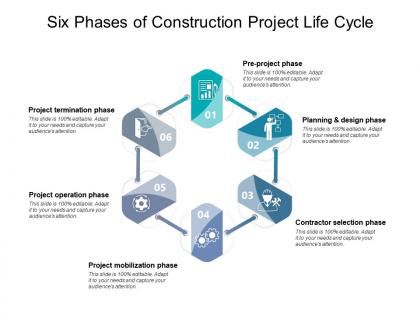
Six phases of construction project life cycle




Try Before you Buy Download Free Sample Product
 Impress Your
 Audience
 100%
100% Editable
 Save Hours
 of Time


Our Six Phases Of Construction Project Life Cycle are explicit and effective. They combine clarity and concise expression.
People who downloaded this PowerPoint presentation also viewed the following :
Six phases of construction project life cycle with all 2 slides:
Give your audience a fulfilling experience. They will find our Six Phases Of Construction Project Life Cycle elevating.

FAQs for Six phases of construction
So there's basically five main phases you'll deal with. First is initiation/planning - that's where you define scope and get approvals. Design comes next, and honestly this phase drags on forever sometimes while architects do their thing. Procurement is all about bidding and picking contractors. Then construction happens - this is when stuff actually gets built, which is pretty cool to see. Closeout wraps everything up with inspections and contract stuff. Oh, and don't rush between phases! Make sure each one's solid before moving on or you'll hate yourself later.
Dude, seriously - planning is like your safety net against everything going sideways. You'll spot problems before they smack you in the face. Set realistic deadlines upfront. Figure out who's doing what and when. Honestly, I've seen too many projects where people think they can wing it and then boom - budget explosion halfway through. Good planning means your crew isn't just standing around waiting for permits or supplies to show up. Yeah, it feels tedious mapping everything out first, but trust me, it beats dealing with chaos and cost overruns later.
Honestly, getting stakeholder buy-in right at the start is make-or-break for your project. Find everyone who matters early - owners, community folks, regulators, actual users. Get them all on the same page about what you're building and why. Document who can actually make decisions vs. who just has opinions (trust me on this one). Gather requirements now and tackle concerns head-on. I've watched projects completely implode later because someone key got overlooked in these initial talks. Oh, and map out how you'll communicate with everyone - future you will be so grateful when drama inevitably hits.
Ugh, scope creep will absolutely kill you - clients think adding "just one tiny thing" won't mess up everything, but it does. Budget gets tight real fast after that. Then you're stuck coordinating architects, engineers, and consultants who can never agree on anything. Permit offices are the worst though - they'll find some random new requirement right when you think you're done. Lock down your scope super early and make change orders crystal clear. Also? Build in way more time than you think for permits. Trust me on this one, those delays are brutal and there's literally nothing you can do about it.
Honestly, just get everyone on the same platform - Procore or Autodesk Build work great. Your whole team can see updates instantly instead of endless phone calls (which nobody answers anyway). Mobile apps let subs upload photos right from site, and you'll actually know what's happening without driving out there constantly. BIM catches those stupid conflicts before they cost you money. The cloud stuff means no more lost paperwork or "I never got that email" excuses. Pick one system though - don't try to use three different apps or you'll just confuse everyone. Get your foremen trained first, then roll it out.
Honestly, start with a solid baseline budget and don't skip the weekly check-ins - monthly is way too late to catch problems. Always pad it with 10-15% contingency because something will definitely break or cost more than expected. Weekly tracking against your projections is huge, and earned value management helps you see if you're actually getting bang for your buck. Oh, and scope creep will kill you if you don't make people go through formal change orders. I learned that the hard way on my last project! Keep everyone in the loop about where the money's going. Maybe even kick off meetings with a quick budget update so it stays top of mind.
Honestly, risk assessment is what'll save your ass on any construction project. You use it to figure out your budget, timelines, which contractors won't flake on you - basically everything important. I always tell people to start with their top 5 risks and plan around those first. Like, maybe weather delays or material shortages, whatever applies to your situation. Then you can decide if you need to fast-track anything or buy extra insurance. The annoying part? You've got to keep updating it as things change. But it beats getting blindsided later.
Honestly, BIM is a game changer for project visibility and control. You'll catch design conflicts way earlier instead of discovering them when it's expensive to fix. The 3D visualization makes client presentations so much smoother - they actually get what you're building. Plus everyone works from the same digital model, so no more "but I thought we were doing it this way" conversations. Cost estimation gets more accurate too. Oh, and it helps with facilities management later, though that's probably not your main concern right now. Start small with a pilot project - you'll see how much smoother things run.
So basically, you want to think about sustainability from day one - not just slap it on later. During planning, go for green materials and smart design choices. Construction phase is all about cutting waste and using energy-efficient methods. Operations is honestly where you'll see the biggest wins though - solar panels, smart systems, all that good stuff. I know the upfront costs can be brutal, but the savings down the road are actually worth it now. Even demo can be sustainable if you focus on salvaging materials. My advice? Pick one phase to nail first instead of trying to do everything at once.
Track these four things: hitting your milestones, staying on budget, quality stuff like rework and defects, plus safety incidents. Most PMs obsess over just timeline and money - big mistake. Quality problems always come back to haunt you later. Also watch your crew productivity and how much material you're wasting. Those are your early warning signs before everything goes sideways. Set up weekly dashboards now so you're not scrambling when the boss asks for numbers. I learned this the hard way on my last project, honestly. Stay consistent with tracking and you'll catch problems while they're fixable.
Oh man, compliance stuff will absolutely wreck your project if you mess it up. Get your permits lined up early - like from day one, not later when you're scrambling. You'll need inspections and approvals at basically every major milestone. Skip something and boom, you're looking at delays, redoing work, or worst case having to demo things (total nightmare). Honestly? Put someone in charge of tracking all this regulatory stuff throughout the whole thing. My buddy learned this the hard way on his last build - don't be that guy. Build those checkpoints right into your timeline from the start.
Here's what's worked for me - inspect everything at each phase, don't wait till the end. Set your quality standards right from the start and actually write processes down (I know, sounds boring but you'll thank me later). Test materials before they go in, keep qualified inspectors around, make checklists for each trade. Oh and train your crew upfront on what you expect - saves so much headache. The trick is catching problems early with regular checks. Honestly, most people skip the systematic approach and just wing it. Build these checkpoints into your timeline now.
So basically traditional construction is like the old waterfall method - design everything first, buy materials, then build. Once you start, going backwards is a nightmare. Agile breaks things into shorter chunks with lots of check-ins and tweaks along the way. You get stakeholder feedback constantly and show progress bit by bit instead of waiting till the end. Honestly, I think traditional still works great for simple projects where requirements won't change. But agile's your friend when dealing with picky clients or uncertain scope. Really depends on how complex things get and who you're working with.
Dude, the closing phase is where you actually learn stuff for next time. Do your post-project reviews while everything's still fresh - seriously, people forget details crazy fast. Document what worked and what was a total disaster. I always write down the communication issues too, not just the technical stuff, because honestly that's usually what goes wrong. Your future self will love having those notes when you're starting another project. Oh, and update your processes based on what you learned - saves so much headache later.
Dude, don't sleep on maintenance planning - seriously. Plan that stuff right from the design phase or you'll be dealing with pissed off building owners later when everything breaks. I learned this the hard way on a project a few years back. Pick materials that'll actually last, make sure people can actually reach the systems to fix them, and write up realistic maintenance schedules. Your reputation lives or dies on whether buildings work five years later, not just day one. Oh, and always throw in a decent maintenance manual with your final deliverables.
No Reviews