

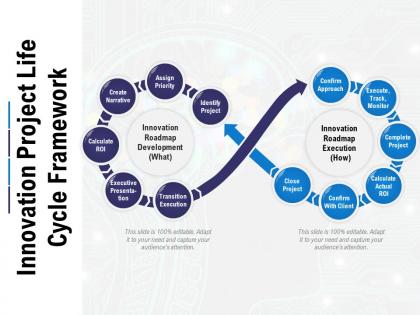
Innovation project life cycle framework





Try Before you Buy Download Free Sample Product
 Impress Your
 Audience
 100%
100% Editable
 Save Hours
 of Time


The designs of our Innovation Project Life Cycle Framework can be immensely inspiring. It is a joy to behold.
People who downloaded this PowerPoint presentation also viewed the following :
Innovation project life cycle framework with all 2 slides:
Bring joy to children with our Innovation Project Life Cycle Framework. Involve them in interesting fun and games.
FAQs for Innovation project
Look, innovative ideas basically flip everything upside down - they question why we even do things a certain way. Traditional stuff just tries to make existing things better. Real innovation usually sounds kinda crazy at first, which is actually a good thing? Like instead of asking "how do we improve this," you're going "what if we threw this whole approach out the window." The key difference is creating something totally new vs just tweaking what's already there. True innovative ideas solve problems in ways nobody's really thought of before. Oh and they tend to borrow concepts from completely different industries too, which is pretty cool when you think about it.
People won't take risks if they're scared of getting burned, so psychological safety comes first. Give them some time for side projects - doesn't have to be Google's 20% thing, but something. When you do brainstorming sessions, actually welcome the crazy ideas instead of shooting them down immediately. Here's the thing though: reward creative thinking even when stuff flops, because those failures teach you what doesn't work. Share your own screw-ups too. Shows them risk-taking is cool with you. Oh, and just ask what's blocking them from trying new approaches - sometimes it's simpler than you think.
Honestly, tech is what drives innovation in pretty much every field now. Companies get new tools to tackle old problems, plus it creates whole new markets. Healthcare's using AI for diagnostics, manufacturing has IoT sensors tweaking production on the fly. Even farmers are flying drones around their fields - which still blows my mind a bit. But here's the thing: it's not just about automating what you already do. Technology actually changes how entire industries can work. I'd say look at your biggest headaches first, then see what new tech might help solve them.
Honestly, think of consumer needs like a roadmap for innovation. You find gaps between what people actually want and what exists - that's where the magic happens. Industry trends matter too since you don't want to build something that'll be dead next year (trust me on this one). Survey your users regularly and keep tabs on industry reports. The sweet spot? Balancing immediate problems people face with where things are headed. Sometimes I get caught up reading too many trend reports though - at the end of the day, real user pain points should drive most decisions.
Honestly, start by actually talking to people who'd buy this thing - surveys are fine but real conversations hit different. You need to figure out if there's demand and who you're up against. Build something super basic to test your main idea without going broke. The financial stuff matters too (run best/worst case scenarios), and make sure it's actually doable tech-wise. Some genius ideas just aren't ready for prime time yet. Keep it small at first. Test fast, and don't be stubborn about changing direction if the numbers aren't adding up.
Patents are such a mixed bag, honestly. Yeah, they motivate companies to dump money into research since they'll get exclusive profits afterward. But then you've got this whole mess where people can't build on existing ideas for like 20 years. It's kind of backwards sometimes. You really want to check what patents already exist before diving into development - saves you from accidentally stepping on someone's toes or missing chances to protect your own stuff. The trick is balancing things so innovation gets rewarded without completely blocking future progress. Easier said than done though.
Honestly? Most companies just hate taking risks - they're terrified of screwing up. You'll also run into that classic "we've always done it this way" BS, plus all the red tape that makes trying anything new feel impossible. Departments don't talk to each other either. Start with tiny pilot projects to prove stuff works. Make failure feel safe - like you're learning, not bombing. Oh, and actually set aside some budget for experimenting instead of hoping innovation happens for free. People get way too comfortable with boring, but small wins can change that mindset pretty quickly.
Honestly, cross-disciplinary teams are where the magic happens. You get engineers working with designers, marketers teaming up with data scientists - and suddenly you're solving problems in ways nobody thought of before. Each field brings totally different mental models to the table. The trick is creating space where people actually feel comfortable challenging each other's assumptions (which can be tricky at first). I'd try those "perspective swap" sessions where team members walk through how their field tackles the same challenge. Sounds cheesy but it works. You'll be shocked how differently a designer approaches user retention versus how a data scientist does.
Look at Dollar Shave Club - they basically destroyed Gillette's monopoly with just a subscription box and funny videos. Warby Parker did the same thing to expensive eyewear. Big companies like Tesla and Amazon? They've got the cash for huge projects like battery tech and AWS. Here's the thing though - you can move way faster than they can. While they're stuck in endless meetings, you can test something, watch it bomb, and try again next week. That's actually pretty powerful. The giants miss tons of smaller problems because they're too busy chasing billion-dollar markets. Find those gaps.
Honestly, customer feedback makes or breaks innovation. You can build something amazing technically, but if it doesn't solve actual problems people have, you're just wasting time and money. Smart companies use feedback as their guide - finding pain points, testing ideas, tweaking stuff quickly. Even harsh criticism is valuable because it tells you exactly what's broken. I learned this the hard way on a project once. Negative feedback stings but it's way better than silence. Start gathering input super early, like before you even launch anything.
Innovation's tricky when it comes to the environment - could save us or speed up the damage. Clean tech and circular economy stuff? Game changers that actually cut resource use. But let's be real, most companies still chase profits first and worry about sustainability later. That whole "move fast, break things" approach usually means environmental costs get shoved aside. I mean, look at crypto - cool innovation but terrible for energy use. Your company needs to bake environmental impact right into how you evaluate new ideas from the start, not tack it on afterward.
So design thinking is basically about obsessing over your users first. Start by really getting what they need - like actually talking to them, not just guessing. Then figure out the real problem you're solving. The brainstorming part is where it gets fun though - just throw out crazy ideas without judging them. Seriously, the weirdest suggestions sometimes work. After that, build quick prototypes to test stuff out. Way better than spending months on something nobody wants. The whole thing works because you're checking your assumptions constantly instead of building in a bubble. Maybe try interviewing a few target users this week?
Look, your team won't innovate if they're scared of getting in trouble for failing. Create that safe space first - people need to know they can experiment without you losing your mind if something doesn't work. Also, figure out what red tape is slowing them down and cut through it. I've seen too many good ideas die in bureaucracy hell. Model the behavior yourself - take some risks, try new approaches. And honestly? Celebrate the smart failures just as much as the wins. Oh, and just ask them directly what's blocking their creativity right now. They'll tell you.
Honestly, data analytics is like having x-ray vision for spotting opportunities others miss. Look at customer behavior patterns, market gaps, weird operational stuff that's broken. User feedback shows you what people actually want (not what they say they want). Track competitors, catch trends early. But here's the thing - most teams just hoard data like digital packrats. The real win? Turn those insights into things you can actually test. Let your data tell you which products to build or markets to jump into. My advice: grab one metric that might reveal something cool and really dig into it this week. Start there.
Honestly, just ask yourself who gets hurt by what you're building. That whole "move fast and break things" vibe is kinda reckless when real people are involved. Will it kill jobs? Mess with privacy? Only work for rich folks? I always think about whether I'm actually solving something useful or just building stuff because it's technically cool. Environmental impact matters too - like, we don't need another resource-heavy app nobody asked for. Get different people involved early on, they'll catch problems you'd totally miss. Oh and don't assume the benefits automatically justify the risks.
No Reviews