


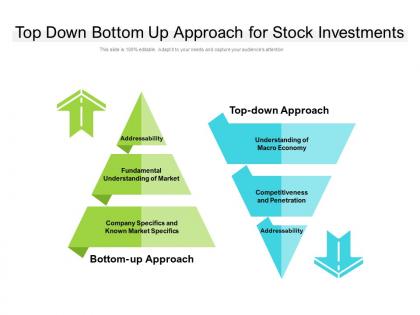
Top down bottom up approach for stock investments




Try Before you Buy Download Free Sample Product
 Impress Your
 Audience
 100%
100% Editable
 Save Hours
 of Time


Our Top Down Bottom Up Approach For Stock Investments generate an electrifying effect. The audience will feel galvanized.
People who downloaded this PowerPoint presentation also viewed the following :
Top down bottom up approach for stock investments with all 2 slides:
Generate an electric atmosphere with our Top Down Bottom Up Approach For Stock Investments. Get everyone around feeling galvanized.

FAQs for Top down bottom up approach
So basically, value investors are bargain hunting - they want stocks trading below what they're actually worth. Growth investors? They'll pay top dollar for companies they think will explode in size. Think of it like this: value is finding designer stuff at Goodwill (Buffett's whole thing), while growth is buying the trendy new brand at full price because you believe it'll take over. Value people care about current numbers and low ratios. Growth folks bet on future earnings potential. Honestly depends on how much risk you can stomach and your timeline.
So basically, dollar-cost averaging means you put in the same amount every month instead of throwing everything in at once. When prices are high, you buy less. When they're low, you get more shares. It's like... imagine buying gas every week vs trying to fill up when it might be super expensive. The whole point is you don't have to stress about timing the market perfectly - honestly, most people suck at that anyway. Just pick an amount you won't miss, maybe $100 or whatever, and stick with it. Your risk gets spread out naturally over time.
So basically dividends give you regular cash while you still own the stock - usually every quarter. Pretty nice setup for building wealth over time. Companies that pay dividends are typically more stable, less all-over-the-place volatile. Perfect if you're getting closer to retirement or just want your portfolio to chill out a bit. You can always reinvest those payments to grab more shares too, which compounds your returns. Oh and don't get sucked into chasing crazy high yields - half the time those companies can't actually keep paying them. Make sure they're solid first.
So basically, technical analysis is all about reading charts instead of digging into company financials and stuff. You're looking at price patterns, volume, moving averages - that kind of thing to time your entries and exits better. Support and resistance levels are pretty clutch for figuring out when a stock might bounce or tank. Works great for swing trades that last a few days to weeks. I mean, nothing's guaranteed obviously, but it definitely helps you catch momentum shifts faster than just guessing. Start with basic chart patterns and throw in some volume analysis - that combo usually gives you way better timing.
Basically, you don't want all your eggs in one basket - learned that the hard way during the dot-com crash lol. When tech tanked, my whole portfolio went with it. Now I spread things across different sectors like healthcare, energy, consumer goods, etc. They rarely all crash at the same time, which is pretty nice for your sanity. Oil prices go up? Energy stocks might fly while airlines get crushed. It's weird how they move independently sometimes. I usually aim for 6-8 major sectors and split things roughly equal. Your returns get way smoother and you'll sleep better at night.
Honestly, don't chase every headline - that'll drive you crazy. I learned this the hard way after freaking out over every tiny dip. Focus on the bigger stuff instead: sector rotation, earnings trends, where interest rates are headed. Consumer spending patterns matter way more than daily noise. Pick maybe 2-3 sectors with solid fundamentals and just wait for decent entry points. Your timing doesn't have to be perfect, just get positioned before major shifts happen. Industry disruption is huge too - that's where the real money moves. Economic cycles tell you more than whatever Twitter's panicking about today.
Look for stocks down 20-30% that still have decent fundamentals - solid balance sheets, steady revenue, debt that's not crazy high. Make sure the drop is from temporary stuff like supply chain issues, not because their whole business is broken. I'm obsessed with finding companies trading below book value, though honestly that's pretty rare now. Check if insiders are buying and whether analysts went overboard with downgrades. Don't try to catch a falling knife though. Set price alerts for where you want to jump in and just wait it out.
Honestly, just grab their 10-K filing from the SEC website first - it's free and has all the good stuff. Check their debt-to-equity ratio so you know they're not buried in loans. Cash flow is huge too, way more telling than revenue sometimes. Their profit margins matter, plus how steady their revenue growth has been. Return on equity is solid to look at. Oh and current ratio - basically can they actually pay their bills? I know it sounds like a lot but these numbers paint the real picture of whether a company's actually doing well or just looks shiny on the surface.
Think of economic indicators as your market GPS - they show which direction things are heading. Strong GDP growth, low unemployment, and rising consumer confidence? That's usually good news for stocks since companies are making bank. I'm always watching inflation data too because nobody wants their money becoming worthless. When the numbers look sketchy though, that's when you'd want to pivot to defensive plays or sectors that don't tank during rough patches. Just don't freak out over one bad report - it's the patterns that matter.
Dude, those psychological biases mess with your head when trading. Loss aversion makes you hang onto losers way too long - I literally did this with some tech stock last year, ugh. Then there's herding behavior where you chase whatever's trending. Overconfidence hits after a few wins and suddenly you think you're Warren Buffett or something. Markets crash? You panic sell. Prices peak? You FOMO buy. The trick is catching yourself doing this stuff. Set up systems like automatic stop-losses or stick to a rebalancing schedule. Takes the emotion out of it, which honestly is half the battle.
Honestly, just think about what you could lose without freaking out or affecting your rent money. Look at your emergency fund first - do you even have one? Then consider your debts. Picture your investment dropping 30% next month (which totally happens btw). Would you panic and sell everything? Yeah, you're probably more conservative than you think. I'd start small with money you genuinely don't care about losing. Maybe like $500 or whatever feels right for your situation. You can always add more once you get the hang of it and stop checking your portfolio every five minutes.
Options can boost your gains big time and let you hedge or make extra income with covered calls. But honestly? They're complicated as fuck. You can lose money super quick if you don't get it. Time decay eats away at your positions constantly - I've watched people torch their accounts trying strategies they barely understood. My buddy did this last year, wasn't pretty. Start with covered calls on stocks you already own if you're gonna try it. Paper trade first though, seriously. Don't go all fancy right away.
Social media's actually pretty solid for stock research if you use it right. Reddit investing subs and Twitter often break news before mainstream outlets do - though yeah, you'll scroll through tons of garbage too. I mainly use it to spot patterns across different communities rather than following random hot takes. Discord groups can be goldmines if you find traders who actually explain their reasoning. Just don't let it replace doing your own homework on the fundamentals. Oh, and definitely set up alerts for tickers you're watching. It's crazy how fast sentiment can shift these days.
Think of earnings reports as company report cards - they show revenue, profits, and what management thinks is coming next. Stock prices can swing pretty wild when companies beat or miss expectations. Focus on earnings per share, revenue growth, and whatever the CEO says about future plans. Honestly, one quarter doesn't tell you much though. You gotta compare it to last year and see how competitors are doing. That's how you figure out if your investment still makes sense or if you're just holding onto something that's going nowhere.
Honestly, ignore all that Reddit investing hype and look at your real money situation first. What can you actually afford to lose? Set concrete goals - like "I want 8% growth per year" instead of some vague "get rich quick" nonsense. Here's the thing though: if you need cash in the next 5 years, keep it out of risky stocks. Retirement money? That can ride the waves. Check your progress every few months, not every damn day or you'll go insane. Write everything down so when the market tanks you won't panic-sell like an idiot.
No Reviews