


Design thinking innovation framework





Try Before you Buy Download Free Sample Product
 Impress Your
 Audience
 100%
100% Editable
 Save Hours
 of Time


Indicate your joy with our Design Thinking Innovation Framework. Convey happiness on their achievement.
People who downloaded this PowerPoint presentation also viewed the following :
Design thinking innovation framework with all 2 slides:
Convey happiness on their achievement with our Design Thinking Innovation Framework. Be able to indicate your joy.
FAQs for Design
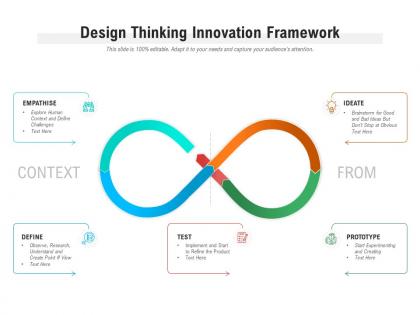
So there are five main stages: Empathize, Define, Ideate, Prototype, and Test. First you figure out what users actually need and where they're struggling. Then define the specific problem you're tackling. Ideation is honestly the best part - just throw out tons of wild ideas without judging them. Build rough prototypes next to make those concepts real. Test them with actual people to see what bombs and what clicks. The whole thing loops back on itself though, which can feel messy at first. Really focus on that empathy step - if you don't get your users, everything else falls apart.
Honestly, just get out there and talk to real people. I mean actually observe them doing their thing - don't just ask what they want because people are terrible at that. Ask about what pisses them off instead. Shadow them if you can swing it. Most teams think they can skip this step (huge mistake). Try making those empathy maps where you map out what users think, feel, see, do. The whole point is dropping your assumptions about how things work. Oh, and make your whole team do this together - builds way better empathy than doing it solo.
So prototyping is basically when you stop overthinking and actually build something - even if it's just sketched on paper or made from cardboard. The goal? Test your ideas before you waste months building the wrong thing. I've seen too many people skip this step and regret it later. You want to fail fast and cheap. Make wireframes, rough models, whatever gets users actually touching your concept. Then watch what happens and iterate based on their feedback. Honestly, your first version will probably suck, but that's the point. Start simple, test early, improve quickly.
Honestly, mixing different people on your team is like having superpowers for design thinking. Engineers see problems totally differently than marketers or psychologists do. You'll catch way more issues that way. The brainstorming gets wild when everyone's expertise starts bouncing off each other - I've literally watched a finance guy come up with the most creative idea in the room while designers just sat there stunned. Short version: different backgrounds = better solutions. Just make sure people feel okay stepping outside what they normally do, otherwise you're missing the whole point.
Honestly, design thinking works way beyond actual design stuff. My old team used it for fixing our nightmare onboarding process - worked like a charm. The five steps (empathize, define, ideate, prototype, test) are perfect when you need to figure out what's actually bugging people first. I've seen it crush problems in healthcare and education too. Business strategy, customer service workflows... pretty much anything where humans are involved and frustrated. Though I guess that's most things at work, right? Just grab something that's driving everyone crazy and walk your team through those steps. You'll be surprised how much clearer things get.
Honestly, I'm obsessed with mixing digital and old-school methods. Miro's fantastic for remote teams doing virtual sticky notes, but nothing beats actual Post-its on a whiteboard when you're all together. The energy just hits different, you know? Start with silent brainstorming so people can think without interruption. Then try "Crazy 8s" - sketch 8 ideas in 8 minutes. Sounds brutal but it works. Round-robin keeps the loud people from hijacking everything too. "How Might We" questions are solid for framing problems. My usual flow: individual thinking first, small groups next, then everyone shares.
Honestly, Design Thinking's biggest win is forcing you to actually listen to users instead of making stuff up. You start with real interviews and observations - sounds obvious but most people skip this part. Define the actual problem before brainstorming solutions (trust me, this saves your sanity later). Quick prototyping lets you test ideas without building the whole thing. I'm always surprised how wrong my first assumptions are. Keep checking back with users as you go - they'll catch things you'd never think of. Next time, literally just spend one day talking to people before you touch any design tools.
Oh man, you're gonna hit some walls for sure. People freak out about the whole "messy trial and error" thing - they want neat timelines and clear plans. Your boss will probably ask for ROI numbers right away, but design thinking payoff comes later when you're not redoing everything. Teams always think they're too busy for the research phase upfront. The "we've always done it this way" crowd? They're the worst. Honestly, some people just hate change. Try running a small pilot project first to show it actually works before you go big.
Honestly, feedback cycles are like having a GPS for product development - they stop you from driving off a cliff. Get real users testing your stuff early, even when it's rough around the edges. I'd rather show 5 people a messy prototype than spend months polishing something nobody wants. Short cycles work best. Test, break things, fix them, repeat. Don't wait for perfection because that's just procrastination with fancy clothes. Your next iteration is ready for feedback right now, trust me. Better to feel awkward about showing unfinished work than devastated about launching something that flops completely.
Honestly, I'd focus on the basics first - user satisfaction scores and how fast people actually adopt whatever you're building. Revenue impact is obvious but takes forever to show up. What's been way more telling for me? How engaged your team gets and whether different departments actually start talking to each other. That collaboration stuff is weirdly predictive. Also track how quickly you can pump out prototypes and iterate - speed usually means you're onto something. Oh, and don't go crazy measuring everything. Pick maybe 3-4 things that actually matter for your specific project and stick with those.
Honestly, the biggest thing is making it safe to fail - most companies totally blow this part. Mix up your teams so marketing people are actually talking to engineers and customer service folks. That's where the good stuff happens. Give people time to really understand users instead of just building random features. Oh, and do those casual show-and-tell sessions where teams can share messy prototypes without getting roasted. Start asking "how might we..." instead of jumping straight to solutions - trust me, it changes everything. Pick one small project first and let the results do the talking.
So Design Thinking is basically figuring out *what* you should build - like doing user research, defining the actual problem, brainstorming ideas. Agile comes in when you know what to build and need to figure out *how* to build it through sprints and all that. They're honestly pretty complementary! Most teams I've seen use Design Thinking upfront to validate their ideas, then pivot to Agile for the actual development work. You can also throw design activities into your sprints if you need to explore new features or - well, when things inevitably go sideways and you need to rethink stuff.
Honestly, remote Design Thinking works way better than I expected once you get the right setup. Miro's my go-to for digital whiteboards - your team can brainstorm and do empathy mapping like you're all in the same room. Figma's solid for prototyping together too. Video calls are obvious but necessary for interviews and those messy ideation sessions (though yeah, screen fatigue hits hard). Don't sleep on Slack for catching those random brilliant ideas that pop up between meetings. My advice? Pick one main visual platform and stick with it. Having everyone scattered across different tools is worse than using basic ones consistently.
So basically, Design Thinking flips the script - you stop guessing what customers want and actually watch how they behave. Hospitals are doing this now, treating patient visits like UX design to cut down on that awful waiting room anxiety. Banks redesigned their whole layouts too. The breakthrough moment? When you quit thinking like the expert and see things from their perspective instead. Honestly, it's kind of obvious once you try it. Map out one customer journey this week - I bet you'll spot three annoying friction points right away that you could test fixes for.
Honestly? Most Design Thinking failures happen because teams skip the boring research stuff and jump straight to brainstorming - way more fun, right? But your solutions are only gonna be as good as you actually understand the problem. I see the same mistakes over and over: not talking to enough real users, getting obsessed with your first "brilliant" idea, completely ignoring budget reality. The whole process isn't some magical framework that fixes everything. You still need to do the work properly. My advice? Whatever time you think research needs, double it. Trust me on this one.
No Reviews