


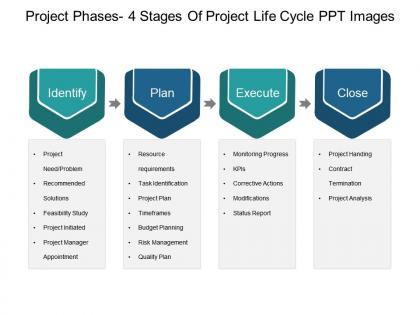
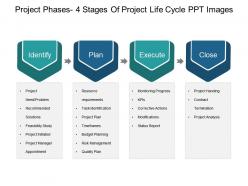
Project phases 4 stages of project life cycle ppt images




Try Before you Buy Download Free Sample Product
 Impress Your
 Audience
 100%
100% Editable
 Save Hours
 of Time


Our Project Phases 4 Stages Of Project Life Cycle Ppt Images will definitely get behind you. They will cover your back in all circumstances.
People who downloaded this PowerPoint presentation also viewed the following :
Project phases 4 stages of project life cycle ppt images with all 5 slides:
Our Project Phases 4 Stages Of Project Life Cycle Ppt Images are an exceptional companion. Your brilliance will find a good friend.

FAQs for Project phases 4 stages of project life
So there are five main phases that kinda flow into each other - initiation, planning, execution, monitoring, and closing. Initiation is where you figure out what you're actually trying to do. Planning gets into the weeds with timelines and who's doing what. Then execution happens (the fun chaos part), while monitoring runs alongside to catch problems early. Here's the thing though - don't rush planning just because it feels boring. I've seen so many projects crash later because someone skipped steps early on. Information moves back and forth between phases too, so it's not totally linear. Honestly, spend way more time planning than you think you need.
So initiation is basically getting the green light - you're figuring out what problem you're solving and why anyone should care. Getting stakeholders on board, that whole thing. Once you've got approval (honestly the hardest part sometimes), then you move into planning mode. That's where the real work happens - schedules, who's doing what, breaking everything down into actual tasks. Dependencies, timelines, all that detailed stuff. It's like... initiation is convincing everyone we need to renovate the kitchen, but planning is measuring cabinets and ordering materials.
Think of stakeholder analysis as your cheat sheet for dealing with people on projects. You figure out who has power, what they actually want, and how they'll mess with (or help) your timeline. Most PMs skip this step - huge mistake. Do it early when you're writing your charter, then keep updating it because people's priorities change constantly. Some stakeholders are critical during planning but become background noise later. Pro tip? Refresh your analysis after every major milestone. I learned this the hard way when a "low influence" exec suddenly became very interested in my project halfway through.
Look, you can't just slap risk management on at the end and call it good. Start identifying your biggest risks right when you kick off the project - build those mitigation plans straight into your charter. Planning phase is honestly make-or-break territory. Do proper risk assessments here and map out your contingency plans. Keep monitoring throughout execution because new risks will definitely pop up (they always do). Oh, and document everything that worked or bombed for next time. The trick is making it automatic, not scrambling when things go wrong. Try opening your next team meeting with "what's gonna bite us this week?"
Honestly, start simple - grab Jira, Asana, or Monday.com for tracking your tasks and progress. That's your foundation right there. I've watched so many teams drown themselves in fancy tools when basic dashboards do the trick. Add some budget spreadsheets and a risk register to catch problems early. Slack or Teams for quick chats too, obviously. Here's the thing though - don't go crazy adding every tool under the sun. Two tools max at first, then build from there only if you actually need more. Trust me, too many tools just becomes this whole mess where nothing gets done.
So it totally depends on your industry, right? Software teams do those agile sprints because they can change direction fast. Construction? They're stuck with waterfall since you can't exactly undo a foundation once it's poured. Manufacturing loves those stage-gate processes with tons of quality checks. Healthcare projects are brutal though - all that regulatory stuff drags everything out forever. Your risk tolerance matters too. I'd honestly just peek at what your competitors are doing first, then tweak from there.
You'll definitely want to track the big four: hitting deadlines, staying on budget, finishing what you promised, and delivering quality work. Stakeholder satisfaction is huge too - I've seen perfect projects get trashed because people felt left out of the loop. Team performance matters, plus whether you actually delivered the business value you said you would. Oh, and set up some kind of simple tracking dashboard right at the start. Trust me on this one - trying to pull together all that data after the fact when everyone's scattered is a nightmare you don't want.
Honestly, just start writing down what worked and what totally bombed after each project. I know it sounds boring, but hear me out - most teams just wing it every time and make the same dumb mistakes. Keep it simple, even a basic spreadsheet works. Then actually look at that stuff when you're planning the next one. Your timeline guesses will get so much better, plus you'll nail the stakeholder communication way faster. I've watched people skip this step for years and wonder why their projects always go sideways. Build those insights right into your templates and you're golden.
Dude, don't skip project closure even though everyone wants to! Get stakeholders to officially sign off first. Document what worked and what was a disaster - trust me, you'll forget otherwise. Hand off deliverables to whoever's taking over. Release your resources and close out contracts (boring but necessary). Oh, and actually celebrate with your team! They deserve it. Use a closure checklist so you don't miss anything obvious. Those lessons you write down? They're honestly lifesavers for your next project when you're stuck wondering "didn't we deal with this before?"
So instead of that old waterfall method where you do everything in order, Agile breaks stuff into these 2-4 week chunks called sprints. You're basically doing tiny versions of planning, coding, and testing all at once. Way less overwhelming honestly - I was skeptical at first but it actually works. Your stakeholders get to see real working pieces constantly instead of waiting months for some big reveal. The cool part? You can pivot when things aren't working instead of being stuck with some ancient plan. Oh, and figure out your bare minimum viable product first - that's your sprint one goal right there.
Oh man, the biggest killers are always the same ones. Teams rush into projects without nailing down what they're actually building - scope creep will destroy you. Timelines get set by people who've never done the work, which is honestly infuriating. Then nobody talks to each other properly. My advice? Actually spend time planning upfront, even when everyone's itching to start coding. Build in buffer time because something always goes wrong. Document the important stuff and don't be scared to tell people when their expectations are crazy. Oh, and do a real kickoff meeting - sounds boring but it saves so much headache later.
Match your communication style to whatever phase you're in. Start with formal presentations during initiation - gotta get that stakeholder buy-in. Planning phase is where things get messy though, so focus on detailed discussions and collaborative sessions. Most projects actually fall apart here if communication sucks. Once you're executing, switch to regular status updates and quick check-ins. Don't forget escalation protocols when issues pop up. Closing means lessons learned sessions and celebrating wins (finally!). Your audience's needs shift as the project moves along, so adjust your frequency and messaging accordingly.
Honestly, good project management software is a total game changer. Everything lives in one spot, so you can actually see what's happening with timelines and resources without digging around. The automation stuff saves so much time - no more hunting people down for updates or doing manual status reports (which nobody likes anyway). When your team can clearly see dependencies and deadlines, collaboration gets way smoother. I've watched teams cut their admin work by like 30-40% just from better tracking. Oh, and start with planning first - that's where you'll notice the biggest difference right away.
Oh man, cultural stuff can totally derail your project if you're not careful. Some teams are super deadline-focused while others need time to build relationships first - learned that the hard way once. Communication styles are all over the place too. Like, some cultures want everything documented while others just do handshake deals. Decision-making is another minefield - could be collaborative brainstorming or strict top-down orders depending on who you're working with. I'd honestly just map out everyone's preferences at the start, set clear communication rules, and pad your timeline with extra meetings for alignment. Trust me on the buffer time thing.
Honestly, it's all about timing with PM skills. Stakeholder management and requirements gathering are huge at the start - mess this up and you're screwed later. Communication becomes everything once you're actually running things because you're basically herding cats and solving problems nonstop. Risk management? That's constant, especially when stuff inevitably goes wrong. You'll also want solid technical knowledge for your field plus basic budget skills (boring but necessary). Oh, and being adaptable is non-negotiable. I'd start by figuring out what you suck at most and work on that first.
-
Topic best represented with attractive design.
-
Great quality product.