

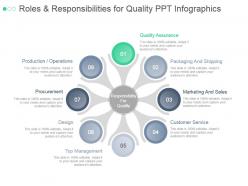
Roles and responsibilities for quality ppt infographics





Try Before you Buy Download Free Sample Product
 Impress Your
 Audience
 100%
100% Editable
 Save Hours
 of Time


Our Roles And Responsibilities For Quality Ppt Infographics are bound to be graded high class. It will impress the connoisseurs.
People who downloaded this PowerPoint presentation also viewed the following :
Roles and responsibilities for quality ppt infographics with all 5 slides:
Highlight the crux with our Roles And Responsibilities For Quality Ppt Infographics. Acquaint folks with the crucial ingredients.



FAQs for Roles and responsibilities for
Start by mapping your current process and finding the biggest gaps - that's where you'll get the most bang for your buck. Build quality in from day one instead of just hunting bugs later. Get solid requirements and test plans that cover functional stuff plus performance, security, whatever matters to your users. Automate the boring repetitive tests (trust me, manual testing everything is soul-crushing). Focus on risk-based testing so you're not wasting time on edge cases nobody cares about. Most importantly, dev and QA need to actually talk to each other regularly - silos are quality killers.
So automation is basically a game-changer - you can blast through hundreds of tests in minutes vs spending days doing them manually. Regression testing is where it really shines though. New code gets pushed? Your tests automatically check that nothing broke. I swear it saves my sanity during crunch time. You won't be stuck clicking through the same boring test cases repeatedly either (thank god). My advice? Pick your most important user flows first and just start there. Don't try to automate everything at once or you'll burn out.
So instead of testing everything at the very end like we used to, QA now happens throughout each sprint. Your testers work right alongside developers, writing test cases early and catching bugs before they become major headaches. Way less stressful than waterfall! They're doing exploratory testing while features are still being built. The whole point shifts from just finding defects to actually preventing them. Oh, and definitely get your QA people into those sprint planning meetings - they'll spot potential problems you hadn't thought of and save you from redoing work later.
Track defect density and how many bugs escape to production - that's your baseline. Test coverage percentage matters, but honestly, don't obsess over hitting 100%. Customer satisfaction scores are probably more important than any internal metric. Cycle time from bug discovery to fix tells you if your process actually works. I'd also watch your automation vs manual testing ratio. The real trick? Pick maybe 3-4 metrics max and actually stick with them. Otherwise you'll spend more time analyzing data than fixing problems.
Don't let QA own quality alone - spread it around to everyone. Leadership has to actually walk the walk though. When execs delay launches for bugs, people pay attention. Build it into how you work: mandatory code reviews, celebrate the early bug-catchers, share those metrics with all teams. Pizza parties for quality milestones sound cheesy but they totally work! Make it feel like team victories, not individual stuff. Oh, and give people decent tools and realistic timelines. Hard to care about quality when you're constantly rushing. Recognition goes a long way when they actually use those tools right.
Oh man, tight deadlines are brutal - you're always racing against "ship it yesterday" while trying not to let quality tank. Requirements changing mid-sprint? Absolute nightmare, especially when you finally figured out what to test. Communication breakdowns between teams happen constantly too. Plus you'll get flaky tests that work sometimes (why though??) and devs insisting their code runs fine locally. Limited test environments don't help either. Honestly, your best bet is getting tight with the dev team and speaking up when timelines are nuts. Document everything and flag quality issues early before they snowball.
Think of risk management as your QA radar - it spots trouble before it hits. You're not just testing at the end anymore. Throughout development, you're constantly sizing up what might break and shifting your testing focus. Say the payment system is mission-critical - obviously you'd throw way more testing power at that than some random button color. It's honestly just common sense prioritizing. Hunt down the bugs that'll actually damage your users or tank your business, not waste time on stuff that doesn't matter. Way smarter than the old spray-and-pray approach.
Honestly, preparation saves your butt here. Get your scope nailed down first and make some solid checklists you can reuse. Don't just look at outcomes - dig into the actual processes. Sample random stuff, not the obviously perfect examples (learned that one the hard way lol). Document as you go because you'll forget details later. Here's the thing though - frame it as helping people improve, not hunting for screwups. Nobody cooperates when they think you're out to get them. Get the right people involved early and always plan follow-ups. Findings without action steps are basically pointless. Oh, and tell everyone upfront why you're doing the audit.
Honestly, just set up some real feedback channels and actually do something with what people tell you. In-app forms work great, plus keep an eye on support tickets for patterns. Beta programs are clutch too - catches issues before they blow up. The annoying part? Everyone's got opinions, so you'll need to sort the real problems from random complaints. I'd group stuff by how serious it is and how often it happens. Oh, and definitely tell users when you've fixed their stuff - people love knowing they were heard. Maybe start with whatever your biggest complaints were last month and figure out why your QA missed them.
Okay so QA is like setting up all the processes upfront to stop bugs before they happen. Testing is when you literally try to break stuff (which is weirdly fun tbh). QC comes at the end - you're checking the final product before it ships. Think of it this way: QA builds the guardrails, testing tries to crash through them, and QC makes sure nothing's actually broken. Honestly, if you get your QA processes solid from the start, you won't be scrambling with QC fixes later. Way less stressful that way.
So ML can totally transform your QA process. Automated defect detection is huge - it catches code patterns you'd never spot manually. The predictive stuff is cool too, flags problems before they blow up. Honestly, the time savings on repetitive testing alone makes it worth it. But here's the real kicker: pattern recognition across massive datasets. Your team would go crazy trying to review all that manually. I'd probably start with just one testing workflow though - don't go overboard right away. Once you see how well it works, you can expand to other areas.
Honestly, start with test management - TestRail or Jira will save your sanity when tracking everything. Automation is where it gets fun though. Selenium or Cypress totally transforms regression testing, way less tedious manual stuff. Performance testing needs JMeter (learned that one the hard way). Oh, and grab SonarQube for static code analysis - catches problems before they become headaches. Jira's solid for bug tracking too, which you're gonna need. Don't try implementing everything at once. Pick one tool per category first, then expand based on what your team actually struggles with.
Honestly, regular sync meetings are a lifesaver for keeping QA standards consistent across teams. Get everyone on shared test management platforms instead of relying on Slack threads - trust me, those turn into a hot mess real quick. Clear documentation helps tons, plus you'll want solid handoff procedures between time zones. Dashboards where everyone can track testing progress work great too. Oh, and rotate who leads different phases so one person isn't hoarding all the knowledge. We learned that one the hard way at my last job.
Honestly, mobile testing changes everything. You've got different OS versions, screen sizes, device types - way more complex than desktop ever was. Can't just grab one iPhone and think you're good to go anymore, you know? People are running everything from brand new flagships to ancient budget phones that barely work. Real device testing becomes crucial for your main user flows - simulators just don't cut it for the important stuff. Plus you'll probably end up automating more since testing manually across like 50 device combos gets crazy expensive. Bottom line: you need to plan your device coverage from the start, not as an afterthought.
So CI/CD basically runs your tests automatically every time someone commits code - catches bugs way earlier instead of finding everything at the end. Game changer, honestly. You get faster feedback, regression stuff handles itself, and deploying doesn't feel like Russian roulette anymore. Frees you up from boring repetitive testing too, so you can focus on the weird edge cases that actually break things. I'd start with automating your regression tests first since those are usually the most painful to run manually. Way less headache overall.
-
Appreciate the research and its presentable format.
-
I discovered this website through a google search, the services matched my needs perfectly and the pricing was very reasonable. I was thrilled with the product and the customer service. I will definitely use their slides again for my presentations and recommend them to other colleagues.