

Routes to inorganic growth powerpoint presentation slides





Try Before you Buy Download Free Sample Product
 Impress Your
 Audience
 100%
100% Editable
 Save Hours
 of Time


Firms that choose to grow inorganically can increase their market share, gain access to new markets and enjoy additional skills. Growth through this route is a faster way for a company to grow and get to enjoy expertise from a new staff. Here is a professionally designed template on Routes to Inorganic Growth to increase the market presence in existing or new markets. The purpose of this is to explain the latest strategies to upsurge sales, output, and business reach through the takeover of new companies. Firms can learn the risks, failures, and benefits of inorganic growth strategies. The deck presents details on ways to expand the organization by engaging in internal activities that increase revenue. One can showcase the products offered by the company currently, financial details before acquisition, key ratios, operating profit, company targets and goals, EBIT range, global sales details, SWOT, etc. Organizations will get to understand the relationship between company acquisition and alliance. Building the right team for inorganic growth is no more a challenging task for companies. The template exhibits the strategies for the merger process, and the results proposed to them. Talk to our experts and get access to the markets best proposal on routes to inorganic growth. Download it now.
People who downloaded this PowerPoint presentation also viewed the following :
Content of this Powerpoint Presentation
Slide 1: This slide displays the title i.e. 'Routes to Inorganic Growth' and your Company Name.
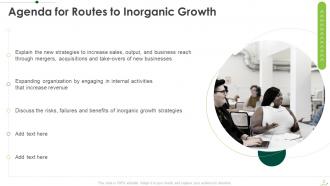
Slide 2: This slide presents the agenda for the project.
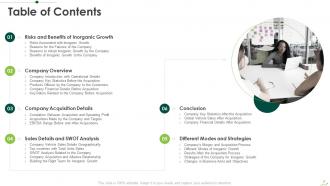
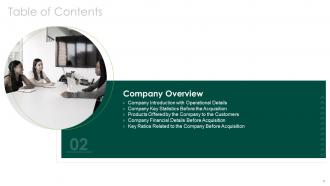
Slide 3: This slide exhibits the table of contents for the project.
Slide 4: This slide showcases the title for risks and benefits of inorganic growth.
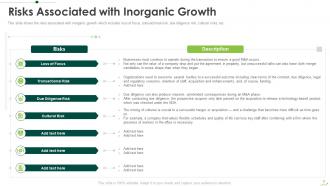
Slide 5: This slide shows the risks associated with inorganic growth which includes loss of focus, transactional risk, due diligence risk, cultural risks, etc.
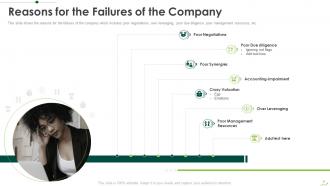
Slide 6: This slide shows the reasons for the failures of the company which includes poor negotiations, over leveraging, poor due diligence, poor management resources, etc.
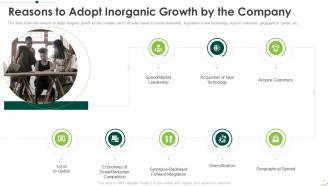
Slide 7: This slide shows the reasons to adopt inorganic growth by the company which includes speed to market leadership, acquisition of new technology, acquire customers, geographical spread, etc.
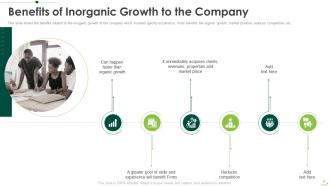
Slide 8: This slide shows the benefits related to the inorganic growth of the company which includes quickly occurrence, more benefits the organic growth, market position, reduces competition, etc.
Slide 9: This slide displays the title for company overview.
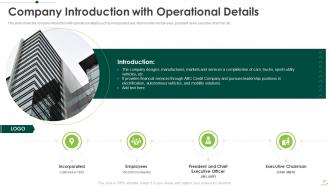
Slide 10: This slide shows the company introduction with operational details such as incorporated year, total number of employees, president name, executive chairman, etc.
Slide 11: This slide shows the company key statistics before the acquisition such as enterprise value, goodwill, advertising expenses, net income, working capital, operating income, engineering costs, etc.
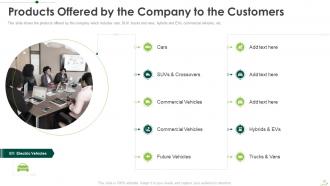
Slide 12: This slide shows the products offered by the compony which includes cars, SUV, trucks and vans, hybrids and EVs, commercial vehicles, etc.
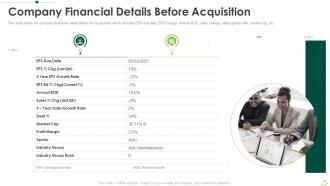
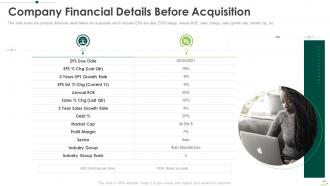
Slide 13: This slide shows the company financials detail before the acquisition which includes EPS due date, EPS change, Annual ROE, sales change, sales growth rate, market cap, etc.
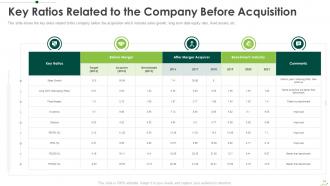
Slide 14: This slide shows the key ratios related to the company before the acquisition which includes sales growth, long term debt-equity ratio, fixed assets, etc.
Slide 15: This slide exhibits the title for company acquisition details.
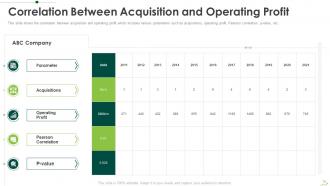
Slide 16: This slide shows the correlation between acquisition and operating profit which includes various parameters such as acquisitions, operating profit, Pearson correlation, p-value, etc.
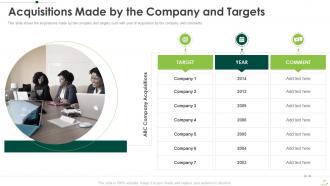
Slide 17: This slide shows the acquisitions made by the company and targets such with year of acquisition by the company and comments.
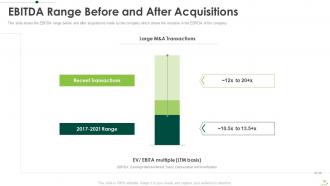
Slide 18: This slide shows the EBITDA range before and after acquisitions made by the company which shows the increase in the EBITDA of the company.
Slide 19: This slide presents the title for sales details and SWOT analysis.
Slide 20: This slide shows the company vehicle sales details geographically which shows various regions and countries with their total vehicle sales detail, etc.
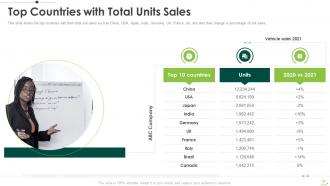
Slide 21: This slide shows the top countries with their total unit sales such as China, USA, Japan, India, Germany, UK, France, etc. and also their change in percentage of unit sales.
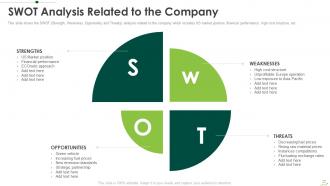
Slide 22: This slide shows the SWOT (Strength, Weakness, Opportunity and Threats) analysis related to the company which includes US market position, financial performance, high cost structure, etc.
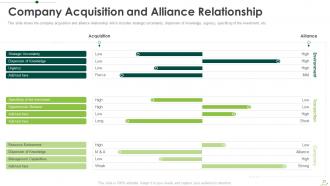
Slide 23: This slide shows the company acquisition and alliance relationship which includes strategic uncertainty, dispersion of knowledge, urgency, specificity of the investment, etc.
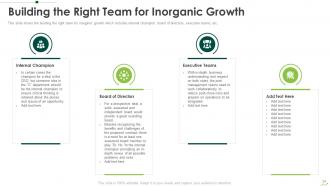
Slide 24: This slide shows the building the right team for inorganic growth which includes internal champion, board of directors, executive teams, etc.
Slide 25: This slide displays the title for different modes and strategies.
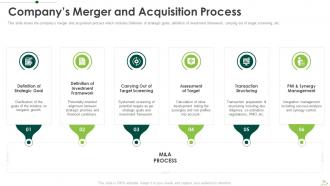
Slide 26: This slide shows the company’s merger and acquisition process which includes Definition of strategic goals, definition of investment framework, carrying out of target screening, etc.
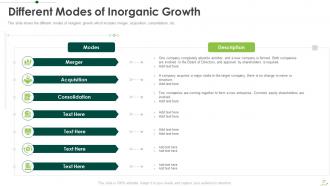
Slide 27: This slide shows the different modes of inorganic growth which includes merger, acquisition, consolidation, etc.
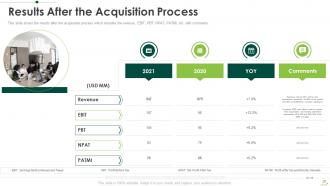
Slide 28: This slide shows the results after the acquisition process which includes the revenue, EBIT, PBT, NPAT, PATMI, etc. with comments.
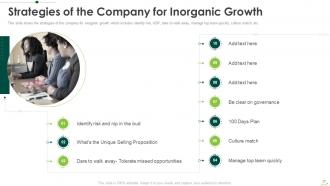
Slide 29: This slide shows the strategies of the company for inorganic growth which includes identify risk, USP, dare to walk away, manage top team quickly, culture match, etc.
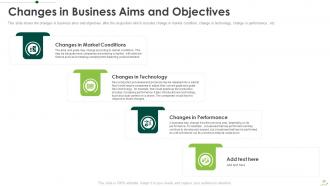
Slide 30: This slide shows the changes in business aims and objectives after the acquisition which includes change in market condition, change in performance, etc.
Slide 31: This slide presents the title for conclusion.
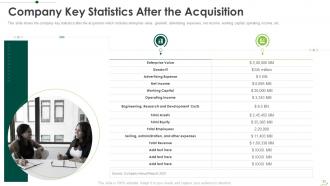
Slide 32: This slide shows the company key statistics after the acquisition which includes enterprise value, goodwill, working capital, operating income, etc.
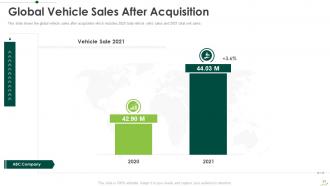
Slide 33: This slide shows the global vehicle sales after acquisition which includes 2020 total vehicle units' sales and 2021 total unit sales.
Slide 34: This slide shows the company financials detail before the acquisition which includes EPS due date, EPS change, sales change, sales growth rate, market cap, etc.
Slide 35: This is the icons slide for the project.
Slide 36: This slide presents the title for additional slides.
Slide 37: This slide presents about the company, it's target audience and value for clients.
Slide 38: This slide showcases the details of the team members.
Slide 39: This slide displays the vision, mission and goals of the company.
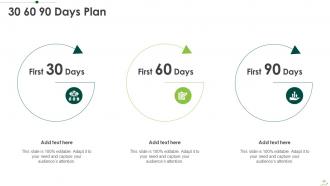
Slide 40: This slide exhibits the 30-60-90 days plan for the project.
Slide 41: This slide displays the posts for past experiences of the clients.
Slide 42: This slide presents the goals of the project.
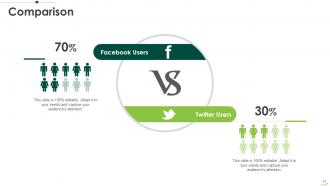
Slide 43: This slide presents the comparison among products.
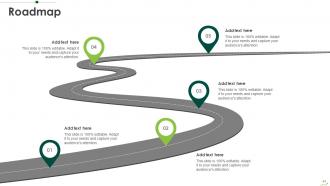
Slide 44: This slide presents the roadmap of the project and it's success.
Slide 45: This is the thank you slide and contains contact details of the company like address, phone no., etc. "
Routes to inorganic growth powerpoint presentation slides with all 45 slides:
Use our Routes To Inorganic Growth Powerpoint Presentation Slides to effectively help you save your valuable time. They are readymade to fit into any presentation structure.














FAQs for Routes to inorganic growth
So there's M&A, joint ventures, partnerships, and licensing deals mostly. Companies love buying out competitors or smaller guys to grow fast - that's your classic M&A move. Joint ventures are cool because you can test new markets with a partner without going all-in on a full merger. Way less messy if things don't work out. Then you've got strategic partnerships where maybe you share distribution or tech resources. Licensing is just paying to use someone's IP or brand name. Honestly depends on how much risk you want and whether you need to stay in control of everything.
So basically, acquisitions give you way more control since you're buying the whole company outright. You can reshape things fast and grab their customers right away. Mergers are more like... two companies deciding to team up as equals, which sounds nice but honestly takes forever to actually work. There's all this blending of cultures and operations that slows everything down. If you want quick market share gains, acquisitions win every time. The impact is just more predictable and immediate compared to the whole "let's combine forces" approach.
So joint ventures are basically like business partnerships where you team up with another company to create something new together. You're splitting costs and profits instead of buying them out completely. Perfect for testing new markets or getting access to tech you don't have. Way less risky since you're not dropping massive cash on a full acquisition. My cousin did this with his manufacturing business last year and it worked out great. Just make sure you figure out who's in charge of what from day one - that's where things can get messy if you don't hash it out upfront.
First thing - make sure it actually fits your strategy and fills real gaps. Check the financials hard: growth, profits, debt, cash flow. Operations and management team need a thorough look too. Here's something people always underestimate - culture clash can kill even the smartest deals. I've watched it happen. Market position matters, plus how messy integration will be and what synergies you'll actually get. Oh, and build a scoring system to compare targets instead of just going with your gut. Way more objective that way.
Acquisitions cost way more upfront - you're dealing with premiums, due diligence fees, all that expensive stuff. Takes years to see your money back sometimes. But organic growth? Super slow, even though it's cheaper daily. Here's the thing though - buying companies gets you instant revenue and market share. Your debt shoots up and ROI gets messy to predict. Growing organically gives you way better control over costs and margins. Less risky financially too. Honestly depends on your timeline. Got cash runway issues? Maybe the acquisition premium is worth it for faster results.
Honestly, the three big ones that'll bite you are cultural mismatches, overpaying, and botched integration. Even when numbers look amazing, cultural clashes can wreck everything - happens more than you'd think. Bidding wars or sloppy due diligence will have you overpaying every time. Integration's where things get really messy though. Systems won't sync, your best people bail, customers freak out. I'd definitely spend way more time upfront figuring out if cultures actually mesh. Also get your integration roadmap nailed down before you even bid - trust me on this one.
Dude, culture stuff will absolutely tank your deal if you ignore it. Seriously, I've watched so many acquisitions crash and burn because everyone just figured the teams would magically get along. People quit, nothing gets done, and all those projected synergies? Gone. You gotta start looking at cultural differences during due diligence - not months later when half the talent has already walked out the door. Map out where the gaps are early. Then actually build integration plans that don't steamroll either company's way of doing things. Oh, and be super transparent about what's happening throughout the whole mess.
Track your revenue boosts and cost savings first - that's the bread and butter stuff. Market share growth matters too, plus whether you're actually hitting those ROI numbers (give it 12-24 months to really tell). Don't forget customer retention during the messy integration phase - seriously, clients hate chaos and will bolt if you're not careful. Employee turnover is another big one to watch. Oh, and set these benchmarks before you sign anything, not after when you're scrambling around wondering if things worked out. Integration timelines are worth tracking too since they always take longer than expected.
Get your antitrust lawyers on this ASAP - seriously, before you even hint at the deal publicly. They'll run the numbers on market concentration and figure out if regulators will freak out about monopoly stuff. Filing Hart-Scott-Rodino is inevitable, plus you'll need competitive analysis that's bulletproof. Market share calculations are honestly a nightmare but whatever. Be ready to sell off chunks of the business if that's what it takes for approval. I'd start now mapping which divisions you could live without - better to have that plan ready than scramble later when regulators demand it.
Look at Facebook buying Instagram for $1B back in 2012 - brilliant move. They crushed a competitor while getting huge mobile reach. Disney dropped $71B on Fox, which was insane money but gave them tons of content for Disney+. Amazon's Whole Foods deal was smart too, $13.7B for instant grocery delivery and real stores. The pattern I notice? Best acquisitions kill multiple birds with one stone instead of just boosting revenue. When you're looking at targets, find ones that either eliminate threats, fill gaps you can't build yourself, or unlock new ways to reach customers. Bonus points if they do all three - though that's pretty rare honestly.
Yeah so merger due diligence is way more brutal - you're buying everything, including all their problems. Financial records, lawsuits, employee drama, crappy IT systems, the works. Strategic partnerships? Way more chill. You only care about stuff that actually affects your deal. Can their team deliver what you need? Any IP conflicts? Personnel issues in that specific division? Honestly, I'd start backwards though - figure out what a win looks like first, then build your checklist around that. Saves you from drowning in irrelevant paperwork.
Look, it's all about timing the market right - good interest rates, your stock price looking solid, and finding a seller who's actually ready to deal. Sometimes you just get lucky when a competitor suddenly needs cash or hits some regulatory mess. But honestly? Your team needs to be ready too - right leadership, people who can handle integration, bandwidth to pull it off. I've seen companies rush into deals just because everyone else was doing them, which is dumb. Wait for the right moment, but when everything clicks, move quick. Good targets disappear fast.
Tech makes M&A way less painful tbh. AI tools can surface acquisition targets you'd never find manually - saves so much time digging through databases. Due diligence gets crazy fast with digital platforms analyzing financials and ops data. But honestly? The real magic happens post-merger. Good integration software actually helps teams work together instead of just crossing your fingers that company cultures will mesh. My buddy's firm swears by deal sourcing platforms - wish more people invested in those upfront rather than scrambling later.
Don't get caught up in deal fever and overpay - happens way more than people admit. Cultural integration is huge but everyone thinks it'll magically sort itself out (it won't). Rush the due diligence and you'll miss red flags. Also, skip anything that doesn't fit your actual strategy or where the synergies are total fantasy. Communication during integration makes or breaks everything. Set your success metrics early, budget extra for integration costs, and be honest about whether your team can handle it. Honestly? Walking away from a mediocre deal beats screwing up a promising one.
Honestly, the biggest thing is just talking to people constantly - like way more than feels normal. Share timelines, who's doing what, all of it. People get weird when they're in the dark about changes. Find some quick wins you can knock out in the first three months. Builds momentum and shows you're not just shuffling deck chairs. But here's what really matters - get teams actually working together on real stuff instead of sitting through endless "synergy" presentations (ugh). Set up workstreams with someone clearly in charge and check in weekly. Otherwise things just... drift.
-
Top Quality presentations that are easily editable.