


Sale Marketing Methods And Channel Conflicts Powerpoint Presentation Slides





Try Before you Buy Download Free Sample Product
 Impress Your
 Audience
 100%
100% Editable
 Save Hours
 of Time


While making a sales and marketing PowerPoint presentation presenter must get everything right. So that important points can be put across to the audience clearly. That is why we have come up with 60 slides pre-made Sale Marketing Methods And Channel Conflicts Powerpoint Presentation Slides. You can use this PPT deck sample to lay emphasis on essential sales and marketing methods. This content-ready professionally designed PowerPoint example deck cover the slides like channel marketing strategy, channel marketing planning, launch plan at a glance, our channel products, currently active channels, who is the buyer, buyers journey, our channel partners, target customers, process to manage partners, our lead generation process and activities, value added by channel partnership, communication plan, marketing analysis, role of channel marketing manager, our top channel sales people, our channel sales numbers, financial highlights and may more Encourage your audience with our sales and marketing analysis presentation complete deck. Now is the right time to download our Sale Marketing Methods And Channel Conflicts Powerpoint Presentation Slides presentation and hit the bull's eye. Ensure correct calculations with our Sale Marketing Methods And Channel Conflicts Powerpoint Presentation Slides. Feel confident of sticking to your guns.
People who downloaded this PowerPoint presentation also viewed the following :
Content of this Powerpoint Presentation
Slide 1: This slide introduces Sale Marketing Methods and Channel Conflicts. State your Company Name and begin.
Slide 2: This is an AGENDA slide. State your agendas here.
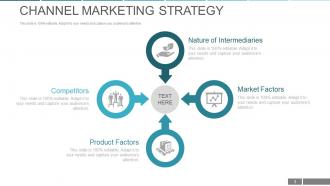
Slide 3: This slide presents Channel Marketing Strategy such as- Nature of Intermediaries, Market Factors, Product Factors, Competitors.
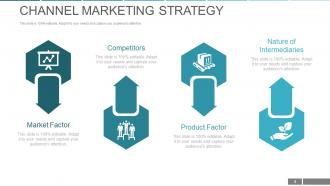
Slide 4: This is another slide on CHANNEL MARKETING STRATEGY.
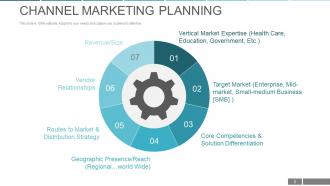
Slide 5: This slide displays CHANNEL MARKETING PLANNING describing- Target Market (Enterprise, Mid-market, Small-medium Business [SMB] ), Vertical Market Expertise (Health Care, Education, Government, Etc.), Core Competencies & Solution Differentiation, Geographic Presence/Reach (Regional…world Wide), Routes to Market & Distribution Strategy, Vendor Relationships, Revenue/Size.
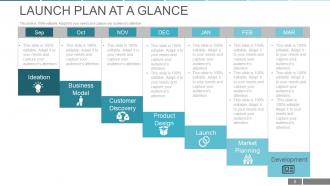
Slide 6: This slide represents LAUNCH PLAN AT A GLANCE describing- Product Design, Development, Market Planning, Launch, Business Model, Ideation, Customer Discovery.
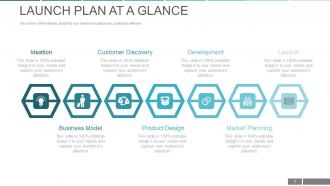
Slide 7: This is an optional slide on LAUNCH PLAN AT A GLANCE.
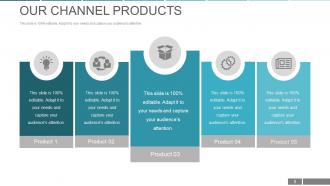
Slide 8: This slide showcases OUR CHANNEL PRODUCTS to be displayed.
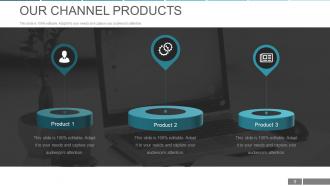
Slide 9: This is another slide displaying OUR CHANNEL PRODUCTS.
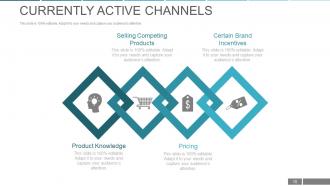
Slide 10: This slide shows CURRENTLY ACTIVE CHANNELS describing- Product Knowledge, Pricing, Selling Competing Products, Certain Brand Incentives.
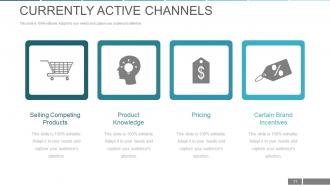
Slide 11: This slide presents CURRENTLY ACTIVE CHANNELS describing- Selling Competing Products, Product Knowledge, Pricing, Certain Brand Incentives.
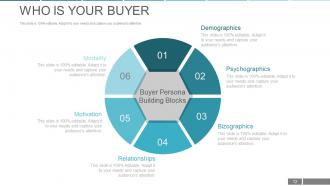
Slide 12: This slide shows Who Is Your Buyer on the basis of- Psychographics, Demographics, Biographies, Modality, Motivation, Relationships.
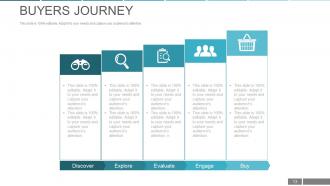
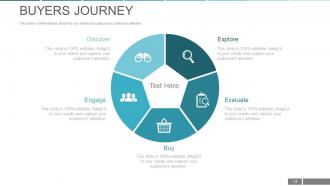
Slide 13: This slide shows Buyer’s Journey categorised as- Discover, Explore, Evaluate, Engage, Buy.
Slide 14: This slide shows Buyer’s Journey categorised as- Discover: Learn about approaches, Identify opportunity, Feel need or pain. Explore: Identify solutions, Build a business case, Commit to change. Evaluate: Choose approach, Compare alternatives, Consider risks. Engage: Select vendor, Check references. Buy: Measure results, Adopt and use, Deploy or launch.
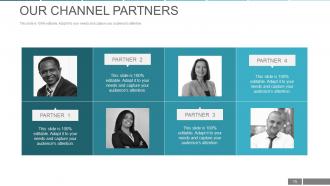
Slide 15: This slide shows Our Channel Partners.
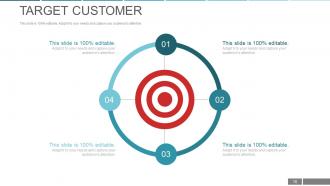
Slide 16: This slide displays TARGET CUSTOMER.
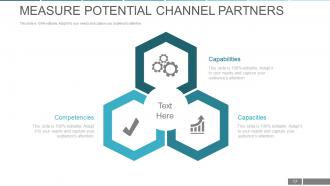
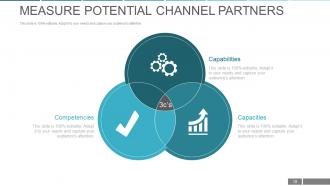
Slide 17: This slide showcases Measure Potential Channel Partners showing- Competencies, Capacities, Capabilities.
Slide 18: This slide showcases Measure Potential Channel Partners showing- Competencies, Capacities, Capabilities.
Slide 19: This slide showcases Process To Manage Partners on the basis of- Demographics, Psychographics, Biographic, Relationships, Motivation, Modality.
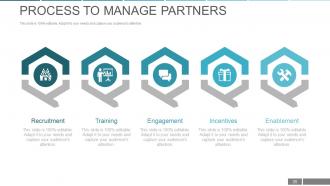
Slide 20: This slide showcases Process To Manage Partners on the basis of- Engagement, Enablement, Incentives, Recruitment, Training.
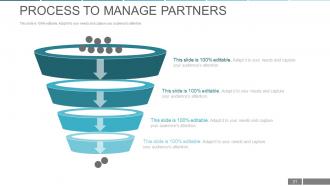
Slide 21: This is another slide describing PROCESS TO MANAGE PARTNERS with the help of a funnel diagram.
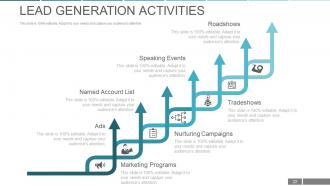
Slide 22: This is Lead Generation Activities consisting of- Roadshows, Tradeshows, Speaking Events, Nurturing Campaigns, Named Account List, Marketing Programs, Ads.
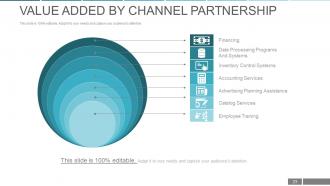
Slide 23: This slide shows Value Added By Channel Partnership showing- Accounting Services, Advertising Planning Assistance, Data Processing Programs and Systems, Employee Training, Inventory Control Systems, Financing, Catalog Services.
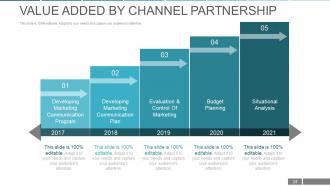
Slide 24: This slide presents VALUE ADDED BY CHANNEL PARTNERSHIP describing- Situational Analysis, Budget Planning, Evaluation & Control Of Marketing, Developing Marketing Communication Plan, Developing Marketing Communication Program.
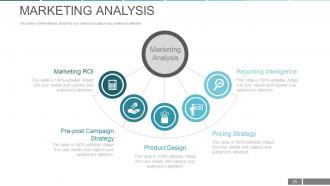
Slide 25: This is Marketing Analysis slide showing- Reporting Intelligence, Marketing ROI, Pricing Strategy, Product Design, Pre-post Campaign Strategy, Marketing Analysis.
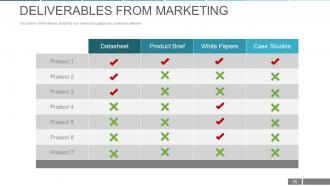
Slide 26: This is Deliverables From Marketing slide in tabular form.
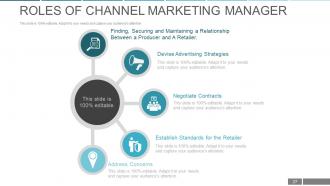
Slide 27: This slide shows Roles Of Channel Marketing Manager displaying- Marketing Manager, Finding, securing and maintaining a relationship between a producer and a retailer, Devise advertising strategies, Negotiate contracts, Establish standards for the retailer, Address concerns.
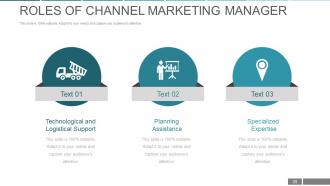
Slide 28: This slide presents ROLES OF CHANNEL MARKETING MANAGER describing- Planning Assistance, Specialized Expertise, Technological And Logistical Support.
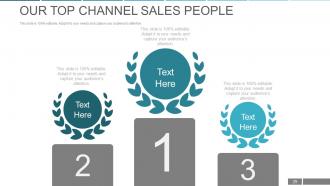
Slide 29: This slide displays OUR TOP CHANNEL SALES PEOPLE with text boxes to show information.
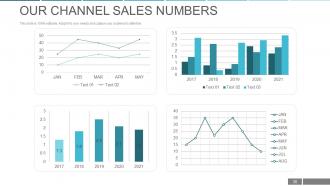
Slide 30: This slide represents OUR CHANNEL SALES NUMBERS with help og graphs and charts.
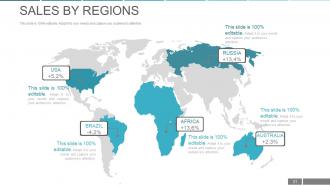
Slide 31: This slide showcases SALES BY REGIONS with the help of related maps.
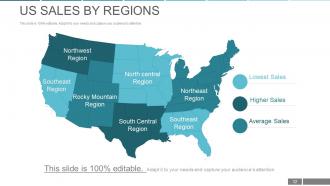
Slide 32: This slide shows US SALES BY REGIONS.
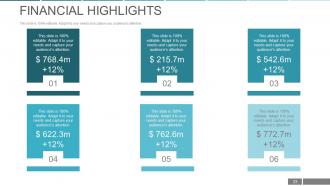
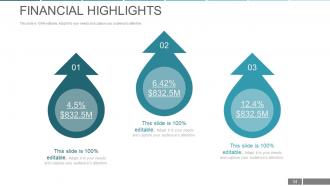
Slide 33: This slide shows Financial Highlights. State finance related aspects etc. here.
Slide 34: This slide shows Financial Highlights. State finance related aspects etc. here.
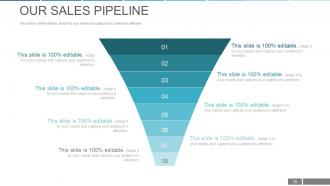
Slide 35: This slide shows Our Sales Pipeline. State sales aspects etc. here.
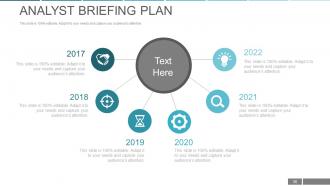
Slide 36: This slide presents an Analyst Briefing Plan.
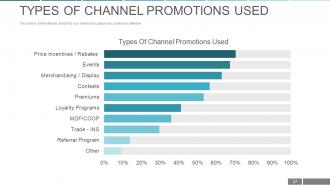
Slide 37: This slide showcases Types Of Channel Promotions Used.
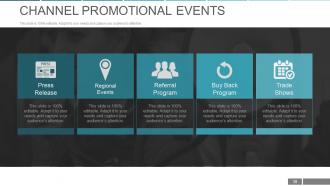
Slide 38: This slide displays CHANNEL PROMOTIONAL EVENTS which includes- Press Release, Regional Events, Referral Program, Buy Back Program, Trade Shows.
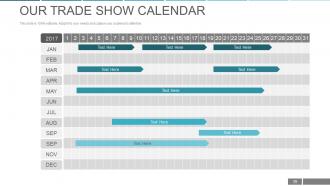
Slide 39: This slide presents Our Trade Show Calendar.
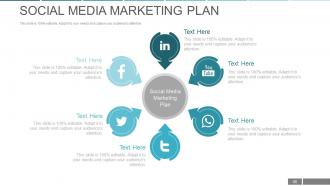
Slide 40: This slide showcases Social Media Marketing Plan.
Slide 41: This slide shows a Website Update Plan.
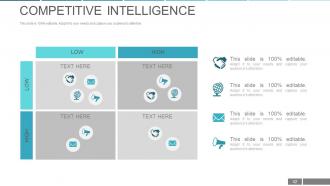
Slide 42: This slide presents a Competitive Intelligence Matrix.
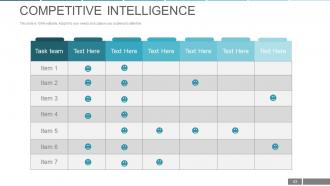
Slide 43: This slide presents a Competitive Intelligence in tabular form.
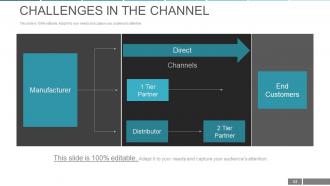
Slide 44: This slide shows Challenges in The Channel from Manufacturer to End Customer.
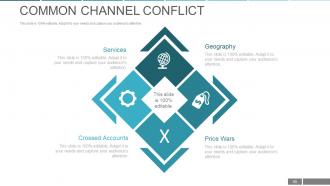
Slide 45: This slide shows Common Channel Conflict with the following subheadings- Geography, Services, Crossed Accounts, Price Wars.
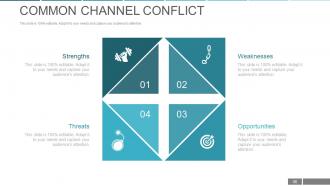
Slide 46: This slide shows Common Channel Conflict with the following subheadings- Strengths, Weaknesses, Threats, Opportunities.
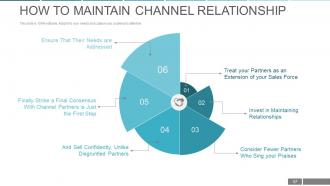
Slide 47: This slide showcases How to Maintain Channel Relationship with the following points- Treat Your Partners As An Extension Of Your Sales Force, Invest In Maintaining Relationships, Consider Fewer Partners Who Sing Your Praises, And Sell Confidently, Unlike Disgruntled Partners, Finally Strike A Final Consensus With Channel Partners Is Just The First Step, Ensure That Their Needs Are Addressed.
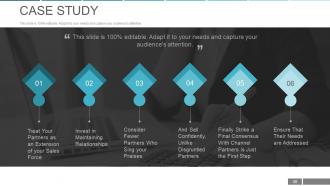
Slide 48: This slide presents Case Study.
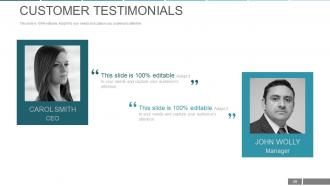
Slide 49: This slide presents Customer Testimonials to be stated.
Slide 50: This slide is titled Additional Slides to move forward. You may change the slide content as per need.
Slide 51: This slide presents Our Mission. State your vision, goals too here.
Slide 52: This is OUR TEAM slide with names and designation.
Slide 53: This is ABOUT US slide to show company specifications etc.
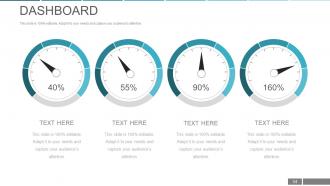
Slide 54: This is a DASHBOARD slide with text boxes to show information.
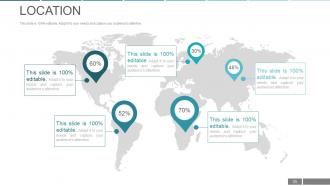
Slide 55: This is a Location slide of world map top show global marketing, growth, presence etc.
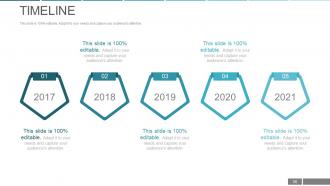
Slide 56: This is a TIMELINE slide. Show data related with time period here.
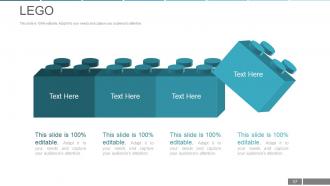
Slide 57: This is a LEGO slide with text boxes.
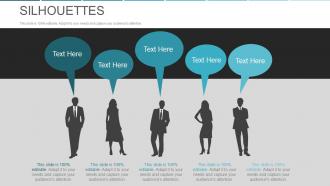
Slide 58: This is a SILHOUETTES slide to show people specific information etc.
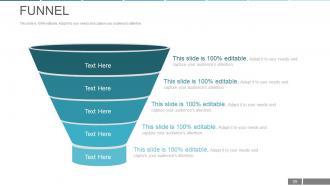
Slide 59: This is a FUNNEL slide with text boxes.
Slide 60: This is a THANK YOU slide with address, contact numbers and email address.
Sale Marketing Methods And Channel Conflicts Powerpoint Presentation Slides with all 60 slides:
Face formidable competition with our Sale Marketing Methods And Channel Conflicts Powerpoint Presentation Slides. Gradually establish your ascendancy.




FAQs for Sale Marketing Methods And Channel Conflicts
You've gotta really understand your customers first - like actually know what keeps them up at night. Build clear personas, then craft messaging that hits their specific pain points. Most people mess this up by being way too vague, honestly. Set up a sales process your team can actually follow consistently. Make sure your pricing backs up how you're positioning yourself. Oh, and definitely track what's working vs what isn't - you'd be surprised how many companies just guess at this stuff. I'd start by looking at what you're doing now and finding the biggest holes to fix first.
Dude, customer personas are like having insider info on who you're actually talking to. Instead of using the same pitch on everyone, you can figure out if you're dealing with a penny-pinching startup founder or some enterprise VP who cares more about fancy features. Way more effective than just winging it, honestly. You'll stop wasting time on dead-end leads and actually close deals faster with the right ones. Oh, and don't overthink it - just start with your top 3 customer types and tweak your approach from there. Makes such a difference once you get the hang of it.
Dude, stories are everything in sales pitches. People retain stories way better than boring bullet points - it's just how our brains work. When you share how another client tackled the exact same problem, you're basically giving them a preview of their own success story. The emotional connection is what seals the deal, not rattling off features. Here's the thing though - you can't just throw any random customer story at them. Pick one that actually matches their world. Same industry, similar company size, whatever. I've seen too many reps blow it by telling irrelevant stories that don't land.
Honestly, you're probably missing tons of opportunities without looking at your data. Check your CRM to see which lead sources actually convert and when people are most likely to buy. Most sales people just wing it, which is kinda crazy when you think about it. Start with win/loss ratios by where leads come from and deal size - I bet you'll find some weird patterns. Then figure out what messaging works and which touchpoints matter. Focus your time on the stuff that actually gets results instead of chasing every single lead.
Honestly, just listen to what they actually need first. Don't be that pushy salesperson everyone hates - it backfires way more than it works. Wait until they're already buying, then ask something like "what else would make this perfect for you?" Bundle stuff that makes sense together, or show them why the upgrade's worth it. Cross-selling is easier when you do the "people who bought this also got..." thing. Upselling works when there's real benefits to going premium. Timing matters though - introduce extras after they've committed to the main thing. Focus on solving their problems, not just moving products.
Social media basically flipped the whole sales game on its head. Instead of those awkward cold calls, you're building real relationships first. LinkedIn's honestly become the new place to network - way better than those stuffy golf meetings if you ask me. You can actually research people beforehand, comment on their posts, share useful stuff. Build some credibility before you even think about selling anything. The whole approach is different now - you're playing the long game, earning trust instead of jumping straight to "buy my thing." My advice? Start following your prospects and engaging with what they post. Then reach out.
Honestly, multi-channel selling works because you're just going where your customers already hang out. Some people love scrolling through your website late at night. Others are impulse buyers on Instagram. And yeah, there are still folks who want to actually call you - weird, I know, but they exist. The cool thing is customers who shop across multiple channels spend like 30% more than the ones who stick to just one place. Makes sense when you think about it. I'd start with figuring out which 2-3 channels your people actually use most. Don't spread yourself too thin trying to be everywhere at once.
Honestly, you've gotta do your homework first - dig into their industry's problems and what keeps them up at night. Healthcare folks obsess over compliance and patient stuff, but tech startups just want to scale fast. I totally bombed a manufacturing pitch once by talking about features they couldn't care less about, so trust me on this one. Match their language without sounding like you memorized their Wikipedia page. Focus on results that actually move the needle for their specific world. Oh, and ask smart questions during those discovery calls - that's where the gold is.
Track the obvious stuff first - revenue growth, conversion rates, deal size, how long sales take. But customer satisfaction scores matter way more than people think since happy customers stick around. Also watch your pipeline velocity and lead quality. Honestly, I'd just pick 3-4 key metrics for a simple dashboard instead of overthinking it. Oh, and retention rates are huge for predicting what's coming next. You don't want to drown in spreadsheets when a few solid numbers tell the whole story.
Figure out what your company's actually trying to hit this quarter - revenue numbers, new markets, keeping customers happy, whatever. Your sales work should match those goals directly. Enterprise focus? Stop wasting time on tiny deals (trust me, I've been there). Focus your prospecting and messaging on what actually matters. Honestly, the biggest thing is staying in touch with leadership regularly. Goals change fast and you don't want to be the person still chasing last quarter's priorities. Just had coffee with my manager yesterday about this exact thing - keeps everyone sane.
Honestly, role-playing is your best friend here - have them practice on each other first before they bomb real calls. Don't throw everything at them in one massive training session because that's just torture. Break it down into smaller pieces they can actually digest. Make some quick reference cards they can keep handy during calls (I swear by these). Pair your veterans with the newbies so they can shadow real conversations. The key thing? Check in regularly to see what's actually working and what isn't. Sometimes the perfect strategy on paper falls flat in reality.
Oh man, this is huge - what works in NYC will absolutely tank in Tokyo. Americans want that quick, direct pitch, but try that in Asia and you'll get nowhere without building relationships first. Europeans? They want ALL the technical specs that would bore Americans to death. The negotiation part trips people up too - some cultures think pushback is straight up rude, not just business. Honestly, I learned this the hard way on a project in Germany once. Research the hell out of business etiquette for each market and find local partners who actually know what they're doing.
Honestly, CRM systems completely changed how I think about sales. They show you everything - every customer interaction, your whole pipeline, buying patterns. The automation alone is worth it because who wants to manually track follow-ups? That's just soul-crushing work. But here's what really matters: the data insights. You'll finally see which parts of your sales process actually work and which parts are basically throwing money away. I'd say pick one thing to focus on first, maybe conversion rates, then build from there. Way better than those messy spreadsheets everyone pretends to love.
Set up weekly one-on-ones with your reps so they can tell you what's actually happening out there. Monthly team sessions work too. Your salespeople see trends way before you do - honestly, they're usually right about what clients really want. Listen for patterns in objections and what tactics are crushing it. Write down their best ideas and test them with a few people first. Once something works, roll it out to everyone. The real trick? Make sure they know you're actually listening. When reps see their feedback creates real changes, they'll keep the good stuff coming your way.
Dude, buyers are basically detectives now - they're 70% done deciding before they even hit you up. Your content has to actually help them, not just pitch. LinkedIn's where it's at for outreach, but don't be that guy sending templated garbage. Quick personalized videos in emails are absolutely crushing text-only stuff right now. Oh, and here's the thing that took me forever to figure out - people want to feel understood, not hunted down by some quota-chasing salesperson. Map out where your prospects actually spend time online and show up there with real value first. It's like dating but for B2B.
-
Easily Understandable slides.
-
Top Quality presentations that are easily editable.