


Sales Manager Headhunting Gantt Chart




Try Before you Buy Download Free Sample Product
 Impress Your
 Audience
 100%
100% Editable
 Save Hours
 of Time


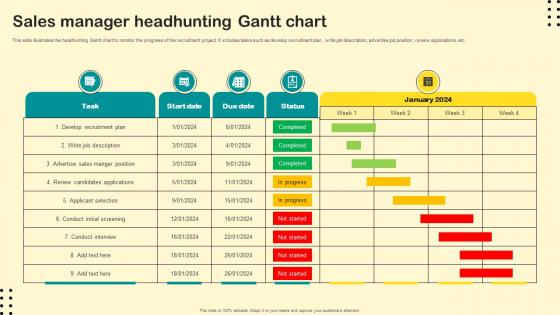
This slide illustrates the headhunting Gantt chart to monitor the progress of the recruitment project. It includes tasks such as develop recruitment plan, write job description, advertise job position, review applications, etc.
People who downloaded this PowerPoint presentation also viewed the following :
Sales Manager Headhunting Gantt Chart with all 6 slides:
Use our Sales Manager Headhunting Gantt Chart to effectively help you save your valuable time. They are readymade to fit into any presentation structure.





FAQs for Sales Manager
Look, revenue track record is everything - don't even bother if they can't show consistent numbers. Ask them to walk through their sales process and how they'd handle a struggling rep. That question alone tells you if they can actually manage people. They need to coach your team AND present to executives without breaking a sweat. Forecasting accuracy matters too (trust me, finance gets cranky about bad projections). Skip anyone who just thinks "more activity equals more sales" - you want strategic thinking. Oh, and make sure they can connect with both C-suite types and your frontline reps. It's a weird skill combo but absolutely crucial.
Don't just take their word for it - dig into the real numbers. Get quota percentages, deal sizes, and sales cycle data from multiple years, not their cherry-picked best one. I always ask for peer references too, not just managers. Your former teammates will actually tell you if someone's lazy or difficult to work with. Also think about what they were selling - crushing 150% in enterprise software is totally different than 120% in quick transactional stuff. The complexity and market timing matters way more than people realize. Get concrete examples for everything they claim.
Look, industry experience matters a ton for sales managers. Someone who gets your market already knows the sales cycles, key players, and what makes buyers tick. I've watched "superstar" reps from other industries crash and burn because they thought it'd be easy to transfer over - it's not. But here's the thing: don't be too rigid about it. Fresh eyes from adjacent industries can actually shake things up in good ways. They might bring customer approaches you haven't tried. My take? Go for industry knowledge first, but if you find someone exceptional with solid transferable skills, don't write them off completely.
Honestly? The best salespeople aren't even looking for jobs, so you gotta be proactive about this. Start building relationships with top performers now - way before you actually need to hire someone. LinkedIn stalking works, but referrals are gold. When you do find someone good, move FAST. Their inbox is probably blowing up with other offers. Don't just throw money at them either. Yeah, comp matters, but sell them on growth opportunities and team culture. Show how they'll actually make an impact. Speed up your whole interview process too - I've seen great candidates disappear because companies took forever to decide.
LinkedIn's your best bet - that's where all the sales managers are anyway. Share some industry stuff, comment on their posts, be actually helpful instead of just spamming job listings (seriously, don't be that recruiter). Twitter works too if you follow the sales guru types. Use LinkedIn's search to find people who aren't actively looking, then interact with their content first before sliding into their DMs. Oh, and check who's creeping on your company page - those people are probably interested and worth a direct message.
Definitely ask how they deal with underperforming reps and their day-to-day coaching style. What's their go-to - one-on-ones, team meetings, or just hopping on calls when stuff hits the fan? I'd push for a real example of motivating someone back to quota. That'll show you what they're actually made of. Also figure out how they balance being supportive vs pushing hard for numbers. Good sales leaders know when to coach and when to crack the whip. Oh, and try "walk me through your first 90 days with a new hire" - honestly their answer tells you everything about how they think.
Oh man, cultural fit is HUGE for sales managers - honestly might matter more than for other roles. These people need to motivate teams and represent your company to big clients. I've watched super talented sales managers crash and burn just because they couldn't vibe with the team or company culture. Skills you can teach, but personality clashes? That'll tank performance every single time. During interviews, really pay attention to how they communicate and lead. Also their core values need to match yours since they'll basically become the face of your company to key accounts.
Don't just look at their sales numbers - that's the trap everyone falls into. Someone might've crushed it because they inherited amazing accounts or knew all the right people. What you really need to know is whether they can actually coach a team and handle the messy stuff. I'd definitely call people who worked under them, not just their old managers. And I know you're probably in a rush to fill the role, but honestly? Taking shortcuts here will bite you later. Test how they'd handle your specific market too - every industry's different.
Honestly, data analytics is a game changer for finding sales managers. Pull performance metrics from LinkedIn, sales databases, industry reports - you'll spot the real winners before everyone else catches on. Numbers don't lie, so dig into their revenue growth, how well they keep teams together, quota numbers over several years. The predictive stuff is pretty cool too - helps figure out if they'll actually mesh with your company culture. I'd start by nailing down what KPIs actually matter for your role, then build your whole search around that. Way better than just going with gut instinct, which honestly most people still do.
Honestly, forget job boards - networking is where you'll actually find good sales managers. Your industry contacts can hook you up with solid performers who aren't even looking but might jump for the right gig. Plus sales people know other sales people, so one good candidate usually leads to more. The real advantage though? You get the inside scoop on someone's actual performance, not just whatever fluff they put on their resume. I'd probably spend like 70% of your time just working your network. Map out who you know and figure out their connections to sales teams you want to poach from.
Ask them to walk through building a team from zero or fixing a broken one. What's their hiring process like? How long does it take new reps to get up to speed? I'd definitely dig into their coaching approach - some people just wing it which is a red flag. The good ones can tell you exact numbers: retention rates, how many reps hit quota, promotions they've driven. Also get them talking through real examples where they turned around struggling reps. Those stories tell you everything about whether they actually know what they're doing or just got lucky.
Honestly, case studies are your best bet - give them a real market scenario and see how they break it down. Behavioral interviews work too, ask about their biggest strategy wins and failures. Those stories reveal way more than you'd think. Role-playing is solid, maybe have them create a go-to-market plan on the spot. I know some places use those fancy assessment tools, but they're kinda overkill IMO. The key thing is watching both how they think through problems AND whether they can actually execute, not just talk theory all day.
Dude, compensation talks can totally make or break everything. Get real salary ranges from your client AND candidates right away - I've wasted so much time skipping this step. Sales managers are super picky about their numbers too, especially base salary and commission stuff. Your client offering 20% below market? Good luck keeping anyone decent interested. I always try to benchmark early now and just be straight up about the budget. Way better than having those crushing "we're out" conversations after someone's done three rounds of interviews. Trust me on this one.
Honestly, EQ matters way more than most people realize in sales management. Your team will hit targets better when you can actually read what clients are feeling and help reps bounce back from rejection. Creates this whole environment where people feel safe to take risks - I've seen performance jump like 25% when managers get this right. Plus you'll hire way better people. Skills are easy to spot on paper, but cultural fit? That's where the magic happens. Ask about specific conflicts they've handled or how they've motivated struggling teammates. You want real stories, not corporate fluff - trust me on this one.
Look beyond your usual hiring spots - try diverse job boards and partner with groups that support underrepresented candidates. LinkedIn has diversity filters too, which helps. Honestly, I've seen way too many "culture fit" rejections that were just bias wearing a fancy hat. Focus interviews on actual sales skills and numbers they've hit, not whether you'd grab beers with them. Mix up your interview panel - different people notice different strengths. Oh, and track where candidates drop off in your process by demographics. You might be surprised what patterns show up.
-
Use of different colors is good. It's simple and attractive.
-
Editable, diversified, compatible with MS PPT and Google Slides, and on top of that finest graphics!! I mean in the words of the famous Ross Geller, “What more do you want!”