


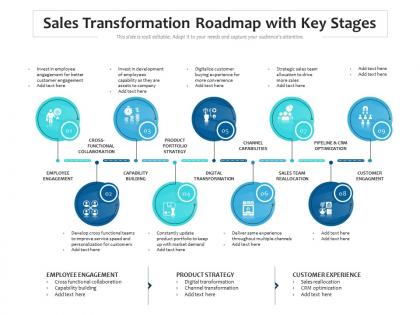
Sales transformation roadmap with key stages




Try Before you Buy Download Free Sample Product
 Impress Your
 Audience
 100%
100% Editable
 Save Hours
 of Time


Our Sales Transformation Roadmap With Key Stages are topically designed to provide an attractive backdrop to any subject. Use them to look like a presentation pro.
People who downloaded this PowerPoint presentation also viewed the following :
Sales transformation roadmap with key stages with all 2 slides:
Use our Sales Transformation Roadmap With Key Stages to effectively help you save your valuable time. They are readymade to fit into any presentation structure.
FAQs for Sales transformation roadmap
Honestly, you need four main things: strategy alignment, process redesign, tech integration, and change management. Start with clear goals that actually tie to business results. Map your new sales processes first, then pick tech that supports them - not just whatever flashy CRM is trending right now. The people part is where most transformations die though. Get your team bought in early with solid training and coaching. Oh, and definitely plan it in phases with some quick wins upfront. Builds momentum and keeps everyone from losing their minds when things get messy.
Honestly, start by talking to your sales team first - they know exactly where things are breaking down and they'll be pissed if you don't include them anyway. Map out your whole funnel from lead to close, then dig into the numbers: conversion rates, deal sizes, how long sales cycles take, win rates. Also check what tools you're actually using vs what's just sitting there unused (we all have those). Once you see the full picture, you can figure out what's bleeding the most money and tackle that first. It's like fixing a leaky roof - find the biggest hole before worrying about the small drips.
Look, tech is what makes your whole sales transformation actually work. Without good CRM systems and analytics tools, you're basically flying blind - can't automate the boring stuff or see if your changes are even helping. I learned this the hard way at my last company. But don't let the tech tail wag the strategy dog, you know? Figure out your goals first, then find tools that fit. Otherwise you'll end up with expensive software that doesn't solve your real problems. Sales enablement platforms are great, but only if they match what you're trying to accomplish.
Honestly, analytics is like having x-ray vision for your sales process. You'll finally see what's actually working instead of guessing. Look for patterns in customer behavior - that stuff is pure gold. Which activities actually close deals? Where are prospects getting stuck? I'd start with cleaning up your data first though, because messy data makes even the best tools useless. Then use predictive models to figure out which leads are worth chasing. Focus on leading indicators, not just the results after everything's done. It's way more actionable that way.
Honestly, the worst mistake is trying to fix everything simultaneously - you'll just burn out your team. Pick 2-3 things max. And seriously, don't skip explaining the "why" to your reps. They need to get what's changing and how it helps them win, not just hit your numbers. I've watched so many transformations crash because executives thought buy-in was automatic. Spoiler: it's not. Timelines are another killer - this stuff takes 12-18 months minimum, no matter what your VP says. Oh, and track the right metrics from day one. Start small somewhere, grab some quick wins, then grow from there.
First thing - map your sales goals directly to what the company actually cares about. Revenue targets, new markets, keeping customers around longer. Whatever moves the needle up top. I've watched so many transformations crash because they turned into these weird sales-only bubbles that nobody else understood or cared about. Schedule regular check-ins with the executive team (trust me on this one). Your roadmap should reference the exact same KPIs they're tracking. Same timelines too. That's honestly the only way you'll get the budget and support you need to make real changes happen.
Training your sales team properly is honestly make-or-break for any transformation. I've watched companies blow tons of money on shiny new CRM systems, then their reps just find sneaky workarounds because nobody bothered teaching them right. Your adoption rates will crash without it. Figure out your biggest skill gaps first - that's where you build your training program. Don't just show them HOW to do something new. Explain WHY you're changing things up. Oh, and it can't be a one-time thing either. Keep training ongoing or people slip back into old patterns real quick.
Track both leading and lagging indicators - you need the full picture here. Sales cycle length, conversion rates per stage, rep productivity, and customer acquisition costs are key. Revenue growth is obvious but honestly that's just the end result. The real goldmine? Activity metrics like call volumes, pipeline velocity, deal sizes, and win rates. Also measure if people are actually using new processes and tools because otherwise your transformation is basically worthless. Dashboard everything and review monthly - that way you can pivot fast when things go sideways. Trust me, the activity stuff tells you way more than just looking at final revenue numbers.
Honestly, customer feedback is everything because it shows you the brutal truth about what's actually happening vs. what you think is happening. Your sales team might believe they're being super consultative, but buyers could see them as pushy or confusing - ouch, but that's pure gold for fixing things. I'd hit up surveys, win/loss interviews, the whole deal to find where you're missing the mark. Those specific pain points become your roadmap. Don't guess what needs fixing when customers will straight-up tell you.
Make feedback loops your bread and butter - weekly check-ins, one-on-ones, celebrating those little wins. People need to feel safe calling out what's broken without getting their heads chopped off. I've watched so many of these transformations crash and burn because everyone was terrified to speak up. Let your reps experiment with new stuff and share what they learn. Set up sessions where your best performers actually show others what's working (not just talk about it). Oh, and track the stuff that predicts success, not just the revenue at the end. You'll spot problems way earlier.
Honestly, you've gotta get people bought in from day one. Figure out who really pulls weight around there - yeah the executives matter, but don't forget about those unofficial influencers everyone actually listens to. Tell them straight up how this'll affect their day-to-day, good and bad parts included. I swear, half these projects tank because people get caught off guard. Check in with them constantly, not just those boring quarterly meetings. Oh and give them actual say in decisions - not those fake "feedback sessions" where nothing changes. When people feel like co-owners instead of victims, magic happens.
Look, market trends will totally mess with your sales roadmap - but that's actually good. You can't just set it and forget it anymore. Remote selling took over? Cool, now you're scrambling for digital tools and figuring out virtual rapport building. Economic shifts happen? Time to reprioritize what capabilities matter most. I made this mistake once - built this perfect roadmap then ignored everything happening around me. Big yikes. Now I do quarterly check-ins to see what's shifted. Way better than playing catch-up later when you're already behind.
Track your leading and lagging indicators to see the whole picture. Revenue growth, conversion rates, and sales cycle length are the basics you need. Call volume, pipeline velocity, and win rates by rep come next. Don't sleep on customer acquisition cost - seriously, so many teams miss this. Oh, and check if people are actually using whatever new tools you rolled out, otherwise what was the point? Monthly dashboard reviews with your team should do it. Keep it simple though, you don't want analysis paralysis.
Start with cross-functional teams from day one - pull people from sales, marketing, customer success, ops. Give everyone shared KPIs instead of competing goals. Skip the boring status meetings (they're useless anyway). Focus on actual problem-solving sessions where teams work through transformation challenges together. Set up dashboards so everyone sees the same data. Oh, and make sure each department has real stakes in the outcome - that's honestly the only way this stuff works. You want collaboration to feel natural, not like some corporate committee nightmare nobody wants to attend.
Honestly, celebrating those tiny wins is everything - people need that dopamine hit to stay motivated. Check in with your teams regularly so they don't feel like they're drowning alone in all the changes. Don't just tell them what's changing, remind them WHY it matters. I swear people lose sight of the big picture when they're stuck learning new systems all day. Find those natural cheerleaders on each team and back them up hard. They'll drag the reluctant ones forward. Stay flexible though - if something's clearly not working, pivot fast instead of being stubborn about it.
-
Unique design & color.
-
Much better than the original! Thanks for the quick turnaround.