Segregation Of Solid Waste Management In Hospitals

Rating:
90%
Segregation Of Solid Waste Management In Hospitals
Slide 1 of 6
Favourites Favourites

Try Before you Buy Download Free Sample Product

Audience Impress Your
Audience
Editable 100%
Editable
Time Save Hours
of Time
The Biggest Sale is ending soon in
0
0
:
0
0
:
0
0
Rating:
90%
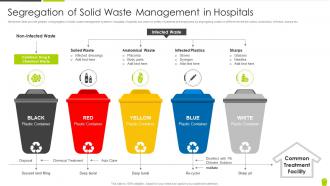
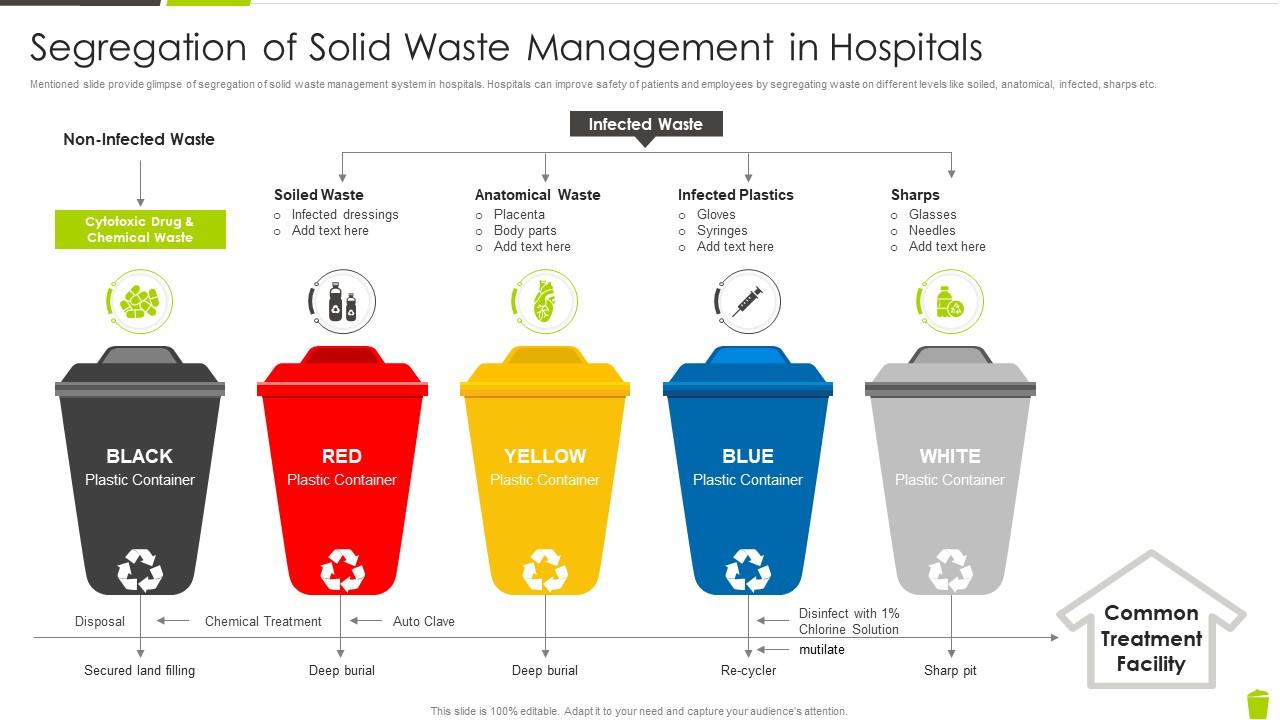
Mentioned slide provide glimpse of segregation of solid waste management system in hospitals. Hospitals can improve safety of patients and employees by segregating waste on different levels like soiled, anatomical, infected, sharps etc. Presenting our well-structured Segregation Of Solid Waste Management In Hospitals. The topics discussed in this slide are Soiled Waste, Anatomical Waste, Infected Plastics. This is an instantly available PowerPoint presentation that can be edited conveniently. Download it right away and captivate your audience.
People who downloaded this PowerPoint presentation also viewed the following :

FAQs for Segregation Of Solid Waste

Honestly, segregation pops up everywhere throughout history - colonialism, slavery, caste systems, religious conflicts, you name it. The US had slavery followed by Jim Crow laws. South Africa did apartheid. India's caste system is still a thing. Different places, same playbook though: dominant groups physically separating people to keep control over resources and power. What's wild is how consistent the economic angle is across all these systems. That's probably where I'd dig if you're doing research - follow the money and you'll usually find the real reasons behind it all.

Honestly, segregation still totally exists - it's just sneakier now. Instead of Jim Crow laws, we get housing patterns and school districts doing the heavy lifting. Check out the demographics in different zip codes around you, it's actually pretty shocking. Like my old neighborhood versus downtown? Completely different worlds. Zoning laws and bank lending keep things separated, plus school enrollment data tells the whole story. Even something random like bus routes can maintain these divides. It's crazy how these patterns stick around decades later, but the evidence is right there if you look at home values and school funding.

Rich neighborhoods literally price out everyone else through housing costs. Can't afford the area? You're stuck with worse schools and fewer job connections. Honestly, it's pretty messed up how zoning laws help wealthy areas stay exclusive while poorer neighborhoods get ignored by investors. This creates these invisible walls everywhere - your zip code ends up determining what opportunities you'll even see. The whole thing becomes generational too since building wealth gets so much harder when you start behind. Next time you're driving around town, just notice which areas have nicer everything. Pattern's everywhere once you see it.

Schools basically mirror whatever segregation already exists in neighborhoods - it's crazy how your zip code still determines so much. But they can also make it worse through stuff like tracking systems and unequal funding. Some districts try to fix this with magnet programs or busing kids around. Here's the thing though - those "colorblind" policies everyone talks about? They usually just keep things exactly how they are. You need actual targeted programs to change anything. Honestly, just look at how your local school boundaries are drawn and where the money goes. That'll tell you everything you need to know about what's really happening.

Mixed-income housing is probably the biggest game-changer, but good luck getting that past local politics, right? Community gardens work really well though - people bond over shared goals without it feeling weird or forced. Same with neighborhood cleanups or business districts that naturally attract different crowds. The trick is finding what everyone already cares about, then building cross-cultural stuff around those interests. Don't try to manufacture connections. Focus on shared spaces where interactions happen organically and everyone gets something out of it.

Segregated communities mess with people's heads in some pretty intense ways. You're constantly surrounded by reminders that you don't have the same shot as everyone else - that builds up over time. Kids especially get stuck seeing the world through this narrow lens, which honestly breaks my heart. Plus you lose out on all those random interactions with different people that actually make you better at solving problems and thinking creatively. The isolation from other groups becomes its own problem. If you're trying to help, I'd say focus on building bridges between communities. Oh, and don't just point out what's broken - celebrate what's already working well there.

Media basically controls what you see about segregation - and that's huge. Newsrooms without diversity? You get stories that either sugarcoat everything or go way overboard. I've noticed how they love those "heartwarming integration" stories but skip the messy ongoing stuff. It's wild how much your whole understanding gets shaped by whoever's behind the camera or editing desk. Different voices = totally different story. So yeah, always ask yourself - whose side isn't being shown here? That missing perspective probably matters more than you think.

Mandatory busing actually worked pretty well back in the 70s and 80s, even though people hated it at the time. Housing voucher programs help too - getting families into more integrated neighborhoods makes a real difference. Fair housing enforcement is huge, plus zoning reforms that stop the exclusionary stuff. Oh, and anything that ties federal funding to integration goals? Schools will move fast when their money's threatened. I've seen some research suggesting metro-wide approaches work better than going district by district, which makes sense if you think about it. Worth looking into if you're doing policy work.

So racial segregation is usually the most obvious - like how school boundaries still follow old redlining maps. Ethnic stuff can be trickier since some of it's by choice (cultural communities) vs forced separation. The money aspect though? That's where it gets messy because wealth decides where you can live, which schools your kids attend, job access - basically everything. These types don't exist separately either, they're all tangled up. Race and class especially - you can't really pull them apart in most situations. If you're digging into local patterns, don't look at just one thing. Check multiple data sources together.

Ugh, segregation absolutely wrecks health outcomes for generations. Communities that were historically segregated still have way higher chronic disease rates and shorter life spans - the maternal/infant death stats are particularly heartbreaking. Poverty gets concentrated, so people can't access decent healthcare or healthy food. Plus they're stuck with more pollution and fewer safe places to exercise. The stress alone is killer. But here's the thing - you can't fix this by just telling individuals to eat better or whatever. You've gotta tackle the bigger stuff: housing policies, transit access, actually investing in these neighborhoods. Otherwise you're just putting band-aids on a broken system.

Honestly, it's all over the place depending on where you look. The US has those federal laws but residential segregation is still super real. South Africa ended apartheid but wealth gaps keep people separated anyway. France does this weird thing where they won't even track racial data - like, how do you fix what you won't measure? Brazil's more upfront about it and actually has affirmative action. Really depends on each country's baggage, you know? I'd check what the laws say versus what's actually happening day-to-day. That gap tells you everything.

Honestly, tech is super weird with this stuff. Social media algorithms basically trap us in echo chambers - you see the same viewpoints over and over. Dating apps can be sketchy too with how people filter matches. But then again, I've seen people connect through online communities they'd never find IRL. Remote work opens doors that geography used to slam shut. Educational platforms reach places traditional schools can't. I think the real issue is we're just letting algorithms do whatever instead of actually designing them to bring different people together. It's fixable, we're just... not really trying that hard yet.

Honestly, art is one of the best ways to break down racial barriers. You know how music like jazz and hip-hop crossed all kinds of cultural lines? Same thing happens when people watch films or visit exhibits about segregation together - suddenly you're sharing this emotional experience that builds real empathy. Theater and literature give marginalized voices a chance to tell their stories authentically too. I mean, there's something powerful about experiencing art alongside people who don't look like you. Support diverse artists when you can. It makes a difference, and those conversations afterward? That's where the magic happens.

Honestly, the civil rights movement taught us that you can't just win one big case and call it done. Brown v. Board was huge, but then schools dragged their feet for *decades* afterward. Real change needs pressure from everywhere - grassroots activists, lawyers filing suits, politicians pushing bills. It's kinda depressing how much people fought back even after the laws changed, but you see this same pattern with every social movement. Legal wins are basically just round one. So if you're working on something, brace yourself for the long haul and don't get discouraged when people push back after your first victory.

Honestly, start small by actually talking to people outside your usual circle - like genuinely getting to know them, not just small talk. When you're in meetings or group settings, make space for voices that usually get talked over. Call people out when they're being exclusionary (awkward but necessary). Join activities or groups that aren't just your demographic. Oh and don't just stay comfortable with segregated spaces when you see them - question why they exist. The whole thing feels weird at first because you're basically rewiring how you move through the world. But those bridge-building moments? They're worth the discomfort.

Ratings and Reviews

90% of 100
Write a review
Most Relevant Reviews
  1. 80%

    by Curtis Herrera

    Great experience, I would definitely use your services further.
  2. 100%

    by Li Stewart

    Making a presentation has never been this easy for me. Thank you SlideTeam for offering a splendid template library.

2 Item(s)

per page: