

 0 Comment
 Customer Reviews

In the ever-evolving healthcare landscape, medical ethics and bioethics play a critical role in guiding medical professionals, administrators, and policymakers in making sound decisions that prioritize patient welfare, confidentiality, and fairness. With the advancement of medical technology, patient data has become extremely sensitive. Healthcare departments, clinics, and hospitals need to make ethical decisions.
In this blog, we have listed the Top 10 PowerPoint Templates on Healthcare Ethics to help people for seminars, medical students, training workshops, or corporate meetings. Use these sensitive and powerful slides to learn about leadership ethics and decision-making frameworks for biotech-tech-based dilemmas like automation and AI in healthcare. These templates are going to save you time and make your message stronger.
If you're also looking for specific presentation decks on medical ethics, this top 10 medical ethics powerpoint presentation templates blog is helpful; it includes more ready-to-use resources tailored for healthcare professionals.
These premium resources are fully editable and structured to help you explain your points clearly. They help professionals visualize the content and explain their points clearly. For example- you're an educator trying to make ethics easy for your students in the classroom.
Also, If you're working on building a strong organizational culture, don't miss the top 7 code of ethics templates with samples and examples. The blog offers clear formats to define ethical principles in any workplace.
Now, let's dive in.
Template 1: Legal Framework of Healthcare Ethics
Use this PPT Template to outline key legal and ethical principles essential for healthcare practice. First, HIPAA protects the patient's data; the organization secures any personal health information. Informed consent is emphasized, requiring patients to fully understand the risks so that they already have an idea before undergoing medical procedures. Patient rights ensure that individuals have the right to control their health information and privacy.

Template 2: Patient Autonomy and Informed Consent
Use this PPT Slide to elaborate the steps in obtaining a patient's consent. It showcases identification of the patient's medical condition, discussing and providing an honest review to ensure the patient understands the information provided, maintaining a high standard of medical professionalism. In the next step, the patient's voluntary and explicit consent is obtained. Also, it involves properly documenting informed consent in the medical records.

Template 3: Importance of Ethics in Healthcare
This PPT Preset shows that ethics is the backbone of the healthcare department. Its SWOT analysis clearly shows that the organizations follow strong ethical guidelines based on core ethical principles like autonomy, beneficence, non-maleficence, and justice. Providing safety and strength also ensures that the quality of care for patients stays consistent over time. There are weaknesses, too—inconsistencies in regular practices lead to mistrust and confusion, which confuse people for no reason, along with a shortage of proper ethical training resources for healthcare professionals.

Template 4: Importance of Ethics in Healthcare Automation
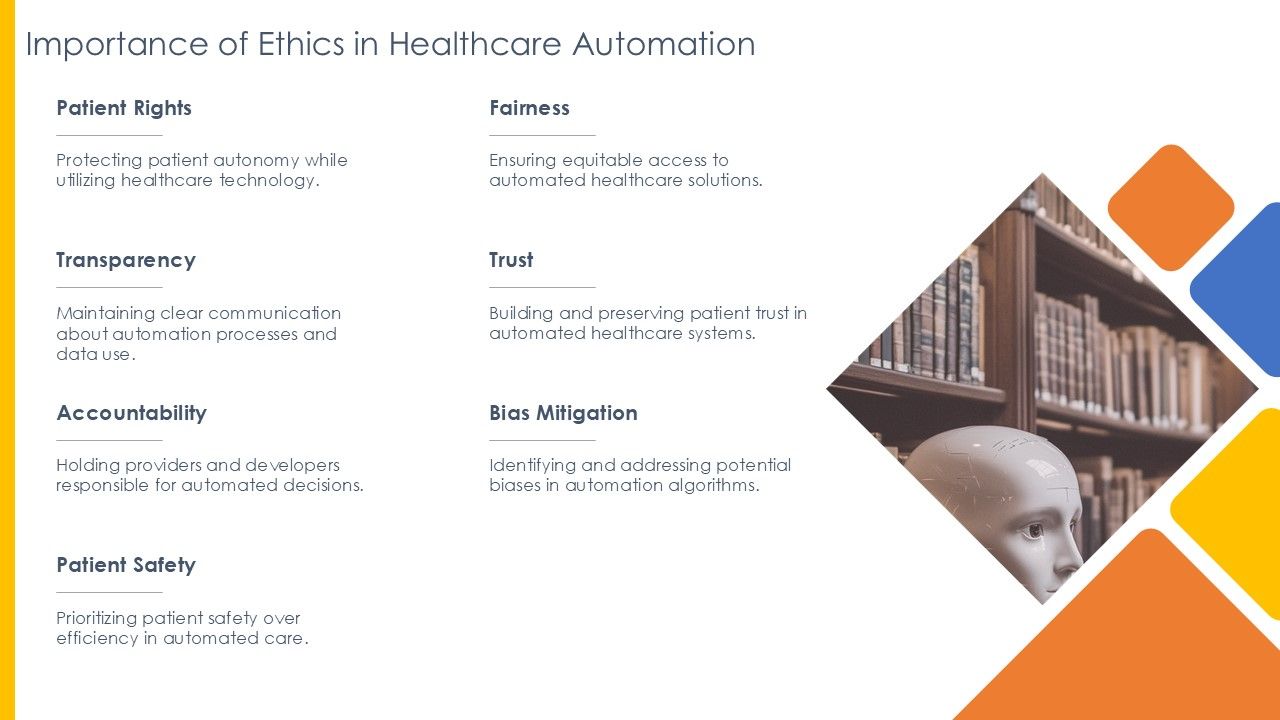
Healthcare automation means that hospitals and doctors make it easy for customers through technology. However, authorization cannot be overstated, especially with patient privacy increasingly at risk. This PowerPoint Presentation illustrates the importance of ethics in healthcare automation. Clear communication about automation processes, prioritizing patients' safety over efficiency, and building trust are necessary to foster confidence in an automated healthcare system.
Template 5: Balancing Ethics and Professionalism
Use this PPT Theme to balance ethics and professionalism in healthcare. Ethics in the department represent the principles that guide professionalizing and making the right decisions. Professionalism means showing discipline, responsibility, consistency in your decisions, and respect for work behaviour. Integrity, meaning honesty and transparency in professional standards, forms the base of this balance. Building connection and trust with stakeholders through consistent actions is equally important.

Template 6: Leveraging Ethical Leadership in Healthcare
Leveraging ethical leadership is key to achieving effective healthcare management. This PPT Template elaborates how ethical leaders promote transparency—preferring open communication—which helps build strong connections between staff and patients. They foster collaboration by engaging multidisciplinary teams, allowing better decision-making and stronger outcomes. They also support ethical practices by training staff to make better choices and fair decisions, keeping accountability clear, and setting clear policies so that responsible behaviour is maintained across the organization.

Template 7: Introduction to Ethical Decision Making
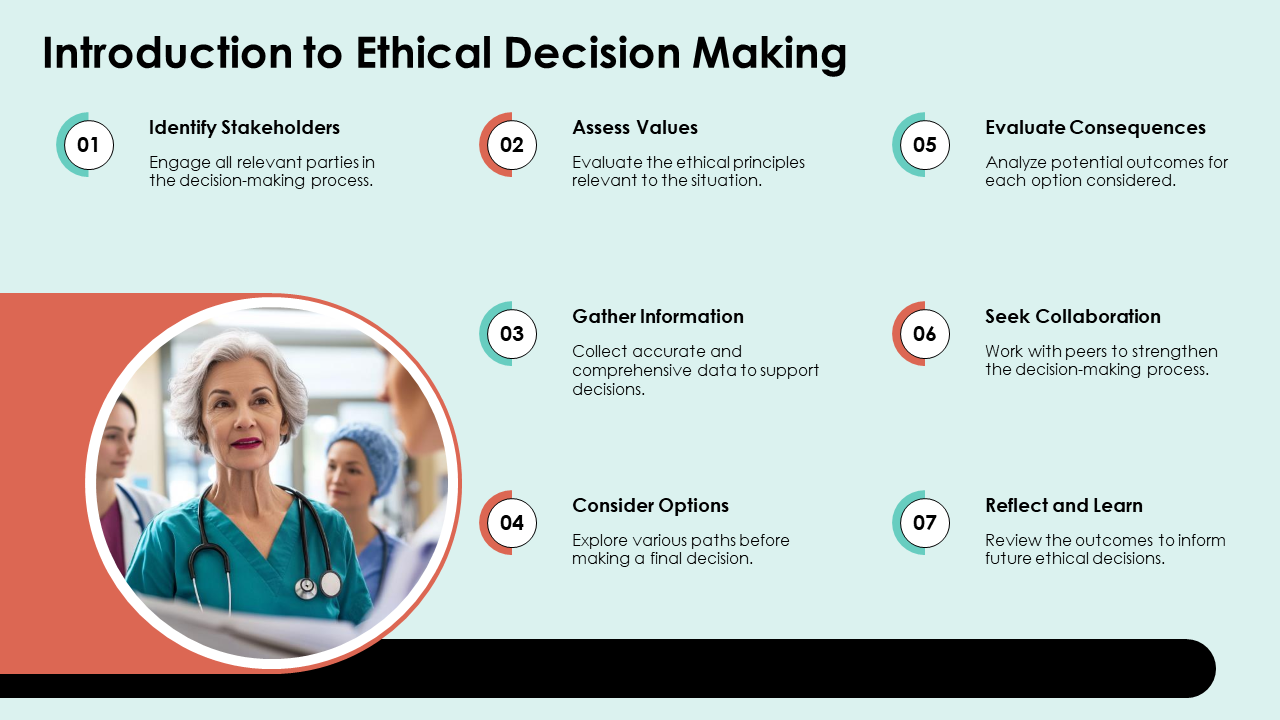
Use this PPT Layout to understand the process that starts by identifying all stakeholders involved and making sure every important voice is heard in the decision-making. Then, values are assessed to evaluate the ethical principles according to the situation. Gathering accurate and correct information to make well-informed decisions. Once you receive the data, find the right options and compare the pros and cons to make better decisions.
Template 8: Patient Rights and Healthcare Ethics
This PPT Template shows how securing the future of healthcare requires strong compliance and ethics. It starts with the CEO, who manages the whole system and ensures everything runs smoothly. Under the CEO, the CFO and CMO manage two important areas: finance and medical services. The CFO manages the compliance manager and compliance analyst, making sure all rules and policies are properly followed. Then, the CMO manages the director and the coordinator, taking care of the patient's rights.

Template 9: Importance of Privacy and Security in Healthcare
This PPT Preset highlights the legal challenges involved. Building trust with the patient is very important in healthcare and the template stresses the need for data breach prevention through strong security measures, and with proper risk management, you can handle problems in advance. It also helps to learn the importance of upholding ethical standards to protect patient dignity and privacy rights. As a result, this will automatically help achieve better health outcomes.

Template 10: Historical Evolution of Ethics Committees
This PPT Theme provides a structured timeline highlighting how the ethics committee has evolved over the decades in the healthcare department. From their first committee inception in 1966 to 1976 guidelines, the expansion of their roles in the 1990s, and adjusting to modern telepaths in 2023, each milestone has been explained in a table format. Use this slide to easily organize presentations, reports, or any educational content.

Template 11: Best Practices of Ethical Data Usage
This PPT Theme contains eight essentials for ethical data management and covers the full data lifecycle. It starts with people's consent; every person should know where exactly their information will be used by organizations. Keep transparency with patients; that helps to build strong connections with them and clean up your biases before they mess up your results. Then, lock things down tight—healthcare-level security isn't an option anymore.

Template 12: Influence of Culture on Patient Values
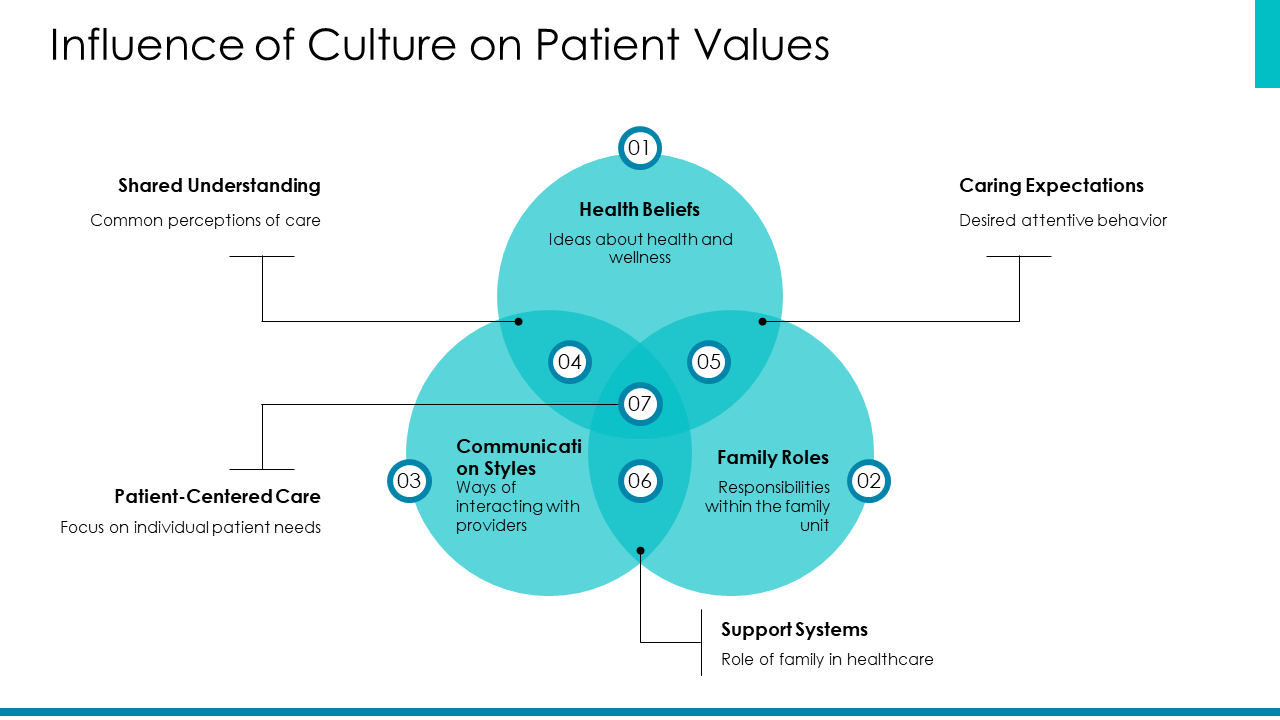
This PPT Slide highlights 6 key cultural factors affecting patient care-" shared understanding" shows how different communities have unique definitions of good treatment. The "Health Beliefs" system explains that some people trust local healers more than MBBS docs, and you have to respect that. Then, in "family roles," most people prefer a family meeting before making any medical decisions.
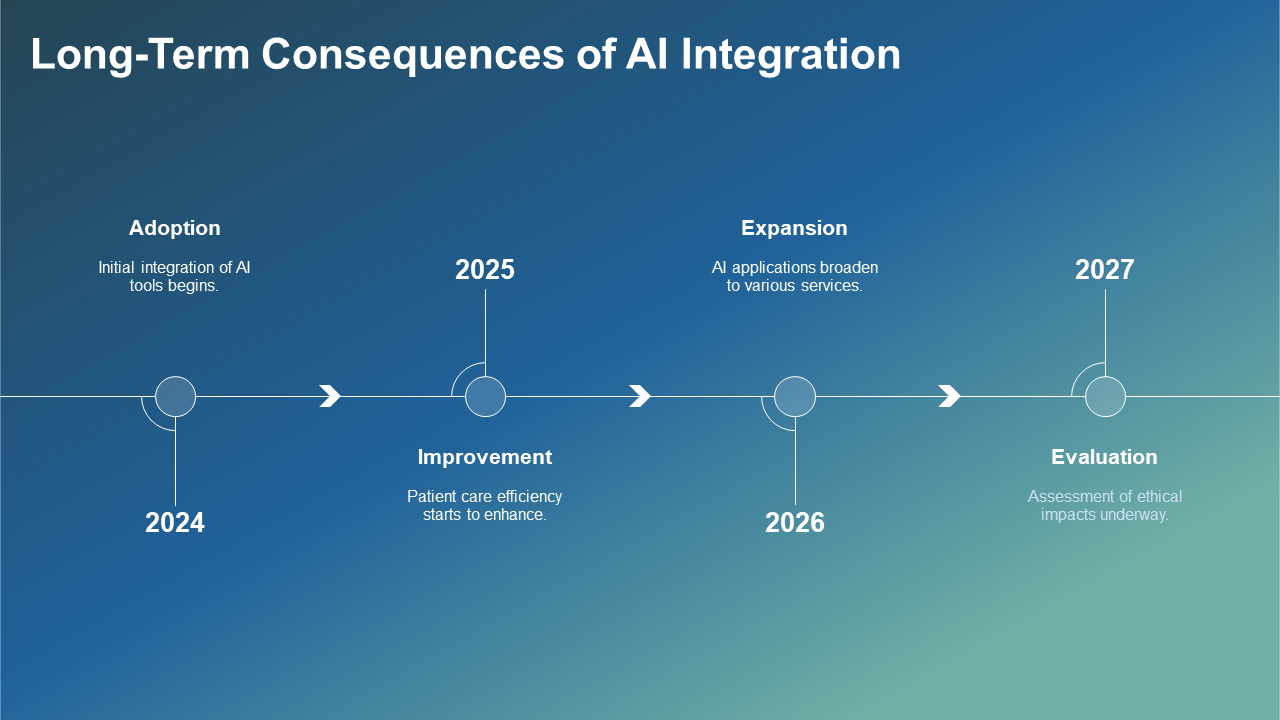
Template 13: Long Term Consequences of AI Integration
Use this PPT Template to understand the "long-term consequences of AI integration." It divides the process into key phases to make it easier for the customer to understand. In 2024, as the new AI tools were launched, companies started adopting the initial integration. 2025 focuses on initialization, including development and efficiency targets. Also, this maintains patient autonomy in clinical decision-making.
“Summing Up: The Importance of Ethics in Healthcare”
Use SlideTeam’s PPT Templates to grow in the rapidly evolving healthcare industry. To explore more healthcare-related resources, check out our top 10 predictive analytics in healthcare PPT templates.
FAQs on the Healthcare Ethics
1. What Are the 5 Ethics of Healthcare?
Autonomy: Patients have the right to make their own healthcare decisions and choose what is suitable for them in any condition.
Beneficence: Acting in the best interest of the patient.
Non-maleficence: Healthcare providers must avoid causing harm to patients; they must treat customers like a family.
Justice: Ensuring fairness in medical decisions and distribution of resources. Treating customers equally in every situation
Confidentially: Protecting the privacy of patient information and keeping it to themselves.
2. What Are the 4 Principles of Healthcare Ethics?
Autonomy: It allows a patient to make their own healthcare decisions, taking control of their choices.
Justice: Treating patients fairly and allowing them to use healthcare resources equally in any situation.
Beneficence: Acts in favour of patients to promote their well-being and build trust so that they can feel comfortable around patients.
Non-maleficence: Eliminating actions that could hurt the patient and avoiding something that might hurt them.
3. What Is Health Care Ethics?
Healthcare ethics means doing the right thing when caring for people's health. It's about making fair, kind, and honest choices when treating patients. It also includes maintaining confidentiality, ensuring patients’ information is protected, and only sharing it with authorized individuals.