


Corporate ethics powerpoint presentation slide





Try Before you Buy Download Free Sample Product
 Impress Your
 Audience
 100%
100% Editable
 Save Hours
 of Time


Showcase your business ethics using this Corporate Ethics PowerPoint Presentation Slide. Maintaining a decorum and following a code of conduct is extremely necessary for the smooth functioning of the organization. Utilize this professional ethic PowerPoint slideshow to give an in-depth explanation of your company’s moral and social values. These core values can originate from anywhere whether it comes from an individual, organizational statements, legal systems, etc. You can easily make use of this ethical principle PowerPoint complete deck to showcase your norms, ethical, unethical, values, etc. that serves as a guide for your business. This business culture PowerPoint template consists of slides like business ethics key drivers, ethical principles for business executives, core values, business ethics need and many others. This increases the scope of this corporate social responsibility PowerPoint complete deck. You can also incorporate this contemporary organizational standard PowerPoint graphic to shape ethical conduct in your organization. Therefore, without any hesitation download, this applied ethics PPT to maintain the decorum of your organization that helps in building strong relationships with the stakeholders.
People who downloaded this PowerPoint presentation also viewed the following :
Content of this Powerpoint Presentation
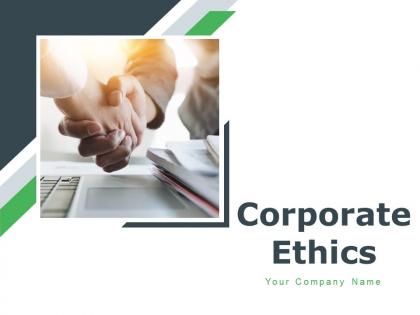
Slide 1: This slide introduces Corporate Ethics. State Your Company Name and begin.
Slide 2: This slide shows Business Ethics Key Drivers as- Introduction, Business Ethics Needs & Drivers, How to Shape Ethical Conduct in the Organization, Areas of Responsibility.
Slide 3: This slide presents Introduction describing- Introduction to Business Ethics, Ethical Principles for Business Executive, Core Values, Role of Individual in Organizational Effectiveness.
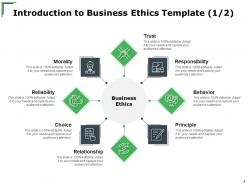
Slide 4: This slide displays Introduction to Business Ethics Template describing- Trust, Responsibility, Morality, Behavior, Reliability, Principle, Choice, and Relationship.
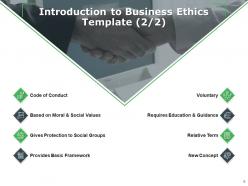
Slide 5: This is another template on Introduction to Business Ethics.
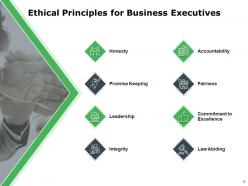
Slide 6: This slide represents Ethical Principles for Business Executives describing- Honesty, Accountability, Promise Keeping, Fairness, Leadership, Commitment to Excellence, Integrity, and Law Abiding.
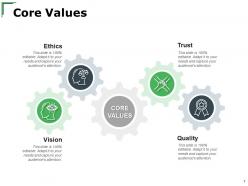
Slide 7: This slide showcases Core Values as- Trust, Ethics, Vision, and Quality.
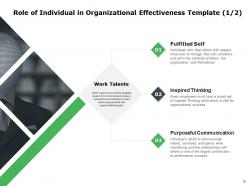
Slide 8: This slide shows Role of Individual in Organizational Effectiveness Template with categories as- Fulfilled Self, Inspired Thinking, and Purposeful Communication.
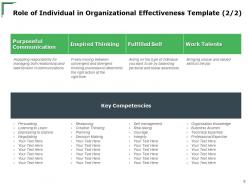
Slide 9: This is another template for Role of Individual in Organizational Effectiveness.
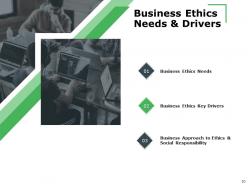
Slide 10: This slide presents Business Ethics Needs & Drivers describing in detail- Business Ethics Needs, Business Ethics Key Drivers, and Business Approach to Ethics & Social Responsibility.
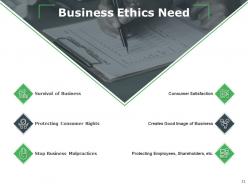
Slide 11: This slide displays Business Ethics Need as- Survival of Business, Consumer Satisfaction, Protecting Consumer Rights, Creates Good Image of Business, Stop Business Malpractices, Protecting Employees, Shareholders, etc.
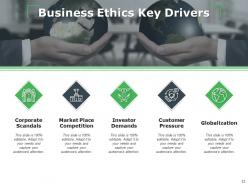
Slide 12: This slide represents Business Ethics Key Drivers as- Corporate Scandals, Market Place Competition, Investor Demands, Customer Pressure, Globalization.
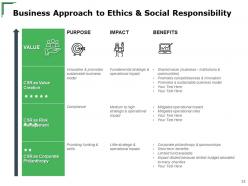
Slide 13: This slide showcases Business Approach to Ethics & Social Responsibility.
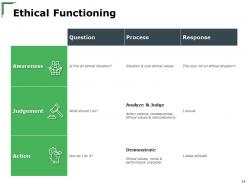
Slide 14: This slide shows Ethical Functioning in tabular form.
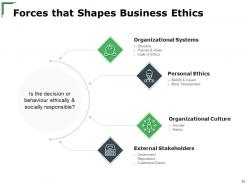
Slide 15: This slide displays Forces that Shapes Business Ethics as- Organizational Systems, Personal Ethics, Organizational Culture, External Stakeholders.
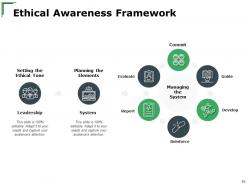
Slide 16: This slide presents Ethical Awareness Framework with categories as- Commit, Guide, Evaluate, Report, Reinforce, Develop.
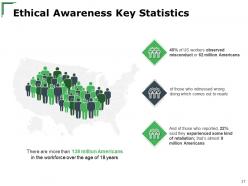
Slide 17: This slide showcases Ethical Awareness Key Statistics with related imagery.
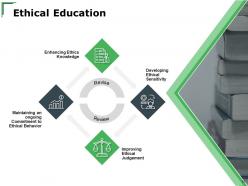
Slide 18: This slide shows Ethical Education with categories as- Enhancing Ethics Knowledge, Developing Ethical Sensitivity, Improving Ethical Judgement, Maintaining an ongoing Commitment to Ethical Behavior.
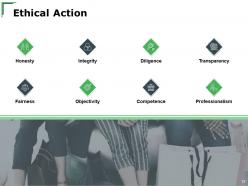
Slide 19: This slide presents Ethical Action describing- Honesty, Diligence, Transparency, Integrity, Fairness, Objectivity, Competence, Professionalism.
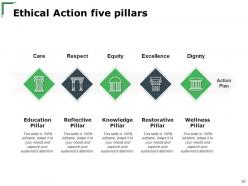
Slide 20: This slide displays Ethical Action five pillars as- Education Pillar, Reflective Pillar, Knowledge Pillar, Wellness Pillar, Restorative Pillar.
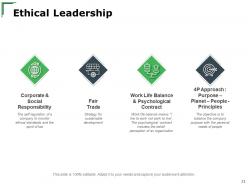
Slide 21: This slide represents Ethical Leadership describing- Corporate & Social Responsibility, Fair Trade, Work Life Balance & Psychological Contract, 4P Approach : Purpose – Planet – People - Principles.
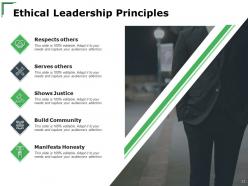
Slide 22: This slide showcases Ethical Leadership Principles describing- Respects others, Serves others, Shows Justice, Build Community, Manifests Honesty.
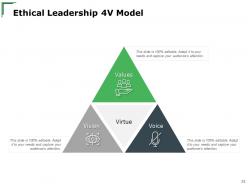
Slide 23: This slide shows Ethical Leadership 4V Model describing- Values, Virtue, Voice, Vision.
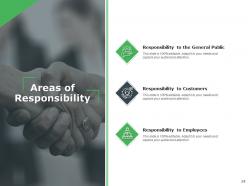
Slide 24: This slide presents Areas of Responsibility as- Responsibility to the General Public, Responsibility to Customers, Responsibility to Employees.
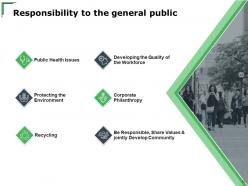
Slide 25: This slide displays Responsibility to the general public describing- Public Health Issues, Protecting the Environment, Recycling, Developing the Quality of the Workforce, Corporate Philanthropy, Be Responsible, Share Values & jointly Develop Community.
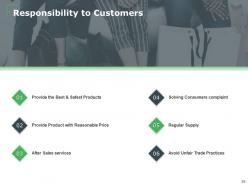
Slide 26: This slide represents Responsibility to Customers as- Provide the Best & Safest Products, Provide Product with Reasonable Price, After Sales services, Solving Consumers complaint, Regular Supply, Avoid Unfair Trade Practices.
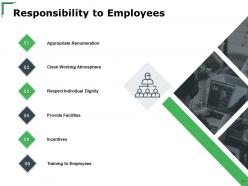
Slide 27: This slide showcases Responsibility to Employees as- Appropriate Renumeration, Clean Working Atmosphere, Respect Individual Dignity, Provide Facilities, Incentives, Training to Employees.
Slide 28: This slide displays icons for Corporate Ethics.
Slide 29: This slide reminds about 15 minutes coffee break.
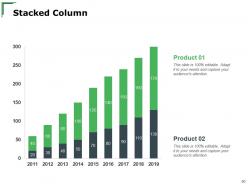
Slide 30: This slide shows Stacked Column chart with two products comparison.
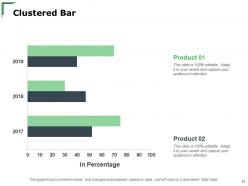
Slide 31: This slide presents Clustered Bar chart with two products comparison.
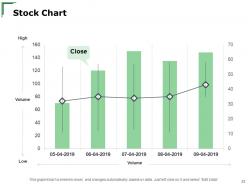
Slide 32: This slide displays Stock Chart with open, high, low and close volume.
Slide 33: This slide is titled as Additional Slides for moving forward.
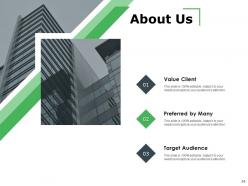
Slide 34: This is About Us slide to show company specifications etc.
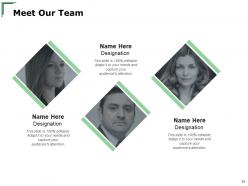
Slide 35: This is Meet Our Team slide with names and designation.
Slide 36: This is Our Mission slide with related imagery and text.
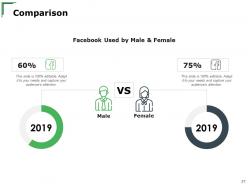
Slide 37: This is a Comparison slide to state comparison between commodities, entities etc.
Slide 38: This slide shows Mind Map for representing entities.
Slide 39: This is a Timeline slide to show information related with time period.
Slide 40: This is another slide continuing Timeline.
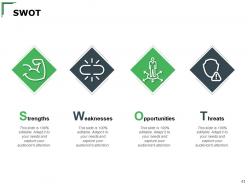
Slide 41: This is a SWOT slide. Show your firm's Strengths, Weaknesses, Opportunities, and Threats here.
Slide 42: This is a Puzzle slide with text boxes to show information.
Slide 43: This is a Venn slide with text boxes.
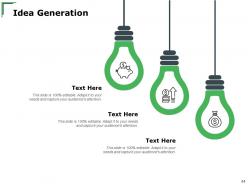
Slide 44: This is an Idea Generation slide to state a new idea or highlight information, specifications etc.
Slide 45: This is a Thank You slide with address, contact numbers and email address.
Corporate ethics powerpoint presentation slide with all 45 slides:
Use our Corporate Ethics Powerpoint Presentation Slide to effectively help you save your valuable time. They are readymade to fit into any presentation structure.
FAQs for Corporate ethics
Look, ethics aren't just some poster on the break room wall - they literally shape how everyone acts when nobody's watching. Clear standards help people make decisions without constantly second-guessing themselves. Good ethics also attract solid employees who actually want to work somewhere decent. The tricky part? Leadership has to walk the walk, not just talk about it. I've seen too many companies where managers preach integrity then throw people under the bus during crunch time. When done right though, people feel safe calling out problems instead of staying quiet and letting things blow up later.
Don't just stick ethics policies in some manual nobody opens. Be specific with real examples, skip the corporate jargon. Training helps, but honestly? Leaders need to actually walk the walk - people notice when you don't. Build it into performance reviews and daily decisions. Oh, and create safe ways for people to speak up without getting burned. The whole "annual ethics seminar" thing is pretty useless if that's all you're doing. Make it part of how you actually operate day-to-day, not some box you check once a year.
Honestly, the hardest part is juggling everyone's demands - shareholders want money, employees want fairness, customers expect you to be ethical. Short-term profits almost always clash with doing what's right. Supply chains are a total mess too because you can't watch every single supplier. Different cultures across global ops make it impossible to keep standards consistent everywhere. Oh, and here's the thing - you can't just slap ethics on after the fact when stuff hits the fan. Build it into your processes from day one or you'll regret it.
Dude, ethics basically make or break customer loyalty. People are super informed now and they'll bail on brands that do sketchy stuff - I've literally seen friends boycott companies over worker treatment. Trust takes forever to build but you can destroy it overnight. Customers want to feel good about spending their money somewhere. Transparency helps a lot, like owning up when you mess up instead of hiding behind PR speak. Bottom line? Making ethical choices isn't just morally right, it's smart business because loyal customers are what keep revenue flowing.
Dude, ethical scandals are brutal for companies. Customers bolt immediately when trust breaks down. Stock prices tank because investors panic and sell off shares. Then there's the legal nightmare - fines, lawsuits, attorney fees piling up like crazy. Good luck hiring decent people when your brand is toxic too. Wells Fargo is the perfect example - that whole fake accounts mess happened years ago and they're still trying to dig out of it. Honestly, companies should just invest in proper ethics training upfront. Way smarter than dealing with the mess later.
Honestly, automated monitoring is a game changer - it catches sketchy transactions and communications way faster than manual reviews. AI can scan through emails for compliance issues and spot patterns people totally miss. Those anonymous reporting apps are clutch too, gives employees a safe way to speak up. Digital training platforms actually track completion rates (finally, no more hunting down stragglers). The trick is weaving this stuff into what you're already doing. Most places mess up by treating tech tools like they're completely separate from their normal processes, which is kinda backwards if you think about it.
Don't wait until you're drowning to figure this out - build your framework now. Think about who gets affected, check it against company values, weigh the fallout. Get different people involved when making calls because groupthink is real. The teams that overthink this? They freeze up completely. Document why you chose what you did - trust me, someone will ask later. Oh, and make sure people feel safe calling out sketchy stuff early. That's honestly where most problems get caught before they blow up.
Dude, you're looking at potential lawsuits, regulatory fines, maybe even criminal charges if things go really sideways. The SEC will come knocking if there's ethics violations - same with DOJ for fraud stuff. Directors can get personally sued too, which is honestly my worst nightmare. Stock prices tank when this stuff hits the news. Oh, and whistleblower cases are brutal. Make sure you're caught up on compliance training and definitely flag anything sketchy to your legal team ASAP. Better safe than sorry with this kind of thing.
Honestly, you've got to look at both the hard numbers and the soft stuff that's harder to pin down. Track things like hotline reports, compliance violations, and those employee culture surveys. Turnover rates tell you a lot too. But here's the thing - data only goes so far. Regular focus groups and exit interviews will give you the real picture of whether people actually feel safe calling out problems. I'd probably start with quarterly ethics surveys and see how you stack up against other companies in your space. The ultimate test? Whether someone will report their own manager without worrying about getting fired for it.
Skip the boring PowerPoint stuff - nobody pays attention anyway. What actually works? Get people doing role-plays with real scenarios they'll face at work. Small groups are perfect for this. Have managers run monthly discussions where they talk about messy situations they've dealt with. People love hearing war stories, honestly. Case studies help too, but make them interactive. The trick is keeping it regular - like 30 minutes every month instead of some marathon annual session. Focus each one on specific stuff that matters for your industry. Way better than generic compliance training that everyone forgets immediately.
Look, CSR is just companies actually walking the walk on their values instead of just talking about them. You say you care about the environment? Cool - show me your sustainability programs. Fair wages matter to you? Then audit that supply chain and prove it. It's pretty simple really. Good ethics should drive your CSR stuff, and solid CSR programs make your company culture stronger. Honestly, half the CSR I see feels like virtue signaling, but when it's done right it's powerful. Next time you're looking at CSR ideas, just ask: does this match what we actually believe?
Dude, stakeholders literally control your whole ethics game. Customers will drop you in a heartbeat if you mess up, employees expect fair treatment and meaningful work, and investors are obsessed with ESG stuff now. The community watches everything too - social media makes it impossible to hide anything anymore. Regulators? They just follow whatever pressure these groups create. I learned this the hard way at my last job when we ignored employee feedback for months. Bad idea. You've gotta actually talk to these people regularly through surveys, meetings, whatever works. Then build their concerns into how you make decisions. Trust me, it's way easier than dealing with the backlash later.
Look, your team's gonna copy whatever you do - that's just how it works. You're transparent and honest? They'll follow. Cut corners when you think nobody's watching? Yeah, they'll pick up on that too. The tricky part is staying consistent, especially during those random Tuesday meetings where it'd be easier to just... bend the truth a little. But here's the thing - people notice everything, even the small stuff. I've seen managers wonder why their teams are sketchy when they themselves dodge accountability left and right. Start with yourself first.
You need four big things for a good ethics program. First - clear policies everyone can actually understand. Training that doesn't suck so people know what they're doing. Safe reporting where folks won't get thrown under the bus for speaking up. And honestly? Leadership has to actually live this stuff, not just give speeches about it. I've watched so many companies bomb because the C-suite preached integrity then cut corners. Oh, and you can't let things slide when someone crosses the line. Start by figuring out what you already have, then fix the worst gaps first. Make it part of how work gets done, not some yearly PowerPoint torture session.
Honestly, you don't have to pick one or the other. Build ethics into your decisions right from the start instead of slapping them on later. Companies think being ethical costs money, but trust me - scandals and lawsuits are way more expensive. Plus the whole reputation thing. Focus on what's sustainable long-term rather than quick cash grabs. Your customers, employees, AND shareholders will benefit if you're thinking beyond next quarter. Maybe start with an ethics audit? Sounds boring but you'll spot problems before they blow up. Short-term thinking is what gets most businesses in trouble anyway.
-
Excellent template with unique design.
-
Excellent products for quick understanding.
-
Very unique and reliable designs.
-
Use of icon with content is very relateable, informative and appealing.
-
good