


Corporate Mentoring Powerpoint Presentation Slides





Try Before you Buy Download Free Sample Product
 Impress Your
 Audience
 100%
100% Editable
 Save Hours
 of Time


Get the development of your employees at a lower cost by employing this content ready Corporate Mentoring PowerPoint Presentation Slides. Showcase the need for corporate monitoring such as enhancing strategic business initiatives, creating a mentoring culture, etc with our topic-specific corporate training PPT visuals. Provide the benefits of monitoring programs like talent retention, lead the way in diversity, succeed in succession planning, etc. Take advantage of the readily available workplace monitoring PPT slideshow to mention the points such as uniqueness, consistency, empower, share responsibility, etc. Describe the effective strategies for mentoring employees like commit to a plan, foster connection, survey the scene and act, look for teaching and guiding moments. Take the assistance of the professionally designed mentorship PPT templates to explain the steps for developing an effective employee mentoring program. Overcome the challenges in mentoring relationships by downloading our visually appealing business mentoring PPT presentation.
People who downloaded this PowerPoint presentation also viewed the following :
Content of this Powerpoint Presentation
Slide 1: This slide introduces the Corporate Mentoring. Add your Company Name to begin.
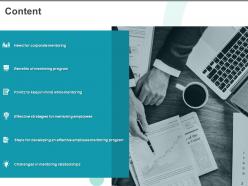
Slide 2: This slide shows the Content- Need for corporate mentoring, Benefits of mentoring program, Points to keep in mind while mentoring, Effective strategies for mentoring employees, Steps for developing an effective employee mentoring program, Challenges in mentoring relationships.
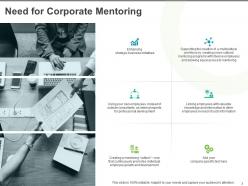
Slide 3: This slide shows the Need for Corporate Mentoring. Supporting the creation of a multicultural workforce, Enhancing strategic business initiatives, Linking employees with valuable knowledge and information to other employees in need of such information, Using your own employees, instead of outside consultants, as internal experts for professional development, Creating a mentoring “culture”—one that continuously promotes individual employee growth and development.
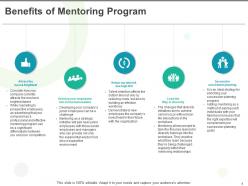
Slide 4: This slide showcases the Benefits of Mentoring Program.
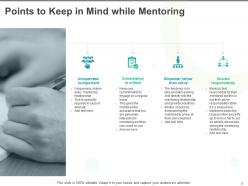
Slide 5: This slide showcases the Points to Keep in Mind while Mentoring Uniqueness is important, Consistency is critical, Empower rather than solve, Shared responsibility.
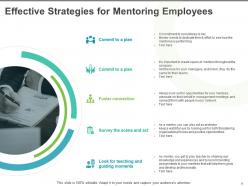
Slide 6: This slide showcases the Effective Strategies for Mentoring Employees.
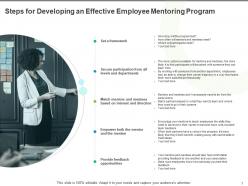
Slide 7: This slide reveals the Steps for Developing an Effective Employee Mentoring Program such as- Set a framework, Secure participation from all levels and departments, Match mentors and mentees based on interest and direction, Empower both the mentor and the mentee, Provide feedback opportunities.
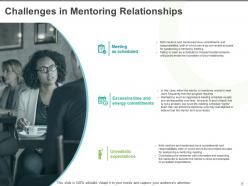
Slide 8: This slide reveals the Challenges in Mentoring Relationships like- Meeting as scheduled, Excessive time and energy commitments, Unrealistic expectations.
Slide 9: This slide is titled as Additional Slides for moving forward.
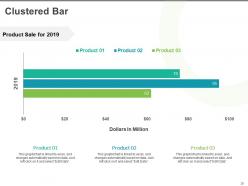
Slide 10: This slide contains an editable Clustered Bar showing the market share of products for a particular financial year.
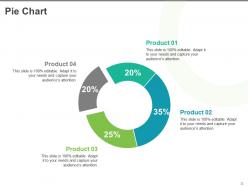
Slide 11: This slide contains an editable Pie Chart showing the market share of products.
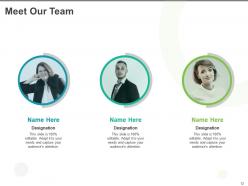
Slide 12: This slide reveals the names and designation of Our Team members.
Slide 13: This slide reveals About Us.
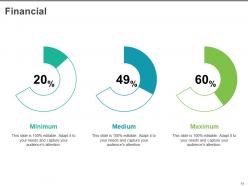
Slide 14: This slide reveals the Financial information.
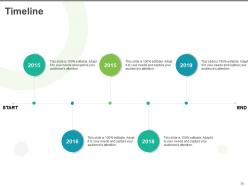
Slide 15: This slide reveals the Timeline for various years.
Slide 16: This slide reveals the Target.
Slide 17: This slide shows a Puzzle.
Slide 18: This is a Thank You slide consisting of Address, Contact numbers and email Address.
Corporate Mentoring Powerpoint Presentation Slides with all 18 slides:
Use our Corporate Mentoring Powerpoint Presentation Slides to effectively help you save your valuable time. They are readymade to fit into any presentation structure.



FAQs for Corporate Mentoring
Honestly, mentoring's pretty awesome from both sides. As a mentee you'll learn way faster, get real career advice, and meet people you'd never connect with otherwise. Having someone genuinely invested in your success? That's gold. Mentors get different perks - you sharpen your leadership game and see things through fresh eyes. Plus there's something really satisfying about watching someone grow. Oh, and it keeps you plugged into what's actually happening day-to-day, which is clutch. I'd say go for whichever role fits - most people are surprised by how much they enjoy it.
Honestly, forget about just matching by seniority - that's how you end up with terrible pairings. Focus on what your mentee actually wants to learn and find someone who's been there. I've watched so many mentoring relationships fall apart because they paired a super direct person with someone who needed more hand-holding (or vice versa). Give both sides questionnaires about their goals, how they communicate, and when they're free. Then do like a 3-month trial run before anyone commits to the long haul. Oh, and definitely survey your potential mentors first about what they're good at and their style.
Dude, culture is literally make-or-break for mentoring programs. I've watched amazing initiatives crash and burn in toxic workplaces where nobody actually gives a damn about development. Meanwhile, companies with so-so programs still see great results because people genuinely want to help each other grow. Your senior folks need to actually *want* to mentor - not just get voluntold into it. Plus you need an environment where screwing up doesn't equal career death, you know? Honestly, skip the fancy program design and first figure out if your company culture even supports what you're trying to build.
Honestly, tech makes mentoring programs so much less of a headache. Matching platforms can pair people up based on actual compatibility instead of random assignments - way better results. Video calls are obvious for remote teams, but I'm obsessed with apps that send check-in reminders and track goals automatically. Some even suggest conversation starters when things get weird (lifesaver). The data you get back is actually useful too - shows what's bombing vs working. My advice? Don't go crazy at first. Just grab one tool that fixes your biggest problem and build from there.
Track the obvious stuff first - retention rates, promotion numbers, how mentees score on skill assessments. But honestly? The survey feedback is where you'll find gold. People dropping out mid-program is your biggest warning sign. Mentor satisfaction matters just as much as mentee results - I learned that one the hard way. Don't go crazy with data at first though. Pick 3-4 metrics you actually care about and check them quarterly. The qualitative stuff from engagement surveys often tells a better story than spreadsheets anyway.
Honestly, just work with people's crazy schedules instead of fighting them. Try 20-minute monthly check-ins rather than those marathon hour-long things nobody has time for. Some companies I know throw mentoring into meetings that already exist, or they'll do quick virtual coffee breaks. Oh, and definitely tell people upfront what they're signing up for time-wise - nobody likes getting blindsided when they're already swamped. Group sessions work great too since you're helping multiple people at once. The whole trick is designing around what's actually realistic, not some perfect world scenario that doesn't exist.
Honestly, I'd start with communication - both writing and presenting stuff clearly. Strategic thinking is massive too. Help them zoom out from their day-to-day grind and see the whole picture, you know? Networking matters way more than people admit. Half of career success is literally about relationships and connecting well with others. Obviously don't skip the technical skills for their specific role, plus solid problem-solving abilities. The real trick though? Figure out what gaps they actually have first. Don't just assume what they need to work on.
So basically you flip the script - pair junior people with senior leaders, but the younger person mentors UP. Works really well actually. Junior staff bring different tech skills, cultural perspectives, all that fresh thinking that executives usually miss. Plus they're brutally honest about what's broken (no corporate filter yet lol). Creates this safe space where diverse ideas actually surface instead of getting buried under layers of hierarchy. Both sides win - exec learns new stuff, junior person builds confidence. I'd start small though. Maybe one monthly coffee between someone from gen z and a boomer executive from another department?
First, figure out what you're actually trying to achieve - leadership skills, technical stuff, career growth, whatever. Then set up applications for both sides and match people based on personality fit, not just who's been around longest. The matching is honestly where most places screw this up by going too fast. Give your mentors some basic coaching training first. Monthly check-ins work pretty well in my experience. Oh, and definitely start with like 10-15 people max as a test run before going big. You'll want feedback systems to see what's working and what isn't. Basic meeting guidelines help too so people aren't just winging it.
Don't just wing it and hope for the best - you've gotta bake equity right into the program design. Look beyond just the C-suite when picking mentors. High performers from different levels work great, especially if they bring diverse perspectives. Skip the whole "volunteer yourself" approach because honestly? Lots of people won't speak up even when they should. Reach out directly to underrepresented folks and anyone working remotely (they always get forgotten). Structure your matching process - none of that networking-over-golf nonsense. Oh, and track your demographics data religiously so you can catch problems before they snowball.
Make it feel natural, not like some corporate obligation. Coffee every few months works great - or just casual texts checking in. LinkedIn's perfect for staying updated on their career stuff. Honestly, the best mentoring relationships I've seen happen when both people actually get something out of it, you know? Maybe set up an alumni thing where former mentees can help new people coming through. But definitely ask your current pairs what they'd want first - they'll have way better ideas than whatever you're brainstorming. Nobody wants forced friendship vibes.
Make feedback a regular thing, not just when something goes wrong. I always build check-ins into every session - ask what's working, what sucks, where they're stuck. Here's the thing though: make it go both ways! Some of my biggest "aha" moments happened when mentees told me I was missing something obvious. Skip the generic "good job" stuff. Give specific examples tied to their actual goals. Oh, and start your next session with this: "What kind of feedback would help you most right now?" Trust me, it changes everything.
Yeah, mentoring programs actually work really well - retention jumps about 20-25% from what I've seen. People feel way more connected when they have someone showing them the ropes and mapping out where their career could go. It's like having a work ally, you know? Makes total sense that they'd want to stick around longer. Oh, and don't go crazy with it right away. Start with maybe 10-15 pairs first to see how it goes. Way easier to fix problems when you're not dealing with hundreds of people at once.
Honestly? Skip the formal HR nonsense - nobody wants another mandatory program. Get your leaders mentoring first (seriously, if the CEO's doing it, everyone else will follow). Set up casual stuff like lunch chats or those peer circles where people just swap knowledge naturally. The companies that nail this don't make mentoring feel like work. They make it stupid easy to connect across departments and actually celebrate when people learn cool stuff. Oh, and give folks time for these conversations - can't happen during a five-minute coffee break. Track the wins too so you've got real stories to share.
Formal mentoring is like having official company programs - you get assigned someone, there's goals, regular meetings, the whole nine yards. Great for onboarding new people or when you need consistent career development. Informal mentoring? That just happens naturally through relationships you already have. Works better for quick problem-solving or learning company culture stuff. Both are solid options honestly, just depends what you're after. I'd probably start informal first - see who you click with - then maybe make it official later if it's really helping and you want more structure to it.
-
Understandable and informative presentation.
-
Best Representation of topics, really appreciable.