

Healthcare marketing powerpoint presentation slides




Try Before you Buy Download Free Sample Product
 Impress Your
 Audience
 100%
100% Editable
 Save Hours
 of Time


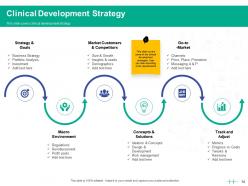
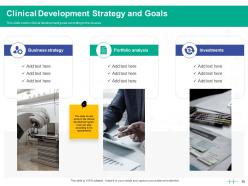
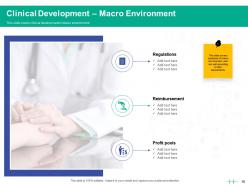
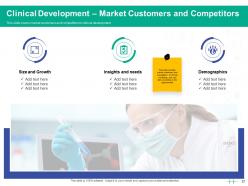
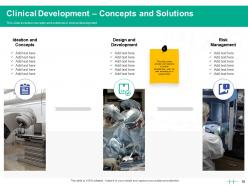
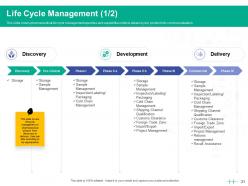
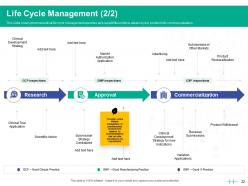
Build an open line of communication with your patient audience by creating trust and piquing interest using our Healthcare Marketing PowerPoint Presentation Slide. The PPT template can be used by healthcare professionals and students to give an overview of the desired healthcare firm. The PowerPoint Slideshow highlights the drug development process starting from drug discovery, to preclinical and clinical trials, fda review, and then manufacturing. Use the launch planning PPT design to showcase a 24-month drug launch plan outline with an integrated approach. Elucidate the product positioning perceptual map where the user can position his brand with respect to risk and fda approvals, using this product positioning PowerPoint template. You can also emphasize the pre-launch activities, pre-launch strategy, gap analysis, cynical development strategy and goals, macro-environment, market customers, and competitors as given in the clinical PPT presentation. This life cycle management PowerPoint design covers the pharmaceutical management expertise and capabilities from discovery to delivery.
People who downloaded this PowerPoint presentation also viewed the following :
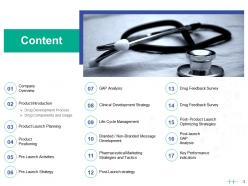
Content of this Powerpoint Presentation
The role of marketing in healthcare has become critical. It is no longer limited to promoting services or products but rather about building relationships of trust and delivering value to patients. Healthcare firms, big and small, are recognizing the role of strategic marketing in fueling growth, building brand equity, and driving sustainability in a competitive environment.
For this reason, SlideTeam Healthcare Marketing PowerPoint Presentation Slides is intended to be an invaluable source for professionals and future industry leaders.
The benefit of these slides is that they were created by professionals for professionals. This, however, does not mean that students will not benefit from using them as well. For newcomers in the industry, these slides serve the purpose of helping individuals structure the insights that stem from them.
What makes these slides unique is the detailed overview of the drug development process, from discovery to manufacturing. Users will gain insights into preclinical and clinical trials, FDA reviews, and launch planning.
Let us proceed and unwrap these 100% editable and customizable templates, which will take you a step closer to job opportunities in the field of healthcare marketing.
Check out the blog for the Healthcare Marketing Plan Powerpoint Template to learn more details.
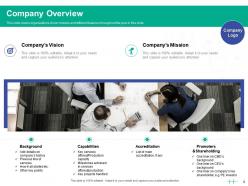
Template 1 - Company Overview
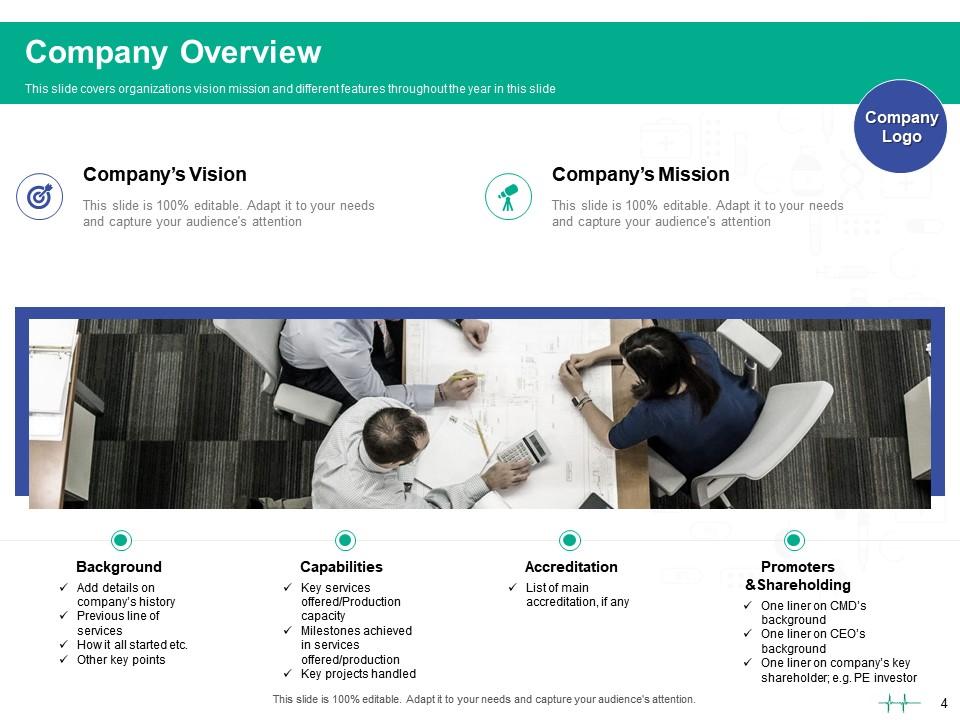
This slide is intended to be the first, most fundamental slide in our healthcare marking presentation. It provides a basic summary of what our organization is and tells the audience about it. To begin with, it outlines our vision and mission, explaining the purpose and direction of our company. In addition, this slide can be a brief overview of our history and a list of significant milestones demonstrating growth and transformation. Insights about our background and heritage would also represent our capabilities and accreditations, explaining to the audience why they should trust our service. In addition, it could describe our promoters and differentiate between operational efforts.
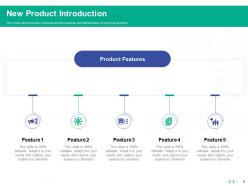
Template 2 - New Product Introduction
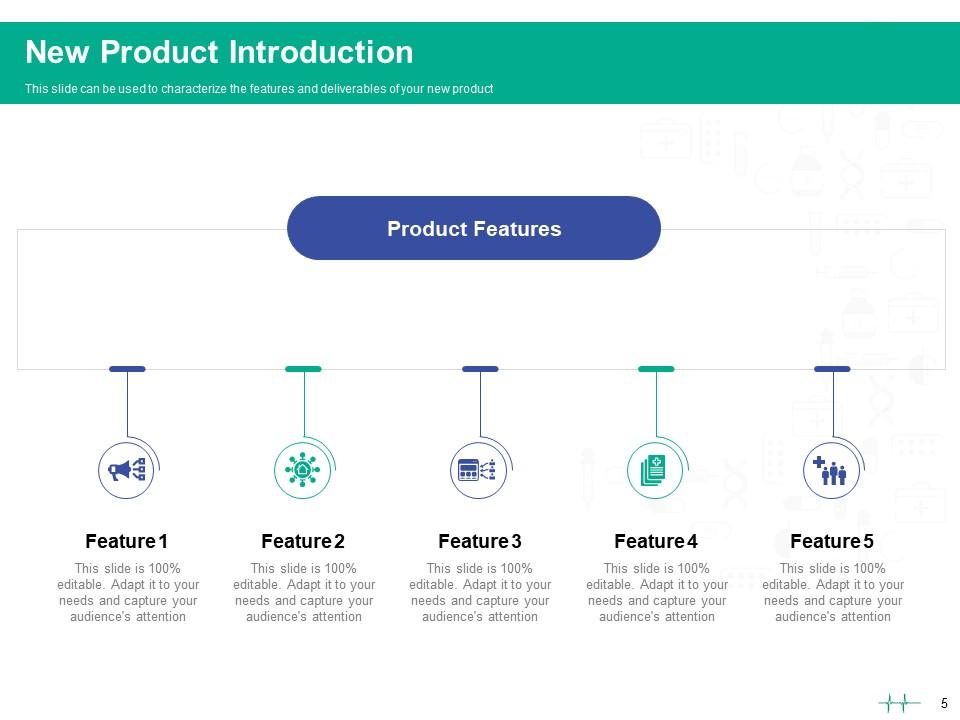
This slide showcases the essence of unveiling our new healthcare innovation. This type of slide enables us to present our product in all its glory, explaining formats that meet requirements of workers. This slide helps introduce our new product to the target audience and highlights its features and benefits. Moreover, it allows us to illustrate our product in practice, describing the problems it is designed to address.
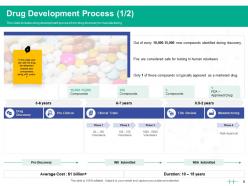
Template 3 - Drug Development Process Part 1
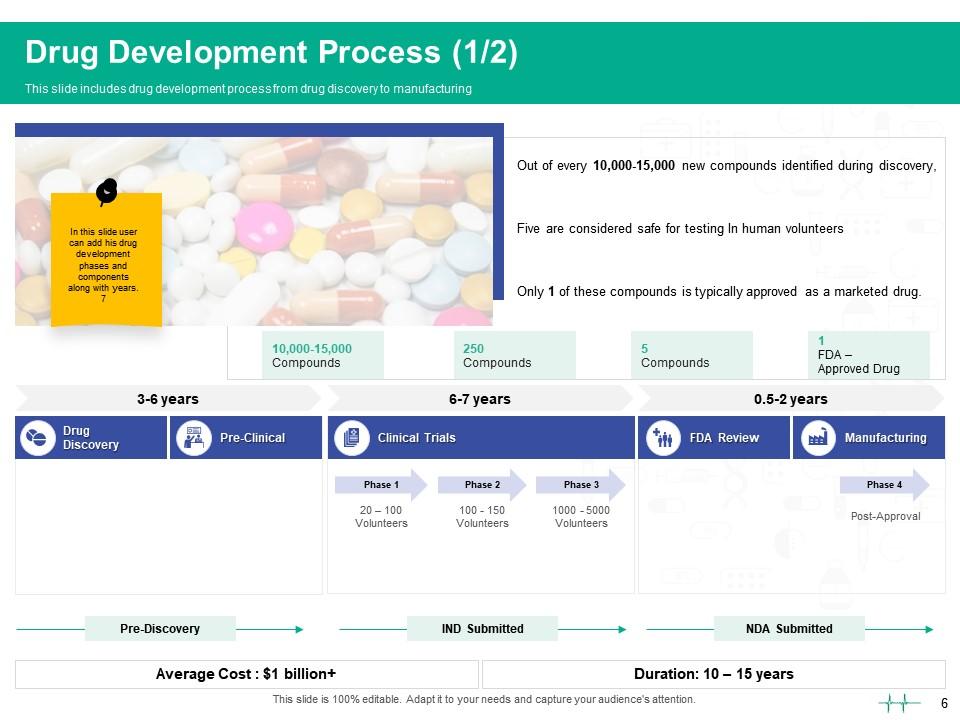
This slide presents a detailed path of steps that are required to be taken to promote pharmaceutical innovations. Each stage of this course is described carefully, from the process of drug discovery to efficient manufacturing. Its primary purpose is to educate the meeting’s attendees about the complexity of the drug development processes. The latter is bound to transform the initial idea into a product accessible to the market. As the slide depicts the processes of preclinical research, clinical trials, the role of the FDA, and production, the audience realizes the sight of our dedication to the provision of safe, effective therapy of the highest quality.
Template 4 - Drug Development Process Part 2
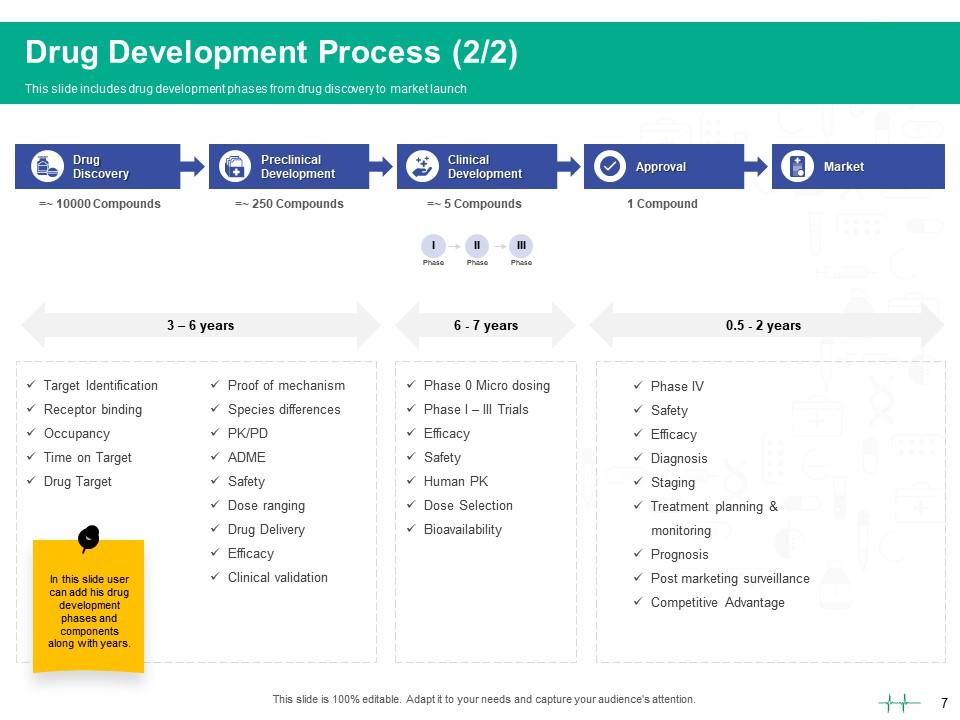
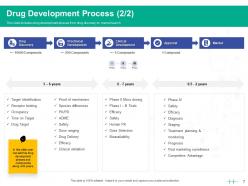
This slide digs into the delicate stages of pharmaceuticals opening up to the public. From drug discovery to the all-important launch, phase-by-phase descriptions explain it all, providing my audience with a detailed account of how the process unfolds. Describe the key phases, such as preclinical and clinical development, as well as the approval of tests at the end of the production process.
Template 5 - Drug Components and Usage
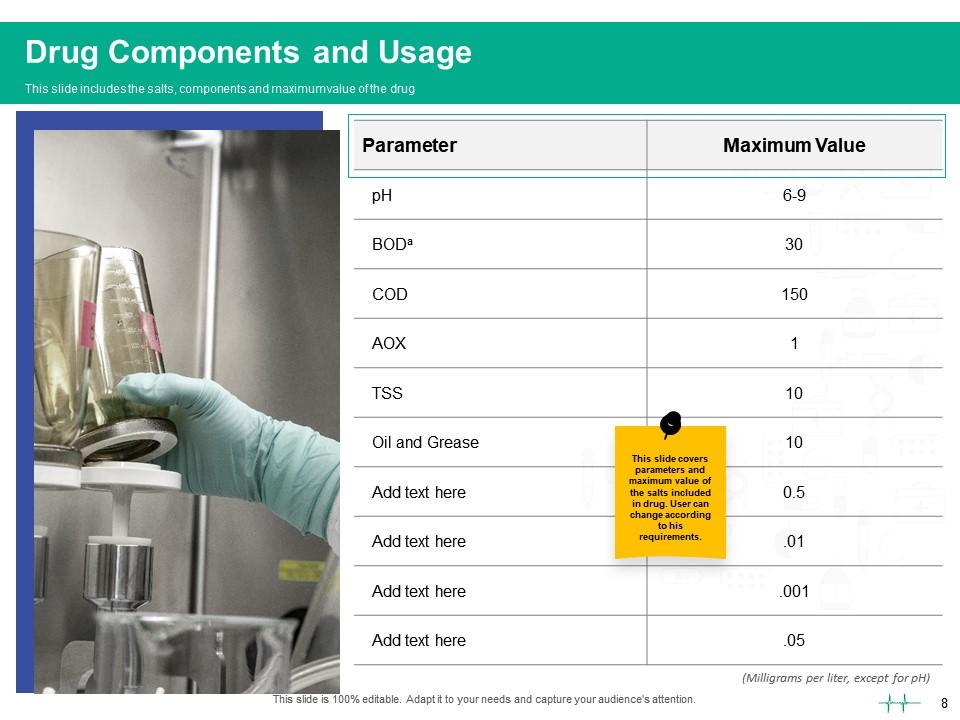
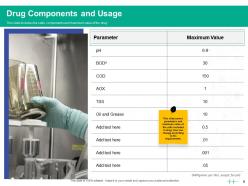
This slide offers data on sales indicators, provides a visual representation of them, and emphasizes the profound analysis of the maximum value of each component. The pH, BOD, COD, AOX, TSS, and oil and grease numbers have been detected, and the maximum for each indicated. The template is a comprehensive guide to understanding the structure and the way the drug is used. It equips prospective clients and healthcare workers with information to make an informed decision. Overall, the slide is based on a visual representation, and the numbers provided are short.
Look out for our blog on healthcare marketing four-page brochure templates for more details.
Template 6 - Product Launch Planning
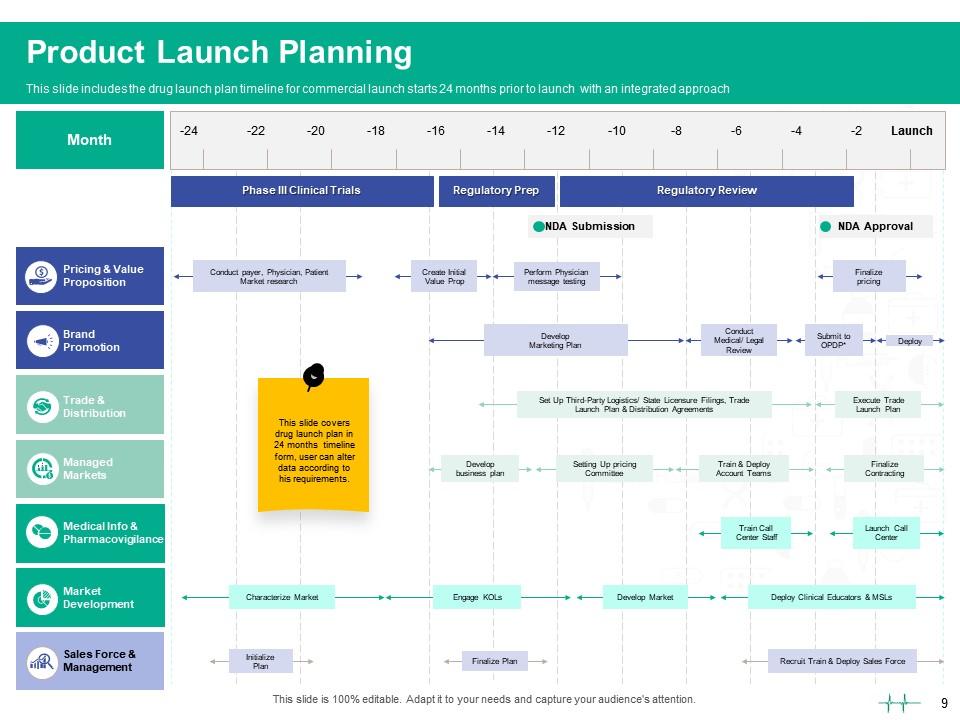
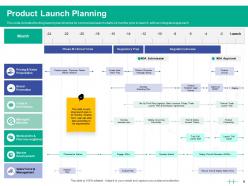
This slide is the blueprint for a commercial introduction of our pharmaceutical innovation. This slide outlines the comprehensive timeline, starting 24 months before the launch, and provides an integrated approach, ensuring that all components are executed on time. Key components are clinical trials, regulatory preparations and reviews, pricing, and value propositions. Notably, the slide lists the effort put into brand promotion, trade and distribution channels, managed marketing efforts, and market development.
Template 7 - Product Positioning
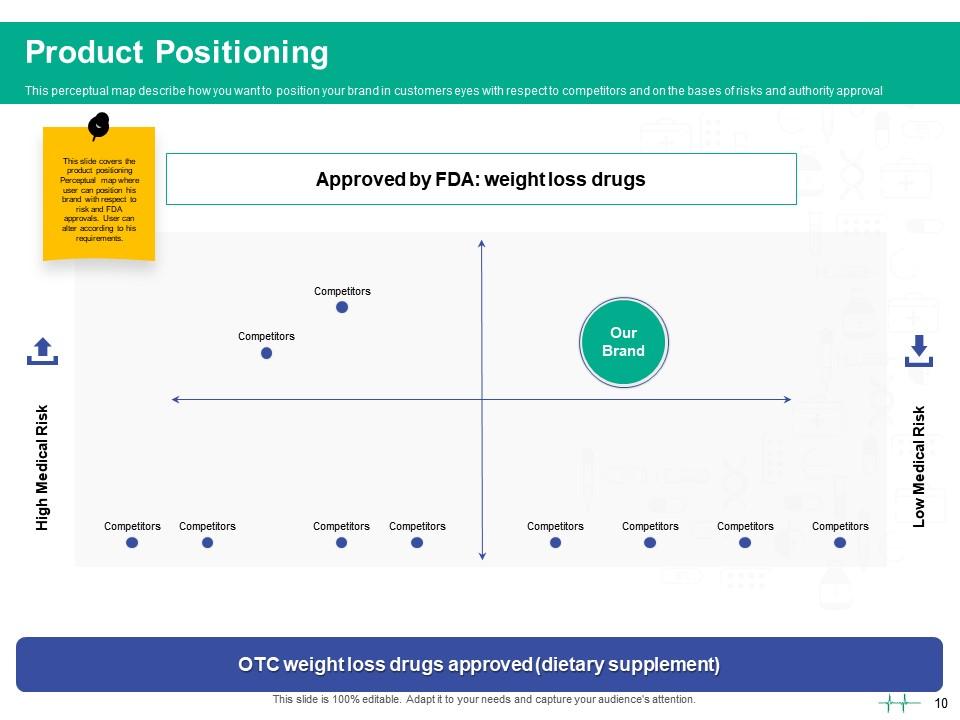
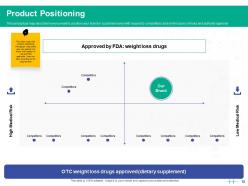
This slide illustrates our strategic method of placing our brand within the map of competition in the healthcare market. Using a perceptual map, the slide shows how we intend to place our product in the customer’s view in comparison with other products via medical risk and authorities’ approval. The slide is a guide to establishing a competitive advantage and customers’ preferences for our product.
Template 8 - Pre-Launch Activities
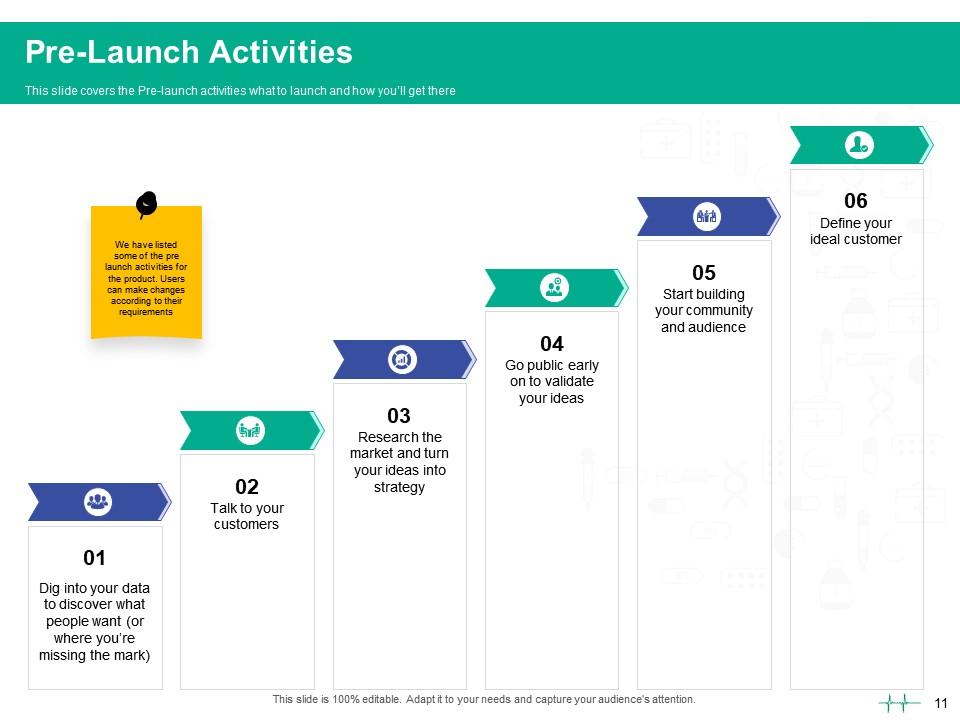
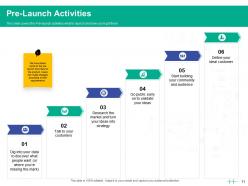
This slide outlines, in brief, the very first steps crucial to laying a foundation of firm concentration on a successful product launch in the healthcare market. It demonstrates the multitude of strategic approaches, such as getting knee-deep in the weeds surrounding data to see better, becoming engrossed in chit-chats to grok something of need from a customer, conducting any number of takes on research to come up with innovative ideas, or getting a city held in firm anticipation. In addition, it describes the importance of defining where the customer is at, and what the road from choosing to piloting a product on the market looks like.
Template 9- Pre-Launch Strategy
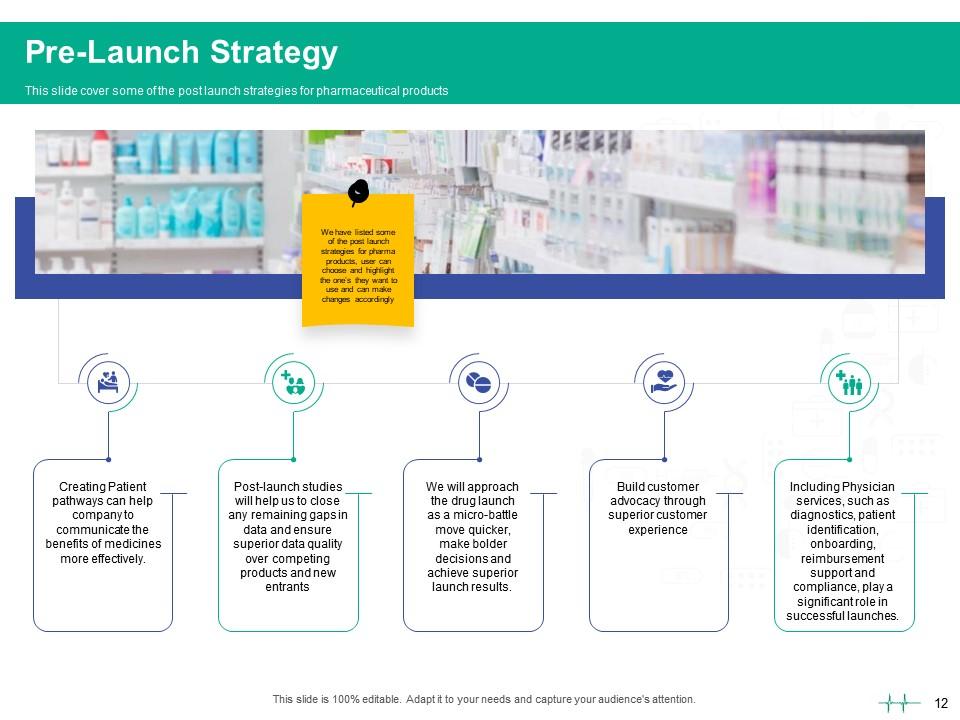
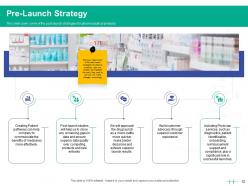
This slide illustrates the strategic details of the preparation of the pharmaceutical product launch. First, it provides the concept of patient pathways that should be implemented to ensure the stakeholders are adequately communicated. Moreover, the slide reveals the importance of post-launch studies since there might be any data gaps remaining. Thus, there is a need to improve and optimize the delivered solutions continuously. Finally, customer advocacy should be developed by providing a superior customer experience. In other words, the template offers critical aspects of proactive and customer-centric operation that should be executed before the beginning of the launch.
Template 10 - Gap Analysis

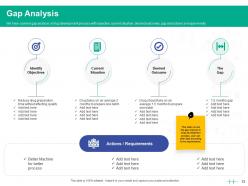
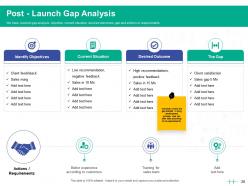
This slide is a powerful tool that offers a systematic approach to the evaluation and resolution of discrepancies in drug development. Its most significant advantage is that it focuses on the issue and facilitates determining objectives, current status, desired results, and gaps. By defining them, the slide offers a clear vision of where we are in comparison with where we aim to be. In addition, the determination of distinct supplementation or subtraction required for successful work allows for overcoming these gaps and improving the process. Finally, this tool gives stakeholders everything they need to make fully informed decisions and develop targeted responses.
Bottom Line
The slide precisely, with the 24-month drug launch plan outline and integrated approach, will enable users to stay on top of the intricacies of the pharmaceutical industry. Moreover, the slides cover other, more advanced concepts, such as product positioning, perceptual maps, pre-launch activities, gap analysis, and lifecycle management. This way, whatever your goal may be – finalizing a marketing strategy or trend analysis, this set of slides has covered you. Explore and download for the best use.
Discover our blog on healthcare marketing engagement advertising strategies consumerized automatically.
Healthcare marketing powerpoint presentation slides with all 39 slides:
Use our Healthcare Marketing Powerpoint Presentation Slides to effectively help you save your valuable time. They are readymade to fit into any presentation structure.
FAQs for Healthcare marketing
Focus on messaging that actually speaks to patients - what are they worried about? Build trust with real testimonials and educational stuff that helps them understand your services. Local SEO is huge since everyone searches "dentist near me" or whatever. Social media helps too for connecting with your community. Healthcare advertising has crazy strict rules though, so definitely get that compliance piece right or you're screwed. I'd honestly start by looking at where you're losing people in your current patient journey - like, are they bouncing off your website or not booking after initial calls? Multi-channel outreach works best but figure out your weak spots first.
Honestly, start with just one platform - Facebook or Instagram work well for building community. Post educational stuff and patient success stories (just watch those HIPAA rules obviously). LinkedIn's solid if you want to establish thought leadership. Behind-the-scenes content showing your staff actually gets great engagement. Health tips, team spotlights, celebrating milestones - that kind of thing works. Don't be all salesy though, nobody wants that. Actually respond when people comment or message you. I'd say consistency beats perfection here. Track what your audience likes and lean into it. The authentic, helpful approach always wins over pushy marketing.
Honestly, patient education is like the secret sauce for healthcare marketing. You build real trust by teaching people about their conditions or treatments instead of just trying to sell them stuff. Blog posts about procedures, symptom videos, health tip newsletters - that kind of thing actually works. People love learning something useful, and it shows you know your stuff before they even walk through your door. Way more effective than being pushy. Just make sure it's actually helpful and not some thinly disguised sales pitch - people see right through that garbage. It's basically showing your expertise while being genuinely helpful.
Honestly, data analytics is a total game-changer for stopping the guesswork. You'll finally know which campaigns actually book appointments instead of just burning budget. I'd start with tracking your current stuff properly first – boring but necessary. Then you can see where people bail out of your funnel and figure out your best patient segments. A/B test literally everything once you're set up. Subject lines, ads, landing pages... it all matters. The best part? You'll know exactly which channels give you real ROI instead of wondering if those Facebook ads are worth it.
Look, healthcare marketing is basically about three things: don't lie, protect privacy, and don't prey on vulnerable people. FDA and FTC will come for you hard if you make bogus treatment claims - learned that one the hard way at my last job. Get consent before using any patient stories or data, obviously. And targeting people with serious health issues? Be really careful there, especially mental health stuff. I always ask myself if I'd be okay with my mom getting marketed to like this. When you're unsure, just run it by legal first. Better safe than sued, right?
Honestly, consistency is everything - your website, social media, how staff picks up the phone, all of it needs to match. Trust me, healthcare is 100% about trust, so being genuine works way better than fancy marketing. Google reviews will make or break you (and yeah, patients actually read every single one). Instead of just listing what services you offer, share real patient stories and outcomes. People relate to actual experiences, not medical terminology that sounds like a textbook. Oh, and definitely start by checking what people are already saying about you online - then use that to shape how you want to be seen.
Honestly, I'd go with Google ads first - that's where people search when something's actually wrong. Facebook might sound weird for healthcare but trust me, their targeting is insane. You can hit people by age, location, even major life events. Email to your current patients is pure gold though, since they already know you. Those three are really the holy trinity - Google, Facebook, and email campaigns. If you're only doing one thing right now, start with Google. You'll probably see results pretty quick and it's easier to track than the other stuff.
So you'll want to team up with local groups that people already trust - think community centers, churches, that sort of thing. Translation is obvious but don't forget the visuals too. Those generic stock photos are pretty much useless here. Each group has different hangups - maybe it's tech stuff, language barriers, or they're worried about privacy (honestly can't blame them). Some folks would rather stick with WhatsApp than download your app, and that's their call. Oh, and definitely test your messaging with actual focus groups first. Their feedback beats whatever you think will work.
Honestly, millennials can smell fake marketing from a mile away, so don't even try the salesy stuff. Hit them on Instagram and TikTok with content that actually teaches something useful. Mobile optimization isn't optional - they're glued to their phones. Online booking and telehealth options are must-haves because convenience wins every time. Patient testimonials work great, but make them feel real. Oh, and they'll research the hell out of you before booking, so peer reviews matter. Start by checking what your digital presence looks like now - probably needs more educational content that helps rather than just promotes your services.
So content marketing is basically gold for healthcare practices. You're showing off your expertise before people even walk through your door - think of it as warming them up ahead of time. Plus it keeps current patients thinking about you between visits, which is smart business honestly. I'd start with whatever questions you hear constantly from patients (trust me, there's probably like 5 that come up every week). Turn those into blog posts or videos. It's way more effective than people realize because you're building trust while they're just browsing online.
Dude, local SEO is everything for healthcare. Think about it - when's the last time you searched for a doctor without adding "near me"? People want someone close by, obviously. Your Google My Business profile needs to be solid, and those patient reviews? Pure gold for getting appointments booked. Focus on stuff like "dermatologist downtown" or whatever specialty you're in. Oh, and don't forget local citations - basically just getting your practice listed everywhere online. It's honestly where most of your new patients will come from since healthcare is still super location-based.
Honestly, patient testimonials are your secret weapon. Put them right on your homepage where people can't miss them. Video testimonials work amazing on social media - way more engaging than text. I'd also sprinkle quote snippets into your email campaigns. Push hard for online reviews on Google and Healthgrades. People scroll through those religiously before picking a doctor. Just make sure you get consent first (boring but necessary). Here's the thing - patients trust other patients way more than your fancy marketing copy. Real stories beat polished corporate stuff every single time.
Ugh, compliance is the absolute worst part. Legal has to approve literally everything, so your timelines get completely wrecked. HIPAA means you can't touch half the targeting tactics that crush it in other industries. One sketchy word choice and you're either getting slapped by regulators or losing patient trust - honestly healthcare people are already suspicious of any marketing (can't blame them though). Oh and patients want education first, not some pushy sales pitch. My biggest tip? Always pad your campaign timeline for those compliance reviews or you'll be scrambling.
Track your patient acquisition costs vs lifetime value - that's where the real ROI lives. Make sure your Google Analytics talks to your CRM (seriously, do this integration now or you'll hate yourself later). Attribution tracking is huge so you know which campaigns actually bring in appointments, not just random website clicks. Cost per new patient, revenue per marketing dollar, patient retention by channel - follow people through their whole journey with you. Oh, and audit whatever data you're already collecting first. You might already have everything you need sitting right there.
Dude, the healthcare tech stuff is getting wild. Machine learning can predict health trends and personalize outreach now. VR is actually pretty cool - patients can literally see their upcoming surgery beforehand, which is crazy when you think about it. Chatbots handle basic questions 24/7. Telehealth exploded after COVID obviously. Your wearables give real-time patient data that's super useful. Predictive analytics spot at-risk patients early too. Honestly, I'd start small though - maybe just a scheduling chatbot or use AI for better email segmentation. Don't try to do everything at once.
-
Perfect template with attractive color combination.
-
The content is very helpful from business point of view.
-
Perfect template with attractive color combination.
-
Illustrative design with editable content. Exceptional value for money. Highly pleased with the product.
-
Professional and unique presentations.
-
Innovative and Colorful designs.
-
Unique design & color.
-
Excellent template with unique design.