


Pharma company management powerpoint presentation slides




Try Before you Buy Download Free Sample Product
 Impress Your
 Audience
 100%
100% Editable
 Save Hours
 of Time


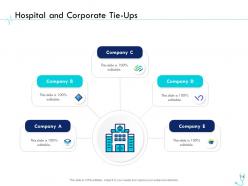
Introduce the measures for a safe and secure public health system by employing our Pharma Company Management PowerPoint Presentation Slides. Mention the key market trends related to robotics, ingestible sensors, nutrition technology, safety-focused wearables, mobile apps, and skintimate technology using these medical industry PPT templates. Take advantage of this content-ready health sector PPT slideshow to showcase global medical statistics in a well-organized format. To illustrate the building block of an optimized public health system, you can select these professionally designed nursing management PPT layouts. Pick this pharmaceutical management PPT presentation to efficiently display the flow of essential medical services. Our healthcare development PPT themes are well-formulated to exhibit the hospital and corporate tie-ups through various included charts, graphs, and tables. Impress the audience by highlighting the operating model of the biotech sector through these hospital management PowerPoint slides. Clearly define the healthcare finance policy with the medical sector administration PowerPoint presentation. Download this health industry PowerPoint deck to prepare an attractive yet informative presentation for your audiences.
People who downloaded this PowerPoint presentation also viewed the following :
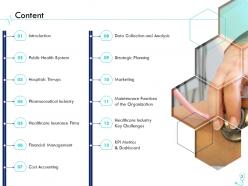
Content of this Powerpoint Presentation
Corporates who are in the pharma business line work in a highly restricted environment, requiring strict follow-ups to regulatory compliances. These regulations are related to medicine development, manufacturing, distribution, and marketing. Moreover, any new development essentially requires approvals, maintaining quality standards, monitoring, and reporting adverse events. Therefore pharmaceutical firm management is necessary to supply high-quality products to customers on time. This involves a meticulous set of processes between suppliers, manufacturers, retailers, and customers that includes supplying materials, information, and cash flow.
Moreover, these companies need to train people to manage pharmaceutical industrial units and their related sectors. This practice will help employees in planning and operating management techniques, identifying and solving management problems, and acquiring consultancy skills. This PPT Presentation on pharmaceutical management covers all aspects from training employees to helping in their crucial decision-making that'll ultimately reflect on the company image. Let’s explore the top slides of this PPT Presentation.
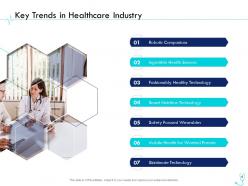
Template 1: Key Trends in Healthcare Industry

Healthcare practitioners must be adaptive, quick-thinkers, and flexible to satisfy the demands of their patients properly. This PPT Slide will help you sort out the seven key trends in the healthcare industry easily. The trends that are mentioned in the presentation template are Robotic companions, Ingestible health sensors, Fashionably healthy technology, Smart Nutrition Technology, Safety Focused Wearables, Mobile health for worried parents, and Skintimate technology. These trends are essential to understand the market and demand.
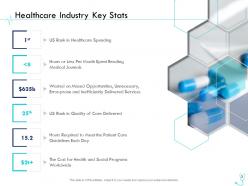
Template 2: Healthcare Industry Key Stats
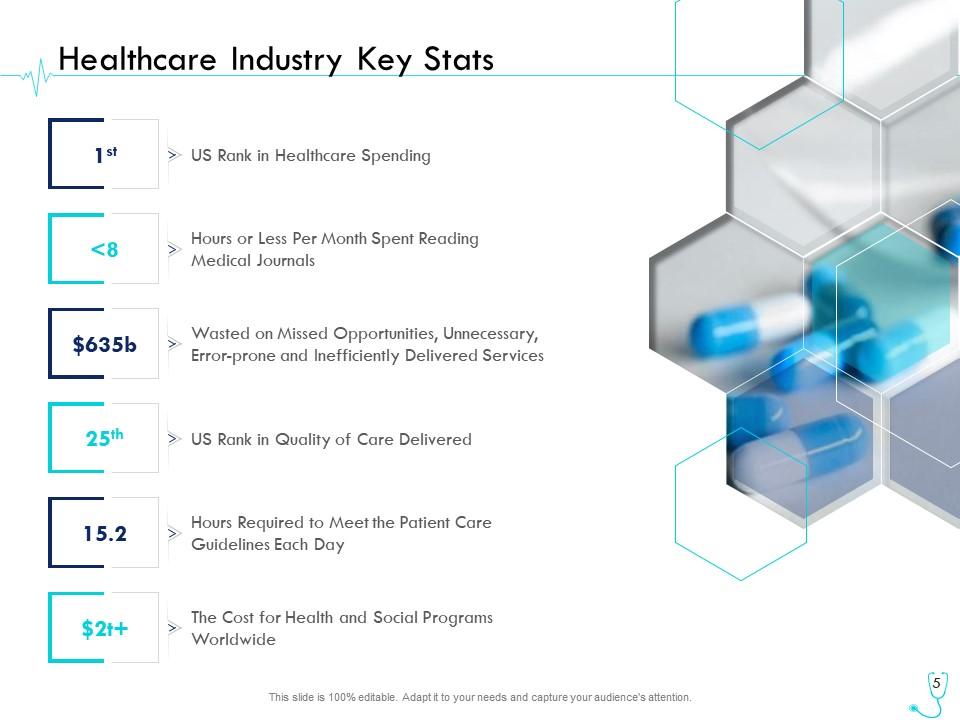
Discuss facts and figures related to the healthcare industry in your region with this PPT Slide. Reveal the average expenditure on useful activities and money wasted on missed opportunities and inefficient services related to pharmaceutical business. Specify the hours required to meet patient care and the overall cost of health and social programs. Draw the comparison in terms of cross-checks numbers using this PPT Slide. The healthcare sector is expanding globally, creating more employment and generating more income in the process. Our PPT Design will help your audience enhance their knowledge about the healthcare industry's statistics.
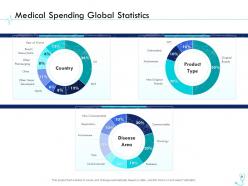
Template 3: Medical Spending Global Statics
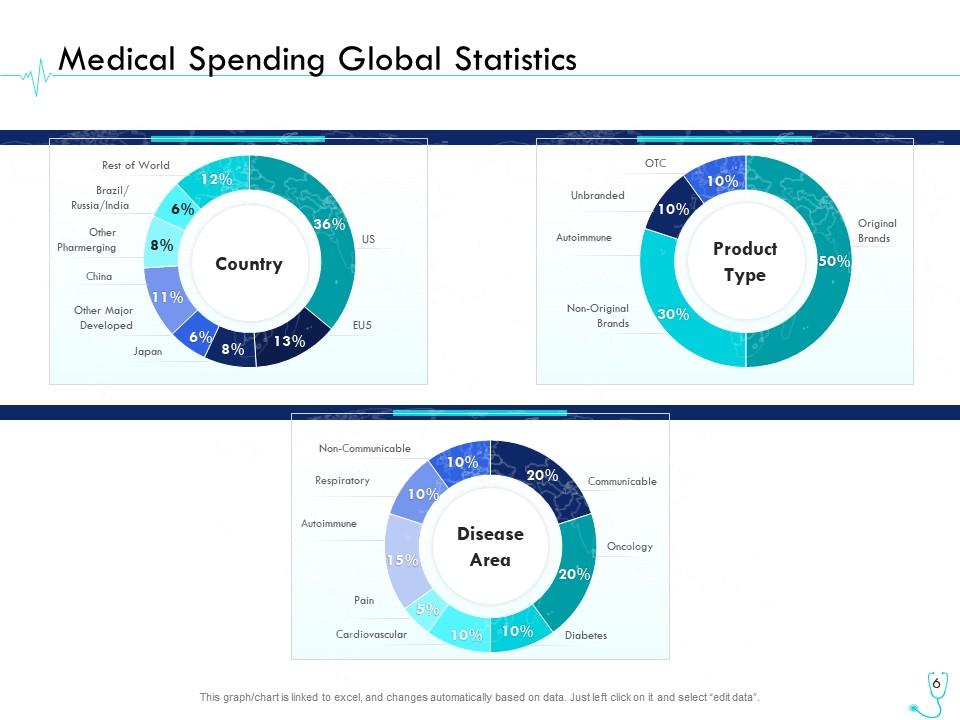
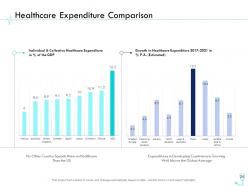
This PowerPoint Slide statistically displays the worldwide amount spent on medical healthcare. Use the first chart to display the highest to lowest percentage of the amount spent on medical care by the countries as shown. The second chart can be used to showcase the percentage of the type of product which is original brand, non-original band, unbranded, and OTC. The third and the last chart provide information about the disease-based expenses, which includes diabetes, infectious, autoimmune, respiratory, non-communicable, cardiovascular, and pain. With the help of our PPT Design, you can gain more knowledge about global statistics in healthcare.
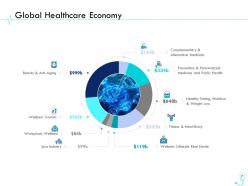
Template 4: Global Healthcare Economy
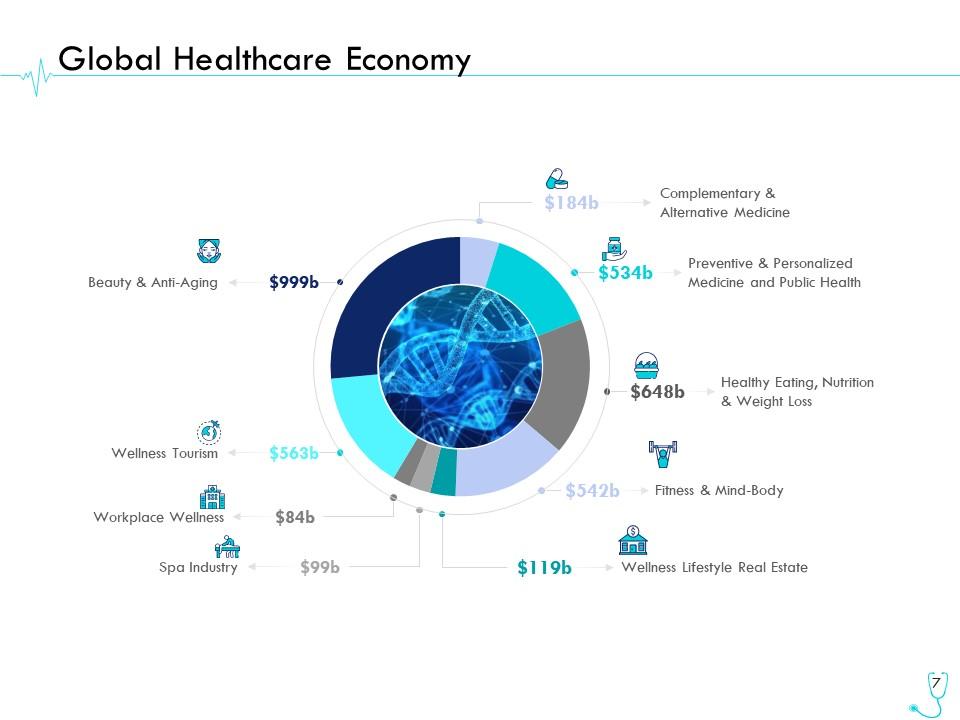
The healthcare industry plays an important role in facilitating healthcare value, putting the needs of the patient first, and upgrading healthcare outcomes worldwide. In this PPT Layout, we can observe the different types of industries and the money invested in them with this Excel-lined pie chart template. Beauty & Anti-aging, fitness & mind-body, medicine & public health, spa industry, complementary & Alternative Medicine, and other healthcare industries can be compared in terms of their economy.
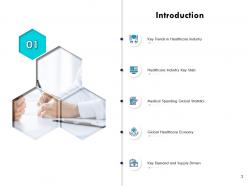
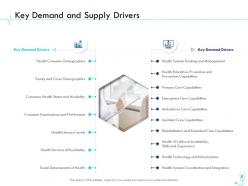
Template 5: Key Demand and Supply Drivers
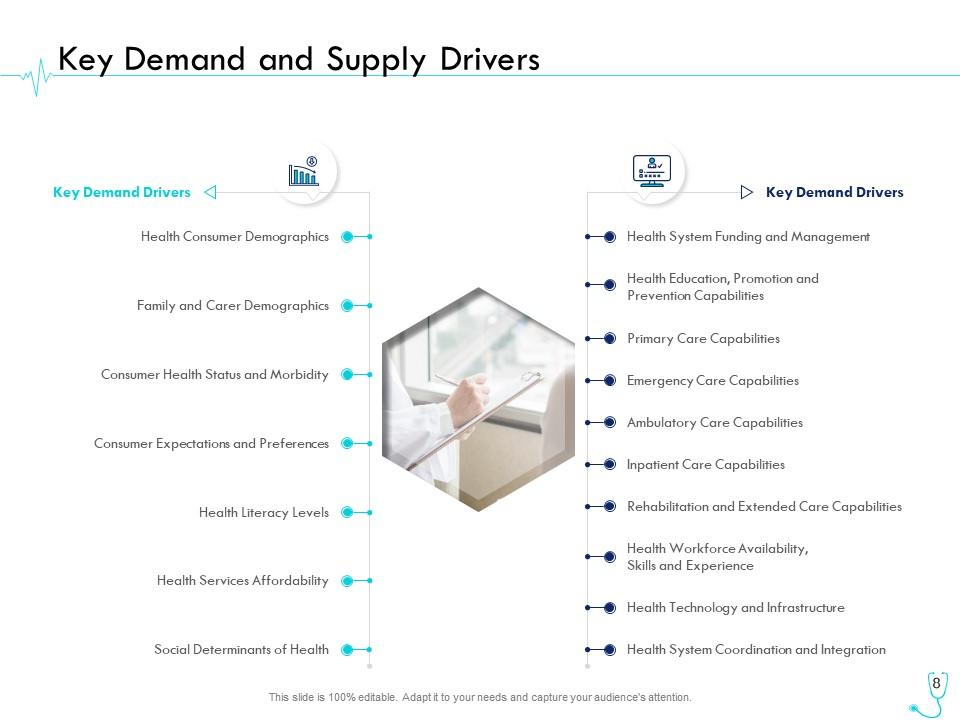
Demand that remains constant regardless of price fluctuations characterizes the healthcare industry. Listed in this PPT Layout are the several critical demands including healthcare demographics, family and carer demographics, consumer health status and morbidity, health literacy levels, social determinants of health, consumer expectations and preferences, and health services affordability. Supplies that can cure those demands must be mentioned alongside as shown, such as health system funding and management, primary care capabilities, emergency care capability, health technology and infrastructure, rehabilitation and extended care capabilities. This presentation design can be crucial in understanding healthcare demands and supply to fulfill the demands of the patients.
Template 6: Public Health System
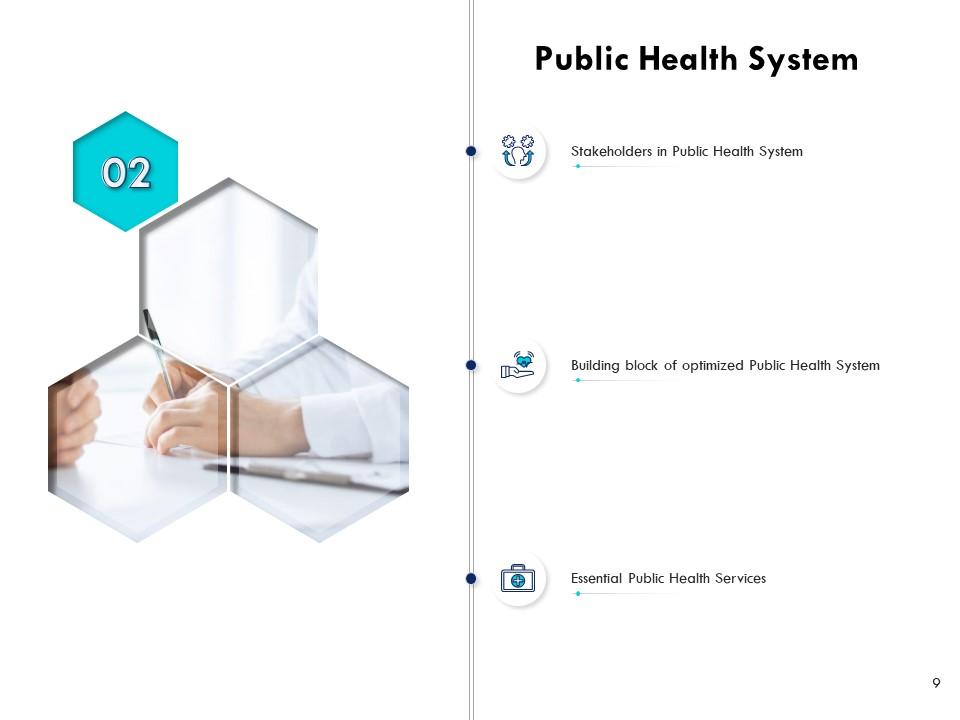
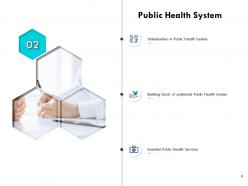
All governmental, commercial, and non-profit organizations that support the provision of necessary public health services within an authority come under the public health system. Our PowerPoint Design will give you a quick overview of the public healthcare system and help you identify which services are crucial for your business. This PPT Design in particular acknowledges three prominent public health systems that include: stakeholders, building blocks of optimized public health systems, and essential public health services.
Template 7: Stakeholders in Public Health System
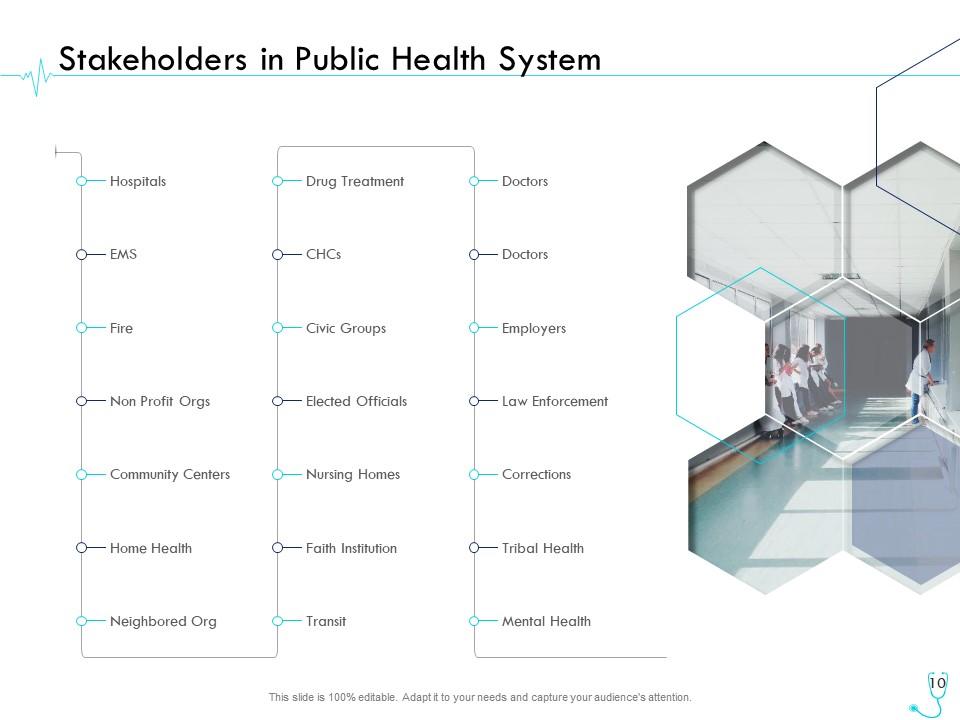
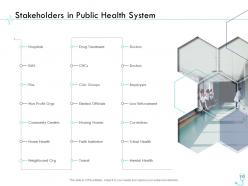
Stakeholders play a vital role in the healthcare system as they encourage the pursuit of health-associated goods, services, research, and programs and handle the expenses of healthcare services. This PPT Template will help you learn about the stakeholders in the public health system. Highlight the importance of stakeholders in the development, execution, assessment, and financing of different healthcare initiatives. Discuss their significant impression on the outcome of any vital program using this presentation layout. These stakeholders will include hospitals, non-profit organizations, home health, employees, transit, mental health, law enforcement, and many more.
Template 8: Building Block of Optimized Public Health System
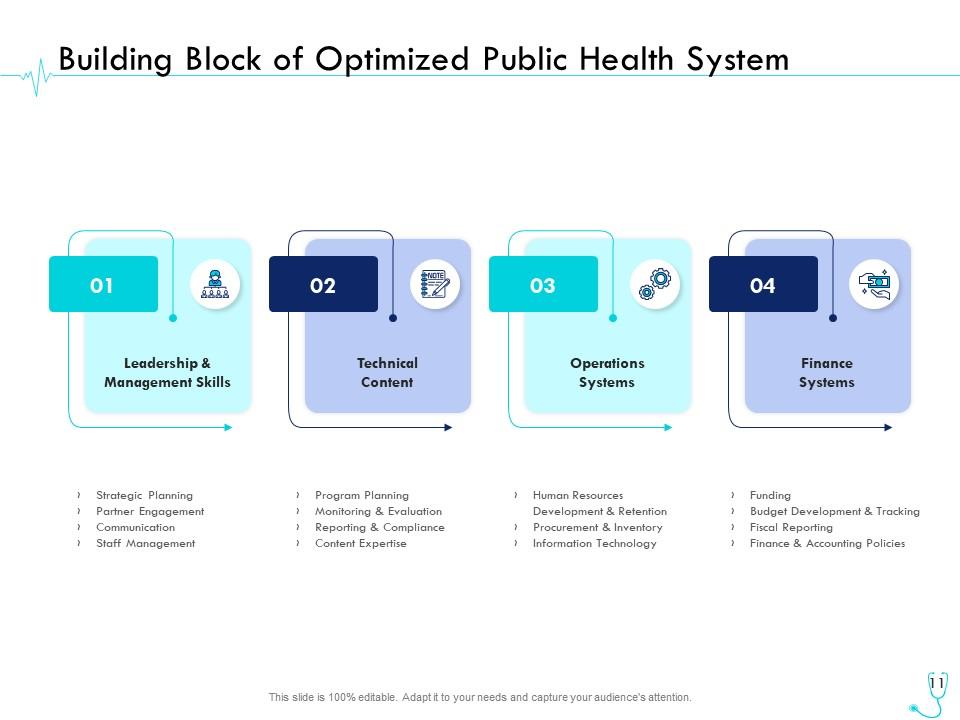
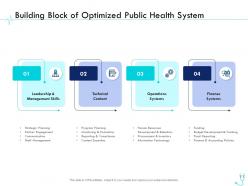
Highlight the four critical factors required for the building blocks of an optimized Public Healthcare System, namely: Leadership and management skills, Technical Content, Operation System, and Finance System. Discuss their role and importance in improving the efficiency of public healthcare using creative pointer format as shown in this PPT Layout.
Template 9: Essential Public Health Services

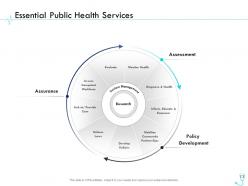
Elaborate on the three essential elements under which the ten public health services fall into using this PPT Design. These are mentioned as assessment, policy development, and assurance. This PowerPoint presentation will help you understand that when it comes to working within communities, ten services such as monitoring healthcare, diagnosis, information, mobilizing community partnerships, developing policies, enforcing laws, etc will further contribute to defining the function and goal of public health.
Template 10: Pharma Company Operating Model

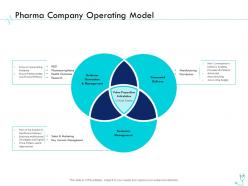
With this PPT Model, explain the critical factors of a pharmaceutical company's operations, culture, and surrounding environment. Specify the three crucial Value Proposition Articulation teams of the operating model with this PPT Design. These will be evidence generation and management. Connected delivery, and custom management. Using this PPT Guide, discuss the best ways to coordinate these aspects to create a fruitful and efficient pharma company.
Conclusion
Pharma companies are not easy to manage and handle as they work under so many regulations. The risk in this line of business is much bigger than a layman thinks because one wrong drug will cost you so many lives. However, managing the company is easy if you follow the footsteps of experts. For instance, with our expert-designed PPT Template you can simplify complex management tasks and get the work done efficiently.
PS: You can also explore these amazing templates on drug indication expansion in a pharma company case here.
Pharma company management powerpoint presentation slides with all 65 slides:
Use our Pharma Company Management Powerpoint Presentation Slides to effectively help you save your valuable time. They are readymade to fit into any presentation structure.
FAQs for Pharma company management
Honestly, cold chain stuff will probably be your biggest headache - one fridge breaks and you're out millions. Regulations are a nightmare too, especially when you're shipping internationally. Counterfeiting is everywhere, which is scary when we're talking about people's medications. Demand forecasting gets wild during health scares (remember COVID?). You really need to see what's happening across your whole supply chain in real time. I'd dump serious money into tracking tech and definitely don't put all your eggs in one supplier basket. Multiple backups are everything in pharma.
Dude, compliance isn't just some checkbox - it literally controls everything you do in pharma management. FDA reqs, GMP standards, clinical trial rules... all of it shapes how you plan manufacturing, supply chains, the whole deal. Honestly? It's pretty overwhelming when you're starting out. But here's the thing - you gotta bake compliance into your strategy from the beginning. Trying to add it later is a nightmare and costs way more. I'd start by figuring out exactly which regulations hit your products and markets first. Then build your processes around those instead of the other way around. Trust me on this one.
Honestly, tech is a game-changer for pharma management. You'll get automated inventory tracking that actually works, plus real-time visibility into your whole supply chain. Predictive analytics help you spot potential stockouts before they bite you. ERP systems tie everything together - seriously, I have no clue how companies functioned before these existed. IoT sensors handle temperature monitoring during transport (super critical for meds), and blockchain makes traceability way cleaner. But here's the real kicker: compliance stops being such a nightmare when your systems automatically spit out audit trails and regulatory reports. If you're just starting out, go with inventory automation first.
Honestly, data analytics is a game-changer for pharma companies drowning in information. You'll spot demand patterns way ahead of time and catch quality problems before they blow up. Supply chain gets smoother too. The compliance headaches? Way more manageable when you're tracking everything in real-time instead of panicking before audits. Plus you'll finally know which products actually make money - some just look productive but aren't worth the hassle. My advice though: don't go crazy trying to fix everything. Pick something specific like inventory first, nail that, then expand from there.
Honestly, start with value-based pricing and get cozy with payers way before you launch. Most companies mess this up by waiting too long. You'll want real-world evidence showing both clinical wins and cost savings - trial data alone won't cut it. PBMs and health plans need to see the actual economic impact. Tiered pricing works well for different markets, plus patient assistance programs help with access issues. Oh, and competitive positioning matters more than people think. Build your market access plan around solid health economics data, but tailor your value story for each payer segment differently.
So pharma companies follow this thing called Good Manufacturing Practices - basically they test everything before it even hits the production floor. Then they monitor each step with crazy amounts of documentation (seriously, the paperwork is ridiculous). Batch testing happens throughout, not just at the end. Creates this paper trail proving every pill meets safety standards. Oh, and if you're ever working with pharma partners? Always check their GMP certifications first. That's like rule number one. The whole system's built on continuous monitoring rather than hoping the final product turns out okay.
Cold chain monitoring is huge - get those temperature sensors locked down first. You'll want FIFO rotation down to a science, plus solid batch tracking for when recalls hit. Serialization is honestly a pain but you can't skip it anymore. Set up auto-reorder points based on real data, not just guessing. Quarantine any expired stuff right away - saw a buddy get nailed on that during an audit. Cycle counts every month beats scrambling for quarterly inventory. Oh, and temperature mapping documentation? That's where most people mess up during inspections, so nail that down early.
Honestly, you've gotta stay flexible with your supply chains - COVID taught us that the hard way. Invest in data analytics so you can catch health trends before they blow up. Partner with global health orgs and regulators early, don't wait until you're scrambling. Diversify where you manufacture stuff and build procurement strategies that can pivot fast when new diseases hit or treatments change. Oh, and monitor social factors in different regions since that drives demand patterns (sounds boring but it's actually pretty crucial). Set up quarterly reviews with your team to discuss what's coming next.
Yeah, M&A stuff totally messes with pharma management in the short run. Supply chains get consolidated, formularies change, vendor relationships shift - basically everything you're used to gets flipped around. The IT integration is honestly the worst part because nothing talks to each other properly. But here's the upside: bigger companies usually score better deals with suppliers once they get their act together. My advice? Map out your critical meds now and have backup plans ready. Don't wait until you're in the middle of chaos to figure out continuity of care.
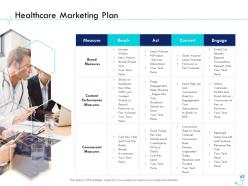
So they're mostly watching prescription volumes and revenue - you know, following the money trail. Market share and brand awareness surveys tell them if doctors actually know their stuff exists. Patient outcomes matter too since that builds credibility long-term. The tricky part? Connecting marketing spend to actual prescribing behavior is honestly a nightmare with all the variables floating around. Most companies use marketing mix modeling to figure out what's actually working. My advice - nail down your KPIs first, then build dashboards tracking both the quick wins and long-term stuff. It's messier than it sounds but doable.
So basically you're flipping everything upside down - instead of just caring about efficiency numbers, now patient outcomes drive all your decisions. Your inventory choices have to factor in whether people actually take their meds consistently. Distribution gets tricky because you're trying to cut wait times while not blowing your budget (which honestly feels impossible some days). You'll be pulling in way more data too - patient feedback, real-world results, all that stuff. Best move? Map out what patients actually go through right now and see where things suck the most.
Figure out your big risks first - regulatory changes, supply chain mess-ups, clinical trial disasters, compliance nightmares. Don't make one of those useless risk registers that nobody touches after week one. Map probability vs impact, then build actual plans to deal with each one. Meet regularly with your team because pharma moves crazy fast and new problems show up daily. Honestly, being proactive saves you so much stress later. Have backup suppliers lined up before your main ones flake out. Build contingency plans now, not when everything's on fire.
Honestly, you can't really go solo in pharma anymore. Costs are insane and the complexity is just overwhelming for one company. Biotech partnerships handle early research stuff. Academic collaborations bring in specialized knowledge. Sometimes even competitors team up - which is kind of wild when you think about it. Risk sharing is huge, plus you get access to skills and tech you don't have. Oh, and new markets too. If you're running any pharma projects, scope out collaboration opportunities right from the start. Trust me, it'll save you tons of time and money down the road.
Honestly, ethics shape pretty much every big call you'll make in pharma management. Pricing, supply chains, clinical trials - it all comes back to balancing profit against patient needs. Super tricky because everyone wants different things. You're constantly deciding stuff like whether to rush a drug launch or how to handle shortages fairly. Which markets do you hit first? All ethical calls. Oh and don't even get me started on the stakeholder drama. My take? Figure out your moral compass early and don't budge when people start breathing down your neck about numbers.
Dude, you're gonna need both the science side AND business chops. FDA regulations and compliance stuff is non-negotiable - that's your bread and butter. But honestly? The people skills are where most pharma managers actually succeed or fail. Project management is huge since you're always herding cats across different teams. Oh, and get comfortable with data analytics - everything's numbers-driven now. The digital side surprised me when I first learned about it, but clinical trials and supply chains run on crazy complex software. I'd definitely get that PMP certification if you can. Stay plugged into industry news too.
-
Design layout is very impressive.
-
Unique design & color.
-
Qualitative and comprehensive slides.
-
Easy to edit slides with easy to understand instructions.
-
Professional and unique presentations.
-
Attractive design and informative presentation.
-
Colors used are bright and distinctive.
-
I discovered this website through a google search, the services matched my needs perfectly and the pricing was very reasonable. I was thrilled with the product and the customer service. I will definitely use their slides again for my presentations and recommend them to other colleagues.