Achieving Sustainability In An Evolving Pharma Company Case Competition Complete Deck

Rating:
100%
Achieving Sustainability In An Evolving Pharma Company Case Competition Complete Deck
Slide 1 of 52

or

Favourites Favourites

Try Before you Buy Download Free Sample Product

Audience Impress Your
Audience
Editable 100%
Editable
Time Save Hours
of Time
The Biggest Sale is ending soon in
0
0
:
0
0
:
0
0
Rating:
100%
Deliver this complete deck to your team members and other collaborators. Encompassed with stylized slides presenting various concepts, this Achieving Sustainability In An Evolving Pharma Company Case Competition Complete Deck is the best tool you can utilize. Personalize its content and graphics to make it unique and thought-provoking. All the fourty seven slides are editable and modifiable, so feel free to adjust them to your business setting. The font, color, and other components also come in an editable format making this PPT design the best choice for your next presentation. So, download now.

Content of this Powerpoint Presentation

Slide 1: This slide introduces Achieving Sustainability in an Evolving Pharma Company (Case Competition). State Your Company Name and begin.
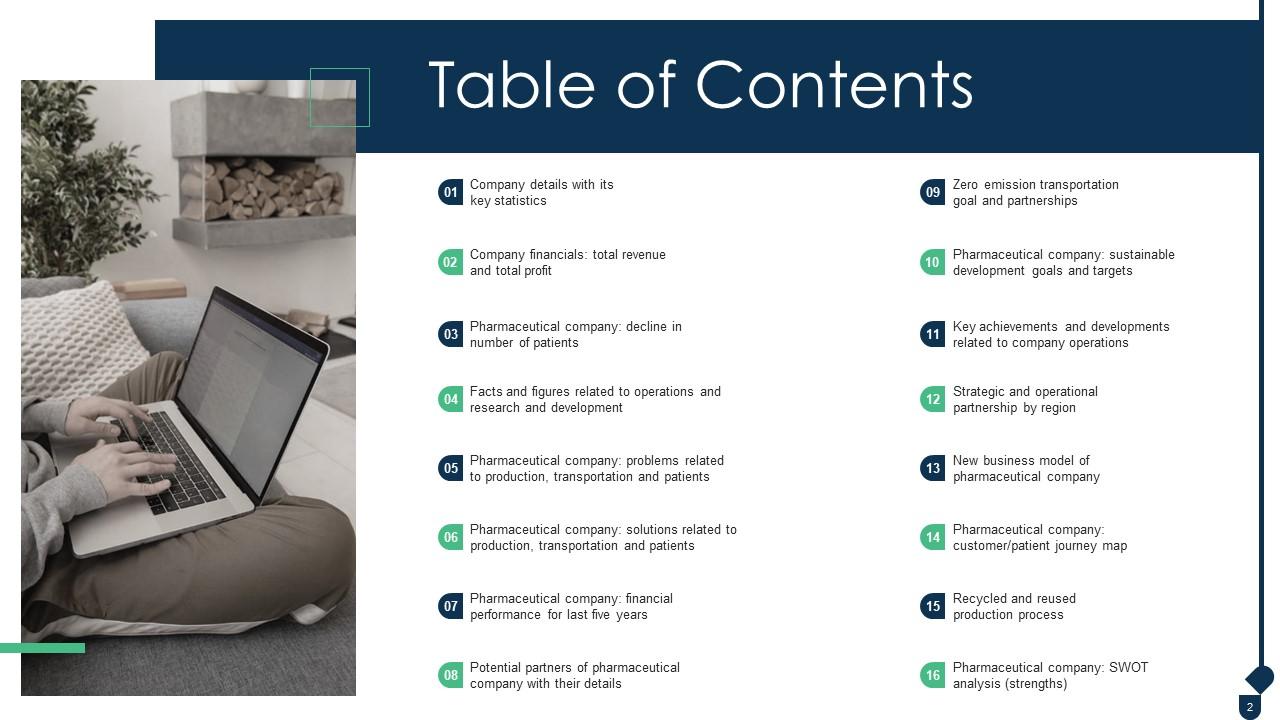
Slide 2: This slide presents Table of Content for the presentation.
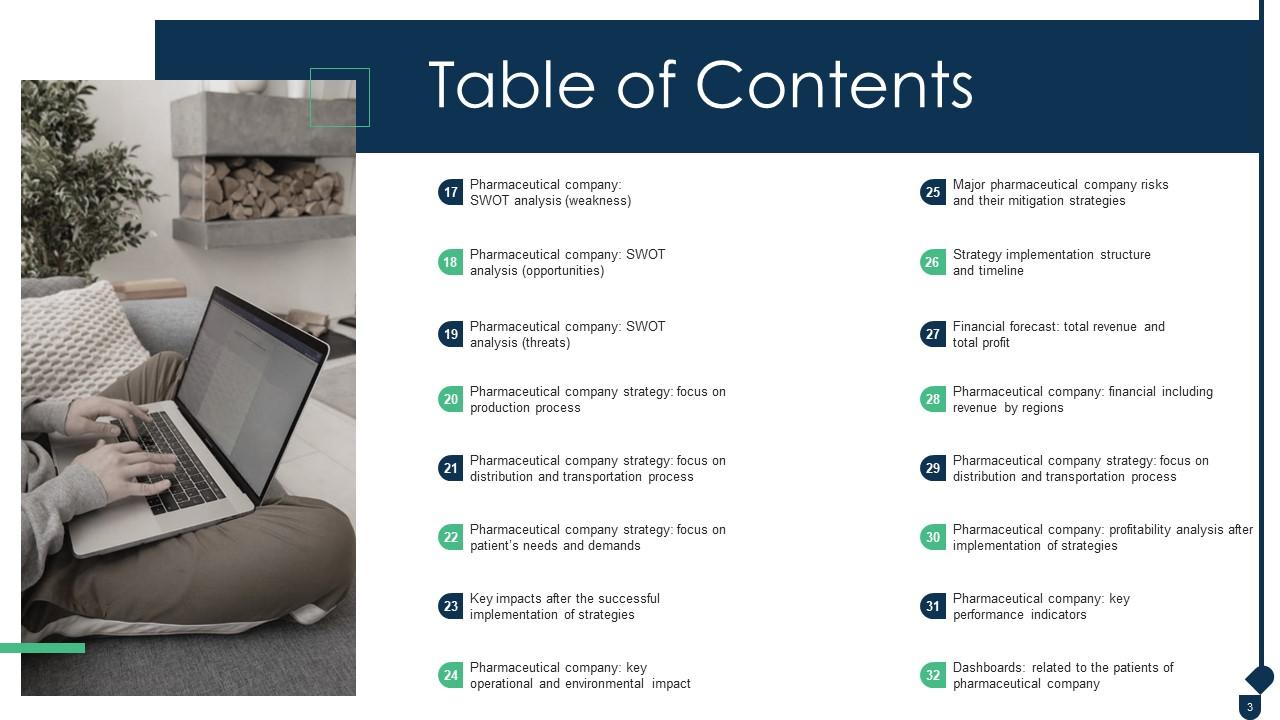
Slide 3: This is another slide continuing Table of Content for the presentation.
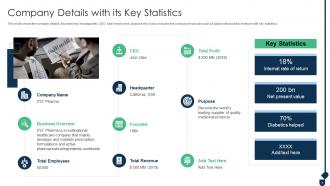
Slide 4: This slide shows Company Details with its Key Statistics.
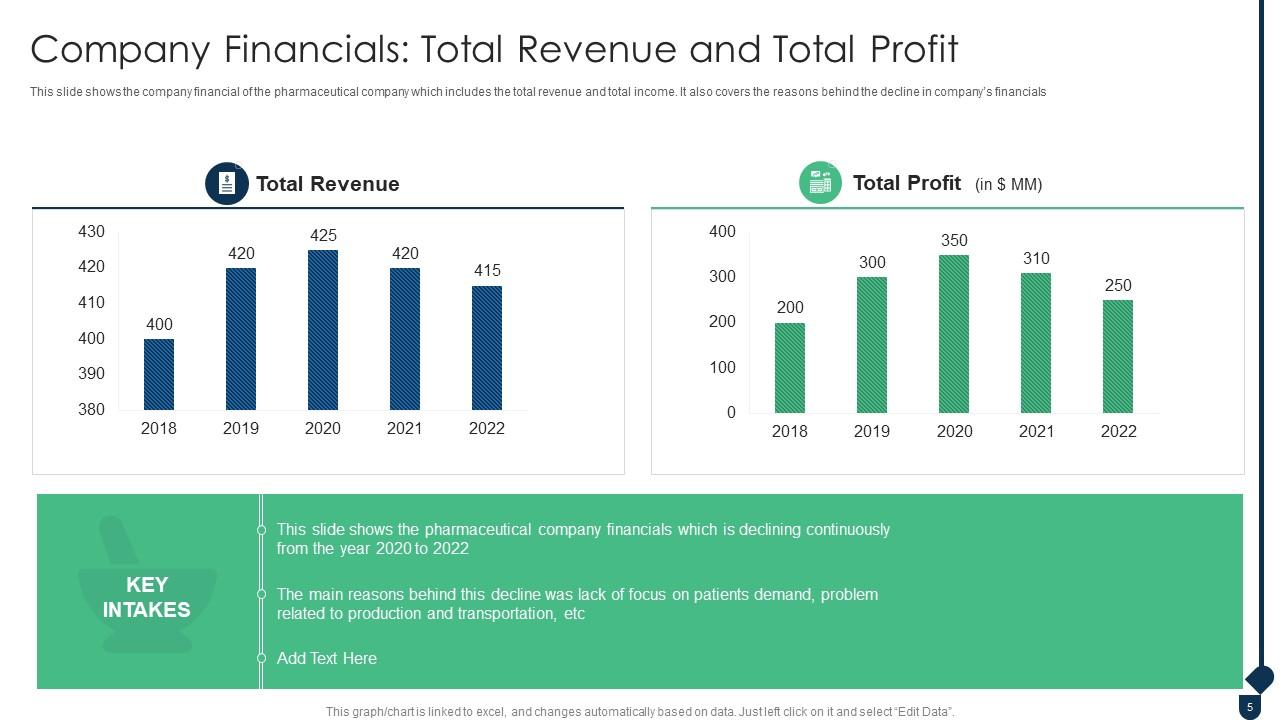
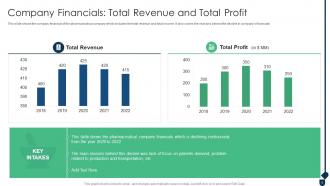
Slide 5: This slide presents pharmaceutical company financials which is declining continuously from the year 2020 to 2022.
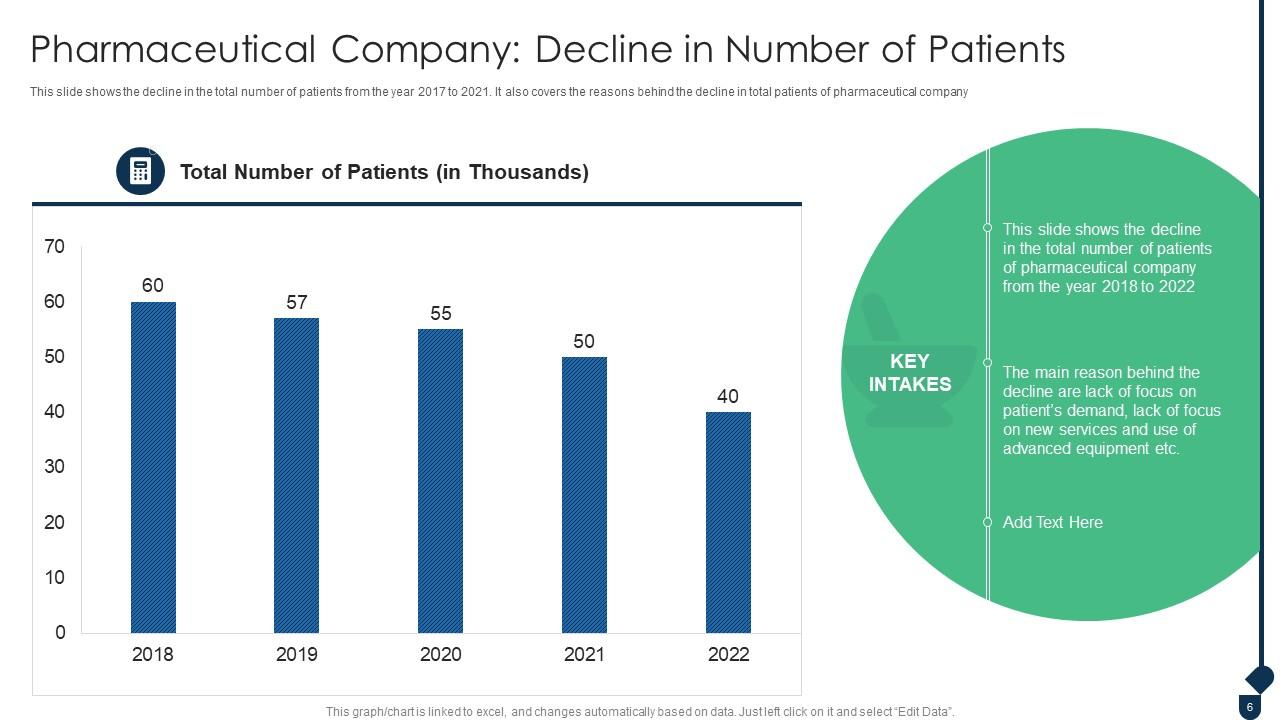
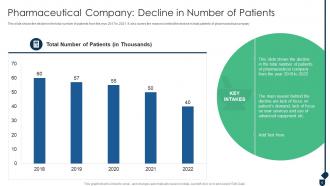
Slide 6: This slide displays decline in the total number of patients from the year 2017 to 2021.
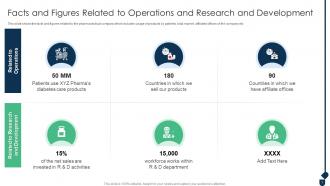
Slide 7: This slide represents Facts and Figures Related to Operations and Research and Development.
Slide 8: This slide showcases various problems related to environmental and operational programs of the pharmaceutical company.
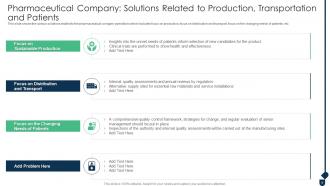
Slide 9: This slide shows various solutions related to the pharmaceutical company operations.
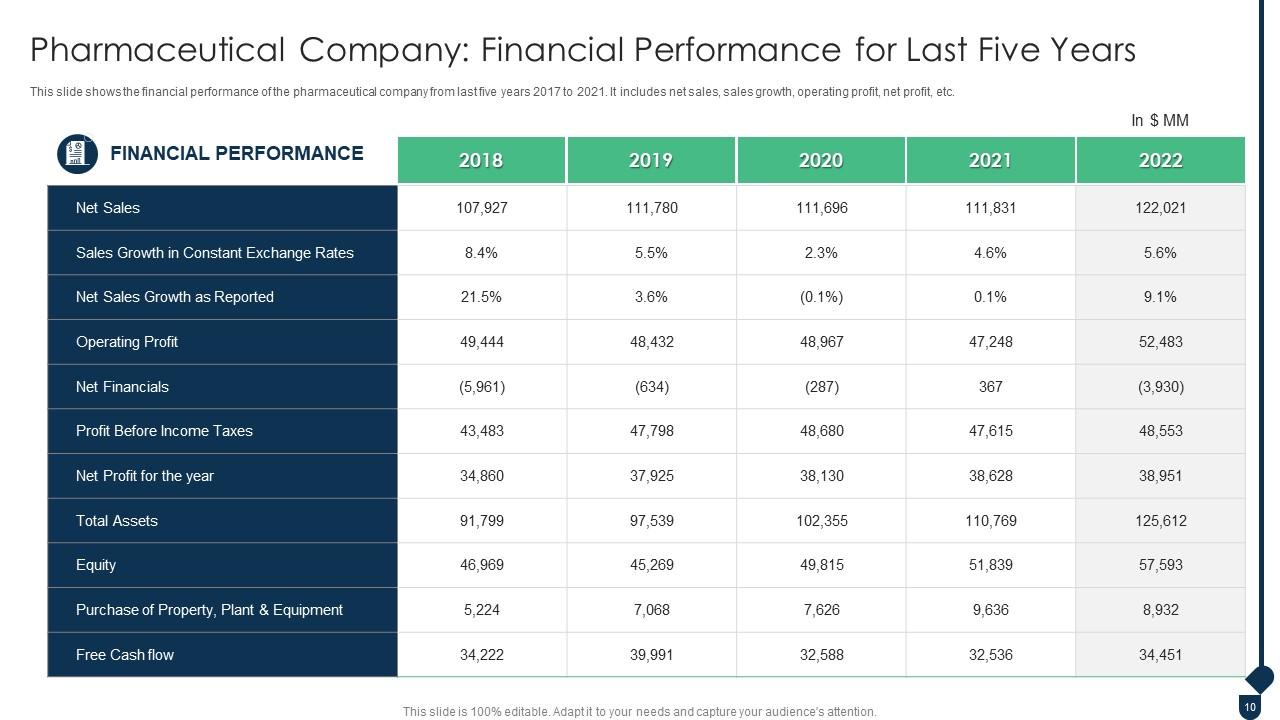
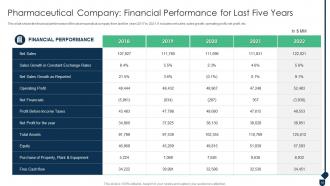
Slide 10: This slide presents financial performance of the pharmaceutical company from last five years.
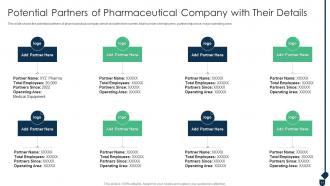
Slide 11: This slide displays potential partners of pharmaceutical company.
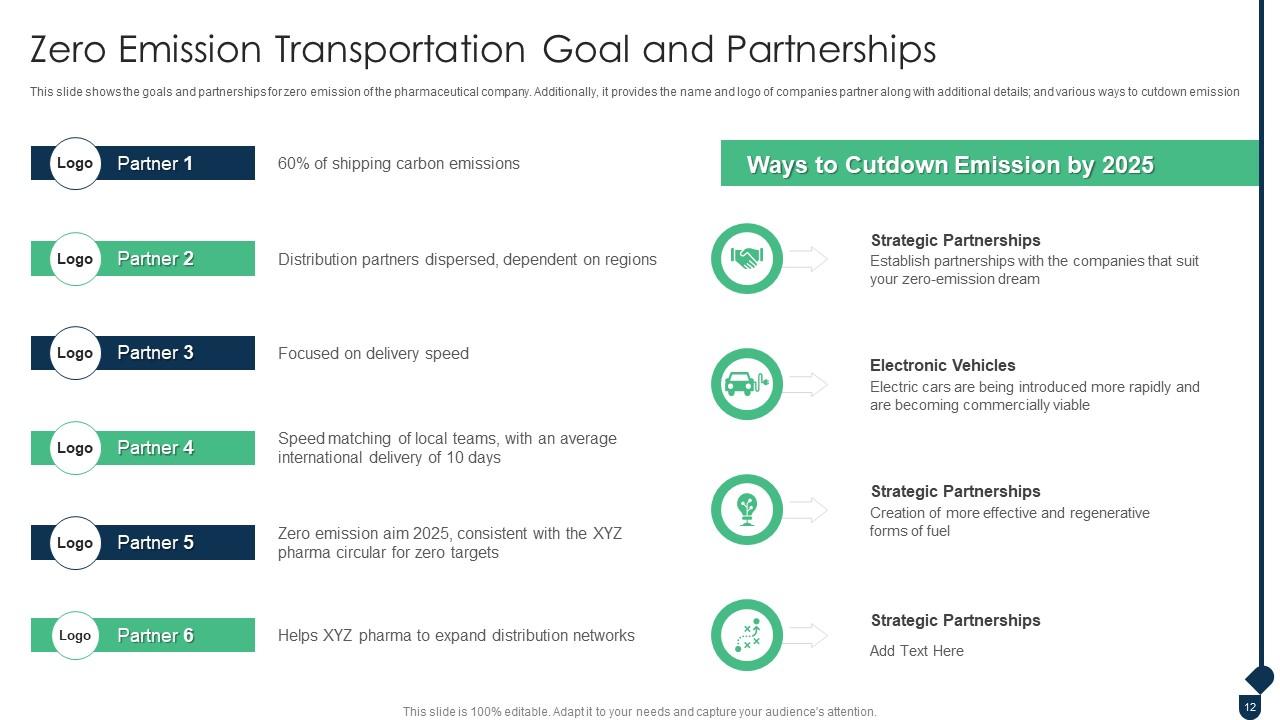
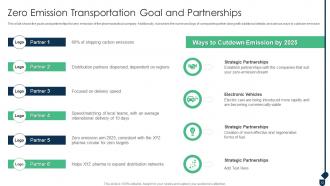
Slide 12: This slide represents Zero Emission Transportation Goal and Partnerships.
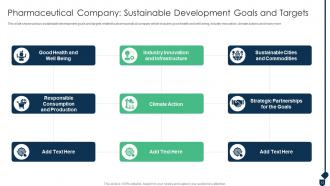
Slide 13: This slide showcases sustainable development goals and targets related to pharmaceutical company.
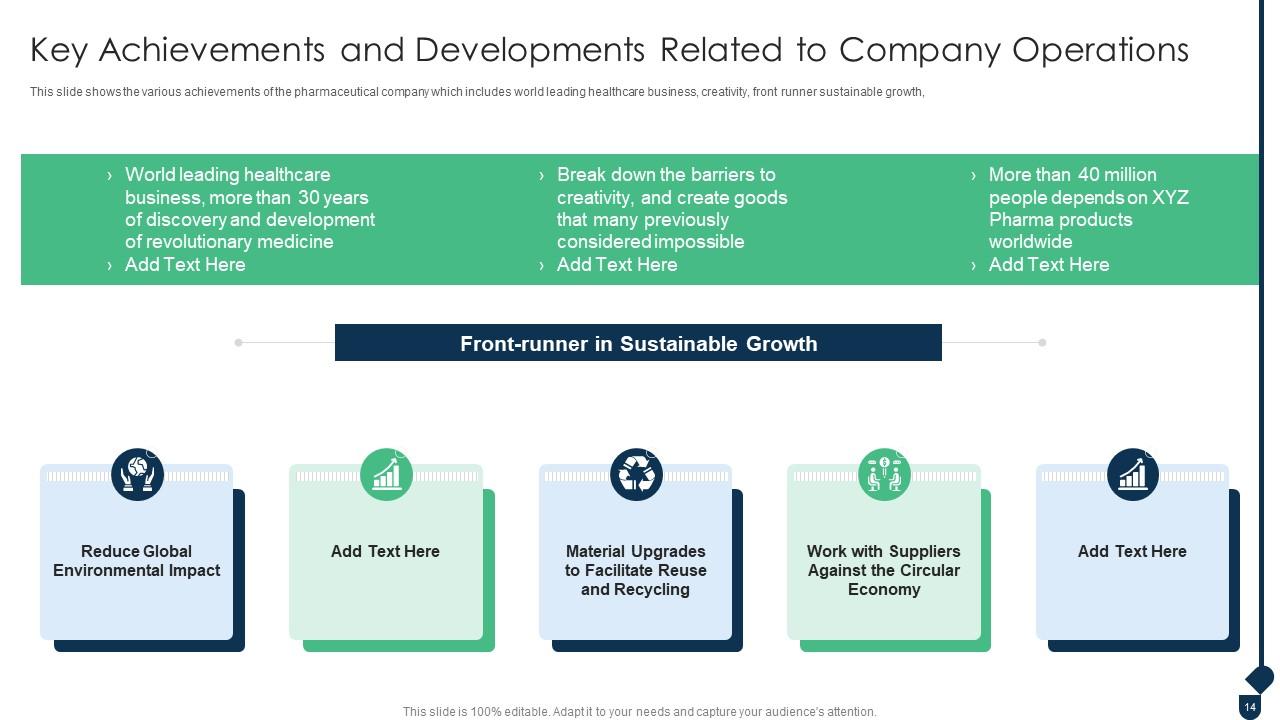
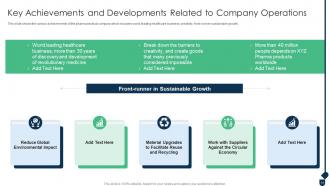
Slide 14: This slide shows Key Achievements and Developments Related to Company Operations.
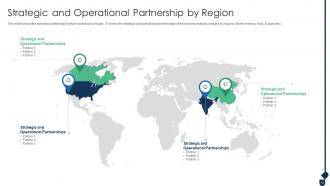
Slide 15: This slide presents Strategic and Operational Partnership by Region.
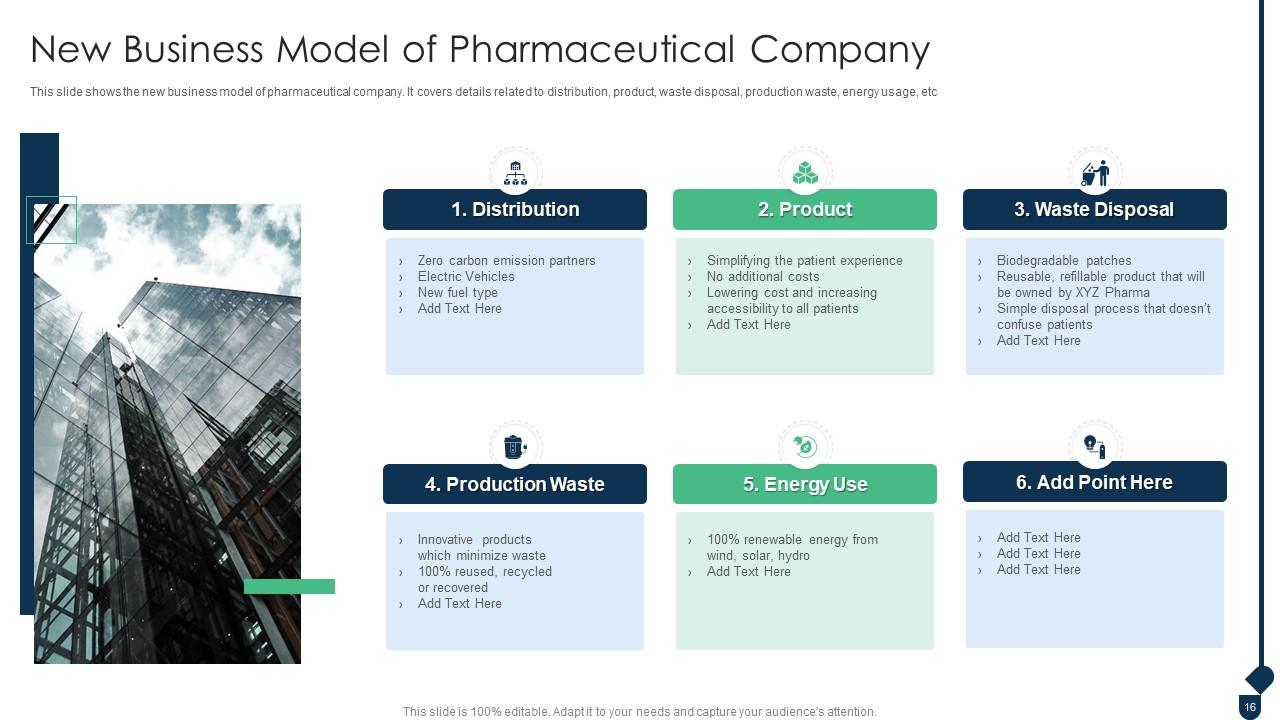
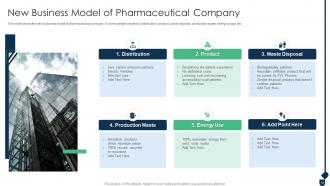
Slide 16: This slide displays New Business Model of Pharmaceutical Company.
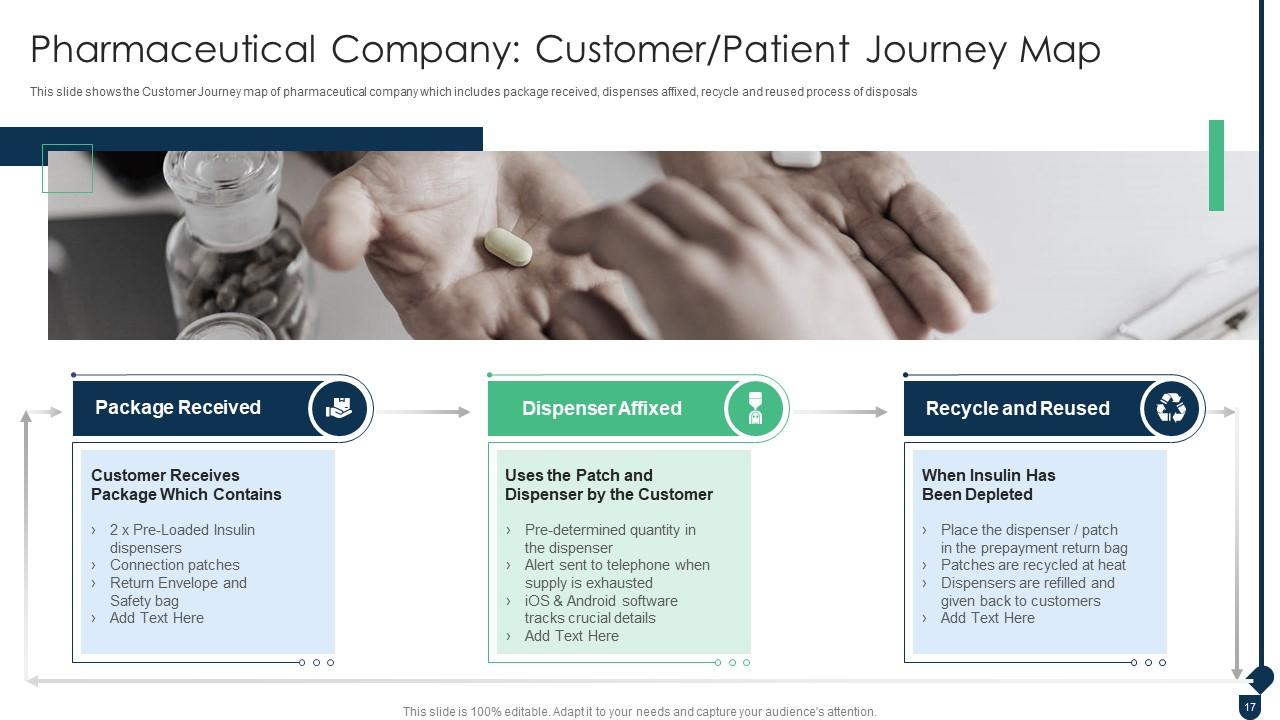
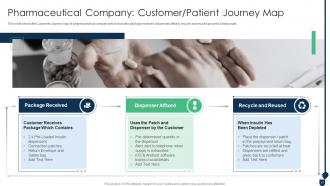
Slide 17: This slide represents Customer Journey map of pharmaceutical company.
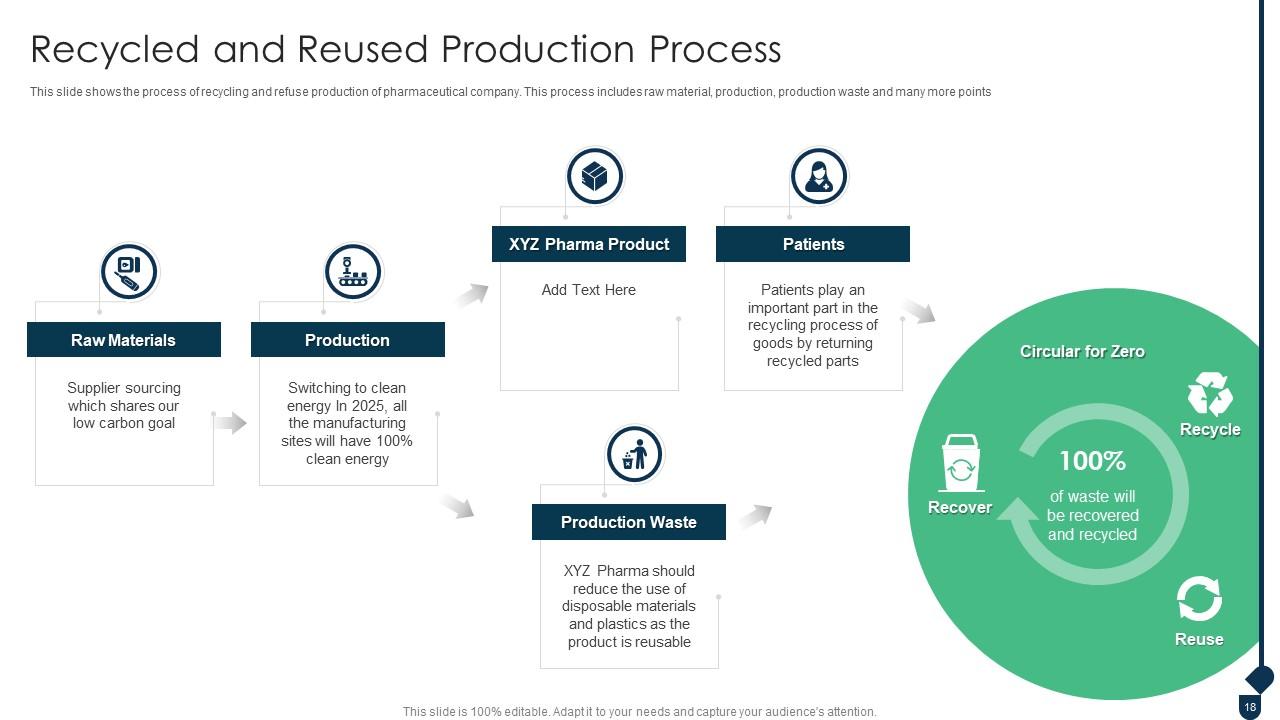
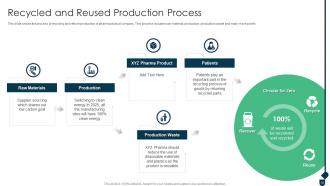
Slide 18: This slide showcases Recycled and Reused Production Process.
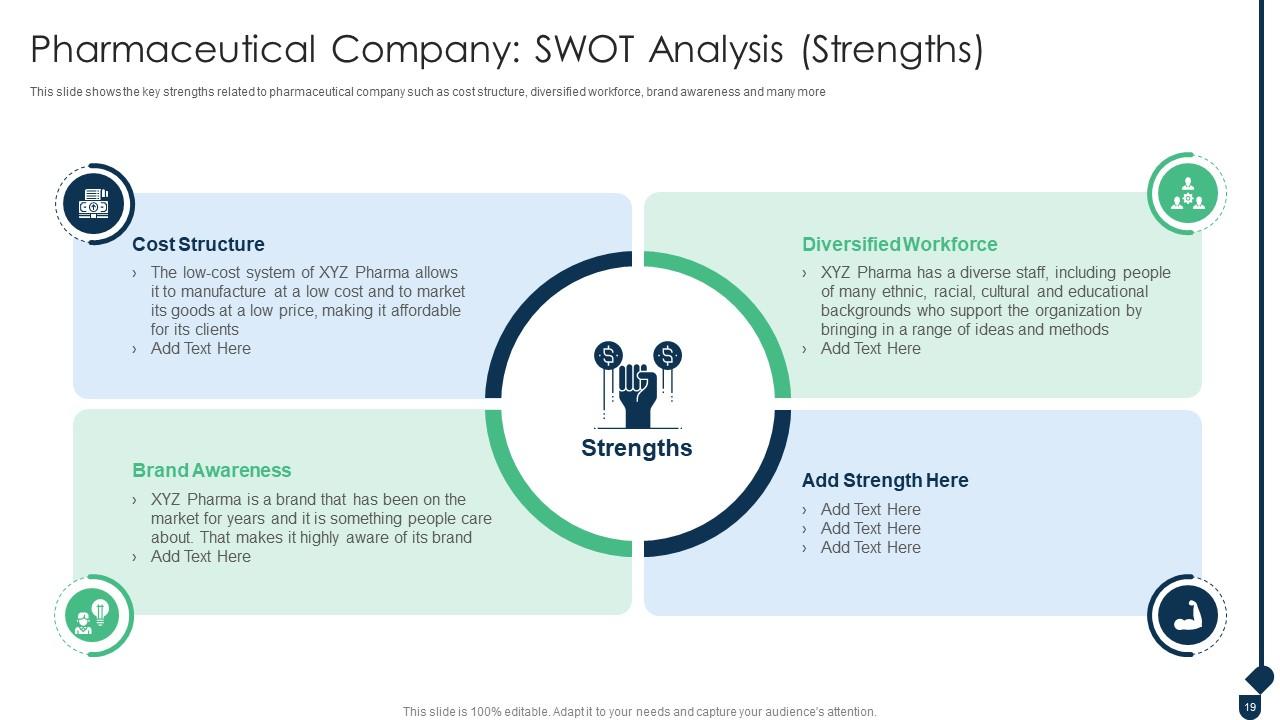
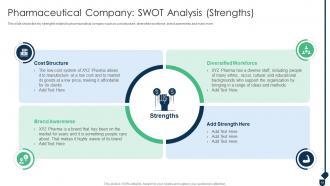
Slide 19: This slide shows the key strengths related to pharmaceutical company such as cost structure, diversified workforce, etc.
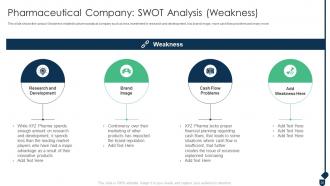
Slide 20: This slide presents Weakness related to pharmaceutical company.
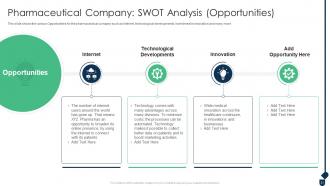
Slide 21: This slide displays Opportunities for the pharmaceutical company.
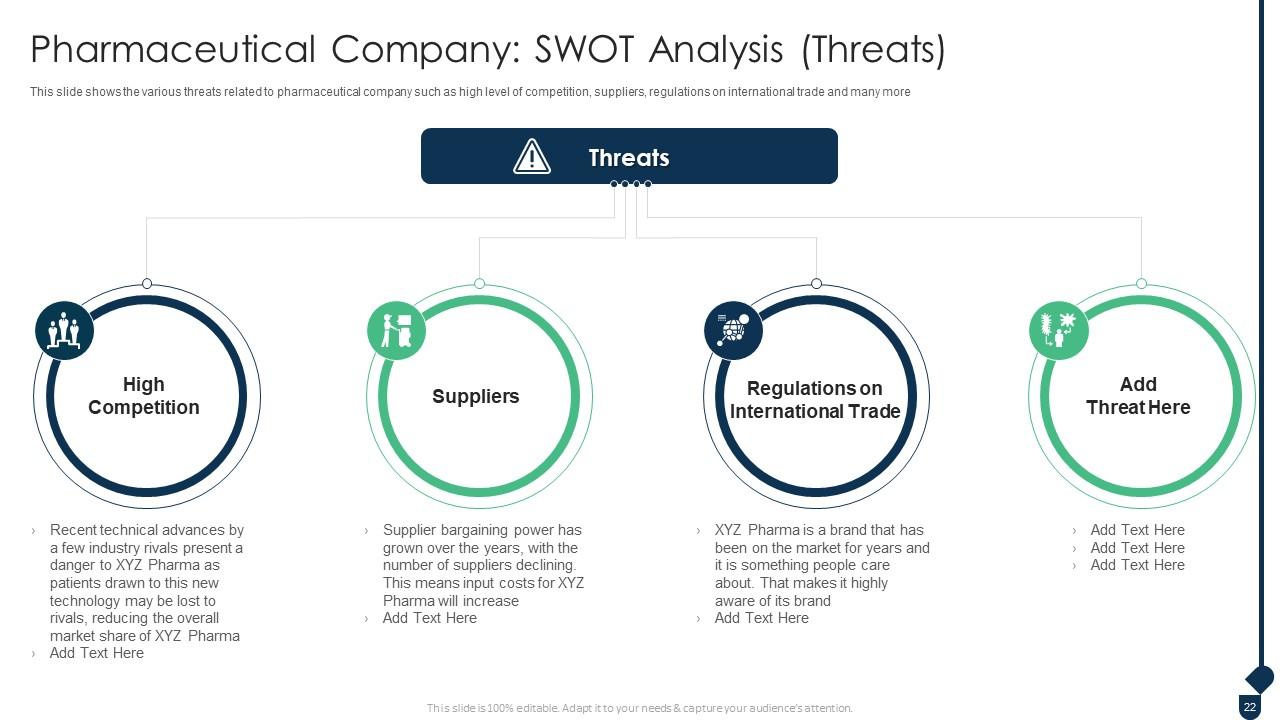
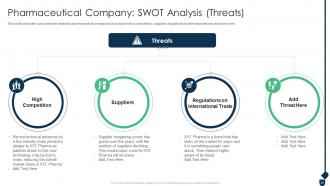
Slide 22: This slide represents various threats related to pharmaceutical company.
Slide 23: The slide explains the Focus on production process strategy of the company.
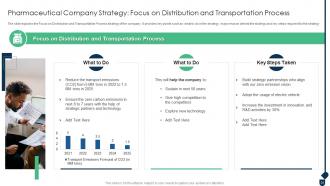
Slide 24: The slide explains the Focus on Distribution and Transportation Process strategy of the company.
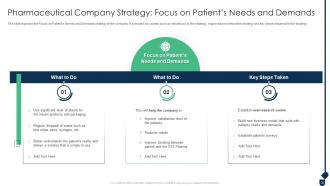
Slide 25: This slide displays Pharmaceutical Company Strategy: Focus on Patient’s Needs and Demands.
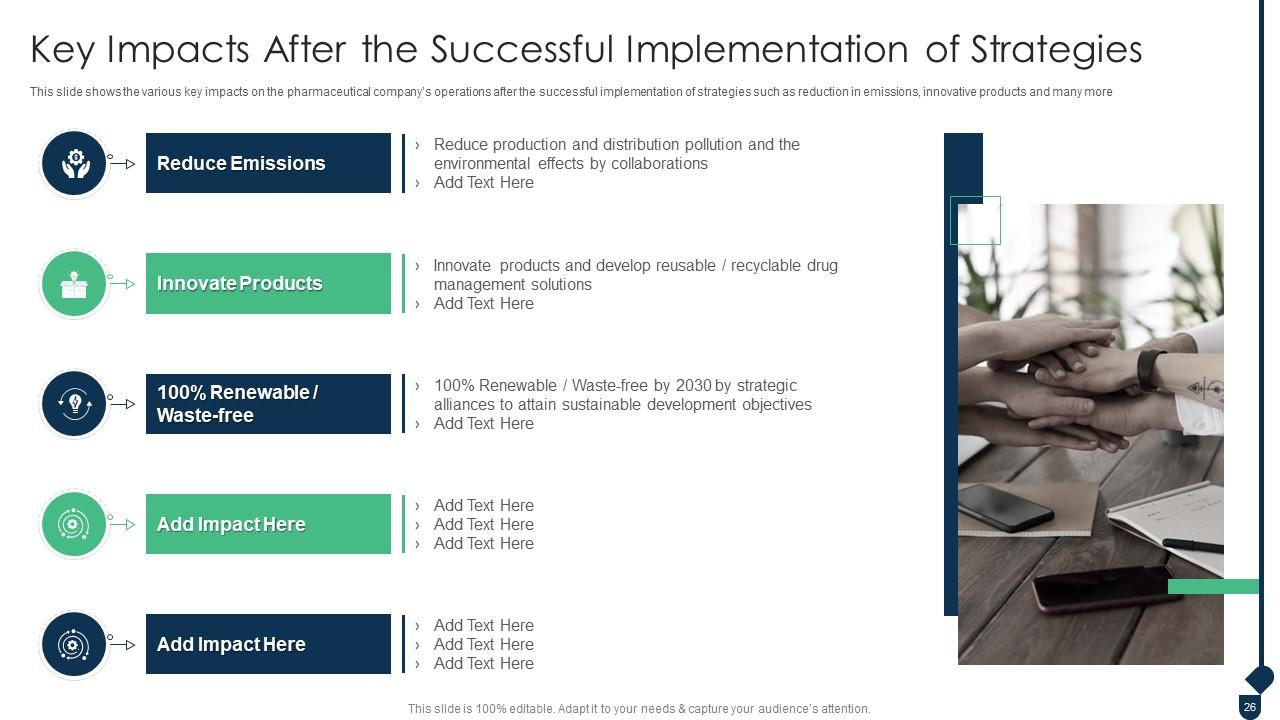
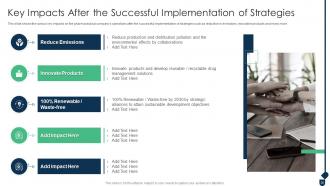
Slide 26: This slide represents Key Impacts After the Successful Implementation of Strategies.
Slide 27: This slide showcases key impacts of the strategies on company’s operations.
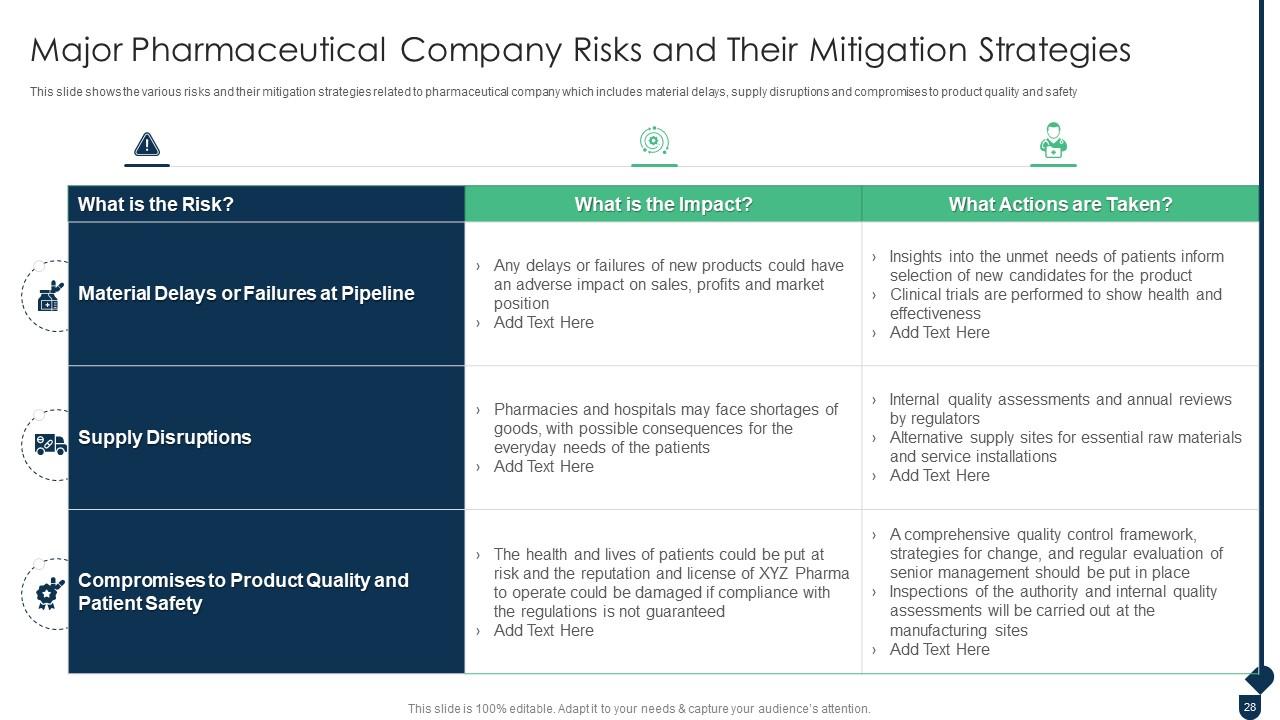
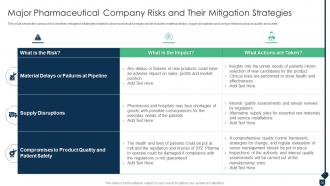
Slide 28: This slide shows Major Pharmaceutical Company Risks and Their Mitigation Strategies.
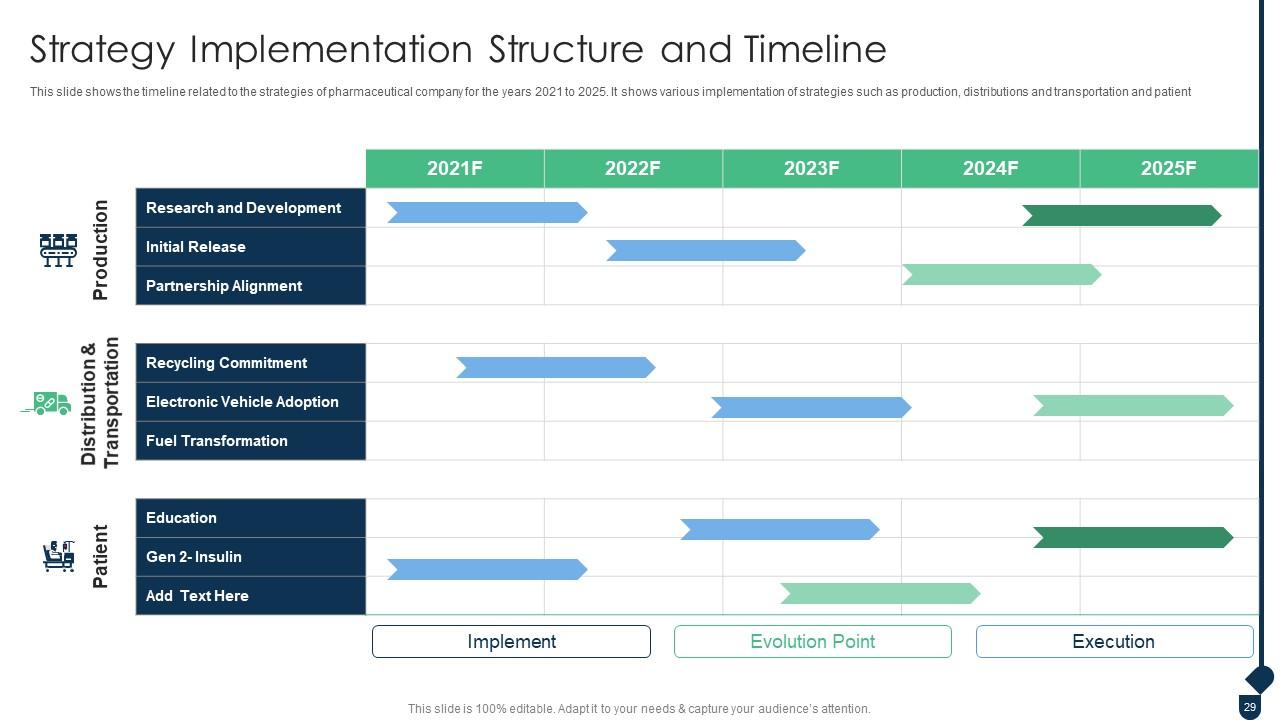
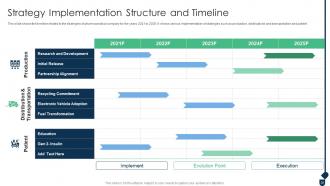
Slide 29: This slide presents Strategy Implementation Structure and Timeline.
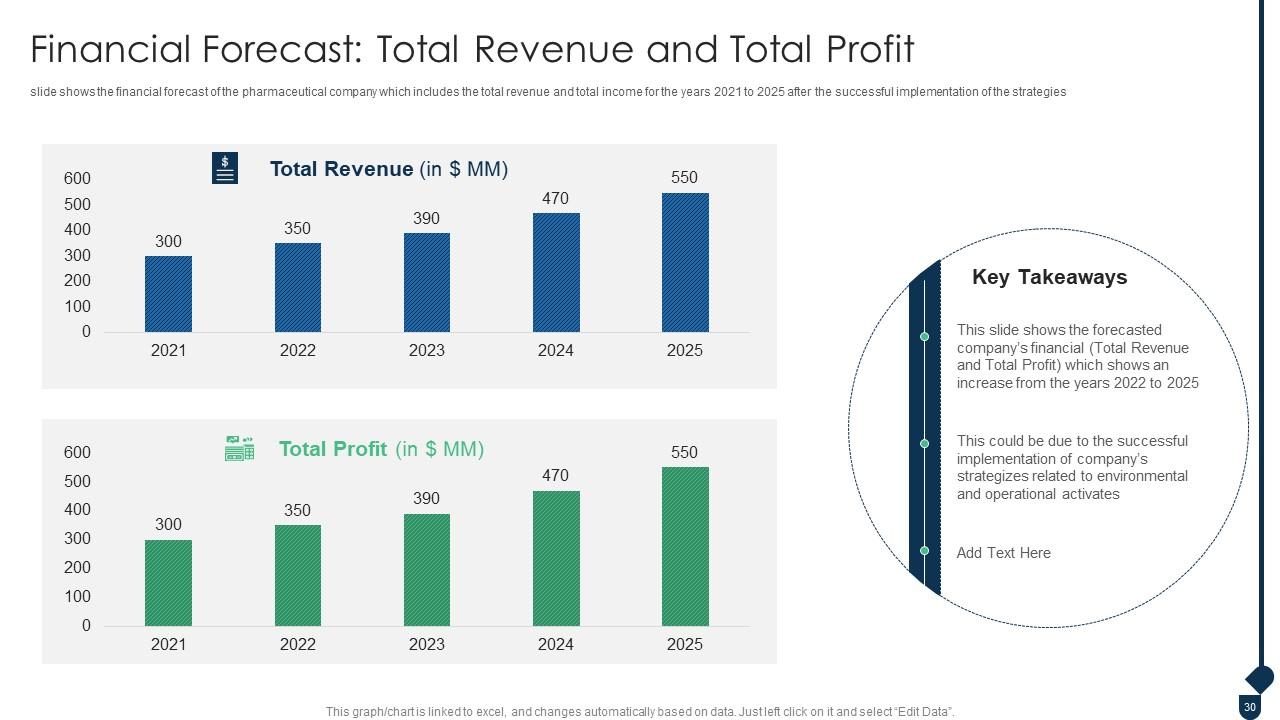
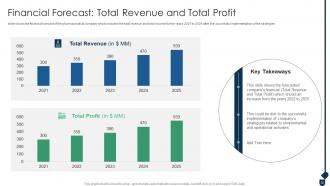
Slide 30: This slide displays financial forecast of the pharmaceutical company.
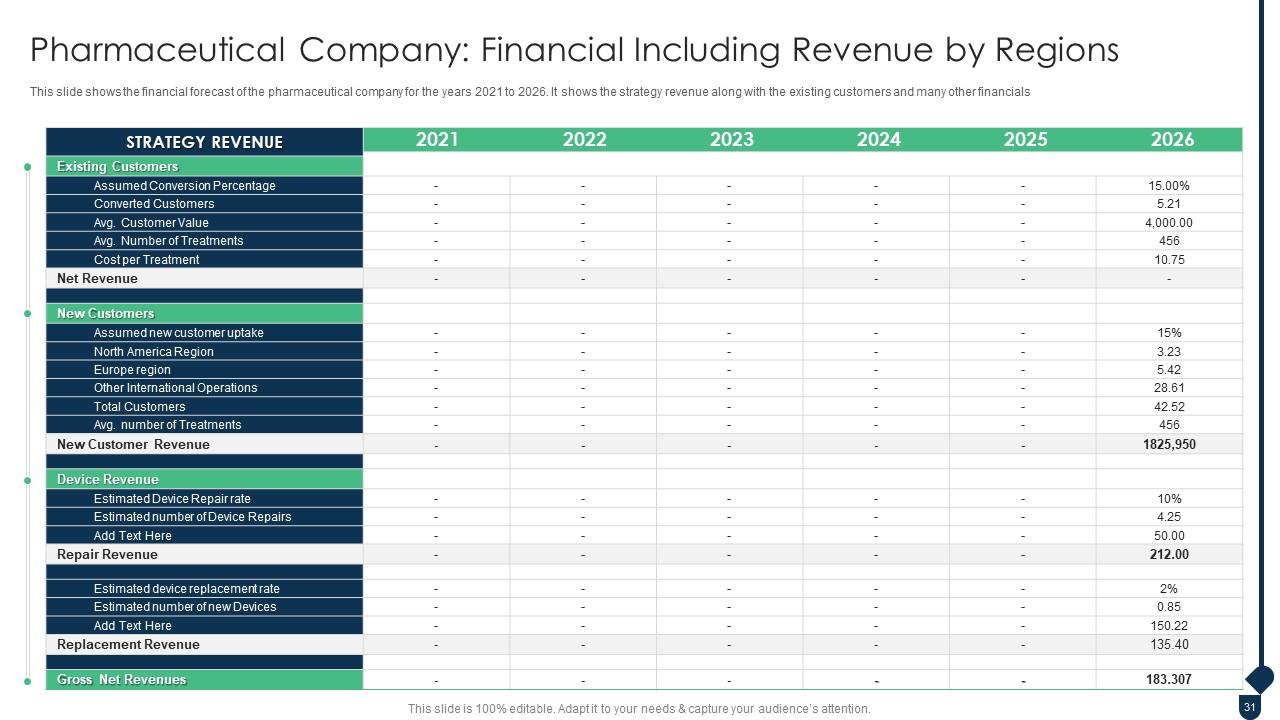
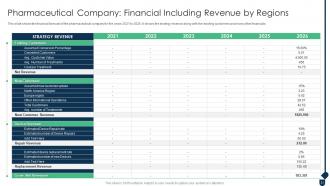
Slide 31: This slide represents Pharmaceutical Company Financial Including Revenue by Regions.
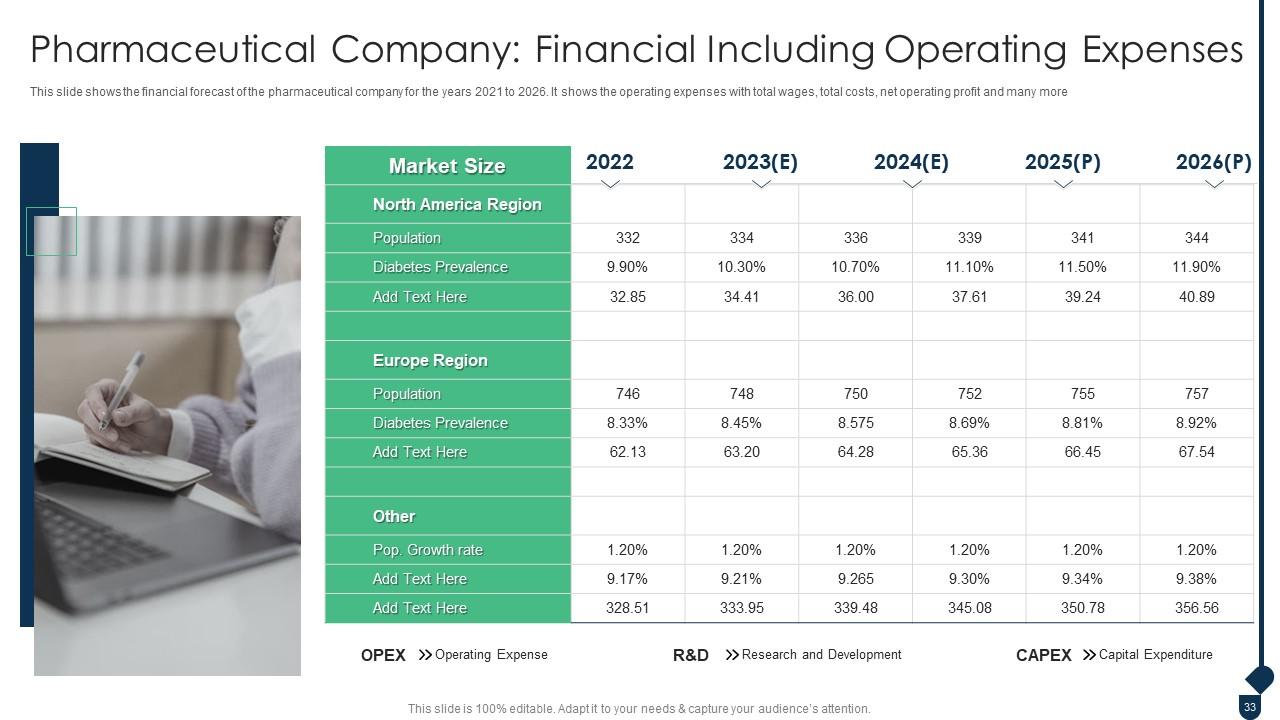
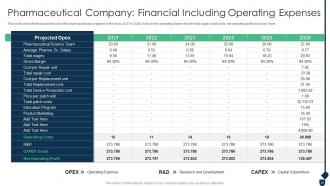
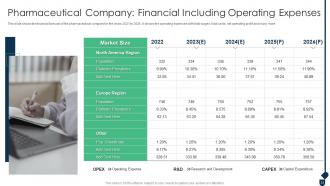
Slide 32: This slide showcases Pharmaceutical Company Financial Including Operating Expenses.
Slide 33: This slide shows the financial forecast of the pharmaceutical company for the years 2021 to 2026.
Slide 34: This slide presents Pharmaceutical Company Profitability Analysis After Implementation of Strategies.
Slide 35: This slide displays Pharmaceutical Company Key Performance Indicators.
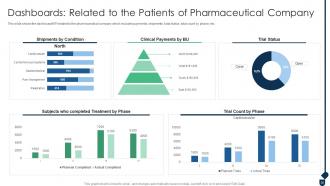
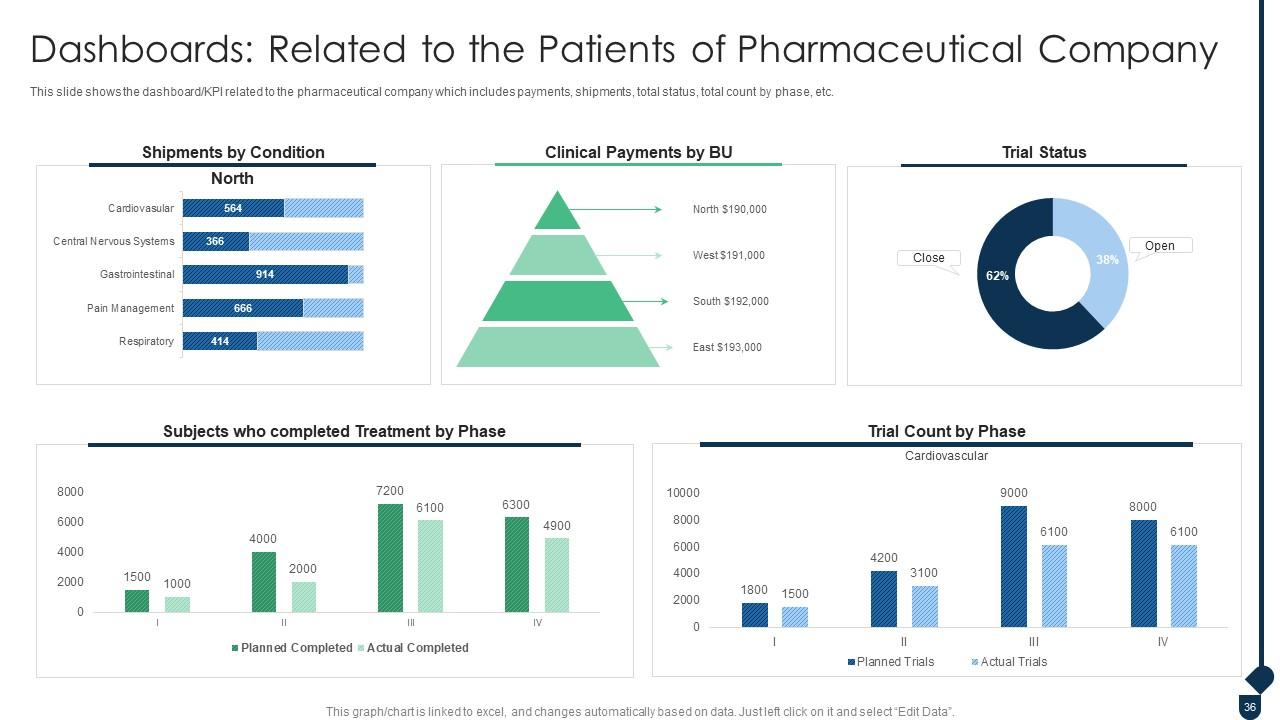
Slide 36: This slide represents Dashboards Related to the Patients of Pharmaceutical Company.
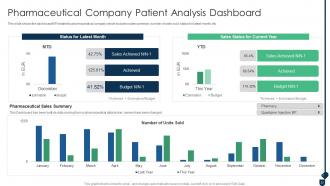
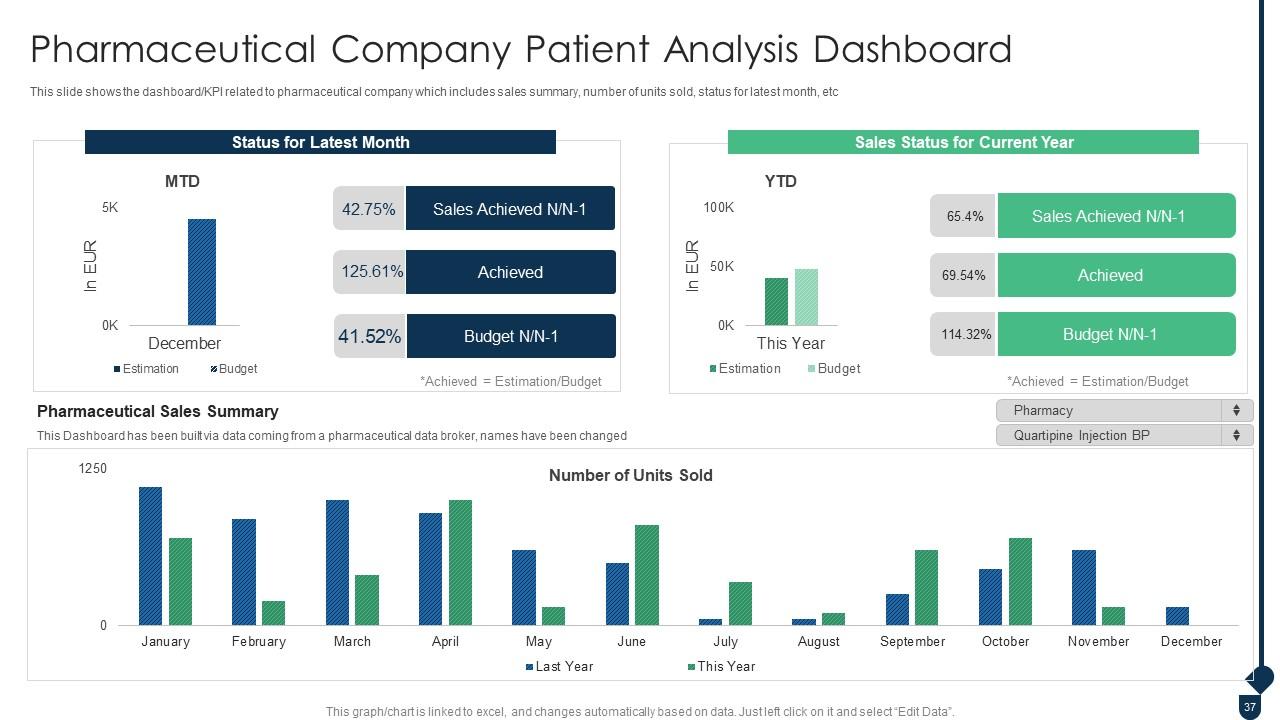
Slide 37: This slide showcases Pharmaceutical Company Patient Analysis Dashboard.
Slide 38: This slide displays Icons for Achieving Sustainability in an Evolving Pharma Company (Case Competition).
Slide 39: This slide is titled as Additional Slides for moving forward.
Slide 40: This slide presents Bar chart with two products comparison.
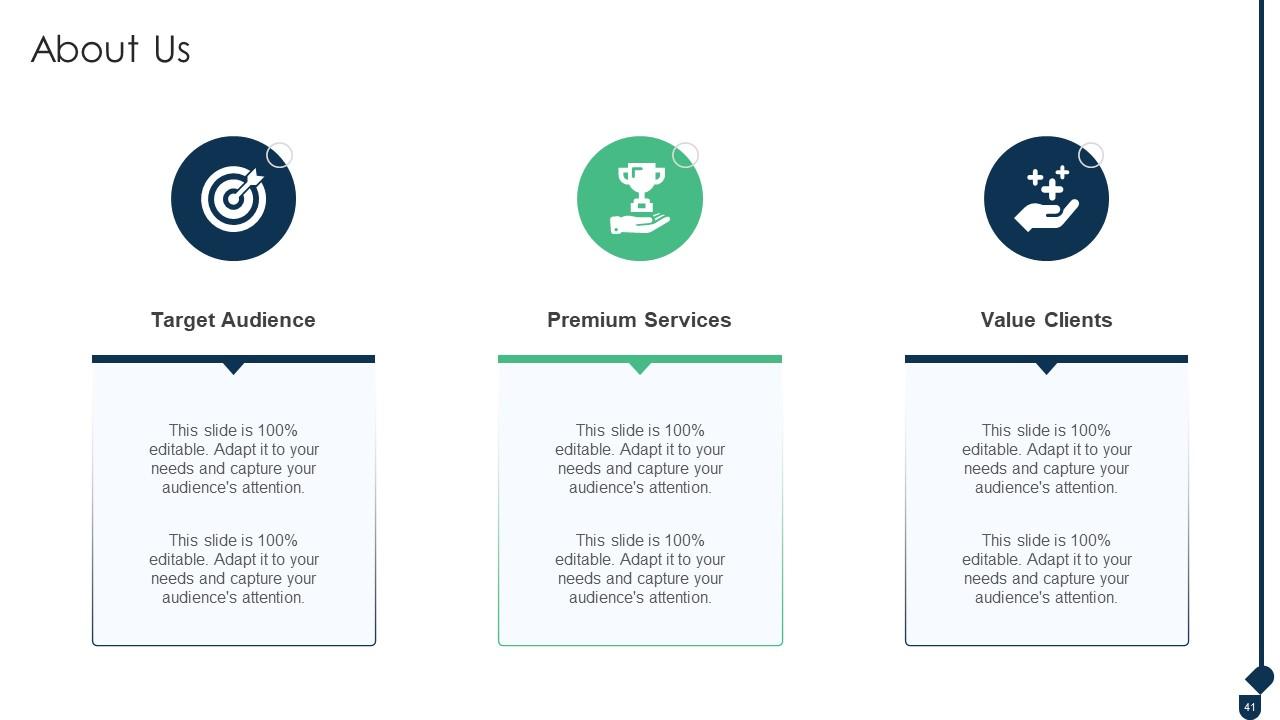
Slide 41: This is About Us slide to show company specifications etc.
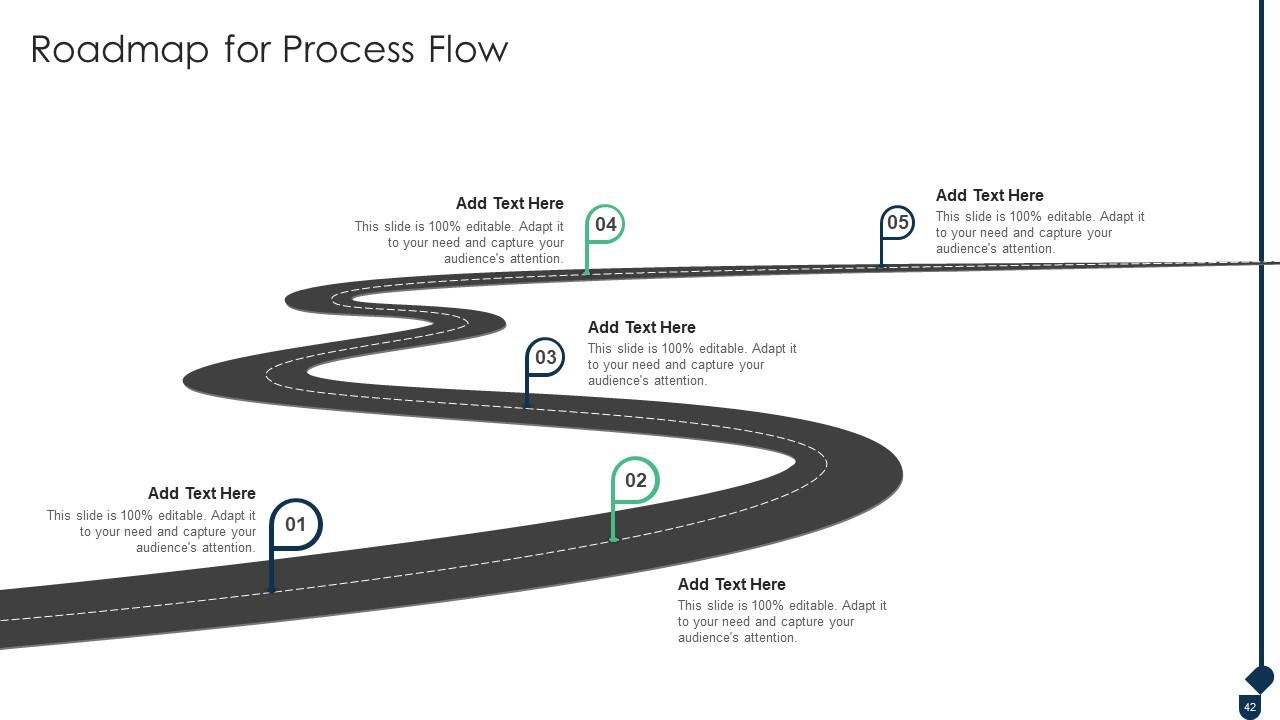
Slide 42: This slide presents Roadmap for Process Flow.
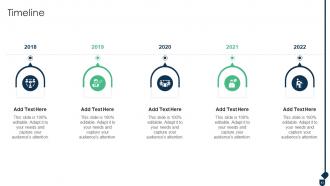
Slide 43: This is a Timeline slide. Show data related to time intervals here.
Slide 44: This slide shows Post It Notes. Post your important notes here.
Slide 45: This slide depicts Venn diagram with text boxes.
Slide 46: This slide shows Circular Diagram with additional textboxes.
Slide 47: This is a Thank You slide with address, contact numbers and email address.

FAQs for Achieving Sustainability In An Evolving Pharma Company Case

So there's three main things: environmental stuff, social equity, and making sure it's actually profitable - honestly if one's missing the whole thing crumbles. Start with a sustainability audit to see where you're at now, then pick like 2-3 specific areas instead of going crazy trying to fix everything. Set actual measurable goals (carbon targets work well), get your whole supply chain involved, and be super transparent about your progress. The social side gets overlooked but it's massive - fair wages, community impact, all that. Oh and definitely don't try to overhaul everything at once, you'll burn out fast.

So measuring your carbon footprint basically means tracking energy use, transportation, waste - all that stuff. The GHG Protocol has tools for it, or you can grab carbon accounting software. Fair warning though, collecting all the data initially is kind of a nightmare. Once you've got your baseline numbers, tackle the big stuff first. Renewable energy, better logistics, less waste. Work with suppliers who actually care about sustainability too. Oh, and don't try to fix everything at once - you'll burn out. Pick one or two things, see some wins, then keep building from there.

So renewables are pretty much the main way to actually cut carbon emissions at scale. Solar, wind, hydro - they're replacing the biggest pollution sources in most operations. Costs have dropped like crazy too, honestly makes the financial argument way easier now. The cool thing is you can grow your business without growing your environmental impact. I'd start with an energy audit to see what you're using now, then figure out which areas make sense to switch first. It's not always obvious where the biggest wins are.
So here's the thing - most companies' biggest environmental wins actually come from fixing their supply chains, not just internal stuff. Your supply chain probably creates way more emissions than your actual operations do (kinda crazy when you think about it). Pick suppliers who already do green practices, cut down packaging waste, optimize shipping routes - that kind of stuff. You'll want to set sustainability standards upfront and check on suppliers regularly. Honestly, I'd start by just mapping out where you're at now. Find your worst environmental hotspots first, then tackle those.
Honestly, start with making your stuff last longer and easier to fix - that's huge. Set up programs where you take products back when people are done with them. One company's trash becomes another's gold, so look into those industrial partnerships. Service models work way better than just selling things outright these days. Supply chains need to be transparent because customers actually care now (who knew?). Partner with recycling places and focus on getting materials back into the loop. Don't go crazy trying to overhaul everything at once though - pick one product line, see what works, then expand from there.

Honestly, mixed-use development is your best bet - less driving, more walking to actual places. Get some real green stuff going too: bike lanes, urban forests, those rain garden things. But here's what pisses me off - city officials always skip the community input part. You need actual residents in those planning meetings, not just developers cutting deals. Don't clump all the affordable housing in one sad corner either. Spread it around. Oh, and maybe try a pilot project first? Test it in one neighborhood before going citywide. That way you're not screwing up everything at once if it doesn't work.

So there's actually some crazy cool stuff happening right now. Precision farming is huge - they're using GPS and sensors to nail down exactly how much water and fertilizer each spot needs. The vertical farming thing is wild too, like something out of a movie but it uses 95% less water. CRISPR gene editing (different from GMOs) is creating crops that can handle droughts way better. Oh and AI drones can catch pest problems super early now. If you're thinking about getting into this space, I'd probably start with precision agriculture companies since that tech is already pretty mainstream.

Honestly, companies only care about sustainability when it hits their profits. Your spending habits? That's what they're actually tracking. Social media backlash works too - just look at how quickly everyone ditched plastic straws when people got loud about it. They're constantly monitoring what sells and what doesn't, then they throw money at whatever's working. Bad press about their environmental impact? Yeah, that directly hurts their bottom line since they obsess over brand reputation metrics. I mean, it's kind of annoying that it takes public pressure, but whatever works. Keep buying the green stuff and calling out the bad actors.

Look, kids honestly just get this stuff way faster than we do. You've gotta make it hands-on though - school gardens, actual recycling projects, real problems they can solve. Reading about climate change in a textbook? Boring. Growing vegetables and seeing how composting works? That sticks. When schools weave environmental stuff throughout different subjects, it stops feeling like some weird activist thing and just becomes... normal, you know? I'd start bugging your local school board about adding more environmental programs. That's probably where you'll see the biggest impact long-term.

Honestly, think of it more like an investment than just throwing money away. Energy upgrades and cutting waste usually pay for themselves in 2-3 years - pretty decent ROI if you ask me. Don't go crazy trying to fix everything though, I've watched companies burn cash that way. Pick maybe 2-3 things that'll make the biggest difference first. Measure how it goes, then do more. Plus your customers and workers are gonna expect this stuff anyway, so you're kinda behind the curve if you're not doing it already.

Honestly, policy changes can make or break your sustainability goals. Look at EVs - they took off once governments started throwing tax credits at people and actually built charging stations. Strong regulations give companies a real reason to care about going green, but weak policies? Total nightmare. Carbon pricing works too. I'd keep tabs on what's happening in your industry - boring, I know, but policy shifts can totally blindside you. Push for better regulations if you can. It's wild how much easier everything gets when the government's actually on your side instead of propping up fossil fuels.

Look, it's pretty simple - NGOs have the street cred and know-how, you've got the cash and muscle to make stuff happen. They already understand the environmental problems way better than most companies ever will, plus communities actually trust them. Meanwhile, you can fund and scale their ideas properly. Honestly? It also just looks less sketchy than trying to go it alone with some random sustainability initiative. Find groups that actually care about what you're trying to do (not just anyone), then hash out who's doing what upfront. Oh, and agree on how you'll measure success - that part's crucial but everyone forgets it.

Honestly, it's mostly about money and time - you're already stretched thin running everything. Upfront costs kill most sustainability plans. New equipment, eco-friendly materials, certifications... all expensive. Most small business owners don't even know where to start anyway. But here's the thing - you don't need to go all-in right away. Simple stuff like cutting waste or swapping to LED bulbs can actually save you money pretty quickly. I know it sounds cheesy, but once you see those savings add up, tackling bigger green projects doesn't feel as scary. Start tiny and build from there.

Be super specific about what you've actually done - like "cut water usage by 30%" instead of fluffy "we care about the planet" stuff. People are smart, they'll call out fake green marketing instantly. Hit different audiences where they hang out - sustainability reports for investors, social media for regular folks, internal newsletters for your team. Oh and definitely own up to where you're still figuring things out. Nobody believes companies that claim they're already perfect at everything. That honesty? Way more trustworthy than pretending you've got it all solved.

Honestly, I'd focus on the basics first - energy use, waste reduction, water consumption, that kind of stuff. Those are your bread and butter metrics. But don't sleep on the softer stuff either. How engaged are your employees with this whole sustainability thing? If they're rolling their eyes at every green initiative, you've got bigger problems. Track your cost savings too - nothing sells a program like showing it actually saves money. Oh, and definitely measure against whatever specific goals you set initially. Pick like 3-5 things max though. I've seen companies try to track everything and just end up drowning in data.

Ratings and Reviews

100% of 100
Review Form
Write a review
Most Relevant Reviews
  1. 100%

    by Clayton Sanders

    Amazing product with appealing content and design.
  2. 100%

    by David Wright

    Excellent design and quick turnaround.

2 Item(s)

per page: