


Service Portfolio Management Structure Catalogue Gear Process Flow Chart Progress Knowledge





Try Before you Buy Download Free Sample Product
 Impress Your
 Audience
 100%
100% Editable
 Save Hours
 of Time


Our Service Portfolio Management Structure Catalogue Gear Process Flow Chart Progress Knowledge are explicit and effective. They combine clarity and concise expression.
People who downloaded this PowerPoint presentation also viewed the following :
Service Portfolio Management Structure Catalogue Gear Process Flow Chart Progress Knowledge with all 12 slides:
Give your audience a fulfilling experience. They will find our Service Portfolio Management Structure Catalogue Gear Process Flow Chart Progress Knowledge elevating.


FAQs for Service Portfolio Management Structure Catalogue Gear Process Flow
An effective service portfolio management framework includes strategy alignment, service categorization, demand management, performance measurement, and continuous improvement. These components work together to ensure services align with organizational goals, optimize resource allocation, and deliver high-quality customer experiences. Financial institutions, for example, leverage service portfolio management to prioritize digital banking services while streamlining legacy operations, ultimately enhancing customer satisfaction and market competitiveness.
Service portfolio management aligns service offerings with business objectives by strategically analyzing, prioritizing, and managing the entire portfolio of services provided. Organizations can achieve this by conducting a comprehensive assessment of their current services, identifying those that directly contribute to key business goals, and then optimizing or retiring those that are less aligned. This process enables organizations to streamline their service delivery, focus resources on high-value offerings, and ultimately enhance their competitive advantage by directly supporting strategic initiatives.
Customer feedback plays a crucial role in shaping a service portfolio by providing insights into customer needs, preferences, and pain points. These insights enable organizations to identify areas for improvement, prioritize service development, and ensure alignment with evolving customer expectations. For example, financial institutions use customer surveys and feedback forums to understand preferences for digital banking services, allowing them to enhance their offerings and stay competitive.
Service portfolio management involves strategically prioritizing services to maximize value and align with organizational goals. Organizations can prioritize services by analyzing key performance indicators (KPIs) like customer satisfaction, revenue generation, and operational efficiency, assessing their strategic alignment with business objectives, and considering factors like market demand and technological advancements. By implementing a robust prioritization framework, organizations can optimize resource allocation, enhance customer experiences, and drive sustainable growth, ultimately leading to a more competitive advantage.
Service portfolio management presents both challenges and opportunities, as organizations navigate the complexities of balancing strategic goals with operational realities. Common challenges include aligning services with evolving business needs, ensuring efficient resource allocation across diverse offerings, and effectively measuring the value and impact of services. These hurdles can be overcome by leveraging robust service cataloging tools, implementing performance dashboards for data-driven decision-making, and fostering cross-functional collaboration to ensure services are aligned with overall business strategy. Ultimately, successful service portfolio management enables organizations to deliver customer-centric experiences while maximizing operational efficiency and driving competitive advantage.
Measuring the success of a service portfolio management strategy involves tracking key performance indicators (KPIs) that reflect both operational efficiency and strategic alignment. Success can be measured by analyzing service level agreements (SLAs), customer satisfaction scores, and the reduction of operational costs, with many organizations finding that a well-managed service portfolio leads to increased revenue generation and a strengthened competitive advantage.
Service portfolio management can be enhanced by technologies that streamline processes, improve visibility, and enable data-driven decision making. These technologies include service catalog management platforms, AI-powered analytics tools, and automation software. By leveraging these tools, organizations can optimize resource allocation, reduce operational costs, and deliver better customer experiences, ultimately enhancing overall service quality and competitiveness.
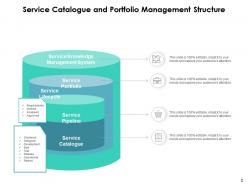
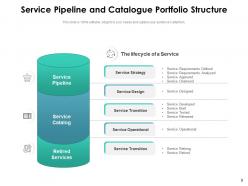
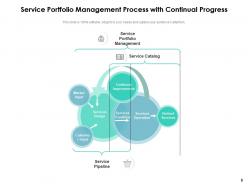
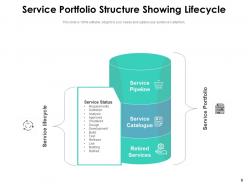
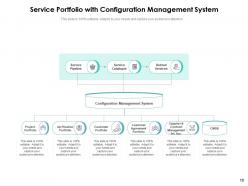
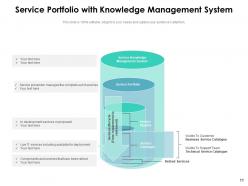
A service portfolio, service catalog, and service pipeline are distinct but interconnected elements in effective service management. A service portfolio encompasses all services an organization offers, outlining their strategic alignment, costs, and performance. A service catalog presents a curated selection of standardized services available to customers, often with detailed descriptions and pricing. Meanwhile, a service pipeline tracks the lifecycle of new service ideas, from ideation to implementation, ensuring continuous innovation and responsiveness to evolving needs. These components work together to ensure service delivery is efficient, aligned with business goals, and constantly evolving to meet customer demands.
Service portfolio management is about optimizing the mix of services an organization offers to meet evolving needs and drive efficiency. Organizations can ensure continuous improvement by regularly evaluating service performance, identifying areas for optimization, and implementing changes based on customer feedback, market trends, and emerging technologies. This might involve streamlining processes, automating tasks, or even sunsetting underperforming services, ultimately enhancing customer experiences and maximizing operational efficiency.
Evaluating individual service performance within a portfolio requires a multi-faceted approach, utilizing metrics like customer satisfaction, service level agreements (SLAs), operational efficiency, and return on investment (ROI). Customer satisfaction, measured through surveys and feedback, gauges user experience, while SLAs track adherence to agreed-upon performance targets, ensuring service reliability. Operational efficiency, encompassing factors like resolution time and cost per incident, highlights process effectiveness, and ROI demonstrates the financial value delivered by each service.
Service portfolio management supports innovation by strategically aligning services with organizational goals, enabling the identification and prioritization of innovative initiatives. This process helps by freeing up resources, minimizing redundancy, and fostering a culture of experimentation and continuous improvement, ultimately leading to the development and deployment of new services and solutions that drive competitive advantage.
Communicating the value of your service portfolio to stakeholders can be achieved through a multi-pronged approach, including showcasing key performance indicators (KPIs) like customer satisfaction scores and service level agreements (SLAs), demonstrating cost savings through process optimization, and highlighting strategic alignment with organizational goals. With many organizations finding that clear, data-driven communication leads to greater stakeholder buy-in, presenting tangible results alongside strategic roadmaps fosters a shared understanding of the portfolio's value and its impact on overall business success.
Risk management is critical in service portfolio management as it helps organizations proactively identify, assess, and mitigate potential threats to service delivery and business objectives. By implementing robust risk management processes, organizations can minimize disruptions, ensure service continuity, and protect their reputation, ultimately enhancing customer satisfaction and driving operational efficiency.
Service portfolio reviews involve analyzing existing services, identifying gaps, and aligning offerings with strategic objectives. Best practices include conducting a comprehensive assessment of service value, usage, and costs, engaging stakeholders across departments, and prioritizing services based on customer demand, revenue generation, and strategic alignment. By leveraging data-driven insights and collaborative decision-making, organizations can optimize their service portfolios for enhanced efficiency, customer satisfaction, and competitive advantage.
Service portfolio management assists in resource allocation and budgeting by providing a clear overview of all services offered, their associated costs, and their strategic value. This comprehensive view enables organizations to identify high-performing services, optimize resource allocation towards those with the greatest impact, and make data-driven budgeting decisions that align with strategic objectives. By prioritizing investments in services that deliver the highest return on investment, organizations can streamline operations, enhance customer experiences, and ultimately drive sustainable growth.
No Reviews