


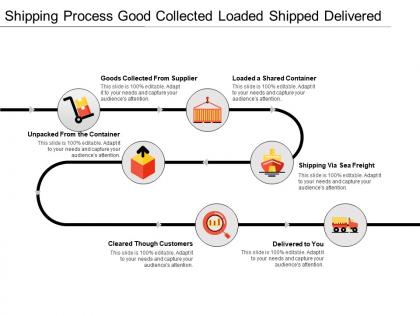
Shipping process good collected loaded shipped delivered




Try Before you Buy Download Free Sample Product
 Impress Your
 Audience
 100%
100% Editable
 Save Hours
 of Time


Counter any hazards with our Shipping Process Good Collected Loaded Shipped Delivered. They nullify any effect they have.
People who downloaded this PowerPoint presentation also viewed the following :
Shipping process good collected loaded shipped delivered with all 5 slides:
Develop expertise on the job with our Shipping Process Good Collected Loaded Shipped Delivered. Increase awareness of intricate details.




FAQs for Shipping process good collected
The key shipping process steps include order processing, inventory allocation, picking and packing, carrier selection, shipment dispatch, tracking updates, and final delivery confirmation. These stages streamline fulfillment by automating warehouse operations, optimizing route planning, and providing real-time visibility, with many e-commerce companies finding that integrated systems significantly reduce delivery times while enhancing customer satisfaction.
Different shipping methods significantly impact delivery timelines and costs through speed, distance coverage, and service levels. Express air shipping delivers within 1-2 days but costs substantially more, while ground transportation takes 3-7 days at lower rates, and economy sea freight requires weeks but minimizes expenses, with many e-commerce businesses finding that offering multiple options enhances customer satisfaction while optimizing operational efficiency.
Packaging serves as the primary protective barrier during shipping, safeguarding goods from damage through cushioning, moisture protection, temperature control, and shock absorption. Strategic packaging design significantly reduces product loss, minimizes return costs, and enhances customer satisfaction, with many retailers finding that investing in quality packaging materials ultimately delivers competitive advantage and streamlined logistics operations.
Businesses can optimize shipping processes through automated tracking systems, strategic warehouse placement, multiple carrier partnerships, real-time inventory management, and transparent communication protocols. These approaches streamline operations by reducing delivery times, minimizing costs, and providing accurate updates, with many retailers finding that faster, more reliable shipping ultimately delivers improved customer loyalty and competitive advantage.
Common international shipping challenges include customs compliance issues, documentation errors, currency fluctuations, delivery delays, and varying regulatory requirements across countries. These obstacles can be addressed through automated customs software, partnered logistics providers with global expertise, real-time tracking systems, and comprehensive insurance coverage, with many multinational companies finding that strategic shipping partnerships ultimately streamline operations while reducing costs and delivery times.
Customs regulations significantly impact international shipping by requiring detailed documentation, product declarations, and duty calculations, often extending delivery times and increasing costs. These requirements vary by country and product type, with many businesses finding that partnering with experienced freight forwarders streamlines compliance processes, minimizes delays, and ultimately delivers smoother customer experiences across global markets.
E-commerce shipping technology tools include warehouse management systems, automated label printing software, multi-carrier shipping platforms, real-time tracking solutions, and inventory management integrations. These technologies streamline operations by reducing manual data entry, optimizing carrier selection, and enhancing customer visibility, with many online retailers finding that automated shipping workflows significantly reduce fulfillment costs while accelerating delivery times.
Businesses can effectively track shipments through GPS-enabled logistics platforms, automated notification systems, integrated carrier APIs, and customer portal dashboards that provide transparent delivery timelines. These technologies streamline communication by sending proactive alerts, enabling self-service tracking, and reducing customer service inquiries, with many retailers finding that real-time visibility significantly enhances customer satisfaction and builds competitive advantage.
Shipping's environmental impacts include carbon emissions from fuel consumption, air and water pollution, noise disruption to marine ecosystems, and waste generation from packaging materials. Companies are adopting sustainable practices by transitioning to cleaner fuels, optimizing route planning through AI technology, implementing eco-friendly packaging solutions, and investing in electric delivery vehicles, ultimately reducing their carbon footprint while meeting increasingly conscious consumer expectations.
Carrier selection significantly impacts shipping efficiency through delivery speed, network coverage, tracking capabilities, and cost optimization strategies. Different carriers excel in specific areas, with FedEx offering premium express services, UPS providing comprehensive logistics solutions, and regional carriers delivering localized expertise, ultimately enabling businesses to match service levels with customer expectations while optimizing operational costs.
Key factors include package dimensions and weight, shipping distance and destination zones, delivery speed requirements, carrier selection, and additional services like insurance or tracking. These variables significantly impact cost structures, with many e-commerce businesses finding that optimizing packaging dimensions and negotiating carrier rates delivers substantial savings while maintaining competitive delivery options for customers.
Companies manage shipping delays through proactive tracking systems, automated notifications, alternative delivery options, transparent communication channels, and contingency planning partnerships. By implementing real-time updates and offering compensation or expedited alternatives, businesses in retail and e-commerce maintain customer trust, with many finding that honest, timely communication ultimately enhances customer loyalty and competitive advantage.
Best practices for returns management include automated return authorization systems, prepaid return labels, clear return policies, streamlined inspection processes, and integrated inventory management. These approaches enhance customer satisfaction by reducing return friction, accelerate product restocking through efficient processing workflows, and minimize operational costs, with many retailers finding that seamless returns management ultimately drives customer loyalty and repeat purchases.
Shipping policies significantly impact customer trust and retention by establishing clear expectations, transparent costs, and reliable delivery timelines. Businesses with comprehensive policies covering returns, damages, and delays build stronger relationships, with many e-commerce companies finding that flexible shipping options and proactive communication enhance customer satisfaction, ultimately delivering competitive advantage and increased loyalty.
Innovations shaping shipping's future include autonomous vessels, IoT tracking systems, blockchain documentation, AI-powered route optimization, and drone delivery networks. These technologies streamline operations by reducing human error, enhancing real-time visibility, and accelerating delivery times, with many logistics companies finding that strategic automation ultimately delivers significant cost reductions and improved customer experiences.
-
Innovative and attractive designs.
-
Use of icon with content is very relateable, informative and appealing.