


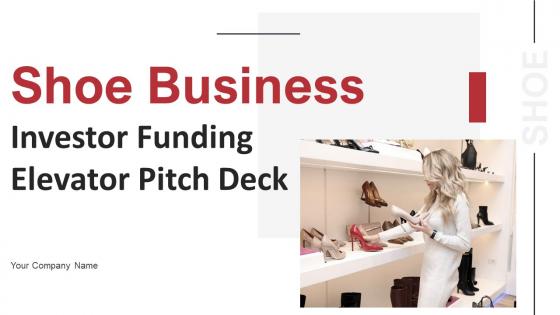
Shoe Business Investor Funding Elevator Pitch Deck Ppt Template




Try Before you Buy Download Free Sample Product
 Impress Your
 Audience
 100%
100% Editable
 Save Hours
 of Time


Check out our professionally designed Shoe Business Investor Funding Elevator Pitch Deck. This pitch presentation addresses prevalent challenges shoe manufacturers face, such as high production costs, extensive human resource requirements, and prolonged manufacturing durations. Also, the Fund Proposal Deck outlines the solution, emphasizing the integration of digital technology into the shoe manufacturing process. Moreover, the Digital Knitting Technology Pitchbook provides comprehensive company insights, including introductions, key facts, product and service offerings, unique selling propositions, notable milestones, business models, competitive analysis, market potential, and financial performance. Lastly, the Digital Knitting Technology pitch deck covers critical elements such as investment requisites, fund allocation strategies, funding trajectory, core team composition, exit strategy, and the companys shareholding pattern. Gain access to this fully editable template now.
People who downloaded this PowerPoint presentation also viewed the following :
Content of this Powerpoint Presentation
Slide 1: This slide introduces Shoe Business Investor Funding Elevator Pitch Deck. State your company name and begin.
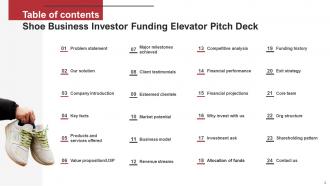
Slide 2: This slide shows Table of Content for the presentation.
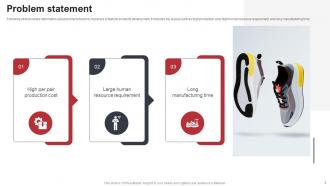
Slide 3: This slide provides information about problems faced by business in fashion products development.
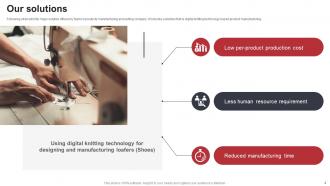
Slide 4: This slide exhibits major solution offered by fashion products manufacturing and selling company.
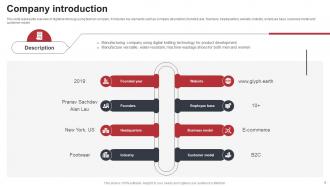
Slide 5: This slide represents overview of digital technology using fashion company. It includes key elements such as company description, founded year etc.
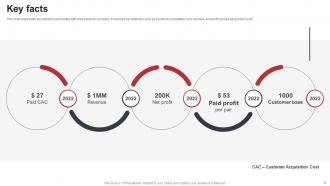
Slide 6: This slide displays key statistics associated with online fashion company. It includes key statistics such as Customer acquisition cost, revenue etc.
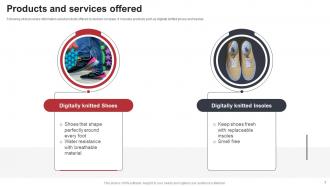
Slide 7: This slide provides information about products offered by fashion company. It includes products such as digitally knitted shoes and insoles.
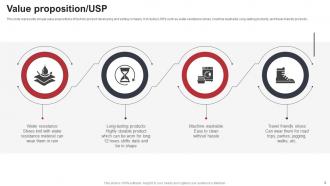
Slide 8: This slide represents unique value propositions of fashion product developing and selling company. It includes USPs such as water-resistance shoes, machine washable etc.
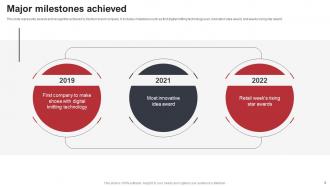
Slide 9: This slide displays the awards and recognition achieved by fashion brand company.
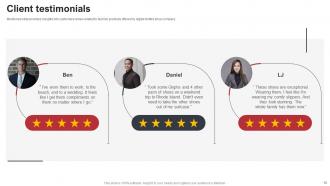
Slide 10: This slide provides insights into customers review related to fashion products offered by digital knitted shoe company.
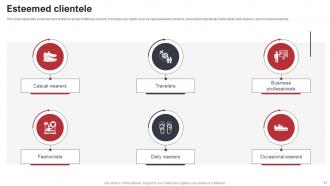
Slide 11: This slide represents customer base of fashion product offering company. It includes key clients such as casual wearers, travelers etc.
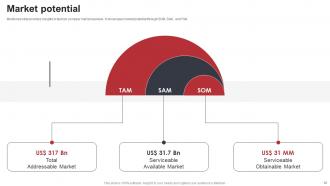
Slide 12: This slide provides insights in fashion company market overview. It showcases market potential through SOM, SAM, and TAM.
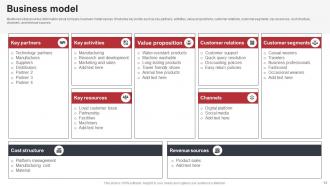
Slide 13: This slide displays information about company business model canvas. It includes key points such as key partners, activities, value propositions etc.
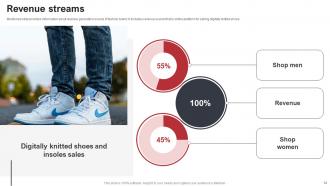
Slide 14: This slide provides information about revenue generation source of fashion brand. It includes revenue source that is online platform for selling digitally knitted shoes.
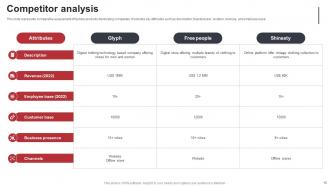
Slide 15: This slide represents comparative assessment of fashion products developing companies. It includes key attributes such as description, founded year, location etc.
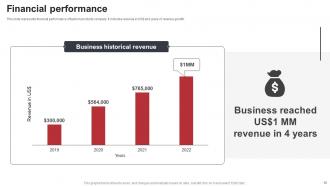
Slide 16: This slide displays financial performance of fashion products company. It includes revenue in US$ and years of revenue growth.
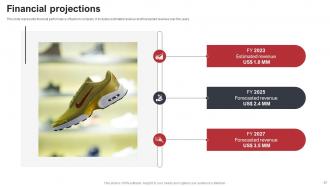
Slide 17: This slide represents financial performance of fashion company. It includes estimated revenue and forecasted revenue over the years.
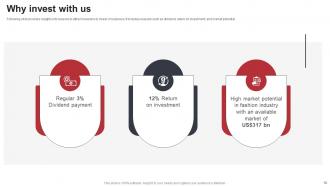
Slide 18: This slide provides insights into reasons to attract investors to invest in business. It includes reasons such as dividend, return on investment, and market potential.
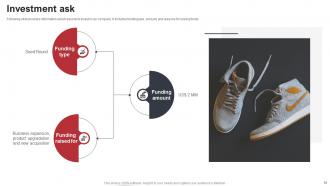
Slide 19: This slide displays information about reasons to invest in our company. It includes funding type, amount, and reasons for raising funds.
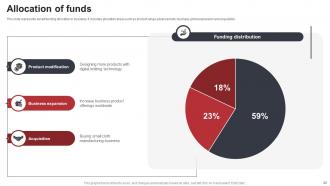
Slide 20: This slide represents asked funding allocation in business. It includes allocation areas such as product range advancement, business global expansion and acquisition.
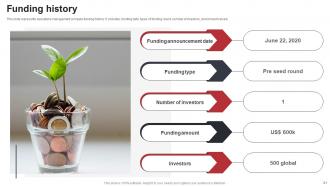
Slide 21: This slide displays operations management company funding history. It includes, funding date, types of funding round, number of investors, and amount raised.
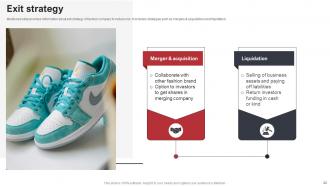
Slide 22: This slide provides information about exit strategy of fashion company to reduce risk. It includes strategies such as mergers & acquisitions and liquidation.
Slide 23: This slide displays information about core management team of fashion company. It includes members such as founder & CEO, and Founder & CTO.
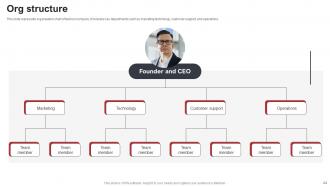
Slide 24: This slide represents organisation chart of fashion company. It includes key departments such as marketing technology, customer support, and operations.
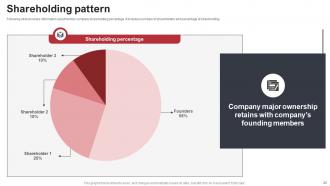
Slide 25: This slide provides information about fashion company shareholding percentage. It includes numbers of shareholders and percentage of shareholding.
Slide 26: This is a Contact Us slide to show company's contact information.
Slide 27: This slide shows all the icons included in the presentation.
Slide 28: This slide is titled as Additional Slides for moving forward.
Slide 29: This slide shows Post It Notes for reminders and deadlines. Post your important notes here.
Slide 30: This is a Timeline slide. Show data related to time intervals here.
Slide 31: This is a financial slide. Show your finance related stuff here.
Slide 32: This slide depicts Venn diagram with text boxes.
Slide 33: This slide provides 30 60 90 Days Plan with text boxes.
Slide 34: This is an Idea Generation slide to state a new idea or highlight information, specifications etc.
Slide 35: This slide contains Puzzle with related icons and text.
Slide 36: This is Our Goal slide. State your firm's goals here.
Slide 37: This slide shows SWOT analysis describing- Strength, Weakness, Opportunity, and Threat.
Slide 38: This is a Thank You slide with address, contact numbers and email address.
Shoe Business Investor Funding Elevator Pitch Deck Ppt Template with all 46 slides:
Use our Shoe Business Investor Funding Elevator Pitch Deck Ppt Template to effectively help you save your valuable time. They are readymade to fit into any presentation structure.











FAQs for Shoe Business Investor Funding Elevator Pitch
Dude, sustainability is absolutely everywhere right now - people actually care about eco-friendly stuff and ethical manufacturing. Also comfort is king since everyone's working from home. Athleisure basically owns the world at this point lol. Direct-to-consumer brands are killing it by skipping stores completely. Limited drops and customization make people go crazy with FOMO. Smart insoles and tech integration exist but honestly it's still pretty niche. For your next line? Focus on sustainable materials and all-day comfort. That's literally where all the money is.
Dude, the difference is crazy. Athletic shoe buyers obsess over performance stuff - cushioning, breathability, support. They'll drop serious cash if the tech actually delivers. Casual shoes though? Style and price win every time. People want versatility without spending a fortune. Nike has basically created a cult following in athletic wear, but casual shoppers will totally switch brands for the right look. I swear some people have like 20 pairs of white sneakers from different companies. Your marketing needs to be completely different - talk performance for athletic, talk style for casual.
Honestly, sustainability isn't optional anymore - customers care and stores won't carry your stuff without it. Nike and Adidas are all over recycled materials and water-based glues now (though half of it's probably just marketing BS). Three big things to hit: where you source materials, cutting production waste, and actually making shoes that don't fall apart in like 6 months. Oh, and definitely audit your supply chain first - that's usually where you'll find the most obvious problems. Most brands are switching to renewable energy in factories too. Start there and you'll be ahead of most companies still figuring this out.
Look, you can't beat Nike at their own game - so don't even try. Find some super specific niche they're ignoring. Maybe it's arch support for runners, maybe sustainable sneakers, whatever. The key is going crazy deep instead of trying to do everything (which honestly just makes you look desperate). Build a tight community around that one thing. Social media is your best friend here - share your actual story, not some polished marketing BS. Work with smaller influencers who genuinely care about your niche rather than dropping huge money on celebrities. Oh and start local! Dominate one city or region first before you think about expanding nationwide.
So 3D printing is completely nuts right now - brands can pump out custom midsoles in hours versus the usual weeks. Nike and Adidas are doing some crazy prototype stuff you should check out. There's also these AI foot scanning apps that get you perfect fits right from your phone, which honestly works better than I expected. Machine learning helps predict what'll actually sell before companies waste money on production. Oh, and the sustainable materials are wild - ocean plastic shoes, mushroom leather, all that. Manufacturing timelines are getting flipped upside down basically.
Dude, you absolutely need a story with shoes. Look at Nike - they've been killing it with "Just Do It" forever, right? Without some kind of narrative, you're basically just another sneaker brand fighting over price. That's brutal. Your customers want to buy into something bigger - maybe it's sustainability, maybe it's street cred, whatever. They're not just getting footwear, they're getting an identity. Honestly, I see so many shoe brands that look identical because they skipped this step. Figure out what you actually stand for first, then build everything else around that story.
So basically, affluent millennials and Gen Z women (25-40, making $100K+) are driving this whole luxury shoe thing. They'll totally drop $500+ on a pair because they see them as investment pieces. Urban professionals especially - they care way more about craftsmanship and brand prestige than the actual price tag. Social media's making it worse too, honestly. My cousin spent $800 on Louboutins last month and didn't even blink. But yeah, if you're targeting luxury, those are definitely your people. High earners who view expensive shoes as status symbols rather than just... shoes.
Honestly, seasonal trends will make or break your shoe inventory game. You're basically placing bets months ahead - ordering boots in July for fall, sandals in January for spring. It's wild how you're constantly gambling on weather and fashion cycles that could totally tank. Last year's monthly sales data helps, but you've got to factor in trend forecasts too. Regional climate stuff matters more than people think. The real trick? Build flexibility into your orders. That way when some "hot" style becomes a total dud, you can pivot fast instead of getting stuck with dead inventory.
Honestly, influencer partnerships are huge for shoes - people trust those unboxing videos way more than regular ads. Instagram and TikTok are where it's at since shoe culture basically lives there. Limited drops work amazing because FOMO is real with sneakers. Email your existing customers first for launches, give them early access or whatever. Pop-ups and local store collabs help too, though I'd probably focus on social first if I were you. Oh and don't try to be everywhere at once - pick like two things you can actually do well instead of half-assing five different platforms.
Dude, social media is everything for shoe sales now. People see influencers rocking certain brands and immediately want them. User-generated content works crazy well too - like when someone posts their new sneakers and gets a bunch of likes, it basically tells everyone else "yeah, these are worth buying." Reviews from actual customers matter way more than brand descriptions honestly. The styling videos are huge for showing how to wear stuff. Most platforms have those direct shopping links now so people can buy without even leaving the app. I'd definitely check which social channels are actually converting for you and focus your energy there instead of spreading yourself thin everywhere.
Honestly, the logistics mess will drive you crazy - sourcing materials from one place, manufacturing somewhere else, then shipping everywhere. One delay and everything falls apart like dominoes. Quality control is brutal too when your factories are spread across different continents. Labor costs keep changing which screws with your margins, and don't even get me started on currency fluctuations. That stuff's unpredictable as hell. My take? Get good supply chain software so you can actually see what's happening. Also build solid relationships with quality managers at each location - trust me on this one.
Dude, shoe shopping online is totally different now. Customers want AR try-ons and those detailed size charts - nobody wants to guess anymore. Smart retailers are sending multiple sizes to your house so you can try them on your own couch. 360-degree product views are basically mandatory at this point. I honestly think the virtual fitting tech is a game-changer because returns used to be such a nightmare. User reviews with actual photos help too. Your return policy better be flexible or people will just shop somewhere else. Make it feel close to the in-store experience and you'll crush it.
Dude, influencer marketing is massive for shoe brands right now. People literally screenshot posts to buy the exact sneakers they see - it's wild how much more effective it is than regular ads. You're hitting their audience in this super authentic way when someone with millions of followers rocks your kicks. But here's the thing - don't just chase follower counts. Find influencers whose style actually matches your vibe. I learned this the hard way lol. Check their engagement rates first and really dig into who's following them. That's where the magic happens.
Honestly, start by pulling your sales data from the past year - see which styles, sizes, and colors are your top performers. The POS systems these days collect crazy amounts of info, so use it! Look at seasonal patterns and where stuff sells best geographically. Here's something most people miss: track what customers browse online vs. what they actually buy. That gap tells you everything about your pricing strategy. I'd focus on identifying your top 20% of products first, then figure out why they crushed it. Don't forget to check inventory turnover rates too - they'll help you predict demand way better than just guessing.
Dude, shoe customization is like crack for customer loyalty. When people design their own sneakers, they get emotionally attached in a way that just doesn't happen with regular purchases. You're basically turning customers into partners in the design process - and once they've invested that time and creativity, good luck getting them to bounce to your competitors. Nobody else can replicate that personal connection they built with your brand. The catch is it's a total pain operationally and costs way more to pull off. But honestly? If you can nail the execution, the loyalty boost usually pays for itself.
-
SlideTeam’s pool of 2Million+ PPTs has really benefited my team, everyone from the IT department to HR. We are lucky to have crossed ways with them.
-
Making a presentation has never been this easy for me. Thank you SlideTeam for offering a splendid template library.