


Shopper Marketing Plan To Improve Retail Store Performance MKT CD V





Try Before you Buy Download Free Sample Product
 Impress Your
 Audience
 100%
100% Editable
 Save Hours
 of Time


The Shopper Marketing Plan to Improve Retail Store Performance template is all about analyzing the buyers journey to enhance the customers shopping experience. It provides a comprehensive overview of shopper marketing, including statistics, trends, evolution, and a comparison with trade marketing strategy. The Customer Segmentation deck features the segmentation analysis, offered products, current marketing strategies, and challenges faced by the retail store. The template comprises a shopper marketing plan with five phases assessment, sustaining shopper strategies, stakeholder alignment, marketing program, and measuring results. The Retail Promotion PPT demonstrates the PITA model, gathering shopper insights, drivers, and barriers for shoppers, shopper profile, engagement plan, in store communication plan, and cross functional team building. It also highlights promotional activities such as in store events, loyalty programs, displays, demos, ambiance, and social media marketing. Lastly, the Customer Engagement Plan module covers the impact of shopper marketing on retail store performance and metrics dashboard. The template is 100 percentage editable, customizable, and compatible with Google Slides. Improve your customers shopping experience by getting access to this template now.
People who downloaded this PowerPoint presentation also viewed the following :
Content of this Powerpoint Presentation
Slide 1: This slide introduces Shopper Marketing Plan to Improve Retail Store Performance. State your company name and begin.
Slide 2: This slide depicts the Agenda of the presentation.
Slide 3: This slide incorporates the Table of Contents.
Slide 4: This slide highlights the Title for the Topics to be covered in the following template.
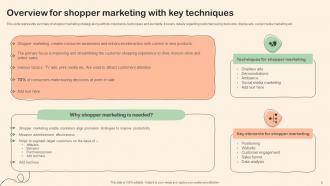
Slide 5: This slide presents the Overview for shopper marketing with key techniques.
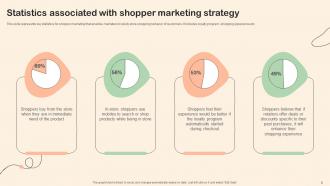
Slide 6: This slide shows the key statistics for shopper marketing that enables marketers to study store shopping behavior of customers.
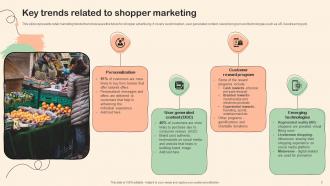
Slide 7: This slide reveals the Key trends related to shopper marketing.
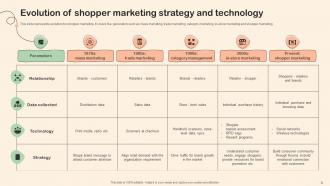
Slide 8: This slide portrays the Evolution of shopper marketing strategy and technology.
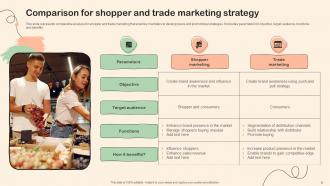
Slide 9: This slide depicts the Comparison for shopper and trade marketing strategy.
Slide 10: This slide displays the Hedaing for the Contents to be covered further.
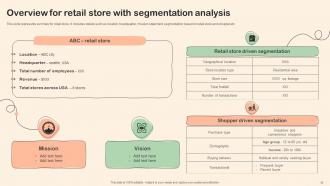
Slide 11: This slide showcases the Overview for retail store with segmentation analysis.
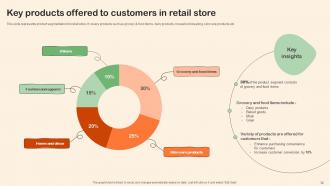
Slide 12: This slide exhibits the Key products offered to customers in retail store.
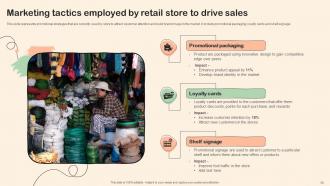
Slide 13: This slide talks about the Marketing tactics employed by retail store to drive sales.
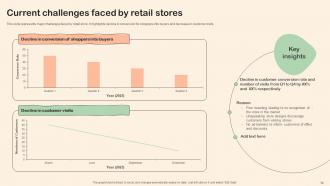
Slide 14: This slide reveals the Current challenges faced by retail stores.
Slide 15: This slide incorporates the Title for the Ideas to be discussed further.
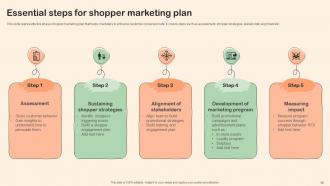
Slide 16: This slide lists the Essential steps for shopper marketing plan.
Slide 17: This slide elucidates the Heading for the Ideas to be covered in the upcoming template.
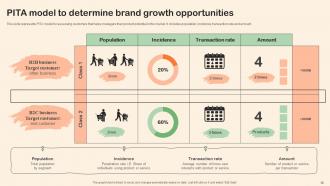
Slide 18: This slide represents PITA model for assessing customers that helps managers their product potential in the market.
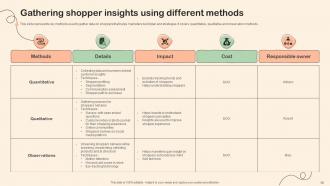
Slide 19: This slide deals with Gathering shopper insights using different methods.
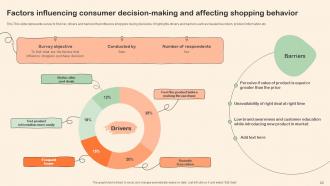
Slide 20: This slide exhibits the Factors influencing consumer decision-making and affecting shopping behavior.
Slide 21: This slide displays the Title for the Components to be discussed further.
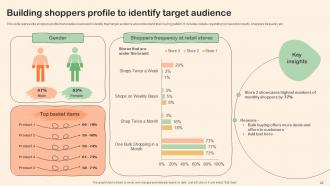
Slide 22: This slide focuses on building Building shoppers profile to identify target audience.
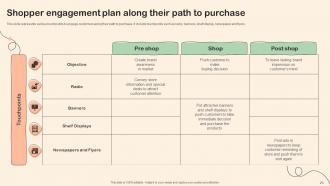
Slide 23: This slide reveals the Shopper engagement plan along their path to purchase.
Slide 24: This slide includes the Heading for the Topics to be covered in the forth-coming template.
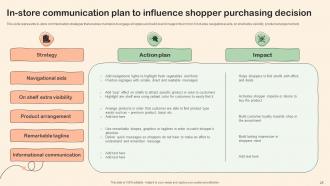
Slide 25: This slide showcases the In-store communication plan to influence shopper purchasing decision.
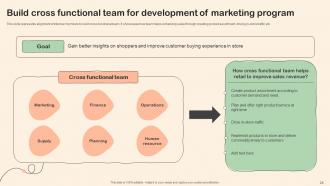
Slide 26: This slide represents alignment of internal members to build cross functional team.
Slide 27: This slide portrays the Title for the Topics to be discussed in the next template.
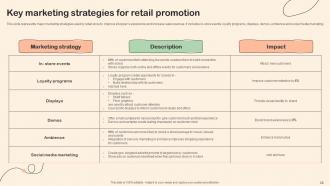
Slide 28: This slide states the Key marketing strategies for retail promotion.
Slide 29: This slide highlights the Heading for the Contents to be covered in the following template.
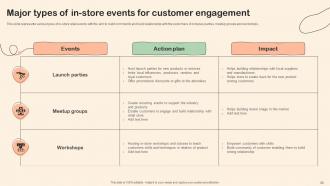
Slide 30: This slide depicts the Major types of in-store events for customer engagement.
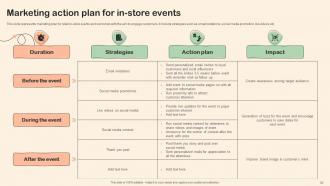
Slide 31: This slide shows the Marketing action plan for in-store events.
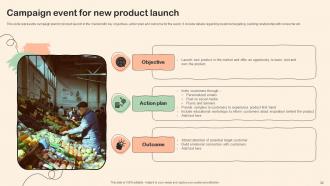
Slide 32: This slide talks about the Campaign event for new product launch.
Slide 33: This slide displays the Title for the Ideas to be discussed further.
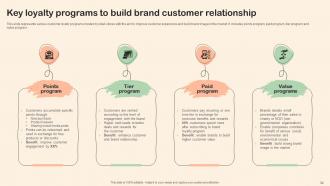
Slide 34: This slide showcases the Key loyalty programs to build brand customer relationship.
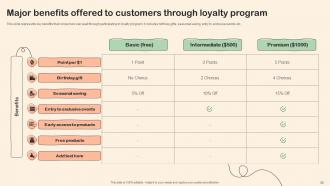
Slide 35: This slide exhibits the Major benefits offered to customers through loyalty program.
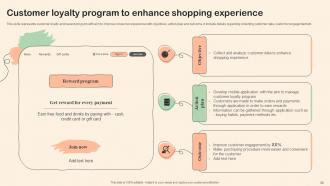
Slide 36: This slide reveals the Customer loyalty program to enhance shopping experience.
Slide 37: This slide mentions the Heading for the Ideas to be covered in the forth-coming template.
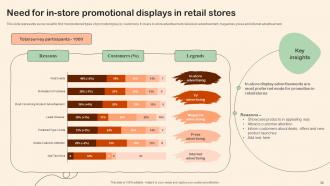
Slide 38: This slide emphasizes on the Need for in-store promotional displays in retail stores.
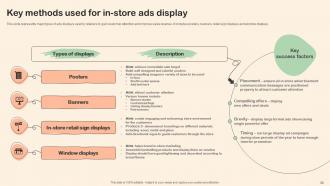
Slide 39: This slide exhibits the Key methods used for in-store ads display.
Slide 40: This slide shows the Title for the Components to be discussed next.
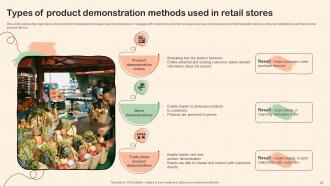
Slide 41: This slide states the Types of product demonstration methods used in retail stores.
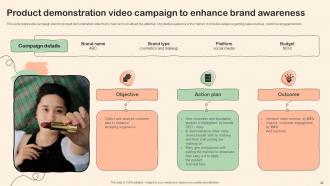
Slide 42: This slide represents the Product demonstration video campaign to enhance brand awareness.
Slide 43: This slide elucidates the Heading for the Topics to be covered in the following template.
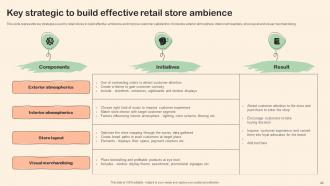
Slide 44: This slide highlights the Key strategic to build effective retail store ambience.
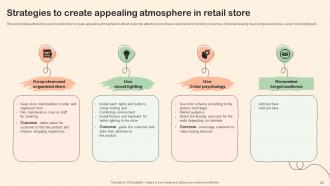
Slide 45: This slide portrays the Strategies to create appealing atmosphere in retail store.
Slide 46: This slide indicates the Title for the Topics to be discussed in the following template.
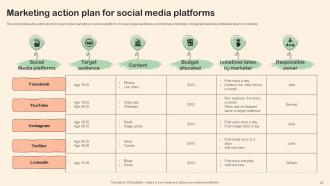
Slide 47: This slide reveals the Marketing action plan for social media platforms.
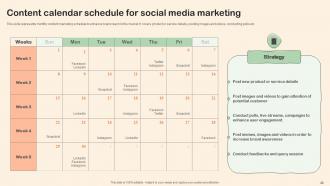
Slide 48: This slide indicates the Content calendar schedule for social media marketing.
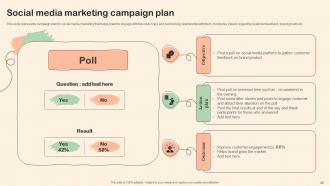
Slide 49: This slide focuses on the Social media marketing campaign plan.
Slide 50: This slide elucidates the Heading for the Components to be covered further.
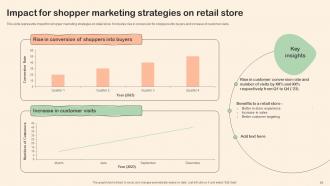
Slide 51: This slide represents impact for shopper marketing strategies on retail store.
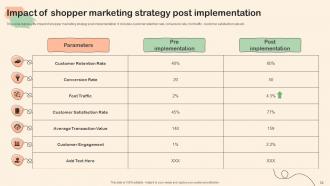
Slide 52: This slide showcases the impact of shopper marketing strategy post implementation.
Slide 53: This slide contains all the icons used in this presentation.
Slide 54: This slide is titled as Additional Slides for moving forward.
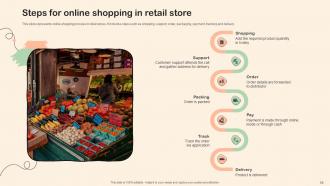
Slide 55: This slide shows Steps for online shopping in retail store.
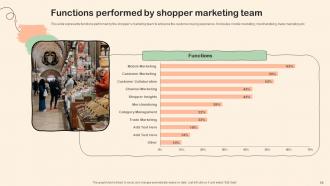
Slide 56: This slide presents Functions performed by shopper marketing team.
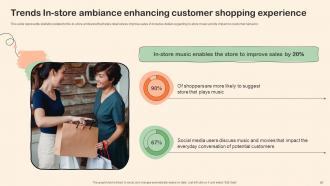
Slide 57: This slide displays Trends In-store ambiance enhancing customer shopping experience.
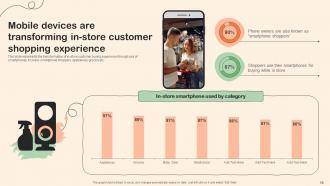
Slide 58: This slide represents Mobile devices are transforming in-store customer shopping experience.
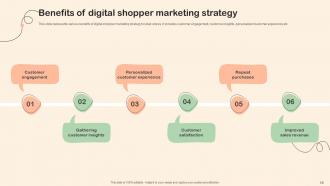
Slide 59: This slide showcases Benefits of digital shopper marketing strategy.
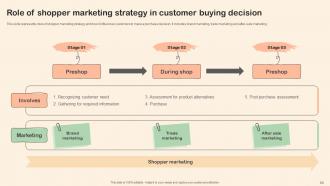
Slide 60: This slide shows Role of shopper marketing strategy in customer buying decision.
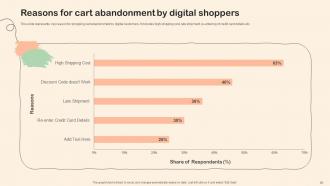
Slide 61: This slide presents Reasons for cart abandonment by digital shoppers.
Slide 62: This is About Us slide to show company specifications etc.
Slide 63: This is Our Mission slide with related imagery and text.
Slide 64: This is a Quotes slide to convey message, beliefs etc.
Slide 65: This is a Financial slide. Show your finance related stuff here.
Slide 66: This slide contains Puzzle with related icons and text.
Slide 67: This is a Timeline slide. Show data related to time intervals here.
Slide 68: This slide depicts Venn diagram with text boxes.
Slide 69: This slide shows Post It Notes. Post your important notes here.
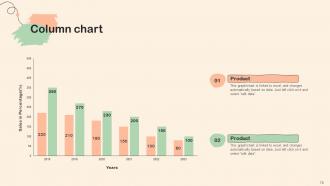
Slide 70: This slide displays Column chart with two products comparison.
Slide 71: This is an Idea Generation slide to state a new idea or highlight information, specifications etc.
Slide 72: This is a Thank You slide with address, contact numbers and email address.
Shopper Marketing Plan To Improve Retail Store Performance MKT CD V with all 77 slides:
Use our Shopper Marketing Plan To Improve Retail Store Performance Powerpoint Presentation Slides MKT CD to effectively help you save your valuable time. They are readymade to fit into any presentation structure.










FAQs for Shopper Marketing Plan To Improve Retail Store Performance
Key components of an effective shopper marketing strategy include path-to-purchase mapping, in-store experience optimization, digital-physical integration, targeted promotional campaigns, and data-driven personalization. These elements work together by understanding consumer behavior, creating seamless touchpoints, and delivering relevant messaging at critical decision moments, with many retailers finding that this strategic combination significantly increases conversion rates and customer loyalty.
Data analytics enhances shopper marketing by providing deep customer insights, optimizing product placement, personalizing promotional campaigns, and predicting purchase behaviors across multiple touchpoints. Through advanced analytics platforms, retailers can track shopping patterns, measure campaign effectiveness, and adjust strategies in real-time, ultimately delivering more targeted experiences and improved conversion rates.
In-store displays significantly influence purchasing decisions by capturing attention, creating product awareness, and triggering impulse purchases through strategic positioning and visual appeal. These displays enhance brand visibility, communicate promotional offers, and guide customer navigation, with many retailers finding that well-designed displays increase sales conversion rates by 20-30%, ultimately delivering improved customer engagement and competitive advantage.
Shopper marketing targets consumers at the point of purchase and throughout their buying journey, focusing on in-store experiences, promotional displays, and purchase decision moments, while traditional advertising builds brand awareness through mass media channels like television, radio, and print. This approach enables retailers and brands to influence immediate purchasing decisions, optimize product placement, and deliver personalized experiences that directly convert shoppers into buyers.
Successful shopper marketing campaigns include Coca-Cola's personalized bottle labels, P&G's Tide Pod in-store demonstrations, Amazon's targeted digital coupons, Unilever's cross-category bundling strategies, and Nike's experiential retail activations. These campaigns streamline purchase decisions by combining emotional engagement, product education, and strategic placement, with many retailers finding that integrated approaches deliver increased conversion rates, higher basket values, and enhanced customer loyalty.
Brands can tailor messaging by segmenting shoppers based on demographics, purchasing behavior, shopping frequency, price sensitivity, and preferred channels. Through detailed persona mapping, retailers develop targeted campaigns that resonate with specific groups, such as convenience-focused millennials or budget-conscious families, ultimately delivering higher engagement rates and conversion optimization across diverse customer segments.
Digital technologies revolutionize shopper marketing by enabling personalized experiences, real-time analytics, mobile engagement, targeted advertising, and omnichannel integration. Through AI-driven insights and location-based services, retailers streamline customer journeys, enhance in-store experiences, and optimize product placement, with many brands finding that these technologies ultimately deliver higher conversion rates and competitive advantage.
Retailers can leverage social media to boost in-store sales through location-based promotions, exclusive in-store offers for followers, user-generated content campaigns, and real-time inventory updates. These strategies create seamless online-to-offline experiences, with many retailers finding that social media drives foot traffic through geotargeted ads and influencer partnerships, ultimately delivering higher conversion rates and enhanced customer engagement.
Key shopper marketing metrics include conversion rates, basket size, dwell time, brand loyalty scores, and return on marketing investment. These measurements enable retailers to track customer behavior, purchase patterns, and campaign effectiveness across touchpoints, with many retail organizations finding that combining in-store analytics with digital engagement data ultimately delivers comprehensive insights for optimizing shopper experiences and driving sustained revenue growth.
Collaboration between brands and retailers enhances shopper marketing by combining complementary data insights, resources, and expertise to create more targeted campaigns and seamless customer experiences. Through shared analytics and coordinated promotional strategies, partnerships enable optimized product placement, personalized messaging, and integrated digital-physical touchpoints, ultimately delivering increased sales, improved customer satisfaction, and stronger competitive positioning for both parties.
Emerging shopper marketing trends include hyper-personalized experiences through AI analytics, omnichannel integration connecting digital and physical touchpoints, sustainability-focused messaging, voice commerce optimization, and augmented reality try-before-buy features. These technologies enhance customer engagement by delivering targeted recommendations, streamlining purchase journeys, and creating immersive brand interactions, with many retailers finding that integrated approaches significantly boost conversion rates and customer loyalty.
Customer experience is central to shopper marketing strategies, directly influencing purchase decisions, brand loyalty, and repeat business across retail touchpoints. Through personalized messaging, seamless omnichannel integration, and targeted promotions, retailers enhance customer satisfaction while driving conversions, with many finding that superior experiences ultimately deliver competitive advantage and increased revenue growth.
Seasonal promotions significantly influence shopper behavior by creating urgency, shifting purchase timing, and increasing basket sizes through limited-time offers. Retailers in fashion, electronics, and grocery sectors find that strategic seasonal campaigns drive impulse purchases, encourage brand switching, and boost customer traffic during key periods, ultimately delivering higher revenues and enhanced customer engagement throughout promotional cycles.
Personalization in shopper marketing can be implemented through data-driven customer segmentation, targeted digital advertising, customized in-store experiences, and personalized product recommendations. By leveraging purchase history, demographic data, and behavioral insights, retailers like Target and Amazon deliver tailored promotions and messaging that enhance customer engagement, increase conversion rates, and ultimately drive stronger brand loyalty and sales growth.
Ethical shopper marketing considerations include transparent pricing, honest product claims, responsible data collection, inclusive messaging, and avoiding manipulative tactics. While effective marketing drives sales, brands increasingly find that ethical approaches build stronger customer trust, enhance brand reputation, and deliver sustainable competitive advantage in today's socially conscious marketplace.
-
No second thoughts when I’m looking for excellent templates. SlideTeam is definitely my go-to website for well-designed slides.
-
The best and engaging collection of PPTs I’ve seen so far. Great work!