


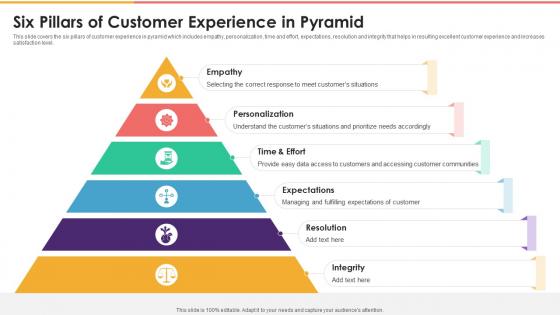
Six Pillars Of Customer Experience In Pyramid




Try Before you Buy Download Free Sample Product
 Impress Your
 Audience
 100%
100% Editable
 Save Hours
 of Time


This slide covers the six pillars of customer experience in pyramid which includes empathy, personalization, time and effort, expectations, resolution and integrity that helps in resulting excellent customer experience and increases satisfaction level.
People who downloaded this PowerPoint presentation also viewed the following :
Six Pillars Of Customer Experience In Pyramid with all 6 slides:
Use our Six Pillars Of Customer Experience In Pyramid to effectively help you save your valuable time. They are readymade to fit into any presentation structure.





FAQs for Six Pillars Of Customer
Honestly, it's all about removing friction and making things personal. Map out where customers get frustrated first - that's your goldmine right there. Quick problem solving matters, but having staff who actually give a damn? Game changer. I can't believe how many companies still don't get this. Consistency across every channel is huge too. Website, phone, in-person - should all feel connected. The magic happens when you predict what they need before they ask. Oh, and seamless interactions aren't negotiable anymore. People expect it. Start small though - fix the biggest pain points first, then build from there.
Mix surveys and actual data - NPS scores, satisfaction ratings, plus those open-ended questions where people really vent. Retention rates and support ticket times tell you a lot too. I'd definitely monitor social media since that's where people complain freely. The tricky part? Actually doing something with all this feedback instead of just collecting it. Monthly data reviews work well, then build action plans from what customers are saying. Oh, and repeat purchase rates - forgot that one but it's huge for spotting problems early.
Dude, personalization is a total game changer for keeping customers happy. Like, when you actually use someone's name in emails or suggest stuff based on what they've bought before, they feel seen instead of just being another random customer. Netflix is perfect example - their recommendations actually make sense because they track what you watch. Short sentences work. But mixing in longer ones keeps it interesting and natural. Honestly, the numbers don't lie either - personalized experiences bump satisfaction up 20-30% and get people buying again. Start small though, don't go crazy right away.
Look, feedback loops are honestly game-changers for catching problems early. You collect customer input, fix what's broken, then tell them what you changed - that's the magic cycle right there. But here's the thing most teams screw up: they ask for feedback then do absolutely nothing with it. Customers notice that and just stop caring. I'd start simple - pick one feedback method, check for patterns every month or so. Oh and always loop back to show people their complaints actually mattered. Otherwise you're just wasting everyone's time, including yours.
Templates are a game-changer for customer insights presentations. Everyone stops making random slide decks and starts following the same format, which stakeholders actually appreciate. You'll save so much time too - no more blank slide panic! The real win is hitting all your important stuff consistently: pain points, customer behaviors, recommendations that people can actually act on. Honestly, the flow just makes more sense when it's standardized. Just grab your best presentation from the past few months and turn that into your team template. Trust me on this one.
Honestly, the worst thing companies do is assume they already know what customers want - like, just ask them? Super obvious but somehow everyone skips it. Teams also get weird about tracking pointless stuff like how fast they respond instead of whether the response actually helps. Plus there's this thing where only the support people think CX is their problem when really it affects everything - design, billing, whatever. Oh and don't get me started on companies that make huge changes without testing first. My take: get real feedback, make sure other departments actually care, then test before you go all-in.
Honestly, tech can fix most of your customer headaches if you use it right. Chatbots are clutch for handling basic questions around the clock. Your CRM should track what people actually want so they don't have to explain their whole situation every single time they contact you. Mobile apps are pretty much mandatory now - order tracking, notifications, easy reordering. People get genuinely annoyed without this stuff. Use analytics to figure out where customers bail out of your process. Then set up automated follow-ups or personalized offers based on what they're doing. Map out your current journey first though and tackle the worst pain points.
Honestly, it all comes down to this - happy employees = happy customers. Your team can't fake being genuinely helpful when they're miserable at work. Customers sense that vibe instantly. I've seen it a million times. Engaged employees will actually problem-solve and create those wow moments that get people talking. Burnt-out staff? They're just going through the motions. It's like a chain reaction starting from your internal culture. Want better customer reviews? Check how your people really feel about showing up every day first.
People remember stories way better than boring feature lists - it's just how our brains work. When you tell a "here's how Sarah fixed this exact problem" story, suddenly everyone's paying attention because they can picture themselves in that situation. I've watched entire rooms shift when someone drops the bullet points and just talks about real customer wins. Stories get people emotionally invested instead of just rattling off specs. Honestly, anything beats another PowerPoint full of charts. Try starting your next pitch with a quick success story - it changes the whole vibe from "salesy" to actually helpful.
Track three things: NPS for loyalty, CSAT for satisfaction, and CES for effort. I used to only watch NPS - terrible idea. Each one tells you something different. Will customers recommend you? That's NPS. Happy with their last interaction? CSAT. Was it a pain to deal with you? CES covers that. Honestly, the real insights come when you look at all three together. Check them monthly, but here's the key part - always follow up with "why" questions. The scores don't mean much without context.
Oh man, this is huge! Some customers want you to get straight to business - boom, done. Others? They want to chat first, build that connection before buying anything. Trust works differently too. Americans love reading reviews online, but in other places it's all about who you know recommending you. And that whole "customer's always right" thing is so American - doesn't fly everywhere, honestly. You've got people who complain loudly versus others who'll just quietly leave. Payment methods vary like crazy too. Really depends on digging into who your actual customers are instead of guessing what they want.
Honestly, the AI stuff is getting crazy good - chatbots actually get what you're saying now instead of just spitting out random responses. You can predict what customers want before they do with machine learning, which feels kinda creepy but works. Voice interfaces and AR are everywhere too (saw this AR shopping thing last week that blew my mind). Everything's personalized in real-time based on how people behave on your site. Plus you can finally move smoothly between apps, websites, stores without losing your place. I'd just look at what tech you're already using and see where you can add this stuff slowly.
Honestly, you've gotta nail down your brand guidelines first - tone, visuals, the whole thing. Then actually get your teams to use them (easier said than done, trust me). Create templates for customer service responses and make sure product info matches everywhere. The worst is when someone's Instagram feels totally different from their email support - customers get so confused by that disconnect. Regular team check-ins help a lot. Maybe set up a shared hub where everyone can grab the right assets? Start by looking at where you are now and spot the weird gaps.
Dude, visuals are a game-changer for CX stuff. People absorb images like 60,000x faster than reading through dense reports - which honestly makes sense when you think about it. Journey maps are perfect for this. Also infographics and dashboards that break down those messy customer flows into something your stakeholders can actually wrap their heads around. Charts showing pain points just hit different than boring bullet points, you know? Teams stay way more aligned when everyone's staring at the same visual roadmap. I'd start simple with basic journey maps - they're clutch for showing that before/after transformation story.
So CRM systems are honestly a game-changer for this stuff. They collect all your customer interactions and purchase history, then you can use that to actually personalize everything. Like instead of boring generic emails, you're hitting people with offers based on what they bought recently. The tracking gets super detailed too - knowing one person likes phone calls in the morning while another only texts back. You can even automate messages to go out at perfect timing. Oh, and definitely start by grouping your contacts based on how they behave. Your engagement will probably skyrocket.
-
Awesome use of colors and designs in product templates.
-
Excellent design and quick turnaround.