


6 Step Customer Journey Flow Chart




Try Before you Buy Download Free Sample Product
 Impress Your
 Audience
 100%
100% Editable
 Save Hours
 of Time


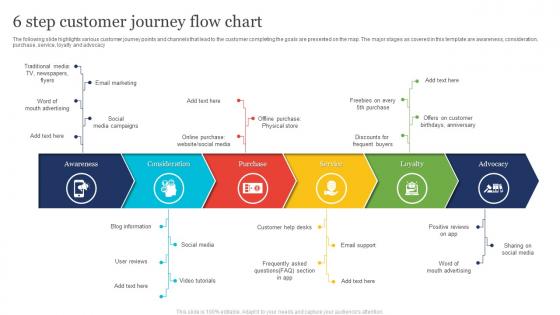
The following slide highlights various customer journey points and channels that lead to the customer completing the goals are presented on the map. The major stages as covered in this template are awareness, consideration, purchase, service, loyalty and advocacy
People who downloaded this PowerPoint presentation also viewed the following :
6 Step Customer Journey Flow Chart with all 6 slides:
Use our 6 Step Customer Journey Flow Chart to effectively help you save your valuable time. They are readymade to fit into any presentation structure.





FAQs for 6 Step Customer
So the main stages are Awareness, Consideration, Purchase, Onboarding, and Retention/Advocacy. For your presentation, try a roadmap-style graphic with icons - way better than those stale funnel diagrams everyone uses. Include emotions and pain points at each stage. Real customer quotes work great too, makes everything feel less theoretical. Actually, I saw someone do this with sticky notes first to map it out, which might help you think through it. Timeline format works fine too if roadmaps aren't your thing. Just don't forget the touchpoints where customers actually interact with you.
Think of personas as your north star for journey mapping - they literally shape everything. A rushed CEO shops totally different than some nervous newbie, right? One might scroll Amazon for 30 seconds and buy, while the other researches reviews for weeks. Pretty wild how different people can be! Use your personas to figure out which touchpoints actually matter and where people get stuck. The emotions at each stage? Completely different too. My advice - just pick your top 2-3 personas and create separate maps. Don't try mapping everyone at once or you'll go crazy.
Track different stuff at each stage since people want different things. Awareness = reach and impressions. During consideration, watch engagement rates and how long they stay on important pages. Conversion is the obvious one - purchases, sign-ups, whatever. But honestly, most people forget about post-purchase metrics and that's a huge mistake. Satisfaction scores, repeat buyers, referrals - super important. I'd set up monthly dashboards for all this so you can catch problems early. Oh, and don't just measure top to bottom then move on.
Look, customer feedback is where you'll find out how wrong your assumptions actually are. Grab it everywhere - surveys, support convos, social media, even when your sales team mentions random customer comments. The real magic happens when you compare what you *think* is happening versus what people actually say. Honestly? Exit interviews with customers who left are pure gold (even though they sting). Map all that feedback right onto your current journey. Short sentences work here. Then fix the pain points and add whatever steps you missed. Oh, and the emotional stuff too - that matters way more than people think. Do this every quarter or you'll drift.
Look, emotional connection is honestly what separates businesses that thrive from ones that just exist. People want to feel heard, you know? When customers hit those vulnerable moments in your sales process, that's where the magic happens if you handle it right. A genuine "I totally understand why this is frustrating" works better than any fancy sales pitch. Map out where people get excited or stressed, then design those touchpoints to actually acknowledge their feelings. Without that human element, you're basically just another company trying to sell stuff. It's crazy how much this one thing changes customer loyalty.
Honestly, automation is a game changer for smoothing out those annoying customer experience hiccups. Chatbots handle the basic stuff instantly. Email sequences that fire off based on what people actually do on your site - that's where it gets good. AI recommendations that don't suck are pretty amazing too. Machine learning can literally predict what your customers want before they do (kind of creepy but super useful). You can segment people and hit them with the right message at the perfect time. Just don't go overboard - tech should make human interactions better, not kill them completely. Start with one annoying repetitive thing first.
Honestly, the biggest mistake is guessing what customers do instead of actually asking them. You'll map out total fiction that way. Don't go crazy detailed on your first try either - keep it high level or people won't bother using it. The emotional stuff is where you find the real insights, so don't skip that part. Oh, and definitely get different teams involved from the start. I've seen so many of these things gather dust because one person made it alone in a corner. Update it every few months too or it becomes useless pretty fast.
Dude, make it into an actual story! Pick a specific customer persona and follow their whole journey like a mini-drama. Start with whatever problem brought them to you in the first place. Each touchpoint becomes a scene - show their frustration when stuff doesn't work, that "aha!" moment when it clicks. Way better than boring bullet points, trust me. Throw in real customer quotes if you have them. People zone out on data but they'll actually follow a story. Oh, and don't forget to wrap up each stage with what happens next - keeps things moving forward.
So B2B journeys drag on forever - we're talking months or years with tons of people weighing in. Total nightmare to map out honestly. B2C is the opposite - one person, quick decisions, usually emotional stuff driving the purchase. For B2B, you'll need those detailed flowcharts showing every stakeholder and decision point. Gets complicated fast. B2C mapping should be more visual and focus on feelings since people buy impulsively. Oh, and definitely ask your team how long sales actually take. They'll know better than any template you find online.
Honestly, customer experience is make-or-break for loyalty these days. People will ditch you fast if something feels off - and there's always another option waiting. You need to figure out where your handoffs between teams are clunky (spoiler: it's probably worse than you think). Those smooth transitions from marketing to sales to support? That's where the magic happens. When you get it right, customers actually want to tell others about you. But map out the real journey first - not the pretty version in your head. Find those annoying friction points and fix them before people get frustrated enough to bounce.
For customer journey mapping, I'd go with Miro or Lucidchart first - they're super visual and easy to use. There are specialized tools too like UXPressia and Smaply, but honestly? Most teams overcomplicate this stuff. HotJar and Google Analytics will give you the actual behavioral data you need (that's where everyone screws up - they skip the data). If you're fancy, Salesforce Journey Builder integrates with everything. But real talk - I've seen amazing results from just a Google Doc and some sticky notes. Sometimes the simple approach gets your team aligned faster than any expensive tool ever could.
Honestly, visuals are a game-changer for getting stakeholders to actually care about customer data. Journey maps show the whole flow, heatmaps highlight where things go wrong, and emotion curves track how people feel throughout. There's something about seeing a bright red "problem zone" that finally makes executives go "oh crap, we need to fix this." Charts work great too - way better than drowning people in spreadsheets. I always pick the visual format based on who I'm presenting to. Like, C-suite folks love those clean infographics that tell the story at a glance.
Okay so first thing - map out your customer journey stages: awareness, consideration, decision, and retention. Educational content works best early on when people are just learning about the problem. Then switch to comparison guides and case studies when they're weighing options. Demos and trials are perfect for closing the deal. Here's where most people mess up though - they totally abandon customers after purchase! That retention stage is huge. Oh and don't just blast the same content everywhere. Different stages need different messaging and channels. I'd start by looking at what content you already have versus what each stage actually needs.
So Disney's like the master class example - they figured out every single step from when you park your car to getting on rides, then built in those "magical moments" everyone talks about. Starbucks did something similar when they realized people wanted a hangout spot that wasn't work or home, so they completely redesigned their stores around that idea. Oh and UberEats - they mapped everything out and found people got super stressed during that "where the hell is my food?" waiting period, which is why we got those tracking features. Honestly though, I'd just pick one type of customer first and map what actually happens, not what you think should happen. Talk to real people before you do anything else.
Honestly, just start by mapping out where customers actually interact with you. Use their names in emails - basic stuff like that makes a difference. Show them products based on what they've already looked at on your site. Push notifications work great when they're actually relevant (not just random spam). Your support team should know what someone bought last time they called. The tricky part? Getting all your channels to sync up so it doesn't feel disjointed. Don't try to do everything at once though - pick one channel, get it right, then move on.
-
One word for SlideTeam–Versatile!
-
The PPTs are extremely simple to modify. Thank you for providing the slides that are ready to be used. They assist me in saving a lot of time.