


Six Sigma Process Improvement Project Quality Control And Management Dashboard




Try Before you Buy Download Free Sample Product
 Impress Your
 Audience
 100%
100% Editable
 Save Hours
 of Time


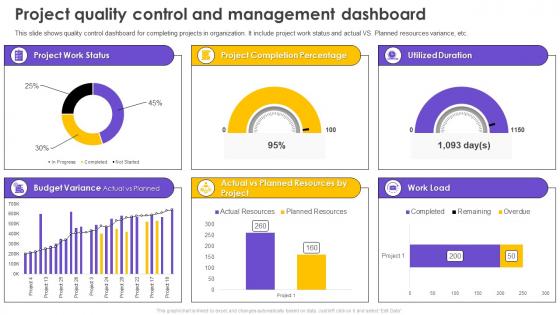
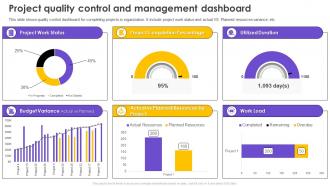
This slide shows quality control dashboard for completing projects in organization. It include project work status and actual VS. Planned resources variance, etc.
People who downloaded this PowerPoint presentation also viewed the following :
Six Sigma Process Improvement Project Quality Control And Management Dashboard with all 10 slides:
Use our Six Sigma Process Improvement Project Quality Control And Management Dashboard to effectively help you save your valuable time. They are readymade to fit into any presentation structure.
-
Six Sigma Process Improvement Project Quality Control And Management Dashboard
-
Six Sigma Process Improvement Project Quality Control And Management Dashboard
-

Six Sigma Process Improvement Project Quality Control And Management Dashboard
-

Six Sigma Process Improvement Project Quality Control And Management Dashboard
-

Six Sigma Process Improvement Project Quality Control And Management Dashboard
-

Six Sigma Process Improvement Project Quality Control And Management Dashboard
-

Six Sigma Process Improvement Project Quality Control And Management Dashboard
-

Six Sigma Process Improvement Project Quality Control And Management Dashboard
-

Six Sigma Process Improvement Project Quality Control And Management Dashboard
-

Six Sigma Process Improvement Project Quality Control And Management Dashboard
FAQs for Six Sigma Process Improvement Project Quality Control
Six Sigma's core philosophy centers on data-driven decision making, systematic defect elimination, and achieving near-perfect quality through statistical process control. This methodology empowers organizations to minimize variation, reduce waste, and enhance customer satisfaction by targeting 3.4 defects per million opportunities, with manufacturing, healthcare, and financial services finding significant cost reductions and operational excellence.
Six Sigma differs from traditional quality control by using data-driven statistical analysis, focusing on defect prevention rather than detection, and targeting near-perfect quality with 3.4 defects per million opportunities. While traditional methods often rely on inspection and sampling, Six Sigma employs systematic DMAIC methodology, ultimately delivering measurable cost savings and operational excellence across manufacturing, healthcare, and financial services organizations.
DMAIC includes Define (project scope and goals), Measure (current performance data), Analyze (root causes of defects), Improve (solutions implementation), and Control (sustaining improvements). These phases streamline process optimization by establishing clear objectives, quantifying problems, and implementing data-driven solutions, with many organizations finding that this structured approach delivers measurable quality improvements and operational efficiency.
Organizations measure Six Sigma effectiveness through key performance indicators including defect rates, process cycle times, cost savings, customer satisfaction scores, and sigma levels achieved. These metrics enable businesses to track quality improvements across manufacturing, healthcare, and financial services, with many companies finding that systematic measurement delivers enhanced operational efficiency, reduced waste, and ultimately stronger competitive advantage in their markets.
Data analysis serves as the foundation of Six Sigma's DMAIC methodology, enabling organizations to identify process variations, measure performance gaps, and validate improvement solutions through statistical evidence. By leveraging tools like control charts, regression analysis, and hypothesis testing, companies across manufacturing, healthcare, and financial services can pinpoint root causes, reduce defects by up to 99.99%, and ultimately deliver measurable cost savings while enhancing operational efficiency.
The Define phase establishes project scope, identifies customer requirements, creates problem statements, and sets measurable goals that guide the entire DMAIC process. This foundational stage prevents scope creep, ensures stakeholder alignment, and establishes success metrics, with many organizations finding that thorough Define phase work reduces project timelines by 30-40% while delivering more targeted improvements.
Common Six Sigma tools include DMAIC methodology, statistical process control, root cause analysis, control charts, and process mapping. These techniques streamline operations by identifying defects, measuring performance variations, and implementing data-driven improvements, with many manufacturing and service organizations finding that systematic application ultimately delivers reduced costs, enhanced quality, and improved customer satisfaction.
Six Sigma contributes to cost reduction and improved efficiency by eliminating defects, reducing process variability, and streamlining workflows through data-driven methodologies. Organizations implementing Six Sigma typically achieve significant operational savings, with manufacturing companies, healthcare institutions, and financial services finding that systematic process improvements deliver reduced waste, faster cycle times, and enhanced customer satisfaction while minimizing operational costs.
The "voice of the customer" captures critical customer requirements, expectations, and feedback that drive Six Sigma project priorities and success metrics. It ensures process improvements directly address customer pain points, enhance satisfaction levels, and deliver measurable value, with many organizations finding that customer-centric Six Sigma initiatives achieve higher ROI and sustainable competitive advantage.
Organizations ensure employee engagement during Six Sigma implementation by providing comprehensive training, clearly communicating benefits and expectations, involving employees in problem identification and solution development, and recognizing contributions through formal reward systems. Through transparent leadership commitment and structured change management, companies like General Electric and Motorola have successfully cultivated workforce buy-in, ultimately delivering sustained process improvements and enhanced operational efficiency across all organizational levels.
Organizations face challenges including cultural resistance to change, significant upfront training costs, lengthy project timelines, difficulty measuring ROI, and maintaining momentum across departments. While these obstacles can slow initial implementation, many companies find that strategic leadership commitment, phased rollouts, and clear communication ultimately deliver improved quality metrics and operational efficiency, with manufacturing and healthcare sectors particularly benefiting from sustained Six Sigma adoption.
Six Sigma addresses variability through statistical analysis, standardized methodologies, and data-driven decision making to identify and eliminate process defects. By implementing DMAIC frameworks and rigorous measurement protocols, organizations across manufacturing, healthcare, and financial services systematically reduce errors, streamline operations, and enhance quality control, ultimately delivering improved customer satisfaction and significant cost reductions.
Six Sigma projects commonly use defects per million opportunities (DPMO), process capability indices (Cp/Cpk), cost savings, cycle time reduction, and customer satisfaction scores as key success metrics. These measurements enable organizations to track quality improvements, operational efficiency gains, and financial impact across manufacturing, healthcare, and service industries, ultimately delivering measurable competitive advantage and enhanced customer experiences.
Small businesses can leverage Six Sigma methodology by implementing simplified DMAIC processes, focusing on data-driven decision making, and prioritizing high-impact improvement projects with limited resources. Through targeted training of key employees and strategic process mapping, small retailers, service providers, and manufacturers streamline operations, reduce waste, and enhance customer satisfaction, ultimately delivering cost savings and competitive advantage in increasingly demanding markets.
Manufacturing giants like General Electric and Motorola pioneered Six Sigma implementation, while healthcare systems, financial services, and retail organizations have successfully adapted these methodologies to reduce defects and improve customer satisfaction. These industries demonstrate that successful Six Sigma adoption requires strong leadership commitment, employee training investments, and cultural shifts toward data-driven decision making, ultimately delivering significant cost savings and operational excellence across diverse business environments.
-
The content is very helpful from business point of view.
-
The best and engaging collection of PPTs I’ve seen so far. Great work!