


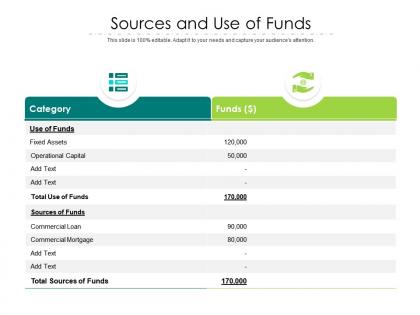
Sources and use of funds




Try Before you Buy Download Free Sample Product
 Impress Your
 Audience
 100%
100% Editable
 Save Hours
 of Time


Our Sources And Use Of Funds absorb the best from every culture. You will gain from diversity.
People who downloaded this PowerPoint presentation also viewed the following :
Sources and use of funds with all 2 slides:
Go that extra distance with our Sources And Use Of Funds. They carry you a lot further ahead.
FAQs for Sources and
Honestly, personal finance isn't that complicated once you break it down. Track your spending first - most people have no clue where their money actually goes. Live below your means (boring but true). Build up 3-6 months of expenses for emergencies. Kill high-interest debt ASAP because that stuff will eat you alive. Then start investing whatever you can, even if it's like $50 a month. Here's the game changer though: automate everything. Set up transfers so you don't have to rely on willpower every single time. Future you will thank present you.
Honestly, budgeting apps are game-changers because they show you exactly where your cash disappears to. Most people have zero clue they're dropping $50/month on random subscriptions they forgot about. The apps automatically sort everything into categories and create these visual charts that make your spending super obvious. I was shocked when I saw how much I spent on coffee last year - yikes. Small purchases really do add up fast. Try Mint or YNAB for like a month and you'll start making totally different choices about money. The pattern tracking is what really gets you.
Lenders basically judge you by your credit score first - it tells them if you've been good about paying stuff back. Anything 740+ gets you sweet rates and easy approvals. Below 620? Good luck getting approved for much. It's honestly wild how three numbers control so much of your life. A 50-point bump can literally save you thousands on a mortgage over 30 years (I learned this the hard way). Check yours regularly and pay down those credit cards before you apply for anything big. Trust me on this one.
Inflation just eats away at what your money can buy, so you need stuff that grows faster than prices rise. Bonds and cash are fine when inflation's chill, but lately? Not so much. I'd lean toward stocks, real estate, commodities - things that usually beat inflation over time. TIPS bonds aren't bad either. Here's something cool though - if you've got a fixed mortgage, inflation actually makes it cheaper to pay back since you're using "weaker" dollars. Just don't park everything in cash or crappy bonds right now. Stay flexible.
Honestly, real estate's a pain if you don't have serious cash upfront. Plus you're dealing with maintenance, taxes, insurance - it all adds up fast. Stocks? Way easier to get in and out of. The market's averaged like 10% annually while real estate sits around 3-4% plus whatever appreciation you get. Don't get me wrong, property has some cool tax perks and you can borrow against it. But if money's tight, I'd just throw it in index funds first. Maybe grab some REITs later so you get real estate exposure without becoming a landlord (trust me on that one).
Honestly, ditch the monthly tracking and go weekly - that's what made the difference for me. Set up a simple forecast for the next 8-12 weeks showing what's coming in vs going out. Invoice people right away and don't feel bad about chasing late payments (I used to hate doing this but you gotta). Try negotiating longer payment terms with suppliers - like 45 days instead of 30. Keep 3-6 months of expenses saved because something always comes up. The weekly tracker thing sounds boring but start there this week.
Definitely grab that full employer match first - it's literally free money. Then just bump your contribution up 1% every year so you don't really feel it. I'm obsessed with automating everything because I'd never remember to transfer money myself lol. A Roth IRA is solid too since you pay taxes upfront but everything comes out clean later. Starting early is huge though, even $50/month makes a difference. Compound interest gets pretty crazy over time. Just set up the automatic transfers and don't think about it.
So basically, behavioral finance is all about how we mess up investing because emotions take over. You know that feeling when everyone's panicking and selling? Even though the company fundamentals look fine, you still want to dump everything. Or when Bitcoin's mooning and suddenly you're ready to YOLO your savings - that's FOMO driving decisions instead of logic. These patterns happen over and over, which is why technical analysis can actually work sometimes. Honestly, the best hack I've found is just automating investments so I can't sabotage myself when I'm feeling emotional about the market.
Yeah, P2P lending can get you way better returns than those pathetic savings account rates. You're basically loaning directly to people instead of going through banks. Pretty neat concept. But here's what sucks - if someone defaults, you just lose that money. No FDIC protection like your regular bank account. The platforms take their cut too, which obviously hurts your profits. Plus your cash might get stuck longer than you planned. My buddy got burned early on by going too big. I'd say test it out with like $500 first, see how it feels.
Honestly, just get Mint or YNAB - they'll automatically sort your spending into categories so you don't have to. Those receipt scanner apps are clutch too since I'm terrible at keeping track of paper receipts. The spending alerts can be annoying but they actually work (learned that the hard way with my coffee habit). What really opened my eyes though was seeing those charts that show where all your money actually goes each month. I'd start with whatever free app connects to your bank, then figure out what else you need from there.
Honestly, the whole ESG space is moving fast right now. AI analytics are making impact measurement way more precise, and everyone's obsessing over climate risk integration. Your clients will start asking about weird stuff like biodiversity investing - I swear that wasn't even a thing two years ago. Transition financing is huge too, where you're funding companies that are *becoming* sustainable instead of just the already-green ones. Social impact bonds are picking up steam, though regulations are a mess. Oh, and learn TCFD climate reporting frameworks because institutional clients expect you to know that stuff cold now.
So basically, when foreign markets tank, investors panic and pull money out of everywhere - including us. Your currency gets pushed around based on what's happening globally, which messes with how much stuff costs to import or export. Central banks then have to play catch-up with interest rates to stay competitive. Trade gets weird too - if there's supply chain drama overseas, we feel it in our prices here. It's all connected, which is honestly kind of annoying. I'd watch major global indices and currency movements if you want to see what's coming our way domestically.
Okay so first thing - write down all your debts with their interest rates and minimum payments. You'll want to pay the minimums on everything, then pick either the highest interest debt (saves you more cash) or the smallest balance (feels good to knock one out completely). Both ways work honestly, just pick one and stick with it. Don't rack up new debt while you're doing this - kinda defeats the purpose, right? Also get like a tiny emergency fund going so when your car breaks down or whatever, you won't have to use credit cards again. Set up autopay too so you don't accidentally miss payments.
Honestly, picture your portfolio dropping 30% overnight - would you freak out and sell everything, or just shrug it off? Your age matters here too. If you're young, you can afford to gamble a bit more since there's time to bounce back. But if you're older or need the cash soon, play it safer. Here's the thing though - if market crashes would have you checking your phone at 2am in a cold sweat, just go conservative. I don't care what some calculator says about "optimal allocation." There are tons of risk questionnaires online that'll give you a starting point, but really it comes down to what lets you sleep at night.
Honestly, crypto's kinda forcing banks to get their act together or get left behind. Traditional institutions are scrambling to add digital wallets and crypto trading because that's what people want now. Used to be banks controlled all the payment systems - now they're competing with decentralized networks that are way faster and cheaper. JPMorgan launched their own digital coin, but other banks are still fighting regulations tooth and nail. If I were you, I'd start testing out crypto services instead of waiting around for regulators to figure things out. That could take forever.
No Reviews