


Sprint Backlog Powerpoint Ppt Template Bundles





Try Before you Buy Download Free Sample Product
 Impress Your
 Audience
 100%
100% Editable
 Save Hours
 of Time


Our Sprint Backlog Powerpoint Ppt Template Bundles are topically designed to provide an attractive backdrop to any subject. Use them to look like a presentation pro.
People who downloaded this PowerPoint presentation also viewed the following :
Sprint Backlog Powerpoint Ppt Template Bundles with all 18 slides:
Use our Sprint Backlog Powerpoint Ppt Template Bundles to effectively help you save your valuable time. They are readymade to fit into any presentation structure.







FAQs for Sprint Backlog Powerpoint
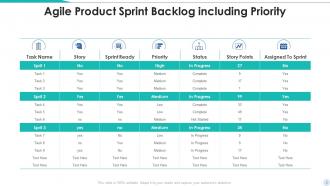
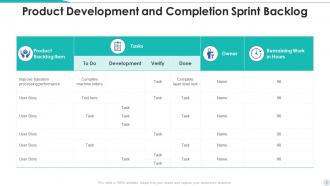
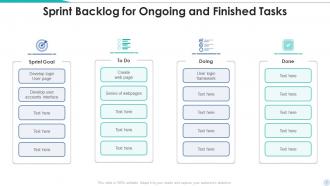
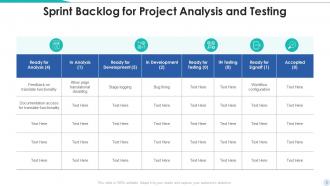
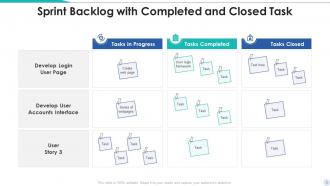
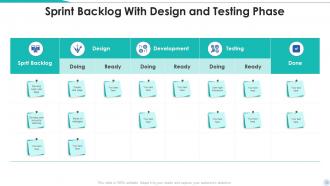
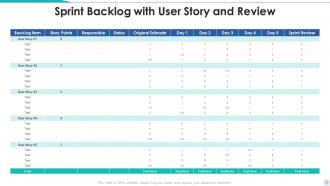
The primary purpose of a Sprint Backlog is to define and track the specific work items, tasks, and deliverables that a development team commits to completing during a single sprint iteration. This living document enables teams to maintain focus, monitor daily progress, and adapt priorities as needed, while providing transparency to stakeholders and ensuring sprint goals align with broader product objectives, ultimately delivering measurable value.
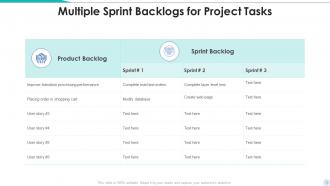
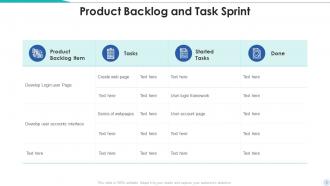
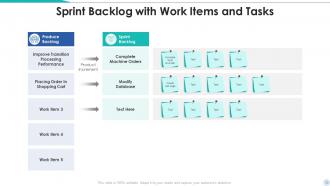
The Sprint Backlog contains specific items selected from the Product Backlog for completion during a single sprint, while the Product Backlog encompasses all features and requirements for the entire product. Sprint Backlogs enable focused execution through detailed task breakdowns and daily progress tracking, ultimately delivering incremental value and maintaining team momentum across development cycles.
An effective Sprint Backlog should include selected Product Backlog items, detailed task breakdowns, effort estimates, acceptance criteria, and dependencies between tasks. These elements enable development teams to maintain focus, track progress systematically, and deliver value incrementally, with many agile organizations finding that well-structured backlogs significantly enhance sprint predictability and team accountability.
Teams prioritize Sprint Backlog items by assessing business value, technical dependencies, risk levels, and effort estimates during collaborative planning discussions. Through techniques like story point estimation, MoSCoW prioritization, and stakeholder input, development teams sequence work that delivers maximum customer value first, while considering technical constraints and sprint capacity, ultimately ensuring focused execution and measurable outcomes.
The Scrum Master facilitates Sprint Backlog management by coaching the Development Team on self-organization, removing impediments that block progress, and ensuring adherence to Scrum practices and timeboxes. While the Development Team owns and updates the Sprint Backlog directly, the Scrum Master enables optimal workflow through guidance and obstacle removal, ultimately delivering enhanced team autonomy and sprint success.
**INPUT**: How often should the Sprint Backlog be updated throughout the sprint? **OUTPUT**: The Sprint Backlog should be updated continuously throughout the sprint, with development teams typically reviewing and adjusting it daily during stand-ups, after completing tasks, and whenever new impediments or scope changes emerge. This dynamic approach enables teams to maintain transparency, adapt to evolving requirements, and track progress effectively, with many organizations finding that real-time updates enhance sprint predictability and delivery outcomes. **Word count: 60 words**
Sprint Backlog effort estimation techniques include Planning Poker, T-shirt sizing, story points, ideal hours, and historical velocity analysis. These methods enhance team collaboration by encouraging discussion, reducing individual bias, and creating shared understanding of task complexity, with many Agile teams finding that combining multiple techniques delivers more accurate estimates and improved sprint planning outcomes.
The Sprint Backlog enhances team accountability by creating transparent visibility into individual commitments, progress tracking, and shared responsibility for sprint goals. Through daily standups and backlog updates, team members take ownership of their tasks while supporting collective success, ultimately delivering higher quality outcomes and fostering collaborative problem-solving across development cycles.
Common pitfalls include overcommitting to unrealistic workloads, selecting poorly defined user stories, neglecting task dependencies, and insufficient capacity planning for team availability. These mistakes often lead to incomplete sprints and reduced team morale, with many agile organizations finding that careful story estimation, realistic velocity tracking, and clear acceptance criteria ultimately deliver more predictable outcomes and sustainable development cycles.
Cross-functional teams effectively collaborate on Sprint Backlog activities through daily standups, shared task ownership, continuous knowledge sharing, and real-time communication tools. By breaking down silos between developers, testers, designers, and business analysts, teams streamline delivery cycles, minimize bottlenecks, and enhance product quality, with many organizations finding that collaborative Sprint execution significantly accelerates time-to-market and improves customer satisfaction.
**INPUT**: What is the impact of changes to the Sprint Backlog mid-sprint, and how should they be managed? **OUTPUT**: Mid-sprint changes to the Sprint Backlog can disrupt team focus, affect velocity tracking, and compromise sprint goals, though they're sometimes necessary for critical business requirements. These changes should be managed through Product Owner evaluation, team consultation, and scope adjustment discussions, with many organizations finding that documenting change rationale and impact assessments ultimately maintains sprint integrity while enabling strategic responsiveness. **Word count: 58 words**
Team members contribute to the Sprint Backlog through developers selecting and estimating tasks, Product Owners prioritizing user stories, and Scrum Masters facilitating planning sessions and removing impediments. Cross-collaboration ensures comprehensive understanding, enables knowledge sharing across disciplines, and streamlines problem-solving, with many agile teams finding that diverse perspectives ultimately deliver higher-quality solutions and faster sprint completion.
Teams determine task completion through predefined Definition of Done criteria, acceptance criteria validation, stakeholder feedback incorporation, and comprehensive testing protocols. These standards ensure consistent quality by establishing clear completion benchmarks, reducing rework cycles, and enabling seamless sprint deliverables, with many development organizations finding that structured done criteria accelerate release velocity while maintaining product reliability.
Key Sprint Backlog metrics include sprint burndown rates, story completion percentages, velocity trends, task estimation accuracy, and defect discovery rates. These measurements enable teams to identify capacity planning improvements, refine estimation techniques, and optimize workflow efficiency, with many development organizations finding that consistent metric tracking ultimately delivers more predictable sprint outcomes and enhanced team productivity.
The Sprint Backlog facilitates transparency by providing a visible, real-time view of sprint progress, task ownership, and remaining work, enabling all team members and stakeholders to track development status. Through daily updates and accessible documentation, teams streamline communication, identify blockers quickly, and maintain alignment on priorities, ultimately delivering enhanced collaboration and predictable project outcomes.
-
Excellent products for quick understanding.
-
Really like the color and design of the presentation.