


Stakeholder Communication Plan Briefing Report





Try Before you Buy Download Free Sample Product
 Impress Your
 Audience
 100%
100% Editable
 Save Hours
 of Time


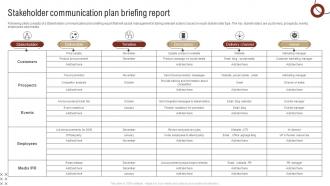
Following slide consists of a Stakeholder communication plan briefing report that will assist management in taking relevant actions based on each stakeholder type. The key stakeholders are customers, prospects, events, employees and media
People who downloaded this PowerPoint presentation also viewed the following :
Stakeholder Communication Plan Briefing Report with all 6 slides:
Use our Stakeholder Communication Plan Briefing Report to effectively help you save your valuable time. They are readymade to fit into any presentation structure.





FAQs for Stakeholder Communication
So first thing - figure out who needs what info and how often. Executives care about business impact, your team wants the nitty-gritty technical stuff. Don't make the mistake I used to make of sending everyone the same boring update. Half the battle is just staying consistent instead of disappearing for weeks (guilty as charged). Some people want emails, others need face-to-face time. Always double-check they actually got what you meant and ask if there's anything else. Timing matters too - don't dump heavy news on Friday afternoons unless you want crickets.
Honestly, you gotta figure out who you're talking to first. Each group wants totally different stuff - investors care about money and ROI, your team wants to know their jobs are safe, customers just want to know how your product helps them. I made this mistake once where we blasted the same boring update to everyone and literally half the people ignored it. Such a waste. Try mixing up how you reach them too - some executives want quick email bullets, but your team might prefer detailed Slack messages. Map out what each group actually gives a damn about, then tailor everything accordingly.
Look, transparency is honestly what makes or breaks stakeholder trust. People want the real story - wins AND the messy stuff. When you're upfront about problems, stakeholders feel included instead of blindsided later. I've watched projects completely implode because leadership kept pretending everything was fine until it wasn't. Don't wait for people to ask questions - be proactive about sharing updates. Figure out what info actually matters to them (not everything does, tbh). Set up regular check-ins where you give them the unfiltered truth. It builds way more credibility than trying to spin everything positively.
Dude, technology is a game-changer for stakeholder stuff. Real-time dashboards and automated updates keep everyone informed without you drowning in emails. Slack or Teams work great for quick check-ins. Project management software shows progress visually, which people love. Survey tools grab feedback super fast too. Honestly? The time you'll save from those soul-crushing status meetings alone makes it worth it. Video calls help tons with remote people obviously. My advice - just pick one tool that fixes your biggest headache first. Don't overthink it. Build from there once you get the hang of it.
Honestly, just pick a couple metrics that actually matter instead of overthinking it. Look at response rates first - are people opening emails and showing up to meetings? That's your baseline. Quality of feedback matters way more than quantity though. If stakeholders are asking good questions and giving useful input, you're on track. Here's what I'd watch: how often you're re-explaining the same thing (major red flag), how long issues take to resolve, and whether everyone's actually aligned on goals. Do a quick survey or informal check-in every so often. Don't try tracking everything at once - you'll just stress yourself out. Start with 2-3 things max.
Jump on it fast - don't let that negativity just sit there while you overthink your response. Really listen to what they're actually mad about, not just what they said on the surface. Honestly? Some of my biggest breakthroughs came from people who were pissed off initially. Own your part if there is one, but also explain where you're coming from. Give them concrete next steps with actual dates. They might still be frustrated, but at least they'll see you have a real plan. Oh, and follow up before they have to bug you about it.
Look, get out ahead of it fast - even if you don't have every detail nailed down yet. Silence is your enemy because people just make up their own scary stories to fill the gap. I learned this the hard way watching companies crash and burn by staying quiet too long. Send regular updates through whatever channels hit your different audiences. Get your leadership on the same page first though, or you'll have mixed messages flying around. Own up to mistakes where you screwed up, show you actually care about the impact. Oh, and set expectations upfront about when they'll hear from you next.
Dude, visuals are a game changer for stakeholder meetings. People's eyes just glaze over when you're rattling off numbers and concepts - I've seen it happen way too many times. But throw up a chart or diagram? Suddenly everyone's paying attention. Complex stuff becomes way easier to digest when it's not just you talking at them for 20 minutes straight. Plus they'll actually remember your points later instead of that deer-in-headlights look when you follow up. Start with one simple visual that hits your main message right away. Trust me on this one.
Dude, you've gotta switch up how you talk to different cultures. Japanese folks want relationship stuff first, then business - super indirect. Germans? Just give them the facts, straight up. Time zones are the easy part honestly. Meeting styles are where it gets weird - some want formal presentations, others just wanna chat it out. Think about hierarchy too. Does your audience care about individual wins or team decisions? Oh and decision-making processes vary like crazy. Pro tip: find someone local to check your important stuff before you blast it out globally. Trust me on this one.
Honestly? Just ask your stakeholders what they want - you'd be amazed how many people skip this obvious step. Employees usually need weekly check-ins plus monthly bigger meetings. Board members want quarterly reports and heads-up on urgent stuff. Customers only care when changes actually affect them. I've never seen anyone complain about too much communication, but I've definitely watched projects crash from radio silence. Better to be predictable than perfect with timing. Oh, and map out who your stakeholders actually are first - sounds basic but you'd be surprised how many people wing this part.
Honestly, just be consistent with your updates - good news AND bad news. People hate being left in the dark way more than hearing problems early. Don't be that person who only calls when they need something (ugh, we all know someone like that). Listen to what they're actually worried about, not just what you think matters. Follow through on what you promise. Here's the thing though - you've gotta reach out with updates before they start hunting you down for info. That's like 80% of building trust right there. Also try seeing success through their lens, not just yours.
Dude, stories just hit different than data dumps. People actually remember them! Like, our brains are literally built for this stuff - it's how we've always shared info. Instead of boring bullet points, try framing your updates around actual customer experiences or what winning looks like in practice. Honestly, stakeholders eat that up way more than spreadsheets. Connect your project results to real humans and real impact. Next time you're building that deck, start with a specific example or user story that shows your point. Way more effective than just listing achievements.
Honestly, two-way communication is a game changer - it turns those boring one-sided updates into actual partnerships. People hate being talked *at* constantly, you know? When you listen and respond to feedback, you catch problems early plus build real trust. Your stakeholders feel heard, which matters more than most people realize. You'll get way better insights about what's really happening too. The best part? People support ideas they help create. Oh, and here's something that works - start your next meeting by asking questions instead of jumping straight into your agenda. Trust me on this one.
You've gotta explain WHY you're making the change first - people hate being left in the dark. Face-to-face meetings work best for your key stakeholders, then email the broader teams. Town halls are good if it's massive. The absolute worst thing? Letting people find out through office gossip (trust me on this one). Make timelines crystal clear and tell each group exactly how it impacts them. Oh, and don't just drop the news and vanish. Schedule regular check-ins so you can handle questions and keep everyone on track.
So basically schedule regular check-ins and surveys at big project milestones. Coffee chats honestly work way better than formal meetings though - people are more real when they're relaxed. Set up different ways for them to give input: email surveys, quick pulse checks, whatever works. Ask specific questions about what's actually working vs. what sucks. Here's the crucial part - you've gotta show them you're using their feedback. Like, actually change things based on what they tell you and let them know about it. Otherwise they'll just stop caring and you're back to square one.
-
They had the topic I was looking for in a readymade presentation…helped me meet my deadline.
-
“Love it! I was able to grab an exciting proposal because of SlideTeam.”