


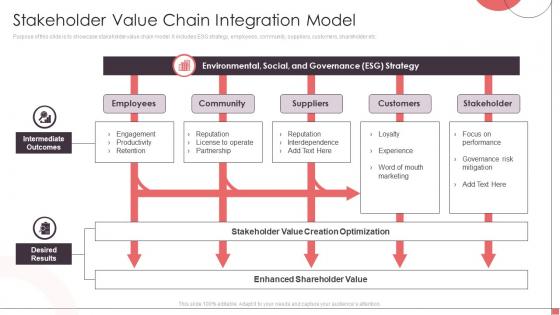
Stakeholder Value Chain Integration Model




Try Before you Buy Download Free Sample Product
 Impress Your
 Audience
 100%
100% Editable
 Save Hours
 of Time


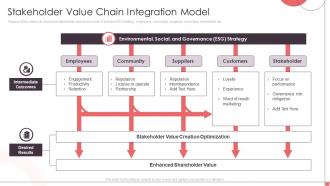
Purpose of this slide is to showcase stakeholder value chain model. It includes ESG strategy, employees, community, suppliers, customers, shareholder etc.
People who downloaded this PowerPoint presentation also viewed the following :
Stakeholder Value Chain Integration Model with all 6 slides:
Use our Stakeholder Value Chain Integration Model to effectively help you save your valuable time. They are readymade to fit into any presentation structure.





FAQs for Stakeholder Value
So basically you've got four main things to tackle. First, figure out who your stakeholders actually are - customers, employees, suppliers, investors, the whole crew. Map out how they're all connected next, because trust me, it gets confusing real quick with a complex business. Then dive into what value each group gives and gets from you. The feedback part is crucial too - you need ways to check if you're actually hitting the mark for everyone. Oh, and don't overthink it at first. Just grab a piece of paper and list your top 10 stakeholders with what they want from you. That'll get you started.
Look, getting your stakeholders involved isn't just nice-to-have fluff - it actually moves the needle on performance. Customers, employees, suppliers... when you bring them into decisions, you catch problems early and spot opportunities you'd totally miss otherwise. Trust builds up, risks go down. The best part? These people become your biggest cheerleaders. They'll stick around longer and actually recommend you to others. I mean, my old boss used to ignore supplier feedback and we'd constantly get blindsided by supply chain issues. Start simple - figure out who really impacts your business, then create regular check-ins. Just listen to what they're saying.
Honestly, just pick what matters to each group and track that. Customer satisfaction scores and retention rates work great for customers. Your employees? Check engagement surveys and turnover - those tell the real story. Investors care about ROI and long-term performance, obviously. Community stuff gets weird though... like local job numbers or environmental impact. I'd say grab 3-5 solid metrics per group max. Otherwise you'll drown in spreadsheets. Best move is actually asking each stakeholder what success looks like to them first, then build around that.
Honestly, good communication is what keeps everything from falling apart with your stakeholders. You need that honest back-and-forth with customers, suppliers, employees, investors - all of them. When people don't know what's expected or what's going on, trust breaks down fast. Like, how's your supplier gonna meet your standards if they don't even know what those are? I've seen this mess up so many partnerships. Regular check-ins help a ton. Don't sugarcoat the bad stuff either - people actually respect you more when you're straight up about problems and wins.
Start by listing everyone who has a stake in your business, then figure out who has the most power and impact. Focus on the heavy hitters first - suppliers, big customers, regulators. Honestly, I think about it this way: who would stress me out the most if they were pissed off? Those are your top priorities right there. Once you've got that sorted, you can divide up your time and energy better. Just be upfront about how you're ranking people and check back every few months. Things change fast, so your stakeholder map will too.
Honestly, the hardest part is juggling all the competing demands. Customers push for lower prices while investors want fat margins. Employees want better perks, communities want green initiatives - it never ends. Communication gets messy too since some groups are super loud while others ghost you until something breaks. Oh, and everyone operates on totally different timelines which is fun. Different success metrics for each group makes it even trickier. My advice? Map out what each stakeholder actually cares about first. Look for places where their interests overlap - that's your goldmine for building something that works.
Look, tech changes how everyone in your business relates to each other - customers, suppliers, your whole team. Communication gets faster, data flows better, and suddenly everything's more transparent. That can either strengthen relationships or show you where things are falling apart. Your employees will probably freak out about AI at first (honestly, who wouldn't?), but it actually opens doors for them to learn new skills and do more interesting work. Here's the thing though - technology just makes your existing relationships stronger or weaker, it doesn't replace the human stuff. I'd start by figuring out who's most impacted and just talk to them about it upfront.
Patagonia's probably the best example - they bring environmental activists and suppliers right into their sustainability work. Starbucks does something similar with coffee farmers and local communities for their ethical sourcing thing. Apple's got that whole tight ecosystem with developers and accessory makers, though honestly they're kind of control freaks about it. You want to map out who actually influences your success first. Then figure out what's in it for them too. Don't just think transactions - find people who share your values or can open up new markets. The trick is making those relationships work both ways, you know?
So CSR is basically how you think about everyone your business affects, not just investors. Map out your key stakeholders first - employees, customers, suppliers, the local community, whoever. Then figure out where you can create win-win situations. It's honestly way better than just tunnel vision on profits. You build actual trust with people, which makes your business stronger long-term. Plus customers these days really care about this stuff. Start small though - pick one or two areas where you can make a real impact without overwhelming yourself.
Honestly, stakeholder feedback is like having a bunch of free consultants. Your customers will tell you exactly what's broken with your product - stuff you'd never notice. Employees see the daily grind and know where things get messy. Even suppliers sometimes drop genius ideas about better materials or whatever. I've seen companies completely miss obvious improvements because they never bothered asking. Set up some regular touchpoints - surveys work, but sometimes just grabbing coffee and asking "what's annoying you?" gets the best insights. It's wild how much people will share when you actually listen.
Honestly, you gotta mix hard data with actual conversations. NPS is clutch for tracking loyalty - simple but effective. I'd also look at response rates to your emails, meeting engagement, and how fast you resolve complaints. But here's what I really watch for: repeat collaboration requests. That's when you know they actually want to work with you again, not just being polite. Satisfaction surveys help too, obviously. Don't get too caught up in scores though. Set up quarterly check-ins and straight up ask what success means to them. Sometimes the most valuable feedback comes from those random hallway conversations anyway.
Start by figuring out who all your stakeholders are and what they're really after - dig deeper because conflicts aren't always as massive as they first appear. Win-win solutions work great when you can swing them. Like training programs that make employees happy while boosting productivity for investors. But honestly? Perfect balance is basically impossible. Focus on your company's core values when you can't make everyone happy - I learned this the hard way at my last job. Then just be straight up with whoever didn't get what they wanted. Way better than that wishy-washy approach where you try pleasing everyone and fail miserably.
Look, ethics basically holds your whole stakeholder network together. People want to work with companies they trust - suppliers, customers, employees, investors, the whole crew. Nobody's gonna stick around long-term if you're shady or treat people like garbage. Fair treatment and transparency reduce conflicts and boost collaboration. Plus it protects your rep, which honestly is everything these days. My advice? Audit your practices against whatever values you claim to have. Those gaps are red flags waiting to bite you.
So here's what works really well - map out everyone you deal with first. Suppliers, customers, your team, even the local community. Then look for those sweet spots where helping one group actually helps another too. Train your suppliers' people and boom, better quality for your customers, more loyalty for you. Big companies are honestly terrible at this stuff because they're too slow and bureaucratic. You can build real relationships and move quick. I'd literally sit down this week and draw out who's connected to who - that's where you'll find the opportunities they're missing.
Ugh, disruptions are the worst - everything falls apart at once. Your suppliers can't deliver, customers get pissed about delays, and investors start panicking about whether you know what you're doing. Trust goes out the window fast. Some stakeholders will bail completely, others will want new contracts with better terms. Honestly, the worst thing you can do is stay quiet and hope nobody notices. Jump on the phone immediately when stuff hits the fan. Tell them exactly what went wrong and how you're fixing it. People hate surprises way more than bad news delivered upfront.
-
“You have the structure in place that are easy to explore new opportunities.I will be recommending your services to other people.”
-
I was never satisfied with my own presentation design but SlideTeam has solved that problem for me. Thank you SlideTeam!