


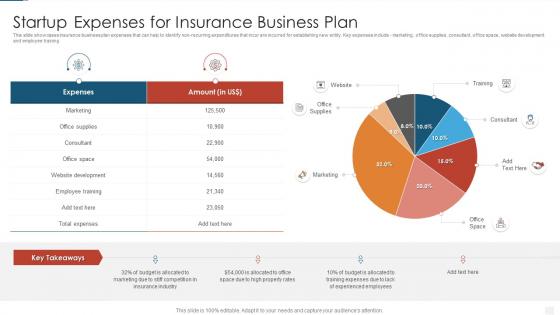
Startup expenses for insurance business plan




Try Before you Buy Download Free Sample Product
 Impress Your
 Audience
 100%
100% Editable
 Save Hours
 of Time


Our Startup Expenses For Insurance Business Plan are topically designed to provide an attractive backdrop to any subject. Use them to look like a presentation pro.
People who downloaded this PowerPoint presentation also viewed the following :
Startup expenses for insurance business plan with all 7 slides:
Use our Startup Expenses For Insurance Business Plan to effectively help you save your valuable time. They are readymade to fit into any presentation structure.
-
Startup expenses for insurance business plan
-

Startup expenses for insurance business plan
-

Startup expenses for insurance business plan
-

Startup expenses for insurance business plan
-

Startup expenses for insurance business plan
-

Startup expenses for insurance business plan
-

Startup expenses for insurance business plan
FAQs for Startup expenses for
Primary startup expenses unique to insurance businesses include regulatory licensing fees, statutory capital reserves, actuarial consulting, specialized insurance software systems, and comprehensive compliance infrastructure. These requirements often demand significant upfront investment, with regulatory capital alone ranging from hundreds of thousands to millions, but ultimately enable scalable operations and competitive positioning in increasingly regulated markets.
Market research significantly impacts insurance startup budgets by identifying target demographics, competitive pricing strategies, regulatory requirements, and distribution channel costs. Through comprehensive market analysis, startups can optimize resource allocation for product development, marketing spend, and operational infrastructure, while avoiding costly missteps in underwriting models, ultimately delivering more accurate financial projections and competitive positioning.
Essential technology investments for backend operations include core insurance systems, claims processing platforms, customer relationship management software, data analytics tools, and regulatory compliance systems. These technologies streamline underwriting, automate claims workflows, and enhance customer service delivery, with many insurance companies finding that strategic backend investments reduce operational costs by 20-30% while significantly improving processing speeds and regulatory adherence.
Insurance startups should allocate 15-20% of initial capital for compliance costs, including licensing fees, regulatory filings, capital requirements, legal consultations, and ongoing audit expenses. These investments enable faster market entry, reduce regulatory risks, and build stakeholder confidence, with many insurtech companies finding that proactive compliance spending ultimately delivers competitive advantages and smoother operational scaling.
Branding and marketing represent significant initial expenses for insurance companies, encompassing website development, brand identity creation, digital advertising campaigns, compliance-focused content, and customer acquisition strategies. These investments enable insurance startups to build consumer trust, differentiate services in competitive markets, and establish credible market presence, with many new insurers finding that strategic marketing ultimately delivers faster customer acquisition and sustainable growth.
Entrepreneurs should anticipate state insurance licensing fees, which typically range from $100-$500 per license type, along with examination fees, continuing education costs, and annual renewal charges. These regulatory requirements vary significantly by state and insurance categories, with many insurance startups finding that comprehensive licensing across multiple states and product lines requires substantial upfront investment, ultimately enabling broader market access and competitive positioning.
Partnerships with tech providers can significantly reduce startup costs for insurance firms by eliminating expensive software development, providing scalable cloud infrastructure, and offering pay-as-you-grow pricing models. Through strategic alliances with insurtech companies, startups can access advanced underwriting systems, claims processing platforms, and customer management tools without substantial upfront investments, ultimately accelerating market entry while preserving capital for growth initiatives.
Indirect staffing costs for insurance startups include payroll taxes, health insurance premiums, workers' compensation coverage, retirement plan contributions, and professional development expenses. These overhead expenses typically add 25-30% to base salaries, with many growing insurance firms finding that investing in comprehensive benefits packages enhances talent retention and competitive positioning in the marketplace.
Insurance product types significantly influence startup capital requirements through varying regulatory reserves, licensing costs, technology infrastructure needs, and underwriting capabilities. Life and health insurance typically demand higher initial reserves and specialized actuarial systems, while property casualty products require extensive claims processing platforms and risk assessment tools, with many startups finding that simpler product lines like term life or basic liability coverage offer more manageable entry points.
Startup businesses should secure general liability, professional liability, property insurance, cyber liability coverage, and workers' compensation insurance. These policies streamline risk management by protecting against lawsuits, data breaches, and property damage, with many growing startups finding that comprehensive coverage ultimately delivers operational stability and competitive advantage in increasingly regulated markets.
Developing insurance software platforms involves costs for custom development teams, licensing existing solutions, regulatory compliance integration, data security infrastructure, and ongoing maintenance support. These investments typically range from hundreds of thousands for basic systems to millions for comprehensive platforms, with many insurtech startups finding that strategic software partnerships significantly reduce initial capital requirements while accelerating market entry.
Startups should calculate initial operational expenses by assessing licensing fees, regulatory compliance costs, technology infrastructure, office setup, staffing requirements, and marketing investments. Through comprehensive market research and financial modeling, insurance startups can accurately project expenses like claims management systems, underwriting software, and professional staff salaries, ultimately enabling realistic budgeting and sustainable growth planning.
Customer acquisition budgets in insurance should account for digital marketing campaigns, lead generation systems, agent recruitment and training, compliance costs, and technology infrastructure investments. These strategic investments typically require substantial upfront capital, with many insurance startups finding that diversified acquisition channels, from online advertising to partnership development, ultimately deliver sustainable customer growth while building competitive market presence in an increasingly digital landscape.
Startups can effectively manage cash flow by implementing phased capital deployment, securing adequate working capital reserves, and establishing strategic partnerships with reinsurers to minimize initial risk exposure. Through careful expense prioritization and technology automation, insurance startups streamline operational costs while building customer bases, with many finding that digital-first approaches and regulatory compliance investments ultimately deliver sustainable growth and competitive market positioning.
Insurance companies should maintain financial reserves equivalent to 12-18 months of operating expenses, regulatory capital requirements, catastrophic loss reserves, and liquidity buffers for market volatility. These reserves enable insurers to handle unexpected claims surges, regulatory changes, and economic downturns while maintaining policyholder confidence, with many successful insurers finding that robust reserve management ultimately delivers competitive stability and sustainable growth opportunities.
-
Much better than the original! Thanks for the quick turnaround.
-
Informative design.