


Steps To Prevent Banking Frauds Through Risk Assessment





Try Before you Buy Download Free Sample Product
 Impress Your
 Audience
 100%
100% Editable
 Save Hours
 of Time


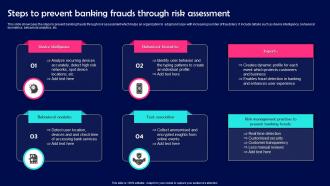
This slide showcases the steps to prevent banking frauds through risk assessment which helps an organization to adapt and cope with increasing number of fraudsters. It include details such as device intelligence, behavioral biometrics, behavioral analytics, etc.
People who downloaded this PowerPoint presentation also viewed the following :
Steps To Prevent Banking Frauds Through Risk Assessment with all 6 slides:
Use our Steps To Prevent Banking Frauds Through Risk Assessment to effectively help you save your valuable time. They are readymade to fit into any presentation structure.





FAQs for Steps To Prevent Banking Frauds
Phishing emails are probably the worst ones right now. Scammers also do fake websites, pretend to be your bank on the phone, or stick those little card readers on ATMs. Just be suspicious of everything, honestly. Don't give out info if someone calls you - hang up and call your bank directly. When you get emails, go to their actual website instead of clicking links. I check my statements like every few days now because people are crazy. Oh, and those sketchy ATMs with weird little boxes attached? Hard pass. Cover your PIN too - you never know who's watching.
So basically, AI can catch fraud way better than those old rule-based systems. It learns what normal spending looks like for each person, then flags weird stuff instantly. The cool part? Machine learning actually gets better over time - adapts to new scams without you manually tweaking anything. These algorithms crunch thousands of data points at once, spotting sketchy patterns like odd locations or timing. Way fewer false alarms too, which honestly saves everyone headaches. I'd probably start with transaction monitoring first since that's where you'll see the biggest impact right away.
So regulatory bodies are like the referees keeping banks honest - they write the rules and make sure everyone follows them. Banks have to watch for sketchy transactions, report weird stuff, and keep their security tight. FDIC, OCC, FinCEN - they're all constantly tweaking requirements because fraudsters keep getting more creative (honestly, it's like whack-a-mole). The whole system stops banks from either getting ripped off themselves or letting crooks slip through. Just stay on top of whatever compliance updates your team sends out. Trust me, falling behind on that stuff is not worth the headache.
Banks should blast out fraud alerts constantly - emails, texts, app pings, whatever works. Make the examples super specific though, like "this is exactly what that fake Amazon text looks like" instead of boring generic warnings. Interactive stuff is clutch too. Quick quizzes, those "spot the scam" games that don't feel like school. Honestly, most people tune out vague security lectures anyway. The trick is keeping it current - what's actually happening right now, not last year's threats. Hit people where they're paying attention and you'll actually get through to them.
Start with MFA if you haven't already - honestly, it blocks most basic attacks right away. SSL encryption is a given for data transmission, obviously. You'll need real-time fraud monitoring too; it catches weird login patterns and sketchy transactions instantly. Don't let users stay logged in forever even though they'll whine about it - session timeouts are clutch. Strong password policies help, plus adaptive authentication that ramps up security when things look risky. Oh, and throw in biometrics and device fingerprinting for that extra verification layer. Multi-layered approach is key here.
So basically banks build these algorithms that learn how each customer normally spends money. When something weird happens - like you suddenly buy stuff in Thailand at 3am - it gets flagged. The systems track amounts, locations, timing, all that stuff. Some can even tell if your typing rhythm is off when logging in, which honestly feels a bit creepy but whatever. You gotta find the right balance though because nobody wants their card getting declined when they're trying to pay for dinner. Banks should definitely dig into their past fraud cases first to see what patterns they missed.
Honestly, real-time monitoring is your best friend here - get systems that can instantly flag weird spending patterns. Multi-layered authentication helps too, plus those behavioral analytics that learn how customers normally spend. Your staff training matters way more than people realize though. Front-line employees usually catch sketchy stuff first. Oh, and don't sleep on transaction velocity checks - they're clutch for spotting rapid-fire purchases. When fraud does hit, you'll want solid response protocols ready so nobody's running around confused. I'd start by checking what detection tools you've got now and see where the biggest holes are.
Oh man, social engineering is seriously the biggest threat in banking fraud right now. Criminals are getting ridiculously good at impersonating people your staff trusts - like IT support or executives. Train your employees to always verify identities through separate channels, not just trust what they see on caller ID. Set up clear protocols for any sensitive requests. Multi-factor authentication helps too, obviously. The tricky part is creating an environment where people feel okay questioning authority figures without worrying they'll get in trouble. I've seen too many breaches happen because someone was afraid to double-check a "urgent" request from their boss.
So banking apps actually have pretty solid security built in - they encrypt everything and use fingerprint/face unlock stuff. Real-time monitoring catches weird transactions too. Honestly the freeze feature is a lifesaver, used it when my card info got stolen somehow. You can set spending limits which is smart. Just turn on all their security settings and don't bank on public wifi (learned that one the hard way). Oh and definitely enable those text alerts - you'll know right away if someone's messing with your account. Keep the app updated too.
Honestly, you've got to think about this from multiple angles. Start by figuring out what sensitive data you actually have and where it lives - sounds obvious but most companies have no clue. For online stuff, encryption and multi-factor auth are non-negotiable. Keep everything updated too. Physical documents need locked storage and limit who can access them. Here's the thing though - your employees are probably your biggest risk. People fall for phishing emails all the time. Train them constantly on social engineering tricks and proper data handling. Oh, and definitely run background checks when hiring. Layer everything because hackers will find the weakest point.
Dude, seriously turn on multi-factor authentication for your bank accounts if you haven't yet. Password theft is way more common than people realize, and MFA is basically what saves your ass when it happens. Yeah it's annoying getting those text codes or using your fingerprint, but think about it - even if some scammer gets your login info, they're still locked out without your phone. My cousin learned this the hard way last year (different story though). Takes like two minutes to set up and honestly? Could save you from losing thousands. The extra step is so worth it.
So banks and cops actually work together way more than you'd think. Real-time data sharing is huge - banks spot weird transaction patterns and immediately flag law enforcement instead of waiting weeks. Joint task forces are pretty common now too. Banks handle the data analysis side while police do the actual criminal stuff. Oh, and some banks have specific officers just for talking to cops, which honestly makes total sense. The trick is setting up secure channels so info flows fast. Fraud detection gets so much better when everyone's talking. Hit up your local financial crimes unit if you want to explore this - they're usually down to collaborate.
Customer reports are goldmines for catching stuff your fraud systems miss. When someone flags suspicious activity or complains about false alerts, dig into those cases - they'll show you exactly where your detection is falling short. Some banks I know actually built cool feedback loops where customer reports automatically update their fraud models. Pretty smart if you ask me. Also worth surveying people about those constant fraud alerts because nobody wants to deal with alert fatigue. The main thing? Don't let reports sit in a vacuum. Feed that intel back into your system so it actually learns from real-world scenarios.
Oh man, synthetic identity fraud is getting absolutely wild right now - like scary sophisticated. You definitely need AI-powered behavioral analytics and real-time monitoring since that's basically the baseline now. Device fingerprinting paired with identity verification is huge. Social engineering through deepfakes and voice cloning is bypassing traditional security completely, which honestly keeps me up at night sometimes. Biometric auth isn't just fingerprints anymore either - it's tracking typing patterns, mouse movements, all that behavioral stuff. The whole game's shifting from reactive detection to actually predicting fraud before it happens. Start with auditing your current gaps, then get ML models that adapt automatically.
Your employees are basically your front line against fraud, so training them is crucial. When people know how to recognize phishing emails and sketchy behavior, they won't accidentally hand over access to bad actors. Honestly, half the time internal fraud happens just because someone didn't realize they were creating a security gap. Interactive training works way better than boring lectures - do scenarios and real examples. You want that culture where people actually speak up when something feels weird. It keeps security fresh in everyone's mind instead of just being another forgotten policy.
-
“I really like the convenient operation and professionalism I saw on the SlideTeam website. I want to express my regards and appreciation to the team.”
-
I discovered some really original and instructive business slides here. I found that they suited me well.