


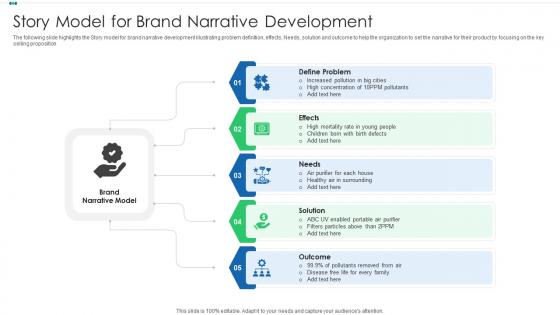
Story model for brand narrative development




Try Before you Buy Download Free Sample Product
 Impress Your
 Audience
 100%
100% Editable
 Save Hours
 of Time


Our Story Model For Brand Narrative Development are topically designed to provide an attractive backdrop to any subject. Use them to look like a presentation pro.
People who downloaded this PowerPoint presentation also viewed the following :
Story model for brand narrative development with all 6 slides:
Use our Story Model For Brand Narrative Development to effectively help you save your valuable time. They are readymade to fit into any presentation structure.





FAQs for Story model for
Okay so you need three things: authenticity, conflict, and transformation. Find a real person - maybe your founder or a customer - who faced an actual problem. Then show how your brand helped solve it. Basically think mini-movie plot, you know? Don't just slap your values on there like stickers though. Weave them into the story naturally. Oh and here's the thing - the best ones feel personal, not like some corporate BS. Short sentences work. So do longer ones that actually flow together. Start with one specific moment that shows why your brand even exists in the first place.
Honestly, skip the product features and go straight for the feels. Share customer stories where people actually overcame real problems. Your brand's messy origin story works too - like the failures before you figured it out, you know? People are so tired of corporate BS these days. They want authentic, vulnerable stuff they can relate to. Pick one emotion you're going for first. Then build everything around that feeling. Short version: make them see themselves in your story, not just your product.
Honestly? Being real is everything. People can smell fake from miles away, and nobody wants that polished corporate BS anymore. Your actual story - even the messy parts - beats some perfect fantasy version every time. Like, I'd rather hear about how you almost failed in year two than some sanitized "we always knew we'd succeed" nonsense. Don't try to hide your struggles or pretend you're flawless. Audiences forgive mistakes but they won't forgive feeling lied to. The human stuff is usually what makes people actually care anyway.
Honestly, visuals are like a cheat code for making people actually remember your brand. Our brains process images crazy fast - like 60,000 times faster than text, which is wild when you think about it. Colors, fonts, photos - they all tell your story without being preachy about it. But here's the thing that trips people up: you gotta stay consistent everywhere. Your Instagram can't look totally different from your website, you know? I'd make a simple style guide first (doesn't have to be fancy) and then just... stick to it religiously.
Honestly? Don't make everything about yourself - focus on what your audience actually cares about. Being too pushy with sales stuff is another big mistake. Your stories should connect to what your brand does, not feel random. Consistency matters too. Can't have your Instagram saying one thing while your website tells a completely different story - that's just confusing. Also, copying other brands never works. What clicks for them won't necessarily work for you because your audience is different. Keep things simple and always think "would my customers even care about this?" That usually keeps me on track.
Okay so basically you've gotta adapt your story for each platform's vibe. Instagram is all about the visuals - use Stories for behind-the-scenes stuff. LinkedIn wants the professional angle, like case studies and industry stuff. Your website can have all the detailed narrative. Twitter's perfect for quick, snappy story bits that get people talking. TikTok's obviously totally different with the short videos. I honestly think the hardest part is keeping your voice consistent while switching up how you tell it. Map out your main story points first, then figure out which platform works best for each piece.
Dude, cultural context is EVERYTHING for brand stories. Humor that kills in the US can totally bomb elsewhere - learned that one the hard way with a campaign that flopped internationally. Family values, communication styles, even how people process conflict... it's all different. You can't just translate your content either (rookie mistake). The story structure itself needs to match how different cultures actually think and feel. What makes a compelling hero in one place might seem weird somewhere else. Honestly, sometimes you need to completely rethink your narrative arc rather than just swapping out words.
Honestly, data takes out all the guesswork when you're trying to figure out what'll actually resonate. Look at your analytics to see which posts got the most engagement - there's usually a pattern in the topics or emotions that made people click. Social listening tools are super helpful too since they show you exactly how people talk about stuff in your industry. I know it feels less "creative" but whatever. Pull your best-performing content from the past few months and see what themes keep showing up. Those real customer pain points? That's where your best stories come from, not just random inspiration.
Honestly? Vulnerability is everything. Share the messy stuff - times your team screwed up or barely pulled through. People hate perfect success stories anyway. Get real customer testimonials, show behind-the-scenes moments where things went sideways. I've noticed the best brands actually lead with their failures before the breakthrough happened. Your founders should be the main characters, not whatever you're selling. Everyone relates to that "oh crap, now what?" feeling or sudden lightbulb moments. Pick one genuine story about solving a problem the hard way and start documenting that. Way more relatable than polished marketing speak.
Don't just dump testimonials randomly on your site - weave them into your actual brand story. Each one should connect to your values or mission. Say your brand's about empowerment - show how Sarah from Denver actually felt empowered, not just "great product!" Generic praise is honestly pretty useless. Think of testimonials as little chapters in your bigger story. I'd organize them around whatever transformation you're promising customers. Way more compelling than scattered reviews that don't tie to anything.
Track engagement rates and how long people actually stay on your content - that shows real connection. Comments are honestly where you'll find the best insights, way better than just looking at likes. Social listening tools help you see if your stories are hitting emotionally or falling flat. Don't forget the business side though - run brand recall surveys and see which campaigns actually bring in customers. I'd set up monthly check-ins to compare everything against your goals. Oh, and share counts matter more than people think since that means your story was compelling enough to pass along.
Your brand story totally changes as you grow. In the beginning, it's all founder vision and scrappy energy - why you even exist. Scale up a bit? Now you're talking customer wins and proof you're onto something. Big companies focus on industry impact and legacy stuff. Biggest mistake though - startups trying to sound all established and mature right away. Comes off super fake, honestly. Just match your story to where you actually are. Oh, and document those messy early days now! You'll definitely want those authentic moments later when you're telling your origin story. Nothing beats real founder-in-their-garage vibes when it's actually true.
Dude, stories beat features every single time. People connect emotionally with narratives - your origin, your mission, why you even started this thing. Sure, everyone's selling similar stuff, but your exact journey? That's yours alone. I always think about the brands I actually care about... it's never because of their product specs, you know? It's their story that stuck. Your competitors can copy your features but they can't copy your "why." So figure out what makes your brand's background or impact genuinely different and start there instead.
Honestly, character development is what makes people actually give a shit about your brand story. Nike gets this - they don't just showcase pro athletes, they make regular people the heroes. That's smart because we all want to see ourselves in those stories, you know? Find your main character first (could be your founder, customers, whatever works). Then show real transformation. People eat that up because it mirrors their own struggles. The whole overcoming-challenges thing never gets old. Your audience needs someone to root for, and that character growth is what hooks them emotionally.
Honestly, just make a brand story bible first - sounds boring but it works. Document your main story, messaging, tone, all that stuff. Then actually get it to everyone on your team. Social media, customer service, whoever. Otherwise you'll sound totally scattered across platforms (which is awkward). Do regular team check-ins to catch weird inconsistencies. Oh and don't make it some rigid thing - let people add to it too. Start by looking at what you're putting out there now. You'll probably cringe at some of it, but that's the point. Short sentences work. Longer ones with natural flow work too.
-
Good research work and creative work done on every template.
-
Excellent template with unique design.
-
Nice and innovative design.
-
Understandable and informative presentation.
-
Easily Understandable slides.