


Strategic Brand Plan Apple Powerpoint Ppt Template Bundles Branding MD





Try Before you Buy Download Free Sample Product
 Impress Your
 Audience
 100%
100% Editable
 Save Hours
 of Time


Our Strategic Brand Plan Apple Powerpoint Ppt Template Bundles Branding MD are topically designed to provide an attractive backdrop to any subject. Use them to look like a presentation pro.
People who downloaded this PowerPoint presentation also viewed the following :
Content of this Powerpoint Presentation
Slide 1: This slide introduces Strategic Brand Plan: Apple. Commence by stating Your Company Name.
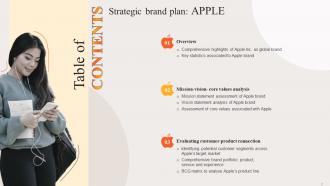
Slide 2: This slide includes the Table of Contents.
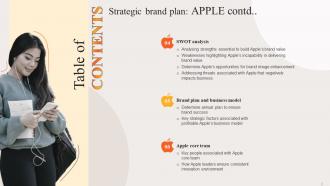
Slide 3: This is yet another slide continuing the Table of Contents.
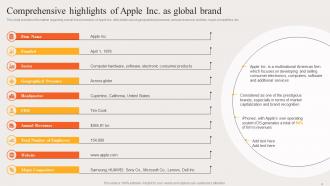
Slide 4: This slide provides information regarding overall brand overview of Apple Inc.
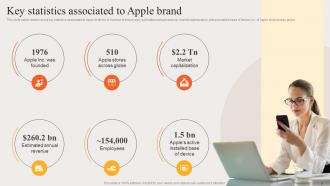
Slide 5: This slide highlights the Key statistics associated to Apple brand.
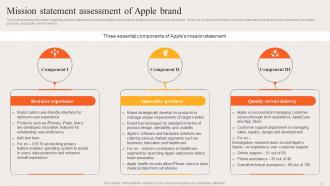
Slide 6: This slide shows the mission statement analysis that defines the purpose of Apple and how it serves its clients.
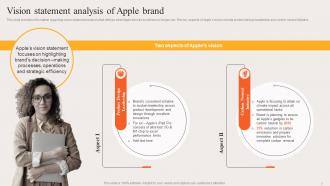
Slide 7: This slide includes the Vision statement analysis of Apple brand.
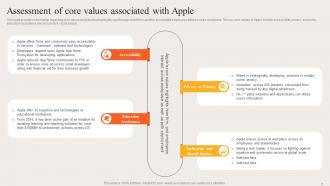
Slide 8: This slide depicts the Assessment of core values associated with Apple.
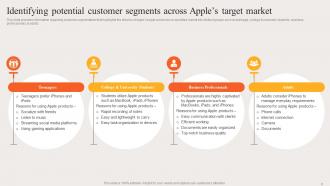
Slide 9: This slide deals with Identifying potential customer segments across Apple’s target market.
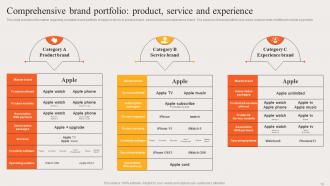
Slide 10: This slide shows complete brand portfolio of Apple in terms of product brand, service brand and experience brand.
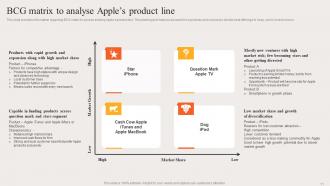
Slide 11: This slide presents the BCG matrix to analyse Apple’s product line.
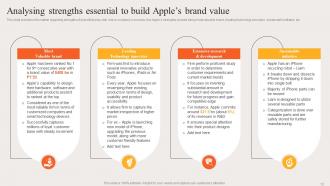
Slide 12: This slide deals with Analysing strengths essential to build Apple’s brand value.
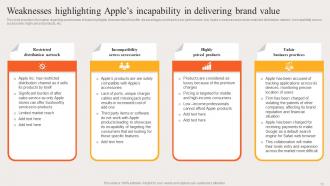
Slide 13: This slide portrays Weaknesses highlighting Apple’s incapability in delivering brand value.
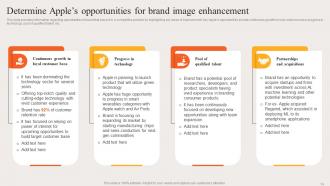
Slide 14: This slide reveals opportunities of brand that place it in a competitive position by highlighting key areas of improvement.
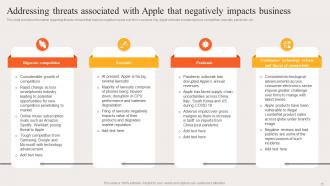
Slide 15: This slide focuses on Addressing threats associated with Apple that negatively impacts business.
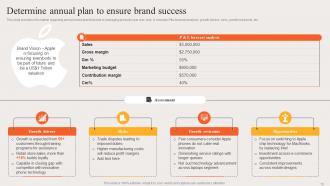
Slide 16: This slide provides information regarding annual brand plan that aids in managing products year over year.
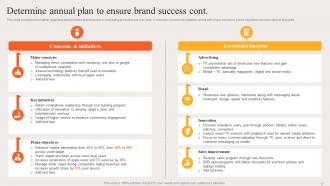
Slide 17: This slide continues to Determine annual plan to ensure brand success.
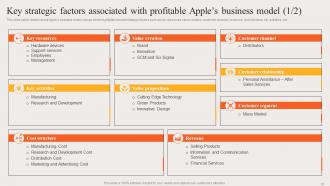
Slide 18: This slide caters details about Apple’s business model canvas which highlights relevant strategic factors.
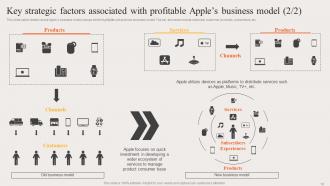
Slide 19: This slide continues highlighting Key strategic factors associated with profitable Apple’s business model.
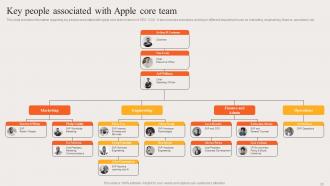
Slide 20: This slide states the Key people associated with Apple core team.
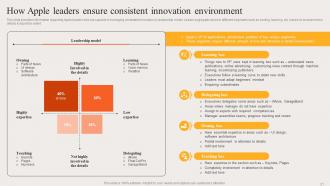
Slide 21: This slide shows How Apple leaders ensure consistent innovation environment.
Slide 22: This is the Thank you slide for acknowledgement.
Strategic Brand Plan Apple Powerpoint Ppt Template Bundles Branding MD with all 27 slides:
Use our Strategic Brand Plan Apple Powerpoint Ppt Template Bundles Branding MD to effectively help you save your valuable time. They are readymade to fit into any presentation structure.







FAQs for Strategic Brand Plan Apple Powerpoint Ppt Template
Key components of an effective strategic brand plan include brand positioning, target audience analysis, competitive differentiation, messaging framework, and performance metrics. These elements work together by establishing clear market identity, defining customer connections, and guiding consistent communications across touchpoints, ultimately delivering enhanced brand recognition and sustainable competitive advantage in increasingly crowded marketplaces.
A brand's mission and vision serve as foundational pillars that guide strategic decision-making, target audience identification, messaging frameworks, and long-term positioning efforts. These core elements enable organizations to maintain consistent brand identity across all touchpoints, align marketing initiatives with business objectives, and differentiate themselves in competitive markets, ultimately delivering authentic customer experiences and sustainable growth.
Market research provides essential insights into consumer behavior, competitive landscapes, target demographics, brand perception, and market opportunities that inform strategic brand positioning. Through surveys, focus groups, and data analytics, organizations can identify unmet needs, optimize messaging strategies, and validate brand concepts before launch, ultimately reducing risks while enhancing market penetration and competitive advantage.
Brands differentiate in saturated markets through unique value propositions, exceptional customer experiences, innovative product features, strategic partnerships, and compelling brand storytelling. By focusing on underserved niches, superior service delivery, and authentic brand personality, companies like Apple and Tesla create distinctive market positions, ultimately building customer loyalty and competitive advantages that drive sustainable growth.
Brand strategy success metrics include brand awareness, customer acquisition costs, net promoter scores, market share growth, and customer lifetime value. These measurements enable organizations to track competitive positioning, customer loyalty, and revenue impact, with many companies finding that combining quantitative data with qualitative feedback ultimately delivers comprehensive insights into brand performance and market effectiveness.
Consumer behavior significantly impacts brand positioning by revealing target audience preferences, purchasing patterns, emotional triggers, and competitive perceptions that shape positioning strategies. Through behavioral analytics and market research, brands can identify optimal positioning opportunities, adjust messaging to resonate with consumer values, and differentiate from competitors, ultimately delivering more targeted campaigns and stronger market positioning that drives customer loyalty and business growth.
Aligning brand values with strategic objectives requires consistent messaging across all touchpoints, employee training that embeds values into daily operations, and measurable KPIs that track value-driven outcomes. Companies like Patagonia and Ben & Jerry's demonstrate this alignment by integrating sustainability and social responsibility into their business models, ultimately delivering authentic customer connections and sustainable competitive advantage through purpose-driven strategies.
Brands can adapt strategic plans through continuous market monitoring, flexible positioning strategies, agile campaign development, and responsive customer engagement approaches. By leveraging real-time analytics and consumer feedback, companies in retail, technology, and financial services streamline their brand messaging while maintaining core values, ultimately delivering competitive advantage and sustained market relevance.
Common pitfalls include inadequate market research, unclear brand positioning, inconsistent messaging across channels, ignoring competitor analysis, and failing to define measurable objectives. These oversights often result from rushing the planning process or lacking cross-departmental alignment, with many organizations finding that thorough preparation and stakeholder buy-in ultimately deliver stronger brand recognition and competitive differentiation.
Storytelling is fundamental to brand strategy as it creates emotional connections, differentiates offerings, and builds memorable brand experiences that resonate with target audiences. Through compelling narratives, companies like Nike and Apple transform product features into aspirational journeys, ultimately driving customer loyalty, premium pricing power, and sustainable competitive advantage in increasingly crowded markets.
Brand planning tools include brand audit templates, competitor analysis frameworks, customer persona builders, brand positioning canvases, and messaging matrices. These resources streamline development by organizing market research, clarifying target audiences, and defining brand architecture, with many organizations finding that structured templates accelerate strategic alignment while ensuring comprehensive brand foundation development.
Social media leverages strategic brand initiatives by enhancing customer engagement, amplifying brand messaging, and providing real-time market insights through targeted content and community building. Through platforms like LinkedIn and Instagram, organizations streamline customer interactions, accelerate brand awareness campaigns, and ultimately deliver improved customer experiences while gaining competitive advantage in increasingly digital markets.
Competitor analysis identifies market gaps, positioning opportunities, and differentiation strategies that directly inform brand positioning, messaging, and tactical decisions within strategic brand plans. Through comprehensive competitor research, organizations can benchmark their value propositions, discover unmet customer needs, and develop unique market positioning, ultimately enabling more targeted brand strategies and sustainable competitive advantages.
Cross-functional teams contribute to brand strategy success by bringing diverse expertise, ensuring consistent messaging across touchpoints, and accelerating implementation through collaborative decision-making. When marketing, sales, product development, and customer service teams align strategically, organizations streamline brand execution, enhance customer experiences, and deliver cohesive brand positioning, with many companies finding that integrated teams significantly outperform siloed approaches.
Effective strategies for long-term brand sustainability include consistent brand messaging, continuous innovation, customer-centric experiences, strategic partnerships, and adaptive market positioning. These approaches streamline brand evolution by maintaining core identity while embracing change, enhancing customer loyalty, and expanding market reach, with many organizations finding that strategic brand investments ultimately deliver competitive advantage and sustained growth.
-
Huge collection of high-quality templates. Worth each penny.
-
I took a chance with SlideTeam. I never looked back. Great products and great service.