


Strategic Guide For Market Segmentation Process Powerpoint Presentation Slides MKT CD V




Try Before you Buy Download Free Sample Product
 Impress Your
 Audience
 100%
100% Editable
 Save Hours
 of Time


Unlock the potential of customer segmentation with our Strategic Guide for Market Segmentation Process template, designed to simplify the customization and personalization of your promotions, assistance, and sales strategies. The RFM Analysis deck commences by introducing customer segmentation and highlighting its significance and critical benefits to businesses. Moreover, STP Analysis PPT offers a comparative assessment of customer versus market segmentation and customer segmentation versus profiling. Furthermore, our Customer Segmentation Powerpoint provides a comprehensive breakdown of the customer segmentation process, exploring various types. Also, the B2B Segmentation template outlines essential matrices businesses utilize for effective customer segmentation. Lastly, the Customer Profiling Powerpoint showcases a case study demonstrating the customer segmentation tree and the branding and marketing strategies employed based on customer segmentation. Gain immediate access to this invaluable resource.
People who downloaded this PowerPoint presentation also viewed the following :
Content of this Powerpoint Presentation
Slide 1: This slide introduces Strategic Guide for Market Segmentation Process.
Slide 2: This slide depicts the Agenda of the presentation.
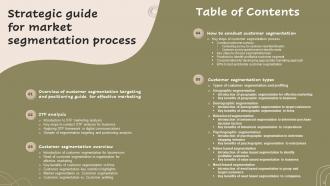
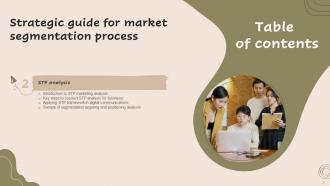
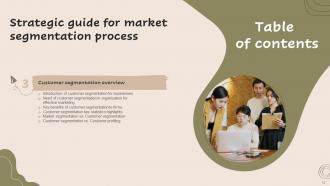
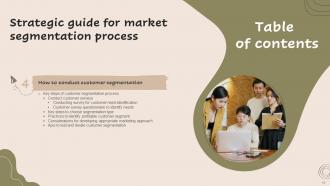
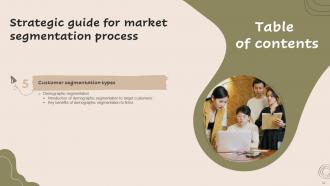
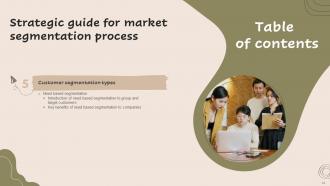
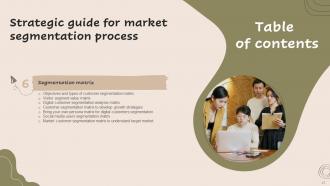
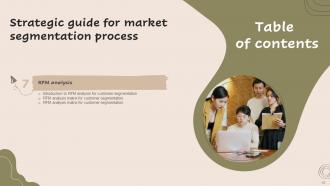
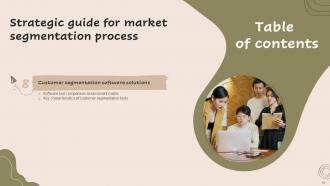
Slide 3: This slide incorporates the Table of contents.
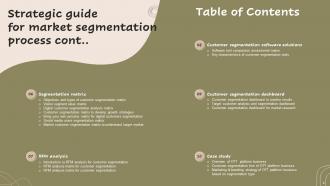
Slide 4: This is yet another slide continuing the Table of contents.
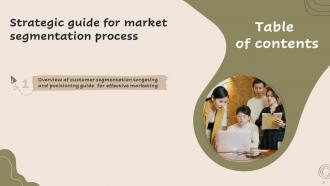
Slide 5: This slide highlights the Title for the Topics to be discussed next.
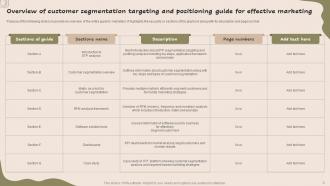
Slide 6: This slide provides an overview of the entire guide to marketers.
Slide 7: This slide mentions the Heading for the Components to be covered in the following template.
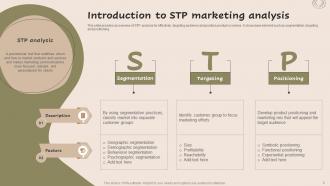
Slide 8: This slide reveals the Introduction to STP marketing analysis.
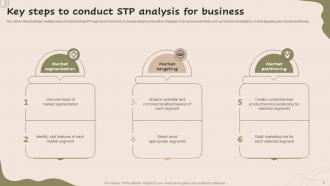
Slide 9: This slide lists the Key steps to conduct STP analysis for business.
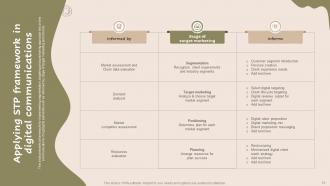
Slide 10: This slide presents a framework for implementing segmentation, targeting and positioning approach into online communications.
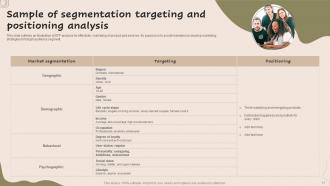
Slide 11: This slide outlines an illustration of STP analysis for effectively marketing of product and services.
Slide 12: This slide elucidates the Title for the Components to be discussed further.
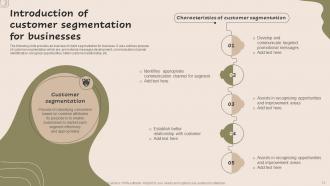
Slide 13: This slide gives a glimpse of client segmentation for business.
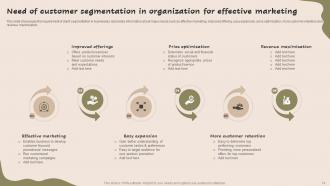
Slide 14: This slide exhibits the Need of customer segmentation in organization for effective marketing.
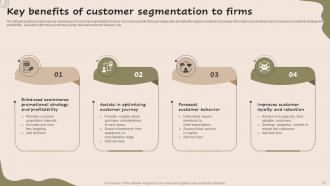
Slide 15: This slide presents the Key benefits of customer segmentation to firms.
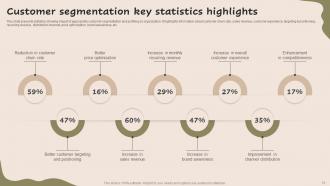
Slide 16: This slide portarys the Customer segmentation key statistics highlights.
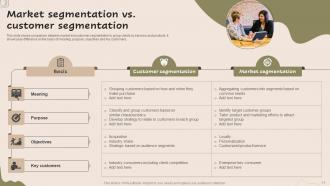
Slide 17: This slide shows comparison between market and customer segmentation to group clients by services and products.
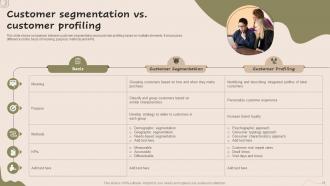
Slide 18: This slide reveals the comparison between customer segmentation and customer profiling based on multiple elements.
Slide 19: This slide exhibits the Heading for the Topics to be covered in the following template.
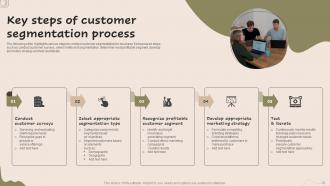
Slide 20: The following slide highlights various steps to conduct customer segmentation for business.
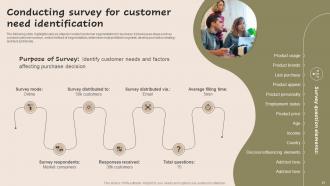
Slide 21: This slide deals with Conducting survey for customer need identification.
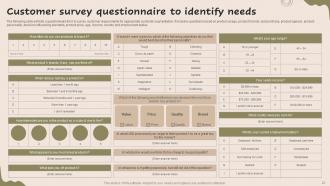
Slide 22: This slide focuses on the Customer survey questionnaire to identify needs.
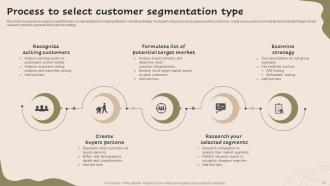
Slide 23: This slide showcases key steps to select the type of segmentation for creating effective marketing strategy.
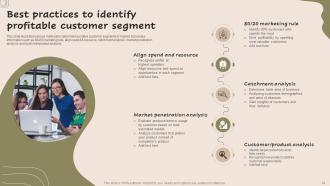
Slide 24: This slide illustrates various methods to determine lucrative customer segments in market.
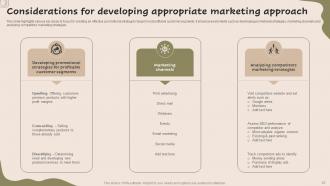
Slide 25: This slide exhibits the various key areas to focus for creating an effective promotional strategy.
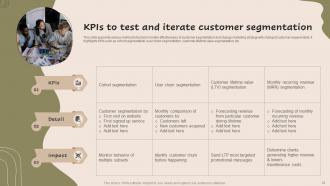
Slide 26: This slide represents the KPIs to test and iterate customer segmentation.
Slide 27: This slide includes the Title for the Topics to be discussed further.
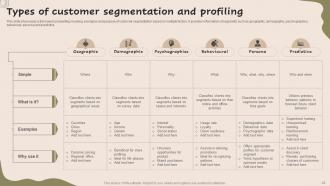
Slide 28: This slide showcases a framework presenting meaning, examples and purpose of customer segmentation based on multiple factors.
Slide 29: This slide elucidates the Heading for the Components to be covered in the forth-coming template.
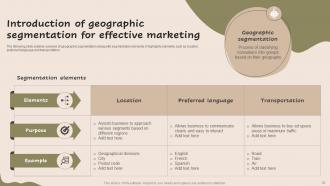
Slide 30: The following slide outlines overview of geographic segmentation along with segmentation elements.
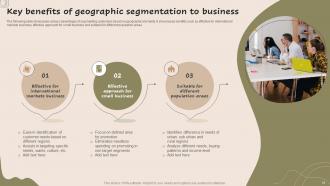
Slide 31: This slide reveals the various advantages of segmenting customers based on geographic elements.
Slide 32: This slide depicts the Title for the Ideas to be discussed further.
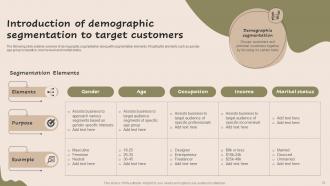
Slide 33: The following slide gives an overview of demographic segmentation along with segmentation elements.
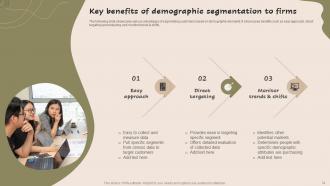
Slide 34: This slide showcases various advantages of segmenting customers based on demographic elements.
Slide 35: This slide displays the Heading for the Ideas to be covered in the following template.
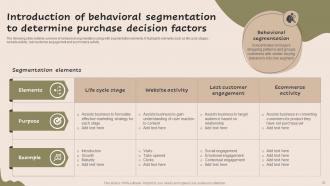
Slide 36: This slide portrays the Introduction of behavioral segmentation to determine purchase decision factors.
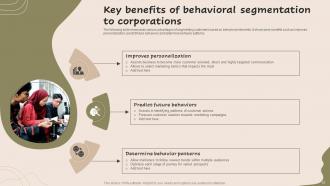
Slide 37: This slide exhibits the Key benefits of behavioral segmentation to corporations.
Slide 38: This slide represents the Title for the Contents to be discussed next.
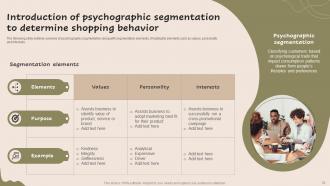
Slide 39: The following slide outlines overview of psychographic segmentation along with segmentation elements.
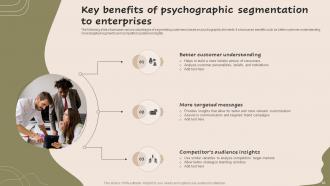
Slide 40: This slide mentions the Key benefits of psychographic segmentation to enterprises.
Slide 41: This slide includes the Heading for the Topics to be coveerd further.
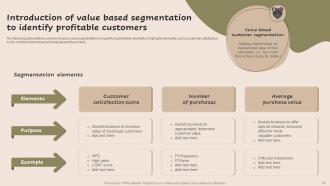
Slide 42: This slide shows the overview of value based segmentation along with segmentation elements.
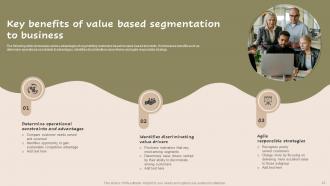
Slide 43: This slide presents the Key benefits of value based segmentation to business.
Slide 44: This slide depicts the Title for the Topics to be discussed next.
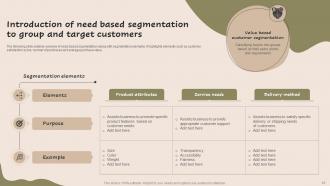
Slide 45: This slide presents the Introduction of need based segmentation to group and target customers.
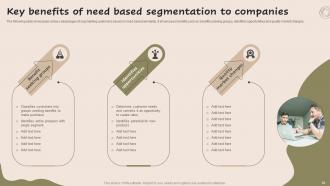
Slide 46: This slide exhibits the Key benefits of need based segmentation to companies.
Slide 47: This slide elucidates the Heading for the Components to be covered in the following template.
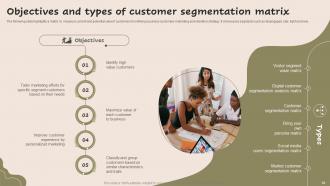
Slide 48: This slide mentions the Objectives and types of customer segmentation matrix.
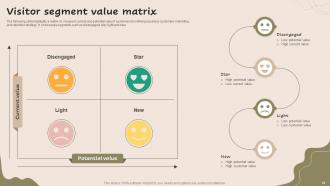
Slide 49: This slide illustrates the Visitor segment value matrix.
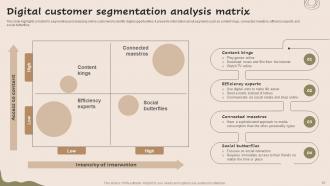
Slide 50: This slide reveals a matrix for segmenting and analyzing online customers to identify digital opportunities.
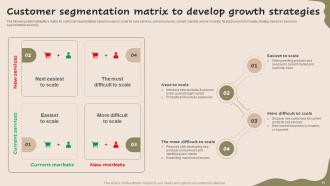
Slide 51: This slide represents the Customer segmentation matrix to develop growth strategies.
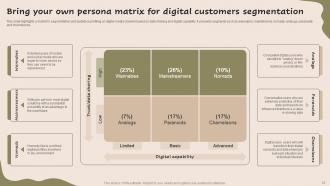
Slide 52: This slide highlights a matrix for segmentation and audience profiling on digital media channel.
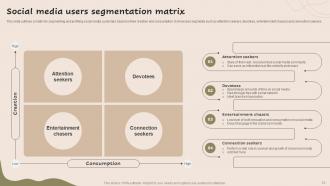
Slide 53: This slide outlines a matrix for segmenting and profiling social media customers based on their creation and consumption.
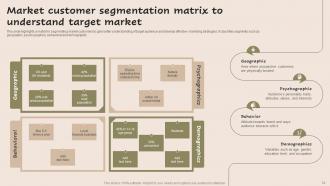
Slide 54: This slide shows a Market customer segmentation matrix to understand target market.
Slide 55: This slide incorporates the Title for the Ideas to be covered further.
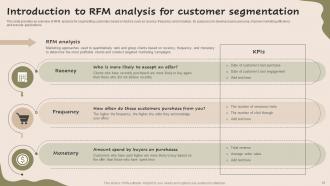
Slide 56: This slide provides an overview of RFM analysis for segmenting customers.
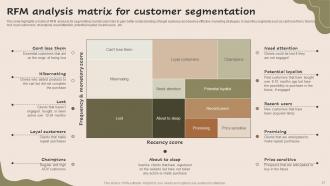
Slide 57: This slide portrays a matrix of RFM analysis for segmenting market customers.
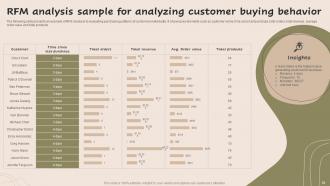
Slide 58: This slide presents an example of RFM analysis to evaluating purchasing patterns of customers individually.
Slide 59: This slide indicates the Heading for the Ideas to be discussed in the following template.
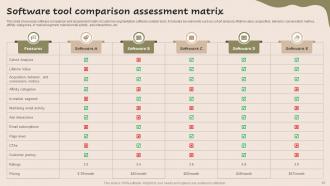
Slide 60: This slide showcases software comparison and assessment matrix of customer segmentation software solution tools.
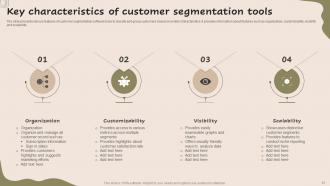
Slide 61: This slide talks about the Key characteristics of customer segmentation tools.
Slide 62: This slide reveals the Title for the Contents to be covered in the upcoming template.
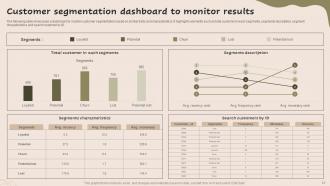
Slide 63: This slide showcases a dashboard to monitor customer segmentation based on similar traits and characteristics.
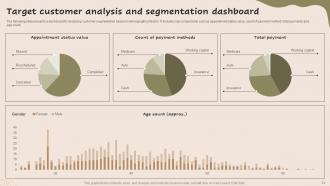
Slide 64: This slide elucidates the Target customer analysis and segmentation dashboard.
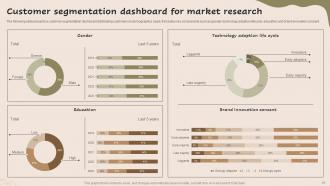
Slide 65: This slide presents a customer segmentation dashboard distributing customers on demographics basis.
Slide 66: This slide represents the Heading for the Topics to be discussed further.
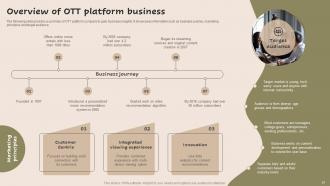
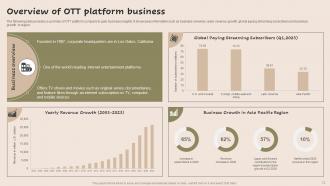
Slide 67: The following slide provides a summary of OTT platform company to gain business insights.
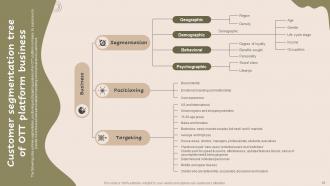
Slide 68: This slide outlines segmentation, positioning and targeting analysis of an OTT platform company.
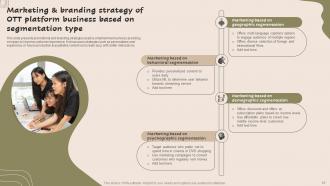
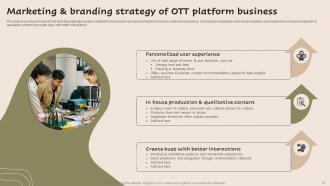
Slide 69: This slide shows promotional and branding strategies used by entertainment services providing company to improve customer experience.
Slide 70: This is the Icons slide containing all the Icons used in the plan.
Slide 71: This slide is used for depicting some Additional information.
Slide 72: The following slide provides a summary of OTT platform company to gain business insights.
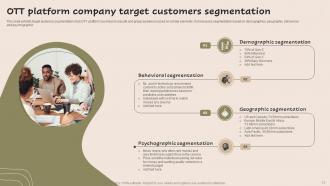
Slide 73: This slide exhibits target audience segmentation of an OTT platform business to classify and group audience based on similar elements.
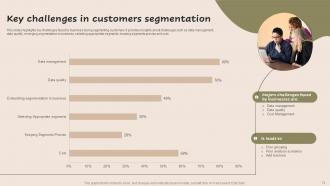
Slide 74: This slides highlights the key challenges faced by business during segmenting customers.
Slide 75: This slide presents promotional and branding strategies used by entertainment services providing company to improve customer experience.
Slide 76: This slide elucidates the Pie chart.
Slide 77: This slide reveals the organization's mission, vision, and goals.
Slide 78: This slide depicts the Venn diagram.
Slide 79: This slide displays information related to the Financial topic.
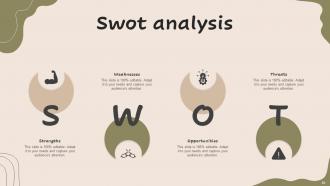
Slide 80: This slide represents the SWOT diagram.
Slide 81: This is the Puzzle slide with related imagery.
Slide 82: This is the Magnifying glass for minute details.
Slide 83: This is the Idea generation slide for encouraging innovative ideas.
Slide 84: This slide elucidates the Mind map.
Slide 85: This slide portrays the firm's Roadmap.
Slide 86: This is the Thank You slide for acknowledgement.
Strategic Guide For Market Segmentation Process Powerpoint Presentation Slides MKT CD V with all 86 slides:
Use our Strategic Guide For Market Segmentation Process Powerpoint Presentation Slides MKT CD V to effectively help you save your valuable time. They are readymade to fit into any presentation structure.









FAQs for Strategic Guide For Market Segmentation Process Powerpoint Presentation Slides
Effective market segmentation requires criteria including measurability, accessibility, substantiality, actionability, and differentiability. These criteria work together by ensuring segments can be quantified and reached, represent sufficient revenue potential, respond distinctly to marketing efforts, and remain stable over time, with many organizations finding that strategic segmentation ultimately delivers enhanced customer targeting and competitive advantage.
Businesses identify target segments through demographic analysis, behavioral data assessment, geographic mapping, and psychographic profiling, while prioritizing using market size evaluation, competitive positioning analysis, and revenue potential calculations. Through customer surveys, purchase pattern analysis, and strategic segmentation tools, organizations streamline resource allocation, enhance customer experiences, and accelerate market penetration, ultimately delivering higher conversion rates and sustainable competitive advantage.
Consumer behavior serves as the foundation for effective market segmentation by revealing purchasing patterns, preferences, decision-making processes, brand loyalty trends, and response variations across different demographic groups. Understanding these behavioral insights enables companies to create targeted segments based on actual consumer actions rather than assumptions, with retailers like Amazon and Netflix successfully leveraging behavioral data to deliver personalized experiences, optimize product recommendations, and ultimately drive higher conversion rates and customer satisfaction.
Demographic factors influence market segmentation strategies by enabling businesses to categorize customers based on age, income, education, gender, and lifestyle preferences, creating targeted marketing approaches for each segment. Companies like Netflix tailor content recommendations by age groups, while luxury retailers focus on high-income demographics, ultimately delivering personalized experiences and improved conversion rates across diverse customer bases.
**INPUT**: What techniques can be used to gather data for segmentation analysis? **OUTPUT**: Data gathering techniques for segmentation analysis include customer surveys, purchase history analysis, behavioral tracking, demographic studies, and social media analytics. These methods streamline market insights by capturing preferences, identifying patterns, and revealing customer motivations, with many retail and financial services organizations finding that combining multiple data sources delivers more precise targeting and competitive advantage. [Word count: 55 words]
Psychographic segmentation enhances marketing efforts by targeting consumers based on values, interests, lifestyles, and personality traits, enabling deeper emotional connections than demographics alone. This approach allows brands to craft personalized messaging, optimize product positioning, and build stronger customer loyalty, with retailers and financial services finding that psychographic insights significantly improve campaign effectiveness and customer lifetime value.
Geographic segmentation offers advantages including targeted marketing campaigns, localized product offerings, efficient resource allocation, and cultural relevance that resonates with regional preferences. While this approach enables businesses to optimize distribution costs and customize messaging for specific markets, it can limit scalability and miss cross-regional opportunities, with many companies finding that balanced geographic strategies deliver competitive advantage.
Businesses can use segmentation to tailor marketing messages by analyzing demographic data, behavioral patterns, purchasing histories, and psychographic profiles to create targeted campaigns. Through personalized content, customized product recommendations, and channel-specific messaging, companies like Netflix and Amazon deliver relevant experiences that resonate with distinct customer groups, ultimately increasing engagement rates and conversion effectiveness.
Digital transformation revolutionizes market segmentation by enabling real-time data analytics, AI-powered customer insights, behavioral tracking, and personalized targeting capabilities. Through advanced technologies, companies can create micro-segments, predict customer preferences, and deliver hyper-personalized experiences, with retail and financial services finding significantly improved conversion rates and customer engagement.
B2B segmentation focuses on firmographics, industry verticals, company size, and decision-making processes, while B2C emphasizes demographics, psychographics, and individual behaviors. B2B strategies target fewer, higher-value accounts with complex buying cycles, whereas B2C approaches reach broader audiences through emotional triggers, with many organizations finding that B2B requires relationship-building while B2C prioritizes mass personalization.
Successful market segmentation examples include Nike's demographic targeting of athletes and fitness enthusiasts, Coca-Cola's geographic adaptation with regional flavors, Amazon's behavioral segmentation through personalized recommendations, and luxury brands like Rolex using psychographic positioning. These strategies streamline marketing efforts by delivering targeted messaging, enhancing customer experiences, and maximizing resource allocation, ultimately delivering higher conversion rates and stronger brand loyalty.
Companies can test segmentation effectiveness through A/B testing different messaging approaches, analyzing conversion rates across segments, measuring customer lifetime value variations, and conducting surveys to assess segment-specific satisfaction levels. Through these methods, organizations in retail, financial services, and healthcare can identify which segments respond best to targeted campaigns, ultimately optimizing resource allocation and enhancing customer acquisition strategies.
Market segmentation analysis tools include CRM platforms like Salesforce, analytics software such as Google Analytics and Adobe Analytics, survey tools like SurveyMonkey, and specialized solutions including Tableau and SPSS. These technologies streamline customer data collection, demographic analysis, and behavioral pattern identification, with many retail and financial services organizations finding that integrated platforms ultimately deliver more precise targeting and enhanced campaign effectiveness.
Market segmentation informs product development by revealing specific customer needs, preferences, and pain points within distinct market groups, enabling companies to create targeted solutions. Through demographic, behavioral, and psychographic insights, organizations can prioritize features, customize functionality, and develop innovative offerings that resonate with specific segments, ultimately delivering higher customer satisfaction and competitive differentiation.
Ethical market segmentation requires avoiding discrimination based on protected characteristics, ensuring data privacy compliance, and preventing exploitative targeting of vulnerable populations like children or financially distressed consumers. Marketers should focus on value-driven segmentation that enhances customer experiences rather than manipulative practices, with many organizations finding that transparent, respectful segmentation strategies ultimately build stronger brand trust and long-term customer loyalty.
-
I really liked their customized design services. I got my desired template made by their expert team. Thank You!
-
Appreciate the research and its presentable format.