


Strategic Impact Of Customer Onboarding Journey Powerpoint Presentation Slides




Try Before you Buy Download Free Sample Product
 Impress Your
 Audience
 100%
100% Editable
 Save Hours
 of Time


The client onboarding process is crucial to keeping them throughout the customer lifecycle. Grab our Strategic Impact of Customer Onboarding Journey template. It demonstrates whether a client keeps using your product over time or discontinues it after a few months. Our Customer Churn Rate deck assists businesses in luring new prospective clients. It covers the challenges faced in client onboarding and its impact on the firm. Our Customer Persona PPT also includes a summary of the user onboarding journey procedure requirements and the favorable survey results. Further, it incorporates a number of the onboarding journeys stages. These comprise setting up a sign up website, distributing a welcome email, facilitating the users first login, etc. It also demonstrates the techniques used to improve customers onboarding processes through the use of software, the creation of customer personas, and the preparation and monitoring of journey maps. Lastly, our Customer Onboarding Journey module showcases the cost spent on each strategy adopted and its positive effect on the company. Get access now.
People who downloaded this PowerPoint presentation also viewed the following :
Content of this Powerpoint Presentation
Slide 1: This slide introduces Strategic Impact of Customer Onboarding Journey. Commence by stating Your Company Name.
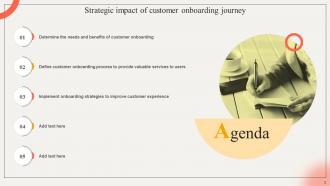
Slide 2: This slide depicts the Agenda of the presentation.
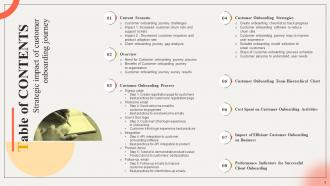
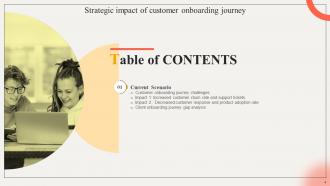
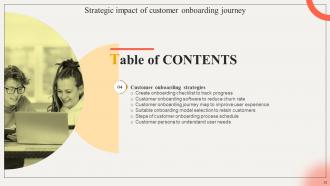
Slide 3: This slide incorporates the Table of Contents.
Slide 4: This slide highlights the Title for the Topics to be discussed further.
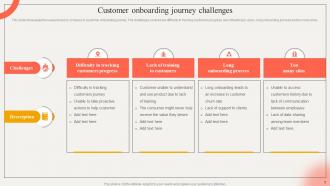
Slide 5: This slide showcases the issues faced by company in customer onboarding journey.
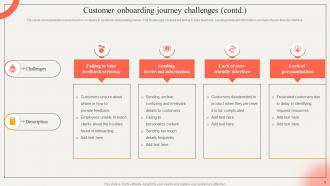
Slide 6: This slide continues the Customer onboarding journey challenges.
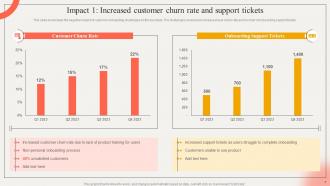
Slide 7: This slide showcases the first negative impact of customer onboarding challenges on the business.
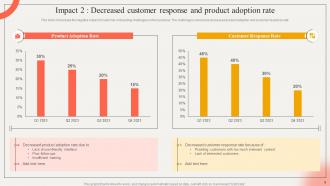
Slide 8: This slide reveals the second negative impact of customer onboarding challenges on the business.
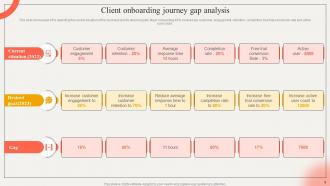
Slide 9: This slide presents the Client onboarding journey gap analysis.
Slide 10: This slide elucidates the Heading for the Components to be covered in the forth-coming template.
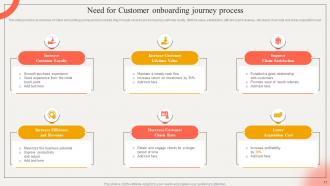
Slide 11: This slide exhibits the Need for Customer onboarding journey process.
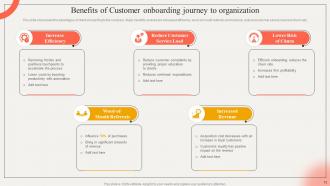
Slide 12: This slide highlights the Benefits of Customer onboarding journey to organization.
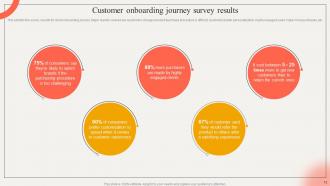
Slide 13: This slide portrays the Customer onboarding journey survey results.
Slide 14: This slide mentions the Title for the Ideas to be discussed in the following template.
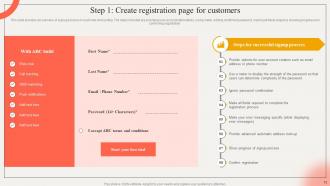
Slide 15: This slide provides an overview of signup process in customer onboarding.
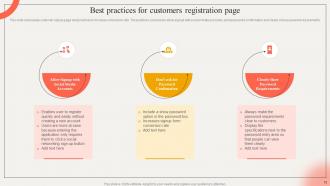
Slide 16: This slide showcases the Best practices for customers registration page.
Slide 17: This slide elucidates the Heading for the Ideas to be covered in the next template.
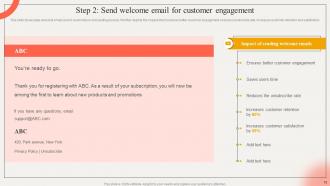
Slide 18: This slide reveals the welcome email send to customers in onboarding process.
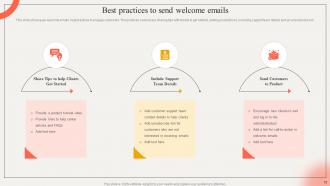
Slide 19: This slide exhibits the Best practices to send welcome emails.
Slide 20: This slide includes the Title for the Components to be discussed in the following template.
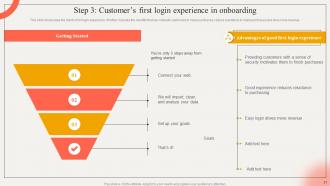
Slide 21: This slide showcases the client’s first login experience.
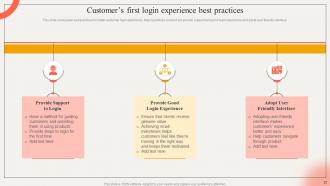
Slide 22: This slide talks about the Customer’s first login experience best practices.
Slide 23: This slide indicates the Heading for the Topics to be covered in the upcoming template.
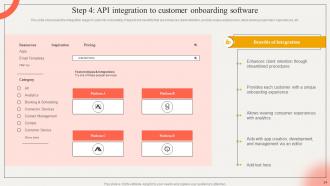
Slide 24: This slide represents the integration stage in customer onboarding.
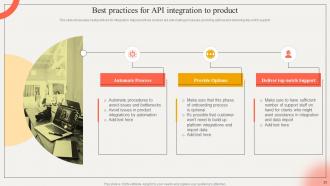
Slide 25: This slide states the Best practices for API integration to product.
Slide 26: This slide presents the Title for the Topics to be discussed next.
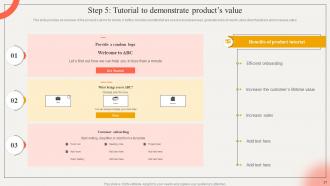
Slide 27: This slide provides an overview of the product’s demo for clients.
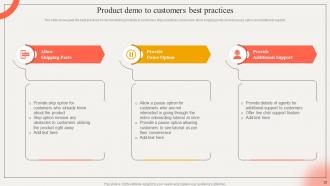
Slide 28: This slide showcases the best practices for demonstrating products to customers.
Slide 29: This slide elucidates the Heading for the Contents to be covered further.
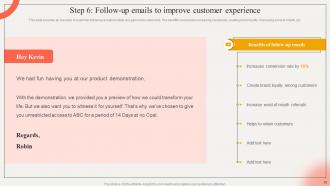
Slide 30: This slide provides an overview of customer follow-up emails to retain and gain more customers.
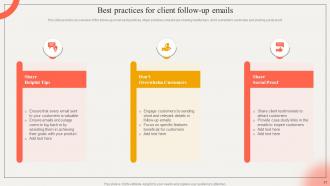
Slide 31: This slide exhibits the Best practices for client follow-up emails.
Slide 32: This slide incorporates the Title for the Ideas to be discussed in the following template.
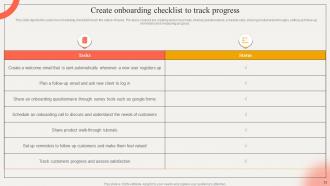
Slide 33: This slide depicts the customer onboarding checklist to track the status of tasks.
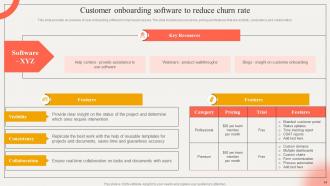
Slide 34: This slide focuses on the Customer onboarding software to reduce churn rate.
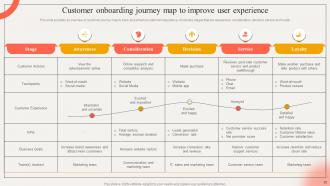
Slide 35: This slide talks about the Customer onboarding journey map to improve user experience.
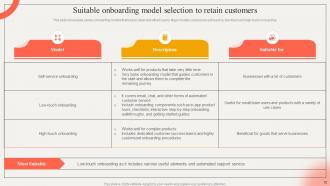
Slide 36: This slide showcases various onboarding models that help to retain and attract users.
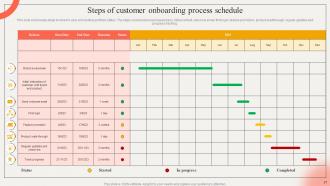
Slide 37: This slide illustrates the Steps of customer onboarding process schedule.
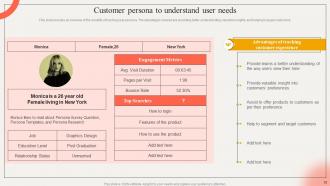
Slide 38: This slide deasl with the Customer persona to understand user needs.
Slide 39: This slide mentions about the Heading for the Ideas to be covered in the forth-coming template.
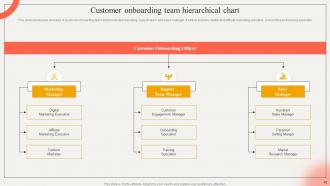
Slide 40: This slide showcases structure of customer onboarding team.
Slide 41: This slide displays the Title for the Topics to be discussed next.
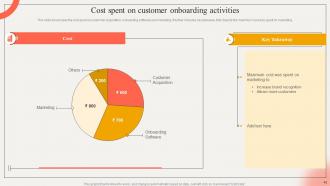
Slide 42: This slide reveals the cost spent on customer acquisition, onboarding software and marketing.
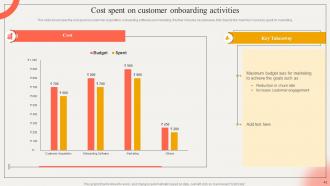
Slide 43: This slide talks about the Cost spent on customer onboarding activities.
Slide 44: This slide elucidates the Heading for the Components to be covered in the forth-coming template.
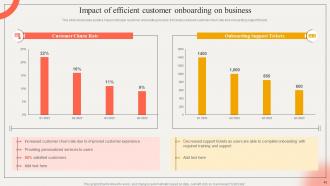
Slide 45: This slide portrays the Impact of efficient customer onboarding on business.
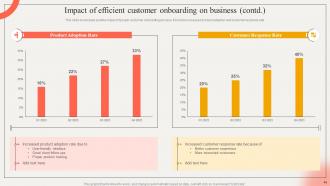
Slide 46: This slide continues the Impact of efficient customer onboarding on business.
Slide 47: This slide shows the Title for the Topics to be discussed next.
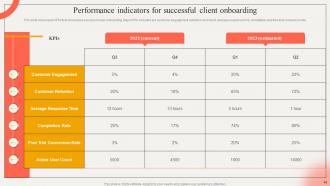
Slide 48: This slide states the Performance indicators for successful client onboarding.
Slide 49: This is the Icons slide containing all the Icons used in the plan.
Slide 50: This slide is used for displaying some Additional information.
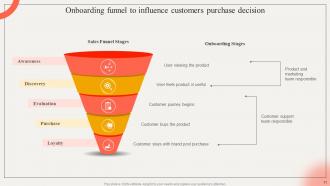
Slide 51: This slide illustrates the Onboarding funnel to influence customers purchase decision.
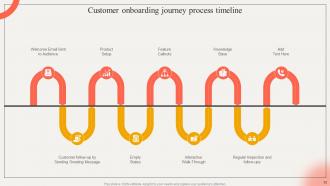
Slide 52: This slide shows the Customer onboarding journey process timeline.
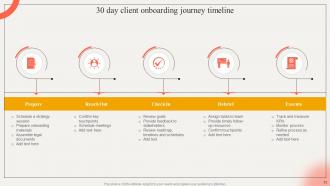
Slide 53: This slide exhibits the 30 day client onboarding journey timeline.
Slide 54: This is the About us slide. State your comapny-related information here.
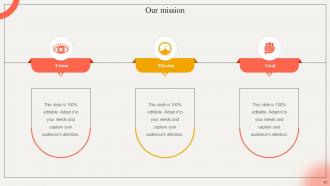
Slide 55: This slide is used for presenting the organization's mission, vision, and values.
Slide 56: This slide contains the Post it notes for reminders and deadlines.
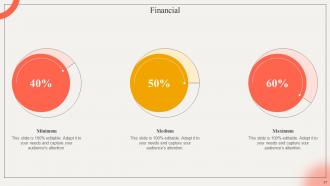
Slide 57: This slide elucidates information related to the Financial topic.
Slide 58: This is the Venn diagram slide.
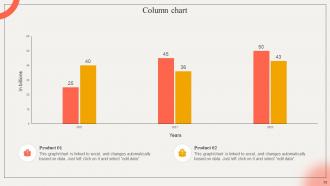
Slide 59: This slide reveals the Column chart.
Slide 60: This is the Thank You slide for acknowledgemnt.
Strategic Impact Of Customer Onboarding Journey Powerpoint Presentation Slides with all 65 slides:
Use our Strategic Impact Of Customer Onboarding Journey Powerpoint Presentation Slides to effectively help you save your valuable time. They are readymade to fit into any presentation structure.






FAQs for Strategic Impact Of Customer Onboarding Journey
Effective customer onboarding includes welcome and account setup, product education and training, initial engagement and feature adoption, progress monitoring and support, and feedback collection and optimization. These stages streamline user experience by reducing time-to-value, minimizing confusion, and building confidence, with many organizations finding that structured onboarding increases customer retention and accelerates product adoption significantly.
Personalized onboarding experiences improve customer retention by delivering tailored content, addressing individual pain points, and accelerating time-to-value through customized workflows. Banks using personalized digital onboarding see 40% higher engagement, while SaaS companies report 25% better retention rates, as customers feel understood and quickly realize product benefits, ultimately reducing churn and increasing lifetime value.
User feedback plays a crucial role in optimizing onboarding by identifying friction points, revealing user preferences, highlighting knowledge gaps, and uncovering drop-off causes throughout the customer journey. Through systematic feedback collection and analysis, organizations streamline processes, personalize experiences, and enhance completion rates, with many companies finding that user-driven improvements ultimately deliver higher satisfaction scores and stronger customer retention.
Presentation templates facilitate effective onboarding communication by standardizing information delivery, ensuring consistent messaging across teams, and creating visual clarity for complex processes. These templates streamline training sessions, welcome presentations, and process explanations, with many organizations finding that structured visual formats reduce onboarding time by 40% while enhancing new employee comprehension and engagement.
Key onboarding metrics include time-to-value, completion rates, user activation scores, feature adoption rates, and customer satisfaction surveys. These measurements enable organizations to identify bottlenecks, optimize workflows, and enhance user experiences, with many companies finding that tracking these indicators reduces churn by 30% while accelerating product adoption and long-term retention.
Different industries approach customer onboarding by tailoring processes to their specific regulatory requirements, risk profiles, and customer expectations. Financial services emphasize compliance verification and fraud prevention, healthcare focuses on privacy protections and consent management, while retail prioritizes seamless user experiences and quick activation, ultimately delivering industry-appropriate security, efficiency, and customer satisfaction.
Common onboarding pitfalls include overwhelming customers with excessive information, lacking personalization, providing inadequate support channels, setting unrealistic expectations, and failing to track progress effectively. These missteps often result in customer frustration, increased abandonment rates, and reduced satisfaction scores, with many organizations finding that streamlined, personalized approaches significantly enhance retention and accelerate time-to-value.
Technology enhances customer onboarding through automated workflows, digital document verification, AI-powered chatbots, mobile-first interfaces, and real-time progress tracking. These solutions streamline account setup, reduce manual processing time, and deliver personalized guidance, with banks and financial institutions finding that customers complete onboarding 60% faster while experiencing significantly improved satisfaction rates.
Effective segmentation strategies include role-based workflows, industry-specific templates, experience-level customization, product-tier pathways, and automated decision trees based on customer data. These approaches streamline onboarding by delivering targeted content, reducing irrelevant steps, and personalizing touchpoints, with many organizations finding that segmented journeys reduce time-to-value by 40% while significantly improving customer satisfaction and retention rates.
Aligning onboarding processes with customer expectations is crucial for reducing churn, accelerating time-to-value, and building lasting relationships from the first interaction. Organizations that strategically customize their onboarding workflows based on customer segments and feedback see significantly higher adoption rates, improved satisfaction scores, and stronger retention, ultimately delivering competitive advantage in increasingly crowded markets.
Storytelling in presentations enhances customer engagement by creating emotional connections, simplifying complex processes, making information memorable, and building trust through relatable scenarios. These narrative techniques help financial services, healthcare institutions, and software companies transform technical onboarding content into compelling experiences, ultimately reducing confusion, accelerating adoption, and strengthening long-term customer relationships.
Businesses ensure consistent onboarding by standardizing communication templates, creating unified digital platforms, establishing clear process documentation, and implementing cross-departmental training protocols. Through centralized customer relationship management systems, organizations streamline interactions across email, phone, and in-person touchpoints, while regular quality audits and feedback loops help maintain service standards, ultimately delivering seamless customer experiences and stronger brand trust.
Innovative onboarding techniques include gamified progress tracking, AI-powered personalization, interactive video tutorials, peer mentorship programs, and micro-learning modules delivered through mobile apps. These approaches streamline the experience by reducing time-to-value, increasing engagement rates, and improving retention metrics, with many financial services and SaaS companies finding that personalized, bite-sized content ultimately delivers higher completion rates and stronger customer satisfaction.
Training programs enhance customer success teams' onboarding capabilities by developing communication skills, technical product knowledge, problem-solving techniques, and customer relationship management expertise. These comprehensive programs enable teams to deliver personalized guidance, proactively address client concerns, and streamline implementation processes, with many organizations finding that well-trained teams reduce onboarding time significantly while improving customer satisfaction and retention rates.
Customer onboarding standardization resources include process workflow templates, checklist frameworks, role-based training guides, communication scripts, and digital onboarding platforms. These tools streamline consistency by automating task sequences, ensuring compliance requirements, and providing measurable touchpoints, with many organizations finding that standardized resources reduce onboarding time while enhancing new customer experiences.
-
SlideTeam is my one-stop destination for templates. Highly recommended!
-
Nothing beats the well-formatted and professionally designed templates offered. Kudos to SlideTeam for their amazing collection of PPT slides.