

Strategic Process For Social Media Recruitment Powerpoint Presentation Slides





Try Before you Buy Download Free Sample Product
 Impress Your
 Audience
 100%
100% Editable
 Save Hours
 of Time


Social media recruitment involves using social networking sites to identify and engage candidates. Here is an efficiently designed presentation on Strategic Process for Social Media Recruitment to recruit high-quality candidates, reduce recruitment expenses, etc. This deck covers challenges associated with social media recruitment, channels used by recruiters, competitive assessment of metrics, and the organizational structure of the recruitment team. Further, this PPT represents the need for social media recruitment strategy, which includes its significance to recruiters and job seekers, HR trends, and benefits to the recruitment company. Moreover, this deck shows applicants screened for recruiting high-quality candidates and content posting schedules on social media. This PowerPoint presentation focuses on employee training schedules regarding social media platforms and budget allocation for recruitment. Also, it captures the impact of social media recruitment, which covers the recruitment process, parameters to measure social recruiting campaign success, etc. At last, this PPT covers the dashboard and metrics to measure social media recruitment success. Customize this 100 percent editable deck through assistance from our highly-skilled research or design team. Get access now.
People who downloaded this PowerPoint presentation also viewed the following :
Content of this Powerpoint Presentation
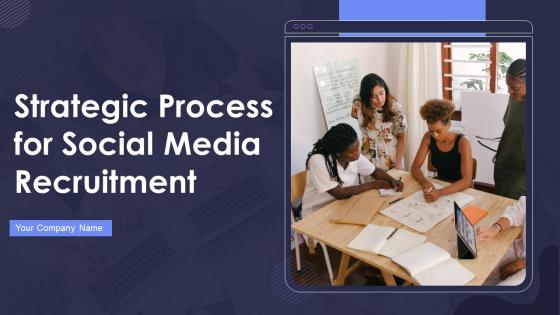
Slide 1: This slide introduces Strategic Process for Social Media Recruitment. State your company name and begin.
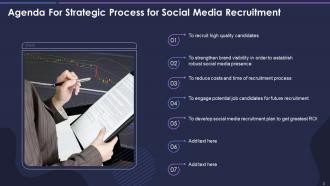
Slide 2: This is an Agenda slide. State your agendas here.
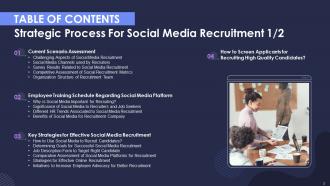
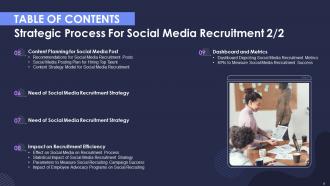
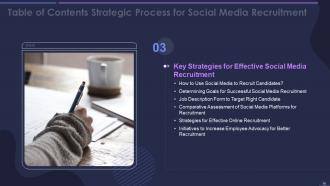
Slide 3: This slide presents Table of Content for the presentation.
Slide 4: This is another slide continuing Table of Content for the presentation.
Slide 5: This slide highlights title for topics that are to be covered next in the template.
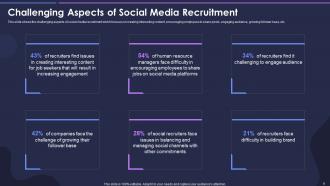
Slide 6: This slide shows Challenging Aspects of Social Media Recruitment.
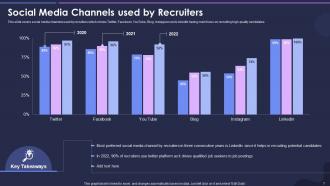
Slide 7: This slide presents Social Media Channels Used by Recruiters.
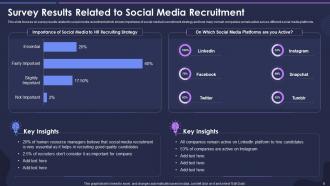
Slide 8: This slide displays Survey Results Related to Social Media Recruitment.
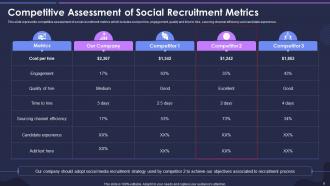
Slide 9: This slide represents Competitive Assessment of Social Recruitment Metrics.
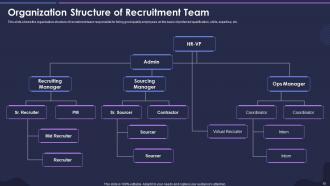
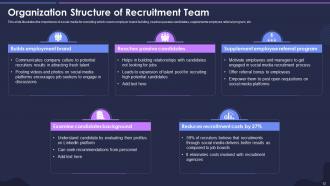
Slide 10: This slide showcases Organization Structure of Recruitment Team.
Slide 11: This slide highlights title for topics that are to be covered next in the template.
Slide 12: This slide shows Why is Social Media Important for Recruiting.
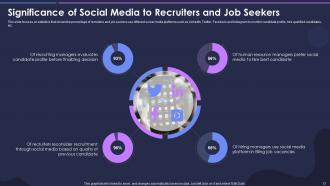
Slide 13: This slide focuses on statistics that shows the percentage of recruiters and job seekers.
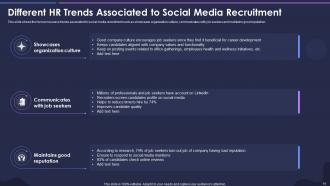
Slide 14: This slide shows the human resource trends associated to social media recruitment.
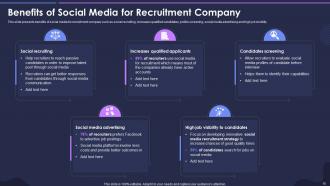
Slide 15: This slide presents benefits of social media for recruitment company.
Slide 16: This slide highlights title for topics that are to be covered next in the template.
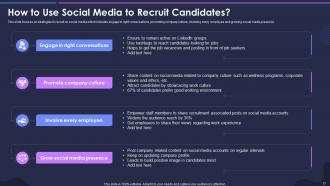
Slide 17: This slide focuses on strategies to recruit on social media which includes engage in right conversations, promoting company culture, etc.
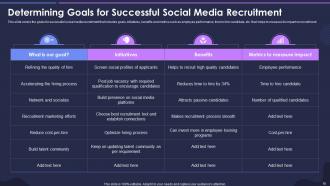
Slide 18: This slide displays Determining Goals for Successful Social Media Recruitment.
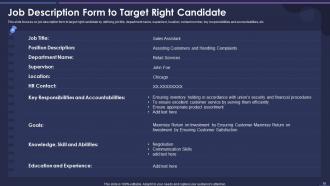
Slide 19: This slide represents Job Description Form to Target Right Candidate.
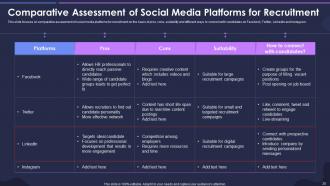
Slide 20: This slide showcases Comparative Assessment of Social Media Platforms for Recruitment.
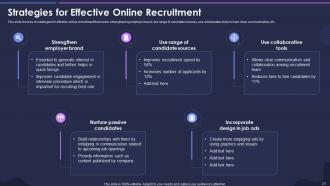
Slide 21: This slide focuses on strategies for effective online recruitment that covers strengthening employer brand.
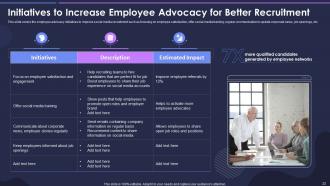
Slide 22: This slide shows Initiatives to Increase Employee Advocacy for Better Recruitment.
Slide 23: This slide highlights title for topics that are to be covered next in the template.
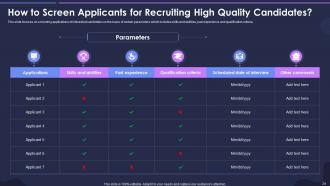
Slide 24: This slide focuses on screening applications of interested candidates on the basis of certain parameters.
Slide 25: This slide highlights title for topics that are to be covered next in the template.
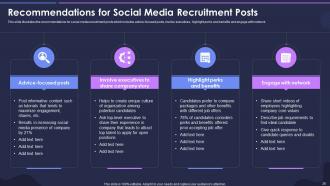
Slide 26: This slide showcases Recommendations for Social Media Recruitment Posts.
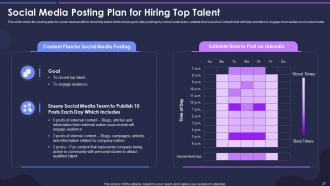
Slide 27: This slide shows Social Media Posting Plan for Hiring Top Talent.
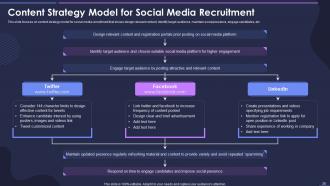
Slide 28: This slide presents Content Strategy Model for Social Media Recruitment.
Slide 29: This slide highlights title for topics that are to be covered next in the template.
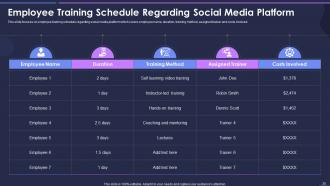
Slide 30: This slide displays Employee Training Schedule Regarding Social Media Platform.
Slide 31: This slide highlights title for topics that are to be covered next in the template.
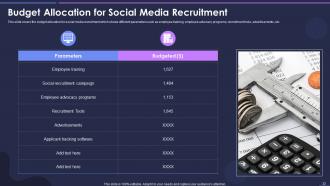
Slide 32: This slide represents Budget Allocation for Social Media Recruitment.
Slide 33: This slide highlights title for topics that are to be covered next in the template.
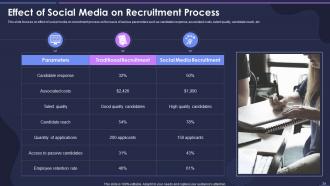
Slide 34: This slide focuses on effect of social media on recruitment process on the basis of various parameters.
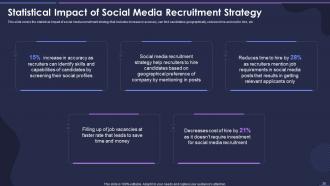
Slide 35: This slide shows Statistical Impact of Social Media Recruitment Strategy.
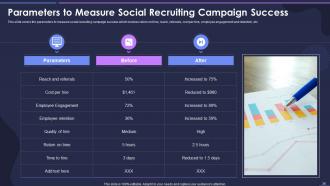
Slide 36: This slide presents Parameters to Measure Social Recruiting Campaign Success.
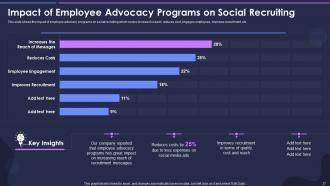
Slide 37: This slide displays Impact of Employee Advocacy Programs on Social Recruiting.
Slide 38: This slide highlights title for topics that are to be covered next in the template.
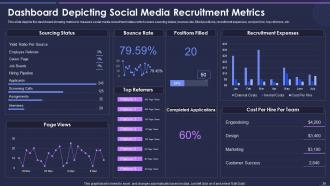
Slide 39: This slide represents Dashboard Depicting Social Media Recruitment Metrics.
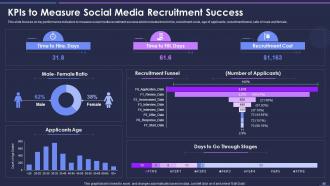
Slide 40: This slide showcases KPIs to Measure Social Media Recruitment Success.
Slide 41: This slide contains all the icons used in this presentation.
Slide 42: This slide is titled as Additional Slides for moving forward.
Slide 43: This is Our Mission slide with related imagery and text.
Slide 44: This slide shows Post It Notes. Post your important notes here.
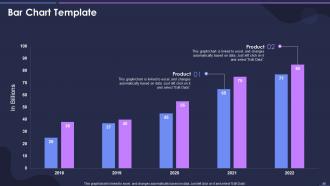
Slide 45: This slide presents Bar chart with two products comparison.
Slide 46: This slide contains Puzzle with related icons and text.
Slide 47: This is a Timeline slide. Show data related to time intervals here.
Slide 48: This is About Us slide to show company specifications etc.
Slide 49: This is Our Goal slide. State your firm's goals here.
Slide 50: This slide presents Roadmap with additional textboxes.
Slide 51: This slide provides 30 60 90 Days Plan with text boxes.
Slide 52: This is a Thank You slide with address, contact numbers and email address.
Strategic Process For Social Media Recruitment Powerpoint Presentation Slides with all 57 slides:
Use our Strategic Process For Social Media Recruitment Powerpoint Presentation Slides to effectively help you save your valuable time. They are readymade to fit into any presentation structure.








FAQs for Strategic Process For Social Media Recruitment
Social media recruitment delivers enhanced candidate reach, cost-effective sourcing, improved employer branding, real-time engagement, and access to passive talent compared to traditional methods. These platforms enable recruiters to target specific demographics, showcase company culture authentically, and build talent pipelines continuously, with many organizations finding significantly faster hiring cycles and higher-quality candidate matches through strategic social recruiting approaches.
Employers can effectively target specific demographics through platform-specific advertising tools, detailed audience segmentation, tailored content messaging, and strategic hashtag usage. LinkedIn enables professional targeting by industry and experience level, while Instagram and TikTok reach younger candidates through visual storytelling, with many organizations finding that combining demographic data with engaging content significantly improves candidate quality and application rates.
Employer branding serves as the foundation of social media recruitment by showcasing company culture, values, and employee experiences across platforms like LinkedIn, Instagram, and Twitter. Strong employer branding attracts quality candidates organically, reduces recruitment costs, and accelerates hiring timelines, with many organizations finding that authentic brand storytelling ultimately delivers competitive talent acquisition advantages.
Organizations measure social media recruitment success through key metrics including application conversion rates, cost-per-hire, time-to-fill positions, candidate quality scores, and social media engagement levels. These analytics enable companies to track ROI by comparing traditional recruitment costs with social media outcomes, while platforms like LinkedIn and Facebook provide detailed insights, ultimately helping organizations optimize their recruitment strategies and reduce hiring expenses.
LinkedIn dominates professional recruitment across finance, consulting, and healthcare sectors, while Instagram and TikTok effectively reach creative industries, retail, and hospitality talent through visual storytelling and authentic workplace culture content. These platforms enable targeted recruitment by streamlining candidate discovery, enhancing employer branding, and facilitating direct engagement, with many organizations finding that industry-specific platform strategies significantly reduce hiring timelines while attracting higher-quality candidates.
Businesses should share employee testimonials, behind-the-scenes workplace content, company culture videos, career development opportunities, and industry insights to attract candidates. These content types enhance employer branding by showcasing authentic work environments, growth potential, and team dynamics, with many organizations finding that diverse, engaging content significantly improves candidate quality and application rates.
Organizations leverage employee testimonials on social media by featuring authentic workplace experiences, highlighting career growth stories, and showcasing company culture through video content, LinkedIn posts, and Instagram stories. These genuine endorsements build employer brand credibility across platforms like Glassdoor and Facebook, with many companies finding that prospective candidates trust peer perspectives more than traditional recruitment messaging, ultimately attracting quality talent.
Social media candidate engagement requires personalized responses, prompt communication, clear next steps, and professional transparency throughout the recruitment process. These practices streamline hiring by building authentic relationships, maintaining candidate interest, and showcasing company culture, with many organizations finding that responsive social media interactions significantly reduce time-to-hire while enhancing their employer brand.
Businesses can optimize recruitment campaigns through social media analytics by tracking engagement rates, click-through rates, candidate quality metrics, and cost-per-hire across different platforms. These insights enable recruiters to identify top-performing content, refine targeting parameters, and allocate budgets strategically, with many organizations finding that data-driven recruitment delivers higher-quality candidates while reducing hiring costs.
Organizations face challenges including candidate quality concerns, brand reputation risks, privacy compliance issues, resource allocation demands, and measuring ROI effectively. While social media recruitment enhances reach and engagement, many companies find that balancing professional screening with broader talent pools requires strategic planning, ultimately delivering competitive hiring advantages when properly managed.
Companies can ensure diversity and inclusion in social media recruitment by diversifying platform usage across LinkedIn, Instagram, Facebook, and niche professional networks, using inclusive language in job postings, and partnering with diversity-focused organizations. These strategies help reach broader talent pools while minimizing unconscious bias, with many organizations finding that targeted outreach and diverse recruitment teams ultimately deliver more equitable hiring outcomes and enhanced workplace innovation.
Employers must navigate privacy laws, anti-discrimination regulations, background check compliance, data protection requirements, and platform-specific terms of service when recruiting via social media. These legal frameworks vary by jurisdiction and industry, with many organizations finding that establishing clear social media recruitment policies, training hiring managers on compliant practices, and documenting decision-making processes ultimately delivers legal protection and competitive hiring advantages.
Automation tools streamline social media recruitment by scheduling posts across platforms, automatically screening candidates through keyword filtering, and managing application workflows from initial contact to interview scheduling. These technologies enable HR teams to reach broader talent pools while reducing manual administrative tasks, with many organizations finding that automated candidate sourcing delivers faster hiring cycles and improved candidate experiences.
Maintaining consistent brand voice in social media job postings requires establishing clear style guidelines, standardized messaging templates, designated content creators, regular voice audits, and cross-platform alignment protocols. These strategies streamline recruitment communications by ensuring uniform tone, reinforcing company culture, and enhancing employer branding, with many organizations finding that consistent voice significantly improves candidate engagement and attracts quality talent.
Businesses build talent communities on social media by creating engaging content that showcases company culture, sharing industry insights, actively participating in professional discussions, and maintaining consistent interaction with potential candidates. Through platforms like LinkedIn, Twitter, and industry-specific forums, organizations cultivate relationships with passive candidates, ultimately delivering a ready pipeline of qualified talent when positions open.
-
The designs by SlideTeam are honestly the best I have seen so far. Will be definitely coming back for more.
-
Keep doing the good work guys. Surpass the needs and expectations always!!