


Strategy For Target Market Assessment And Global Expansion Strategy CD






Try Before you Buy Download Free Sample Product
 Impress Your
 Audience
 100%
100% Editable
 Save Hours
 of Time


A global strategy helps an organization enter foreign markets and reduce business risk. Check out our efficiently designed presentation on Strategy for Target Market Assessment and Global Expansion. The following template helps analyze the target market and evaluate different global expansion methods. This PPT is valuable for a company intending to diversify the market segments and increase its revenue potential. It initially provides an overview of global strategy and process to formulate a plan for international expansion. An assessment of the target market by evaluating the market size and forecasted growth rate is also described in this deck. It showcases competitor analysis that can help to evaluate other critical players in the target market. Furthermore, It shows multiple strategies for global expansion, such as standardization, transnational, multinational, international, etc. After selecting the global market entry strategy, the following presentation highlights multiple overseas market entry modes such as merger and acquisition, joint venture, strategic alliance, international licensing, global export, etc. After identifying all global market entry modes, it covers marketing and hiring plans for the international market. At last, it showcases the impact of entering the global market on the organization. Get access to our 100 percent editable strategy template now.
People who downloaded this PowerPoint presentation also viewed the following :
Content of this Powerpoint Presentation
Slide 1: This slide introduces Strategy for Target Market Assessment and Global Expansion. State your company name and begin.
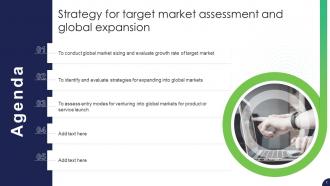
Slide 2: This slide states Agenda of the presentation.
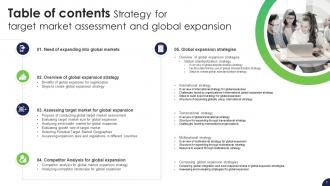
Slide 3: This slide presents Table of Content for the presentation.
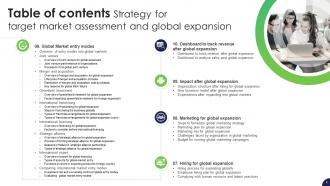
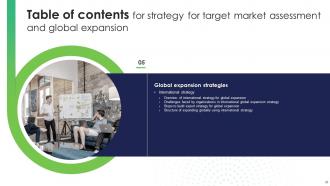
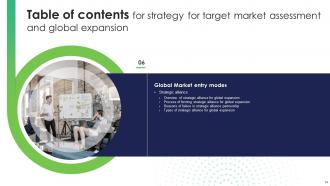
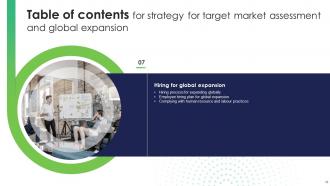
Slide 4: This is another slide continuing Table of Content for the presentation.
Slide 5: This slide highlights title for topics that are to be covered next in the template.
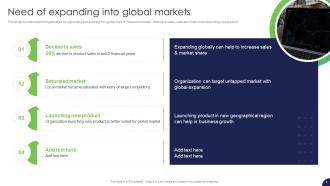
Slide 6: This slide displays Need of expanding into global markets.
Slide 7: This slide highlights title for topics that are to be covered next in the template.
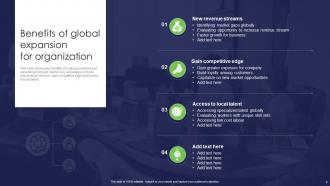
Slide 8: This slide showcases benefits of scaling operations and expanding in foreign market.
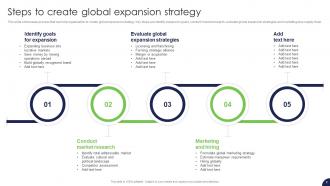
Slide 9: This slide shows Steps to create global expansion strategy.
Slide 10: This slide highlights title for topics that are to be covered next in the template.
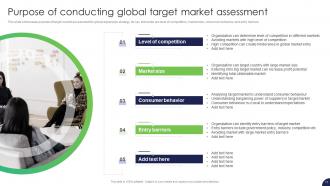
Slide 11: This slide presents Purpose of conducting global target market assessment.
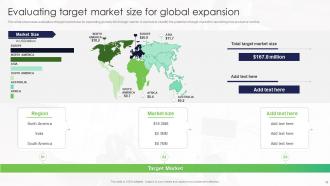
Slide 12: This slide displays Evaluating target market size for global expansion.
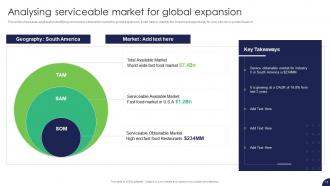
Slide 13: This slide represents Analysing serviceable market for global expansion.
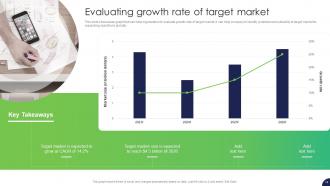
Slide 14: This slide showcases Evaluating growth rate of target market.
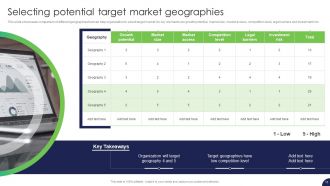
Slide 15: This slide shows Selecting potential target market geographies.
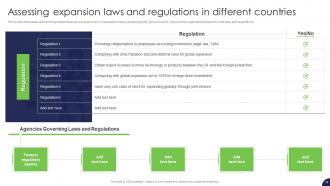
Slide 16: This slide presents Assessing expansion laws and regulations in different countries.
Slide 17: This slide highlights title for topics that are to be covered next in the template.
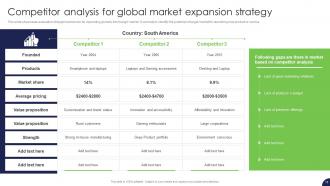
Slide 18: This slide displays Competitor analysis for global market expansion strategy.
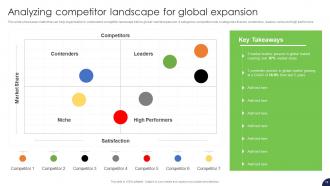
Slide 19: This slide represents Analyzing competitor landscape for global expansion.
Slide 20: This slide highlights title for topics that are to be covered next in the template.
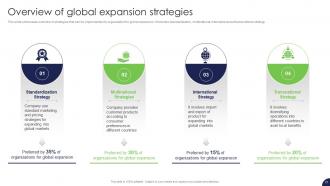
Slide 21: This slide showcases Overview of global expansion strategies.
Slide 22: This slide highlights title for topics that are to be covered next in the template.
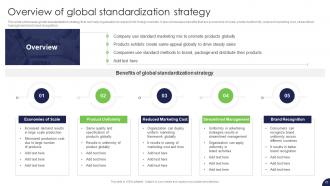
Slide 23: This slide shows Benefits of global standardization strategy.
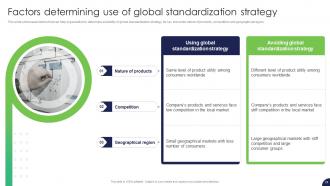
Slide 24: This slide presents Factors determining use of global standardization strategy.
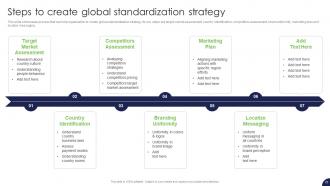
Slide 25: This slide displays Steps to create global standardization strategy.
Slide 26: This slide highlights title for topics that are to be covered next in the template.
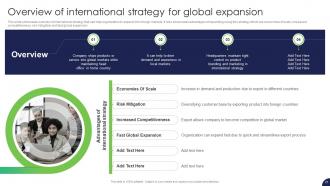
Slide 27: This slide represents Overview of international strategy for global expansion.
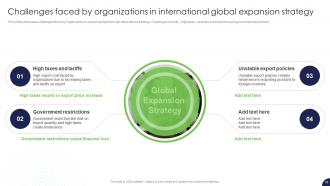
Slide 28: This slide showcases Challenges faced by organizations in international global expansion strategy.
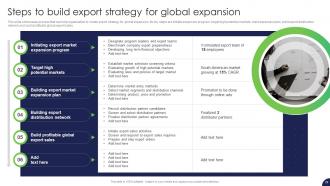
Slide 29: This slide shows Steps to build export strategy for global expansion.
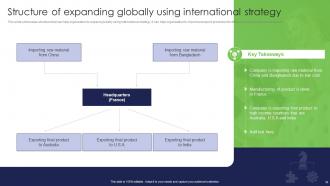
Slide 30: This slide presents Structure of expanding globally using international strategy.
Slide 31: This slide highlights title for topics that are to be covered next in the template.
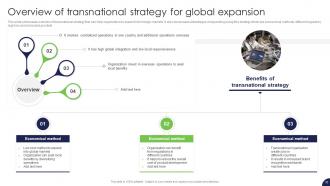
Slide 32: This slide displays Overview of transnational strategy for global expansion.
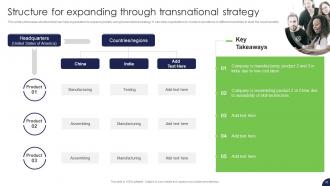
Slide 33: This slide represents Structure for expanding through transnational strategy.
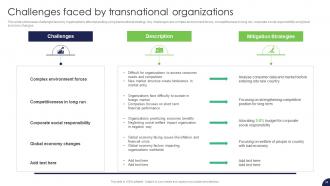
Slide 34: This slide showcases Challenges faced by transnational organizations.
Slide 35: This slide highlights title for topics that are to be covered next in the template.
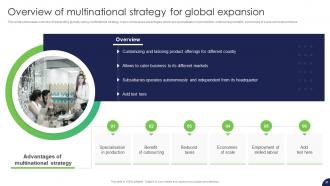
Slide 36: This slide shows Overview of multinational strategy for global expansion.
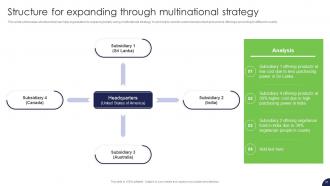
Slide 37: This slide presents Structure for expanding through multinational strategy.
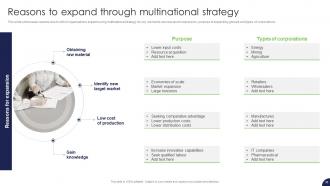
Slide 38: This slide displays Reasons to expand through multinational strategy.
Slide 39: This slide highlights title for topics that are to be covered next in the template.
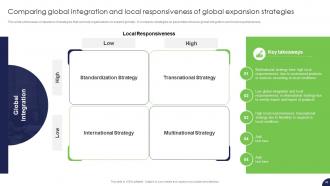
Slide 40: This slide represents Comparing global integration and local responsiveness of global expansion strategies.
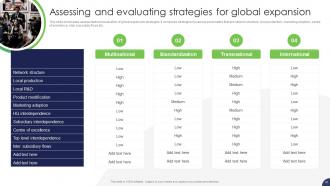
Slide 41: This slide showcases Assessing and evaluating strategies for global expansion.
Slide 42: This slide highlights title for topics that are to be covered next in the template.
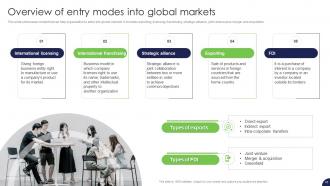
Slide 43: This slide shows Overview of entry modes into global markets.
Slide 44: This slide highlights title for topics that are to be covered next in the template.
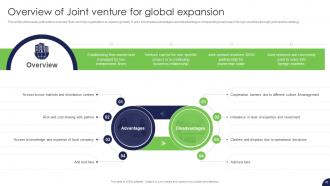
Slide 45: This slide presents Overview of Joint venture for global expansion.
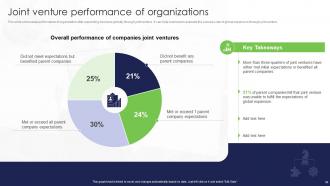
Slide 46: This slide displays Overall performance of companies joint ventures.
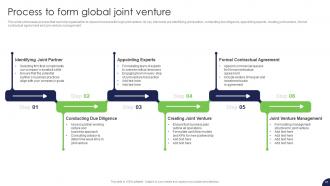
Slide 47: This slide represents Process to form global joint venture.
Slide 48: This slide highlights title for topics that are to be covered next in the template.
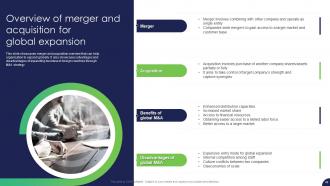
Slide 49: This slide showcases merger and acquisition overview that can help organization to expand globally.
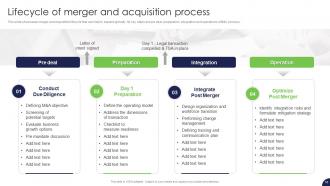
Slide 50: This slide shows Lifecycle of merger and acquisition process.
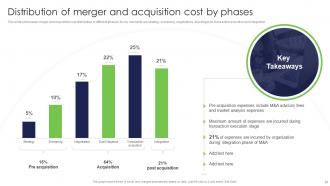
Slide 51: This slide presents Distribution of merger and acquisition cost by phases.
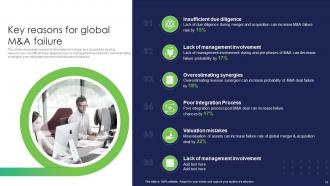
Slide 52: This slide showcases reasons for the failure of merger and acquisition strategy.
Slide 53: This slide highlights title for topics that are to be covered next in the template.
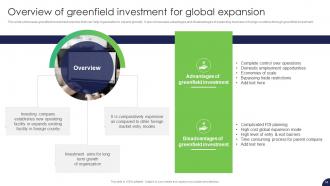
Slide 54: This slide shows Overview of greenfield investment for global expansion.
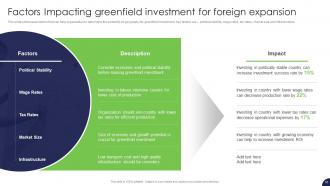
Slide 55: This slide presents Factors Impacting greenfield investment for foreign expansion.
Slide 56: This slide highlights title for topics that are to be covered next in the template.
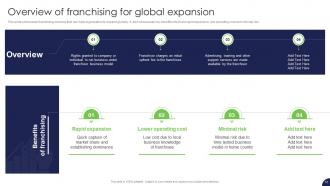
Slide 57: This slide displays Overview of franchising for global expansion.
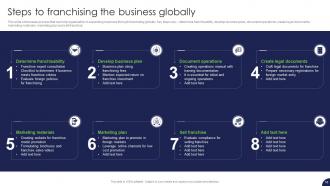
Slide 58: This slide represents Steps to franchising the business globally.
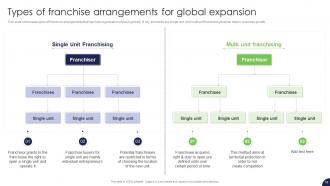
Slide 59: This slide showcases Types of franchise arrangements for global expansion.
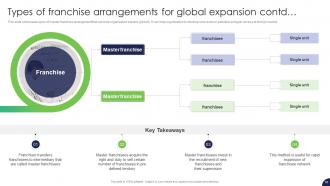
Slide 60: This is another slide continuing Types of franchise arrangements for global expansion.
Slide 61: This slide highlights title for topics that are to be covered next in the template.
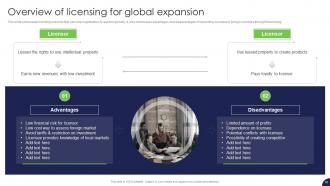
Slide 62: This slide showcases licensing overview that can help organization to expand globally.
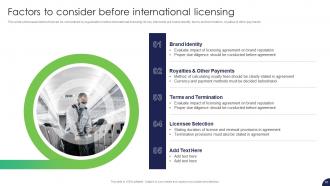
Slide 63: This slide shows Factors to consider before international licensing.
Slide 64: This slide highlights title for topics that are to be covered next in the template.
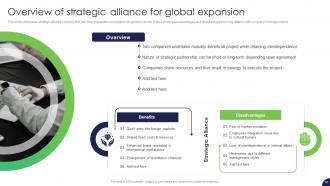
Slide 65: This slide presents Overview of strategic alliance for global expansion.
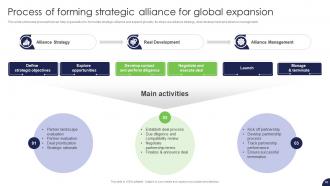
Slide 66: This slide displays Process of forming strategic alliance for global expansion.
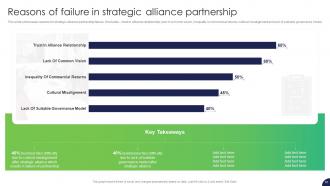
Slide 67: This slide represents Reasons of failure in strategic alliance partnership.
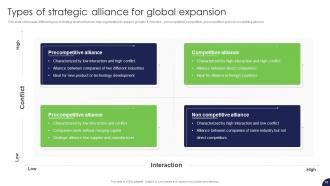
Slide 68: This slide showcases Types of strategic alliance for global expansion.
Slide 69: This slide highlights title for topics that are to be covered next in the template.
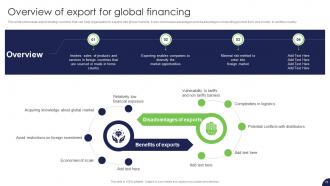
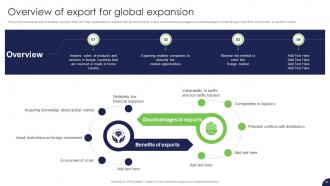
Slide 70: This slide shows Overview of export for global expansion.
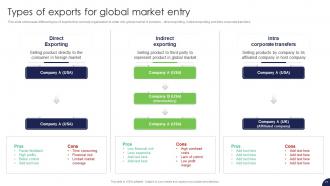
Slide 71: This slide presents Types of exports for global market entry.
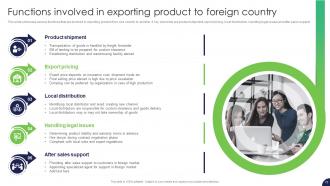
Slide 72: This slide displays Functions involved in exporting product to foreign country.
Slide 73: This slide highlights title for topics that are to be covered next in the template.
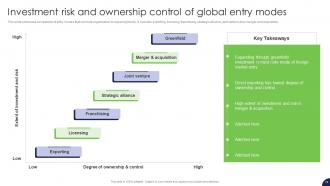
Slide 74: This slide represents Investment risk and ownership control of global entry modes.
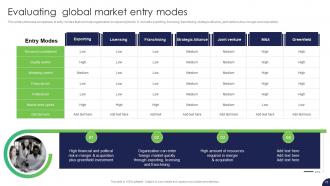
Slide 75: This slide showcases Evaluating global market entry modes.
Slide 76: This slide highlights title for topics that are to be covered next in the template.
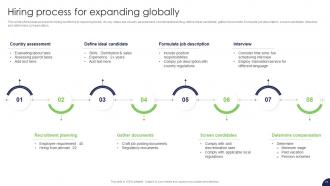
Slide 77: This slide shows Hiring process for expanding globally.
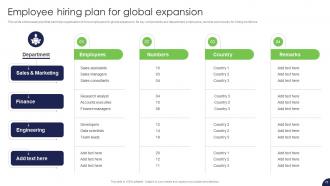
Slide 78: This slide presents Employee hiring plan for global expansion.
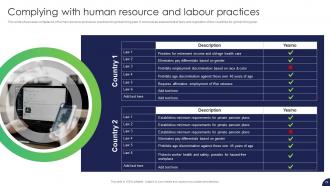
Slide 79: This slide displays Complying with human resource and labour practices.
Slide 80: This slide highlights title for topics that are to be covered next in the template.
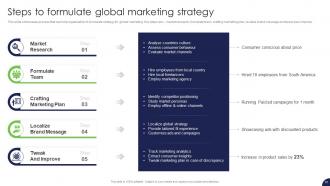
Slide 81: This slide represents Steps to formulate global marketing strategy.
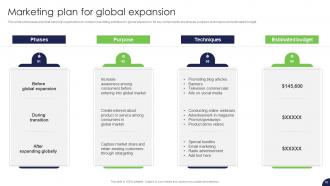
Slide 82: This slide showcases Marketing plan for global expansion.
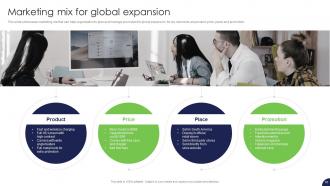
Slide 83: This slide shows Marketing mix for global expansion.
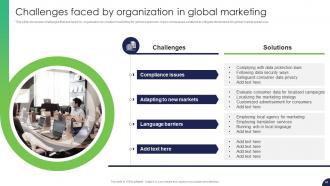
Slide 84: This slide presents Challenges faced by organization in global marketing.
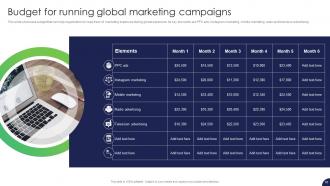
Slide 85: This slide displays Budget for running global marketing campaigns.
Slide 86: This slide highlights title for topics that are to be covered next in the template.
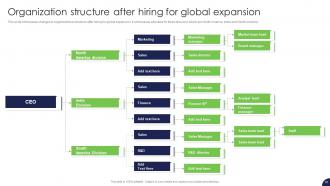
Slide 87: This slide represents Organization structure after hiring for global expansion.
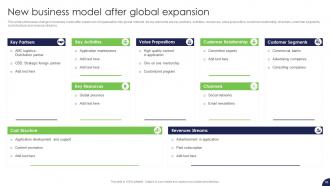
Slide 88: This slide shows New business model after global expansion.
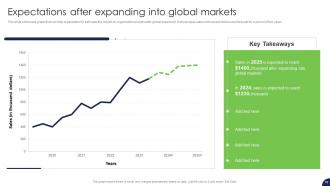
Slide 89: This slide presents Expectations after expanding into global markets.
Slide 90: This slide highlights title for topics that are to be covered next in the template.
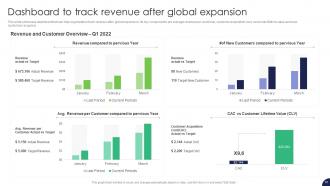
Slide 91: This slide displays Dashboard to track revenue after global expansion.
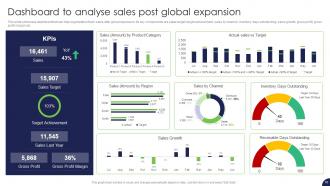
Slide 92: This slide represents Dashboard to analyse sales post global expansion.
Slide 93: This slide contains all the icons used in this presentation.
Slide 94: This slide is titled as Additional Slides for moving forward.
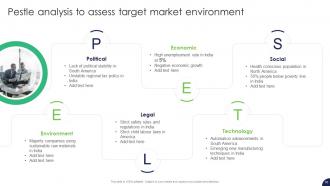
Slide 95: This slide displays Pestle analysis to assess target market environment.
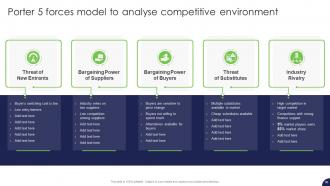
Slide 96: This slide represents Porter 5 forces model to analyse competitive environment.
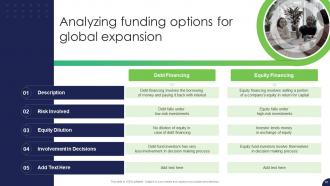
Slide 97: This slide showcases Analyzing funding options for global expansion.
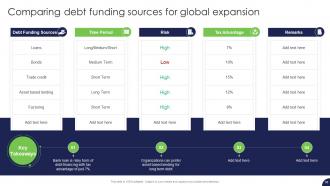
Slide 98: This slide shows Comparing debt funding sources for global expansion.
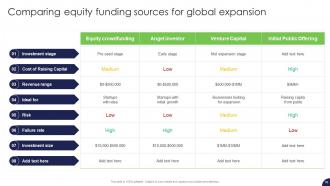
Slide 99: This slide presents Comparing equity funding sources for global expansion.
Slide 100: This is Our Team slide with names and designation.
Slide 101: This slide presents Roadmap with additional textboxes.
Slide 102: This slide provides 30 60 90 Days Plan with text boxes.
Slide 103: This slide shows Post It Notes. Post your important notes here.
Slide 104: This is a Timeline slide. Show data related to time intervals here.
Slide 105: This slide depicts Venn diagram with text boxes.
Slide 106: This is an Idea Generation slide to state a new idea or highlight information, specifications etc.
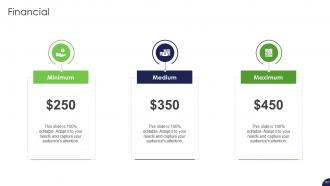
Slide 107: This is a Financial slide. Show your finance related stuff here.
Slide 108: This is Our Target slide. State your targets here.
Slide 109: This is a Thank You slide with address, contact numbers and email address.
Strategy For Target Market Assessment And Global Expansion Strategy CD with all 115 slides:
Use our Strategy For Target Market Assessment And Global Expansion Strategy CD to effectively help you save your valuable time. They are readymade to fit into any presentation structure.









FAQs for Strategy For Target Market Assessment And Global
Businesses can utilize demographic segmentation, psychographic analysis, competitive intelligence, market sizing studies, and cultural adaptation frameworks to identify global target markets. Through digital analytics tools and cross-cultural research, companies streamline market entry decisions, minimize expansion risks, and enhance customer acquisition strategies, with many multinational organizations finding that strategic market assessment ultimately delivers faster international growth and competitive advantage.
Cultural differences significantly influence target market assessment by affecting consumer behavior patterns, purchasing preferences, communication styles, regulatory compliance requirements, and competitive landscape dynamics. Through comprehensive cultural analysis, expanding companies can adapt their value propositions, marketing approaches, and operational strategies to local contexts, with many multinational organizations finding that culturally-informed market assessments ultimately deliver higher success rates and sustainable competitive advantage.
Market segmentation enables companies to identify distinct customer groups across different regions, tailoring their products, pricing, and marketing approaches to local preferences and cultural nuances. Through strategic segmentation, organizations can prioritize high-potential markets, allocate resources more effectively, and customize their expansion approach for each segment, with many multinational companies finding that targeted segmentation significantly reduces market entry risks while maximizing competitive advantage.
Market research platforms like SurveyMonkey and Qualtrics, analytics tools such as Google Analytics and SEMrush, social listening software including Hootsuite Insights, and competitive intelligence solutions like Similarweb enable comprehensive international market analysis. These technologies streamline data collection by automating survey distribution, tracking consumer behavior patterns, and monitoring competitor activities across different regions, with many multinational companies finding that integrated platforms deliver faster market insights and more strategic expansion decisions.
Businesses can assess global competitive landscapes through market research, competitor analysis, regulatory evaluation, customer behavior studies, and local partnership networks. These strategies enable companies to identify market gaps, pricing strategies, and cultural preferences across different regions, with many organizations finding that thorough competitive intelligence ultimately delivers faster market entry, reduced risks, and sustainable competitive advantage in increasingly complex international markets.
Economic stability evaluation requires analyzing GDP growth trends, inflation rates, currency stability, unemployment levels, and government debt-to-GDP ratios. These indicators help multinational corporations assess market viability, with companies like Starbucks and McDonald's finding that countries with consistent economic fundamentals deliver more predictable returns and sustainable expansion opportunities.
Consumer behavior analysis informs global marketing strategies by identifying cultural preferences, purchasing patterns, digital engagement habits, and regional decision-making factors across different markets. Through data-driven insights, companies can customize messaging, optimize channel selection, and adapt product positioning for local audiences, while maintaining brand consistency, ultimately delivering higher conversion rates and market penetration in an increasingly competitive global landscape.
Key metrics for measuring target market entry success include market share growth, customer acquisition costs, revenue per customer, brand awareness levels, and competitive positioning indicators. These metrics enable organizations to track penetration effectiveness, profitability timelines, and strategic positioning, with many companies finding that combining financial performance data with market intelligence delivers comprehensive insights for optimizing expansion investments and sustaining competitive advantage.
Regulatory and legal requirements significantly influence target market selection by determining entry barriers, compliance costs, operational flexibility, and market accessibility across different countries. Industries like pharmaceuticals, financial services, and telecommunications face varying approval processes, licensing requirements, and regulatory frameworks, with many companies prioritizing markets offering streamlined regulations, intellectual property protection, and favorable business environments that ultimately reduce operational complexity and accelerate market entry timelines.
Businesses can localize their branding through cultural adaptation, language translation, regional messaging, local partnership integration, and market-specific visual design elements. These strategies enable companies to resonate with diverse audiences by addressing cultural preferences, communication styles, and consumer behaviors, with many multinational organizations finding that localized branding significantly enhances market penetration and customer engagement across different regions.
Conducting a SWOT analysis before global market entry is crucial for identifying internal strengths and weaknesses alongside external opportunities and threats specific to each target region. This strategic assessment enables companies to leverage competitive advantages, address operational gaps, and navigate regulatory challenges, while many organizations finding that comprehensive SWOT analysis significantly reduces market entry risks and accelerates sustainable international growth.
Assessing target markets in emerging economies presents challenges like limited data availability, volatile regulatory environments, and unpredictable infrastructure, while developed markets offer comprehensive data but face intense competition and market saturation. Emerging markets require extensive on-ground research and local partnerships to navigate cultural nuances, whereas developed markets demand sophisticated differentiation strategies, with many organizations finding that emerging economies ultimately deliver higher growth potential despite increased complexity.
Social media analytics reveal potential customer segments through demographic data, engagement patterns, content preferences, purchasing behaviors, and geographic distribution across platforms like Facebook, Instagram, and LinkedIn. These insights enable businesses to identify high-value segments, tailor messaging strategies, and optimize market entry approaches, with many companies finding that social analytics significantly enhance targeting precision and reduce customer acquisition costs in new markets.
Pricing strategy serves as a critical market entry tool during global expansion, influencing customer acquisition, competitive positioning, brand perception, and market penetration rates across diverse economic landscapes. Through localized pricing models, companies can navigate currency fluctuations, purchasing power variations, and competitive dynamics, with many multinational retailers and technology firms finding that strategic pricing adaptations ultimately accelerate market acceptance and sustainable growth.
Partnerships and collaborations enhance market entry effectiveness by providing local market knowledge, established distribution networks, regulatory expertise, and reduced operational risks. Through strategic alliances with local firms, companies can accelerate market penetration while minimizing investment costs, with many organizations finding that collaborative approaches deliver faster customer acquisition, enhanced credibility, and sustainable competitive advantages in new markets.
-
Great designs, Easily Editable.
-
Been using SlideTeam for some time now…can’t imagine why I wasted all that time in front of the screen trying to make the perfect presentation.