


Succession Planning For Employee Development And Growth Complete Deck




Try Before you Buy Download Free Sample Product
 Impress Your
 Audience
 100%
100% Editable
 Save Hours
 of Time


Succession planning can help the organization to pass critical job roles down to employees with high potential and leadership traits. The following Succession planning for Employee Development and Growth presentation can help in the smooth flow of business by reducing the risk of losing high-potential employees. This PPT is helpful to retain employees for leadership roles and increase the average employee tenure. It initially showcases key benefits and processes to implement succession planning in an organization. The process starts with the identification of critical positions that will have a significant impact on the organization in case of vacancy. After identifying the critical roles, it showcases the selection of high-potential employees for leadership positions. Organizations can use tools like 360-degree feedback, 9 box matrix, and behavioral assessment to identify and evaluate candidates. This PPT also shows a gap analysis between employees skills and competencies required. After identifying potential candidates and conducting a gap analysis, this presentation shows the implementation of training activities like job rotation, mentoring, and coaching to prepare candidates for higher positions. This PPT also highlights best practices and challenges faced in the succession planning process. Lastly, this PPT shows a dashboard to analyze the impact of succession planning implementation. Download this deck right now.
People who downloaded this PowerPoint presentation also viewed the following :
Content of this Powerpoint Presentation
Slide 1: This slide displays the title Succession planning for Employee Development and Growth.
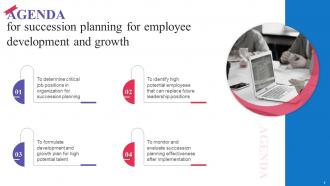
Slide 2: This slide displays the title agenda for Succession planning to prepare employees for leadership roles.
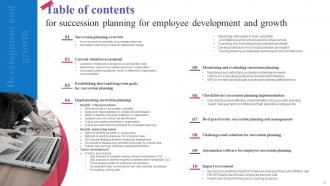
Slide 3: This slide exhibit table of content.
Slide 4: This slide discuss table of content that are to be discuss further.
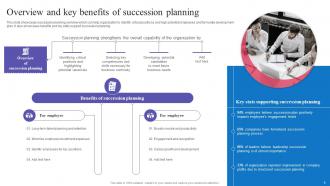
Slide 5: This slide showcases succession planning overview which can help organization to identify critical positions and high potential employees.
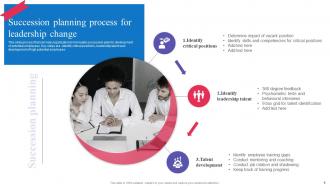
Slide 6: This slide process that can help organization to formulate succession plan for development of potential employees.
Slide 7: This slide discuss table of content that are to be discuss further.
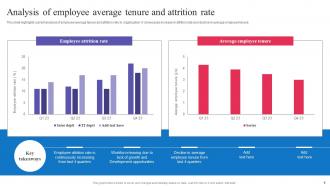
Slide 8: This slide highlights current analysis of employee average tenure and attrition rate in organization.
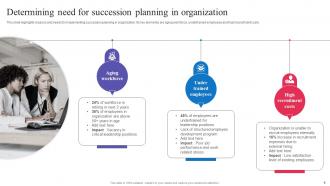
Slide 9: This slide highlights reasons and needs for implementing succession planning in organization.
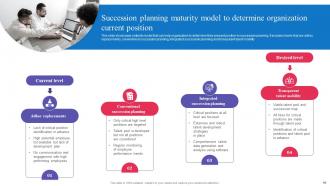
Slide 10: This slide showcases maturity model that can help organization to determine their present position in succession planning.
Slide 11: This slide discuss table of content that are to be discuss further.
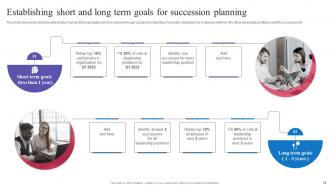
Slide 12: This slide showcases short and long term goals that organization aims to achieve through succession planning.
Slide 13: This slide discuss table of content that are to be discuss further.
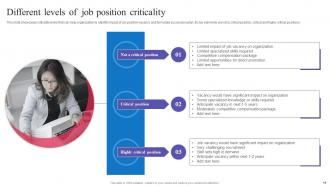
Slide 14: This slide showcases criticality levels that can help organization to identify impact of job position vacancy and formulate succession plan.
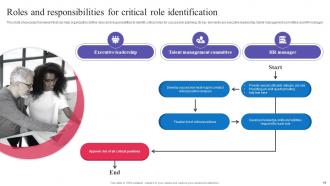
Slide 15: This slide showcases framework that can help organization define roles and responsibilities to identify critical roles for succession planning.
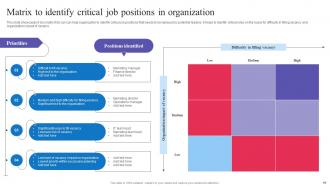
Slide 16: This slide showcases 9 box matrix that can can help organization to identify critical job positions that needs to be replaced by potential leaders.
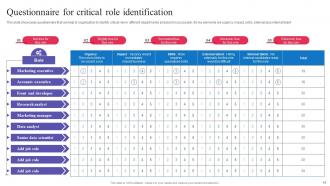
Slide 17: This slide showcases questionnaire that can help to organization to identify critical role in different departments and plan for succession.
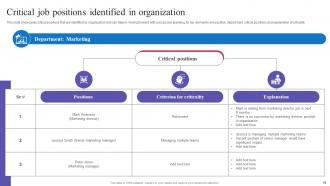
Slide 18: This slide showcases critical positions that are identified by organization and can help in moving forward with succession planning.
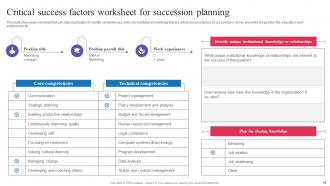
Slide 19: This slide showcases worksheet that can help organization to identify competencies, skills and institutional knowledge that are success factors for job positions.
Slide 20: This slide discuss table of content that are to be discuss further.
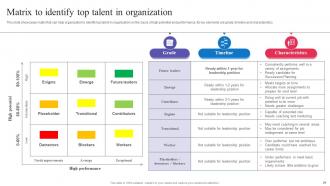
Slide 21: This slide showcases matrix that can help organization to identify top talent in organization on the basis of high potential and performance.
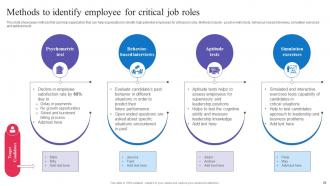
Slide 22: This slide showcases methods that can help organization that can help organization to identify high potential employees for critical job roles.
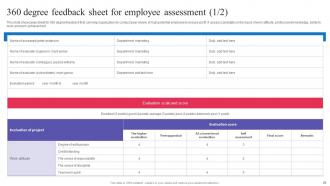
Slide 23: This slide showcases sheet for 360 degree feedback that can help organization to conduct peer review of high potential employee to ensure job fit.
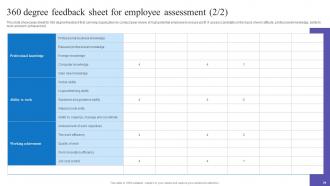
Slide 24: This slide showcases sheet for 360 degree feedback that can help organization to conduct peer review of high potential employee to ensure job fit.
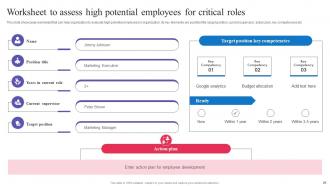
Slide 25: This slide showcases worksheet that can help organization to evaluate high potential employees in organization.
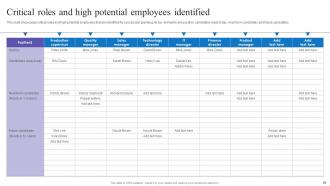
Slide 26: This slide showcases critical roles and high potential employees that are identified for succession planning.
Slide 27: This slide discuss table of content that are to be discuss further.
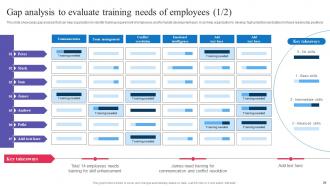
Slide 28: This slide showcases gap analysis that can help organization to identify training requirement of employees and formulate development plan.
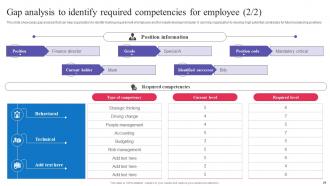
Slide 29: This slide showcases gap analysis that can help organization to identify training requirement of employee and formulate development plan.
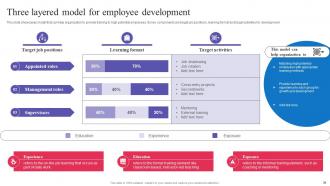
Slide 30: This slide showcases model that can help organization to provide training to high potential employees.
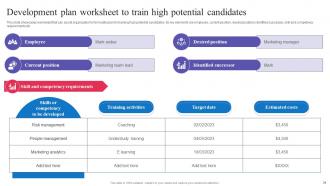
Slide 31: This slide showcases worksheet that can assist organization to formulate plan for training high potential candidates.
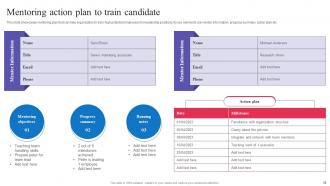
Slide 32: This slide showcases mentoring plan that can help organization to train high potential employees for leadership positions.
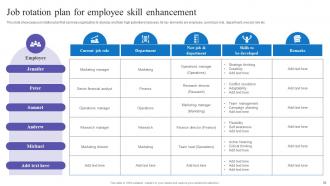
Slide 33: This slide showcases job rotation plan that can help organization to develop and train high potential employees.
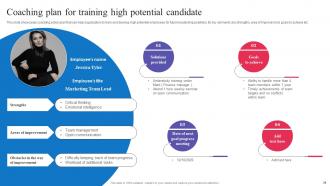
Slide 34: This slide showcases coaching action plan that can help organization to train and develop high potential employees for future leadership positions.
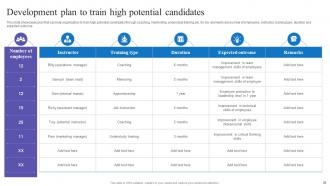
Slide 35: This slide showcases plan that can help organization to train high potential candidates through coaching, mentorship, understudy training etc.
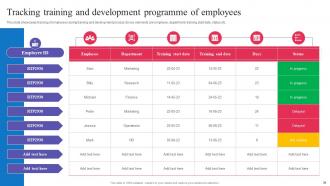
Slide 36: This slide showcases tracking of employees during training and development process.
Slide 37: This slide discuss table of content that are to be discuss further.
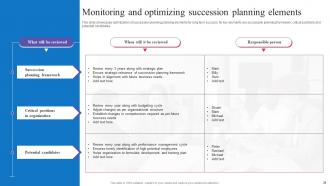
Slide 38: This slide showcases optimization of succession planning elements for long term success.
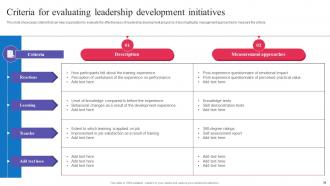
Slide 39: This slide showcases criteria that can help organization to evaluate the effectiveness of leadership development programs.
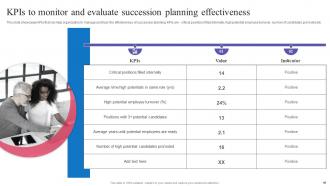
Slide 40: This slide showcases KPIs that can help organization to manage and track the effectiveness of succession planning.
Slide 41: This slide discuss table of content that are to be discuss further.
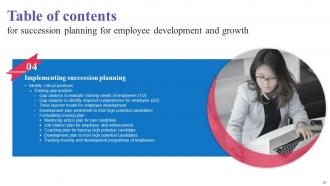
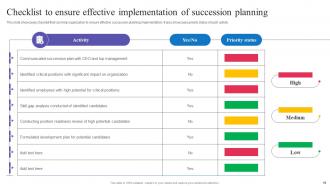
Slide 42: This slide showcases checklist that can help organization to ensure effective succession planning implementation.
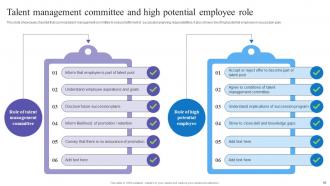
Slide 43: This slide showcases checklist that can help talent management committee to ensure fulfillment of succession planning responsibilities.
Slide 44: This slide discuss table of content that are to be discuss further.
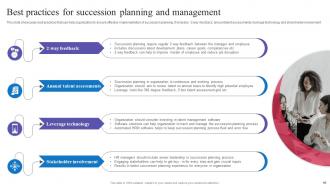
Slide 45: This slide showcases best practices that can help organization to ensure effective implementation of succession planning.
Slide 46: This slide discuss table of content that are to be discuss further.
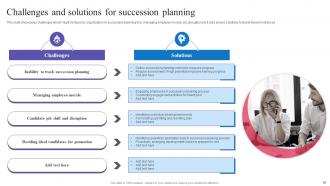
Slide 47: This slide showcases challenges which might be faced by organization in succession planning like, managing employee morale, job disruption etc.
Slide 48: This slide discuss table of content that are to be discuss further.
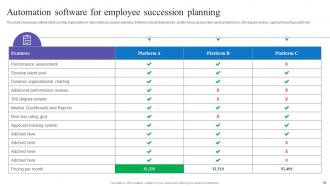
Slide 49: This slide showcases software that can help organization in automated succession planning.
Slide 50: This slide discuss table of content that are to be discuss further.
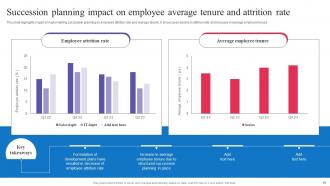
Slide 51: This slide highlights impact of implementing succession planning on employee attrition rate and average tenure.
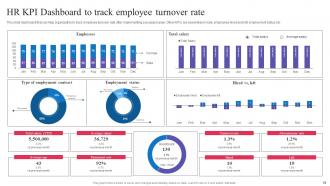
Slide 52: This slide dashboard that can help organization to track employee turnover rate after implementing succession plan.
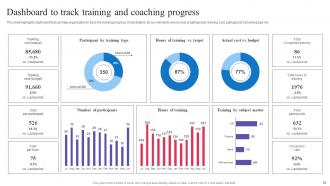
Slide 53: This slide highlights dashboard that can help organization to track the training progress of candidates.
Slide 54: This is the icons slide.
Slide 55: This slide presents title for additional slides.
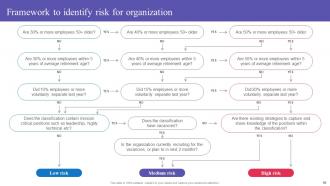
Slide 56: This slide showcase Framework to identify risk for organization.
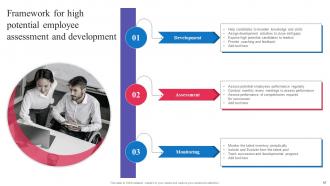
Slide 57: This slide showcase Framework for high potential employee assessment and development.
Slide 58: This slide display SWOT analysis.
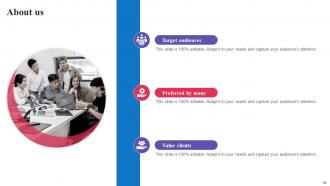
Slide 59: This slide shows about your company, target audience and its client's values.
Slide 60: This slide shows details of team members like name, designation, etc.
Slide 61: This slide display Location.
Slide 62: This slide showcase Comparison between male and female user.
Slide 63: This slide depicts posts for past experiences of clients.
Slide 64: This slide display Venn diagram.
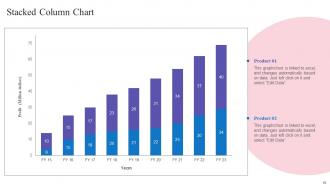
Slide 65: This slide showcases financials of company.
Slide 66: This slide exhibits ideas generated.
Slide 67: This slide display Our target.
Slide 68: This is thank you slide & contains contact details of company like office address, phone no., etc.
Succession Planning For Employee Development And Growth Complete Deck with all 72 slides:
Use our Succession Planning For Employee Development And Growth Complete Deck to effectively help you save your valuable time. They are readymade to fit into any presentation structure.








FAQs for Succession Planning For Employee Development And
Effective succession planning strategies include talent identification and assessment, leadership development programs, knowledge transfer systems, clear succession timelines, and regular plan updates. These components work together by creating robust talent pipelines, ensuring critical skills continuity, and minimizing organizational disruption, with many organizations finding that strategic succession planning delivers reduced recruitment costs, faster promotions, and sustained competitive advantage.
Organizations identify potential leaders through performance assessments, leadership competency evaluations, 360-degree feedback, mentorship program participation, and cross-functional project leadership opportunities. These strategic identification methods enable HR teams to spot emerging talent by evaluating decision-making skills, team collaboration abilities, and strategic thinking capacity, with many companies finding that structured talent reviews and leadership development programs ultimately accelerate internal promotion readiness.
Leadership development serves as the foundation of effective succession planning by identifying high-potential employees, providing targeted training, mentoring opportunities, and progressive responsibilities to build critical skills. Through structured development programs, organizations cultivate internal talent pools, reduce external recruitment costs, and ensure seamless leadership transitions, with many companies finding that systematic development approaches deliver stronger bench strength and organizational continuity.
Succession planning aligns with long-term goals by identifying future leadership needs, mapping critical competencies, and developing talent pipelines that support strategic objectives. Organizations achieve this through leadership assessments, targeted development programs, and cross-functional rotations, with many companies finding that integrated succession planning ultimately enhances organizational resilience and competitive advantage.
Common pitfalls include waiting too long to start, focusing only on senior roles, lack of transparency with potential successors, insufficient development programs, and failing to regularly update plans. These oversights create talent gaps, leadership crises, and organizational instability, with many companies finding that early, comprehensive planning across all levels ultimately delivers smoother transitions and sustained competitive advantage.
Succession plans should be reviewed annually at minimum, with updates triggered by organizational changes, retirements, promotions, or strategic shifts. Many organizations conduct quarterly assessments of key positions, while implementing continuous monitoring for critical leadership roles, ultimately ensuring talent readiness and minimizing disruption risks in an increasingly competitive business environment.
Succession planning effectiveness can be measured through time-to-fill critical positions, internal promotion rates, employee retention percentages, leadership readiness scores, and knowledge transfer completion rates. These metrics enable organizations to track talent pipeline strength, reduce recruitment costs, and minimize operational disruptions, with many companies finding that comprehensive measurement ultimately delivers improved leadership continuity and competitive advantage.
Mentorship programs support succession planning by identifying high-potential employees, accelerating leadership development, and facilitating knowledge transfer from experienced executives to emerging leaders. Through structured mentoring relationships, organizations streamline talent pipeline development, enhance retention of critical institutional knowledge, and build stronger leadership capabilities, with many companies finding that formal mentorship significantly reduces leadership transition risks while improving overall organizational resilience.
Diversity and inclusion can be incorporated into succession planning through intentional talent pipeline development, mentorship programs targeting underrepresented groups, bias-free assessment criteria, and cross-functional exposure opportunities. Organizations increasingly find that diverse succession pools enhance decision-making capabilities, drive innovation, and better reflect customer demographics, ultimately delivering stronger leadership teams and improved business performance across all markets.
**INPUT**: What tools or technologies can enhance the succession planning process? **OUTPUT**: Tools enhancing succession planning include talent management systems, performance analytics platforms, leadership assessment software, competency mapping tools, and employee development tracking systems. These technologies streamline succession by identifying high-potential candidates, tracking skill gaps, and automating development pathways, with many organizations finding that integrated platforms deliver faster leadership transitions and improved workforce continuity.
Organizations communicate succession plans through structured leadership briefings, transparent development conversations, regular progress updates, and strategic alignment meetings with key stakeholders. Through targeted communications, companies build understanding of future leadership pathways, address concerns about career progression, and maintain organizational confidence, while ensuring employees understand their development opportunities, ultimately fostering engagement and retention.
Legal considerations in succession planning include tax implications, estate planning requirements, employment law compliance, shareholder agreements, and regulatory obligations. These frameworks streamline ownership transitions by establishing clear transfer mechanisms, minimizing tax burdens, and ensuring regulatory compliance, with many organizations finding that proactive legal structuring ultimately delivers smoother transitions and reduced operational disruptions.
Organizational culture significantly impacts succession planning by shaping leadership development approaches, talent identification processes, and knowledge transfer mechanisms throughout the organization. Companies with collaborative cultures often see smoother transitions and higher successor readiness rates, while those with hierarchical structures may face challenges in cross-functional leadership preparation, ultimately affecting long-term organizational continuity.
Best practices for documenting knowledge in succession planning include creating comprehensive role documentation, conducting structured knowledge transfer sessions, developing mentorship programs, maintaining updated process maps, and establishing cross-training initiatives. These approaches streamline organizational continuity by preserving institutional knowledge, reducing transition risks, and ensuring critical expertise transfers seamlessly, with many companies finding that systematic documentation accelerates successor readiness while maintaining operational efficiency.
External candidates can be integrated through strategic recruitment targeting specific skill gaps, comprehensive onboarding programs, mentorship pairings with internal leaders, and cultural immersion initiatives. Organizations increasingly combine external talent with internal development, finding that diverse leadership pipelines deliver fresh perspectives, specialized expertise, and competitive advantage while maintaining institutional knowledge through structured knowledge transfer processes.
-
“There is so much choice. At first, it seems like there isn't but you have to just keep looking, there are endless amounts to explore.”
-
SlideTeam’s pool of 2Million+ PPTs has really benefited my team, everyone from the IT department to HR. We are lucky to have crossed ways with them.