

Supplier Relationship Strategic Approach To Supplier Relationship Management




Try Before you Buy Download Free Sample Product
 Impress Your
 Audience
 100%
100% Editable
 Save Hours
 of Time


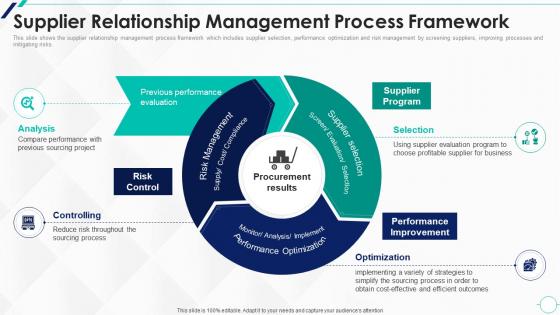
This slide shows the supplier relationship management process framework which includes supplier selection, performance optimization and risk management by screening suppliers, improving processes and mitigating risks.
People who downloaded this PowerPoint presentation also viewed the following :
Supplier Relationship Strategic Approach To Supplier Relationship Management with all 6 slides:
Use our Supplier Relationship Strategic Approach To Supplier Relationship Management to effectively help you save your valuable time. They are readymade to fit into any presentation structure.






FAQs for Supplier Relationship Strategic Approach To
Start by figuring out which suppliers actually matter to your business - you can't treat everyone the same way. Map out your current vendor base first. Set up scorecards for the important ones tracking quality, delivery times, and costs. Communication channels are huge here, and honestly, most companies mess this part up. Create different governance structures depending on supplier tiers. Risk assessment should be ongoing, not just a one-time thing. The suppliers that drive real value? Those need to become actual partnerships, not just transactional relationships. Oh, and always have backup plans ready.
Look, you've gotta measure the obvious stuff first - delivery times, quality scores, costs. That's your baseline data. But here's the thing, relationships matter way more than people think. How fast do they respond when shit hits the fan? Do they actually solve problems or just make excuses? I'd set up quarterly sit-downs to review everything together - makes them feel like partners, not just vendors. Create a simple scorecard mixing hard numbers with feedback from whoever deals with them daily. Those front-line people always know which suppliers are actually reliable versus the ones who just look good on paper.
Honestly, tech has completely changed how we handle suppliers now. All that boring manual tracking gets automated, plus you get instant updates on how everyone's performing. Contract management went digital too, which is huge. The cool part is AI actually helps predict when things might go sideways - saved my butt a few times. Your suppliers can connect straight into your systems now, makes everything way smoother. Oh, and the analytics help you figure out who your best partners actually are (sometimes it's not who you'd expect). Just start by listing what's driving you crazy right now - that's your roadmap for what tools to invest in first.
Honestly, clear communication just saves you so much headache down the road. Your suppliers can't read your mind - spell out what you need, when you need it, and why. I've seen too many projects go sideways because someone assumed the vendor "got it." Check in regularly so small issues don't turn into budget-busting disasters. Here's the thing though: make it a real conversation. Listen when they push back or suggest alternatives - they deal with this stuff all day and might know shortcuts you don't. Don't just send emails and hope for the best.
Track defect rates and compliance scores first - those are no-brainers. On-time delivery matters way more than people think, so measure that plus how consistent their lead times are. Don't just look at cheapest price either, because a supplier who screws up will cost you more downstream. Communication quality is huge too - like, do they actually respond when you need them? Honestly I'd start with maybe 3 metrics max that match your biggest headaches right now. You can always add more later once you've got the hang of it.
Start by figuring out which suppliers actually matter for your big goals - innovation stuff versus just cutting costs. Don't waste time on those cookie-cutter metrics that look impressive but tell you nothing useful. Your top suppliers? Treat them more like actual partners. Yeah, I know that sounds cheesy, but share your forecasts with them and get them involved early when you're developing new products. Also do joint business planning together - it's way more effective than those painful annual negotiations. Then just check regularly if these relationships are actually helping you hit what matters. Most companies never bother with that last part.
Oh man, you're gonna deal with so much miscommunication - it's honestly the worst part. Quality inconsistencies too, and they'll miss deadlines like it's their job. Pricing becomes this whole back-and-forth nightmare, plus good luck getting transparency on how they actually do things. When problems come up (and they will), getting quick responses is like pulling teeth. Contract stuff gets messy fast if you don't nail down terms early. My advice? Set super clear expectations upfront and do regular check-ins instead of waiting for disasters. Create proper communication channels and track their performance from the start.
Honestly, managing supplier risk is huge - you can't just wing it and hope everything works out. Start by figuring out what could actually go sideways: supply chain mess-ups, quality problems, your supplier going broke, weird political stuff. We've all watched companies get totally screwed when their main supplier bails, right? Diversify where you can so you're not stuck with just one option. Communication is everything though - stay in regular contact so you spot red flags early. Way better to have backup plans ready than scramble when things hit the fan.
Dude, supplier partnerships are totally worth it. Better pricing when you commit to volume, plus they actually get your quality standards after working together. When things get crazy supply-wise, you're their priority customer - not some random order. Here's the cool part though: they'll bring YOU new ideas and custom solutions because they care about the relationship. Transactional suppliers? They just don't bother with that stuff. Way fewer headaches overall. I'd pick your 3-5 most critical suppliers first and focus there. Trust me on this one.
Honestly, the best thing you can do is start small with one key supplier and build those innovation workshops together. Share your roadmaps early - don't wait until you're in crisis mode. I've seen companies co-locate teams and the results are honestly pretty impressive when people work side by side like that. Set up regular brainstorming sessions where you're both throwing ideas around. Oh, and this is huge - create incentives that actually reward them for taking risks with you. Most suppliers are used to being told what to do, not asked what they think. Clear communication channels help too, but really it's about involving them in planning from day one.
Start with communication - regular check-ins and reviews with your main suppliers. Most problems I've seen? Poor communication from day one. Don't treat all suppliers the same though. Figure out which ones are actually strategic and build real partnerships with those instead of just going for cheapest price every time. Honestly, penny-pinching backfires more often than people think. Get everything documented in contracts so there's no confusion later. Also diversify - spreading risk across multiple suppliers is basic but crucial. I'd map out what you currently have first, then see which relationships are worth investing in.
Honestly, data analytics is a game-changer for supplier stuff. Pull performance data from your top 5 suppliers - delivery times, quality scores, costs over the past year. You'll start seeing patterns pretty quickly. Some suppliers will clearly be killing it while others... yeah, not so much. The best part? You can actually predict when things might go sideways before they mess up your whole supply chain. I'd focus on spotting performance drops or market shifts that'll hit pricing first. Oh, and you'll probably find spending patterns that'll help big time when you're negotiating contracts later.
Honestly, good supplier relationships can cut your costs by like 5-20% - it's pretty wild. Your key suppliers will hook you up with better pricing and volume discounts when they actually trust you. They'll also bail you out during crazy market stuff (COVID was a perfect example of this). The sweet spot is when you start working together on improving processes and doing longer contracts that help both of you win. I'd focus on your top 3-5 suppliers first and set up quarterly check-ins with them. That's where the real cost talks happen, not in random emails.
Oh man, this stuff is huge when dealing with global suppliers. Japanese companies are all about building relationships first - you can't just jump into business talk. Germans? Total opposite - they want facts and direct communication. I learned this the hard way once! Negotiation styles are tricky too. Some cultures think haggling is rude, others basically require it. Time zones are one thing, but different ideas of "urgent" will drive you crazy. Also figure out who actually makes decisions there - hierarchy matters way more in some places. My advice? Research their culture beforehand and honestly just ask your contacts how they prefer to communicate.
For SRM, you'll need both the people skills and technical stuff. Communication is huge - you're basically negotiating all day. Financial analysis and contract management are non-negotiables too. Project management helps because, honestly, supplier projects turn into chaos without it. Risk assessment is another big one. Don't sleep on the relationship side though - emotional intelligence matters way more than people think. Understanding procurement basics and your specific industry helps round things out. I'd say figure out what gaps your team has first, then build training around those weak spots. The analytical skills are easier to teach than the soft skills, in my experience.
-
It saves your time and decrease your efforts in half.
-
This visual representation is stunning and easy to understand. I like how organized it is and informative it is.