


Supplier strategy powerpoint presentation slides





Try Before you Buy Download Free Sample Product
 Impress Your
 Audience
 100%
100% Editable
 Save Hours
 of Time


To maintain a solid relationship with suppliers, businesses must consistently build up a strategy to provide customers with high quality products or services. Suppliers build their reputation based on the materials they provide and implementing strategic sourcing can facilitate solid and long-term relationships with the outsourcers. Here is a professionally designed Supplier Strategy template to justify and identify necessary changes to enhance supply process efficiency. The purpose of this proposal is to create critical strategies for suppliers, work collaboratively with the suppliers, maximize the potential value of relationships with them, and find gaps and fill problems with proposed solutions. Firms can showcase their relationship of current buyer-seller interactions with critical suppliers using bar graphs and statistics. Using stacked column charts and infographics, one can even display the issues companies face with the suppliers and the effect of those gaps on the company. The template lets you present your cracks in supplier relationship, business requirements, competencies, risk factors, issues, etc. to collect all the significant elements that affect supplier strategy. Organizations understand the areas where actions and approaches to correct them are required and prepare a model to re-establish the standards with suppliers. Download the proposal now. Book a free demo with our experts and access our 100 percent editable template based on needs.
People who downloaded this PowerPoint presentation also viewed the following :
Content of this Powerpoint Presentation
Slide 1: This slide displays the title i.e. 'Supplier Strategy' and your Company Name.
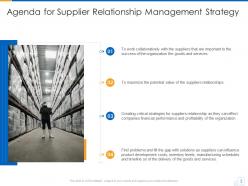
Slide 2: This slide presents the agenda for the project.
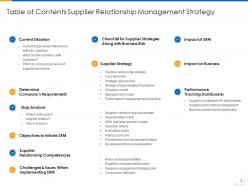
Slide 3: This slide exhibits the table of contents for the project.
Slide 4: This slide shows the title for current situation.
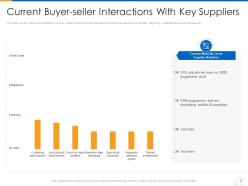
Slide 5: This slide covers the current situation of buyer- seller interactions with suppliers at different levels such as no SRM, exploring , established and world-class etc.
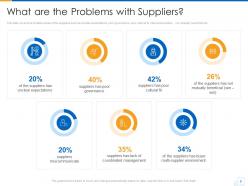
Slide 6: This slide covers the problem areas of the suppliers such as unclear expectations, poor governance, poor cultural fir, miscommunication, not mutually beneficial etc.
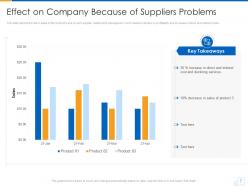
Slide 7: This slide depicts the fall in sales of the product’s due to poor supplier relationship management which leads to decline in profitability.
Slide 8: This slide displays the title for Gap Analysis.
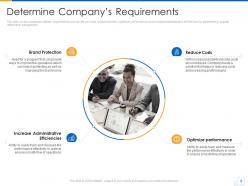
Slide 9: This slide covers companies ultimate requirements such as reduce costs, brand protection, optimized performance and increased administrative efficiencies.
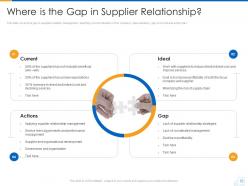
Slide 10: This slide covers the gap in suppliers relation management depicting current situation of the company, ideal situation, gap occurred and action plan.
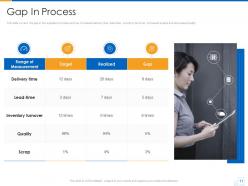
Slide 11: This slide covers the gap in the suppliers process such as, increased delivery time, lead-time, inventory turnover, increased scraps and decreased quality
Slide 12: This slide presents the title for objectives to initiate SRM.
Slide 13: This slide covers the requirements to initiate suppliers relationship management such as enhancing supplier relations, managing supply risk profile etc.
Slide 14: This slide covers supplier relationship competencies to the company such as willingness and ability to collaborate, easy deals, relationship based on trust etc.
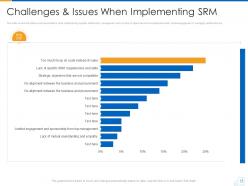
Slide 15: This slide covers this slide covers the problems while implementing supplier relationship management such as limited engagement in managing relationship etc.
Slide 16: This slide covers the checklist for suppliers strategies along with business risk such as bringing new value to suppliers or creating new suppliers etc.
Slide 17: This slide exhibits the title for supplier strategy.
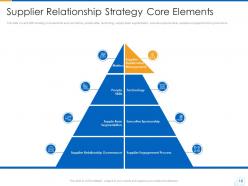
Slide 18: This slide covers SRM strategy core elements such as metrics, people skills, executive sponsorship, suppliers engagement and governance, etc.
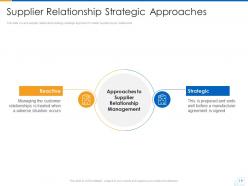
Slide 19: This slide covers supplier relationship strategy strategic approach for better supplier buyer relationship
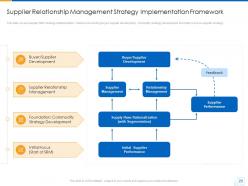
Slide 20: This slide covers supplier SRM strategy implementation framework including buyer/ supplier development, and initial focus on supplier strategy.
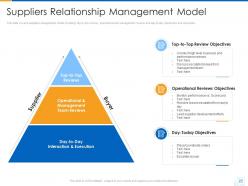
Slide 21: This slide covers suppliers management model including top to top review , operational and management review and day to day interaction and execution
Slide 22: This slide covers suppliers management model including top to top review , operational and management review and day to day interaction and execution
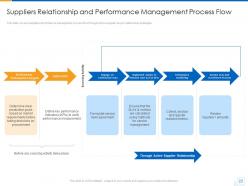
Slide 23: This slide covers suppliers performance management proves flow through active supplier buyer relationship strategies.
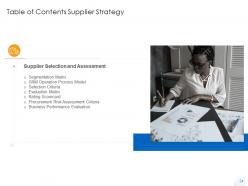
Slide 24: This slide displays the title for supplier selection and assessment.
Slide 25: This slide show the cover letter for B2B services along with customer details and objective of the company.
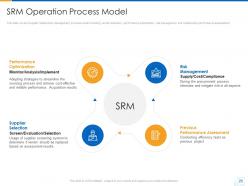
Slide 26: This slide covers Supplier relationship management process model including vendor selection, risk management and relationship performance assessment.
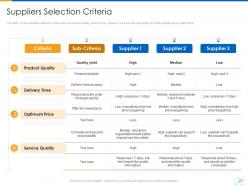
Slide 27: This slide covers suppliers selection criteria such as product quality, delivery time, optimum price and service quality for better supplier buyer relationship.
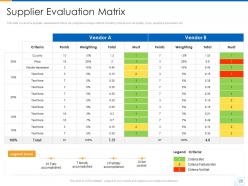
Slide 28: This slide covers the supplier assessment matrix via weighted average method including criteria such as quality, price, suppliers impression etc.
Slide 29: This slide covers the gap in the suppliers process such as, increased delivery time, lead-time, inventory turnover, increased scraps and decreased quality.
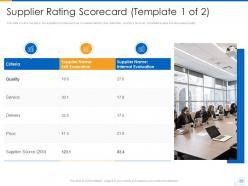
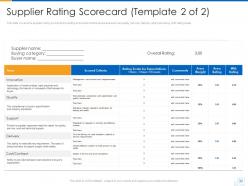
Slide 30: This slide covers the supplier rating scorecard including scorecard criteria and areas such as quality, service, delivery and price along with rating scale.
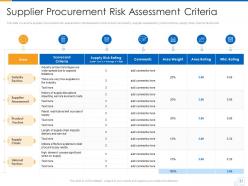
Slide 31: This slide covers the supplier procurement risk assessment criteria based on factors such as industry, product factors, supply chain, internal factors etc.
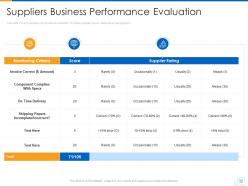
Slide 32: This slide covers suppliers performance evaluation for better supplier buyer relationship management
Slide 33: This slide presents the title for roles and responsibilities.
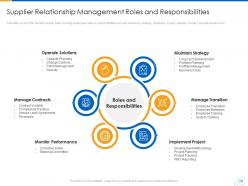
Slide 34: This slide covers SRM element people skills covering employees roles an responsibilities such as implement project, manage contract, operate solutions etc.
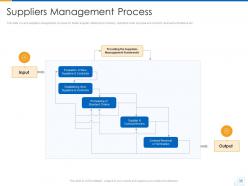
Slide 35: This slide covers suppliers management process for better supplier relationship including standard order process and contract renewal terminations etc.
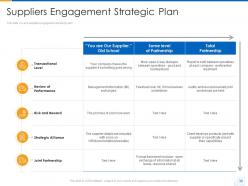
Slide 36: This slide covers suppliers engagement strategic plan
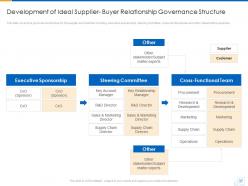
Slide 37: This slide covers the governance structure for the supplier and customer including steering committee, cross-functional team and other stakeholders expertise.
Slide 38: This slide exhibits the title for impact of SRM.
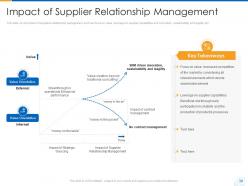
Slide 39: This slide covers impact of suppliers relationship management such as leverage on supplier capabilities and innovation, sustainability and legality etc.
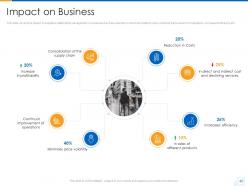
Slide 40: This slide covers the impact of suppliers relationship management on business such as continual improvement of operations, increased efficiency etc.
Slide 41: This slide displays the title for performance tracking dashboards.
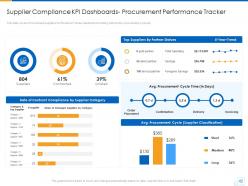
Slide 42: This slide covers Procurement suppliers Performance Tracker dashboard including metrics like procurement cycle etc.
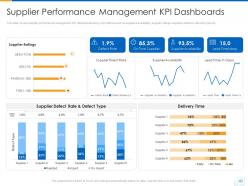
Slide 43: This slide covers supplier performance management KPI dashboards along with metrics such as suppliers availability, suppliers defence rate and type etc.
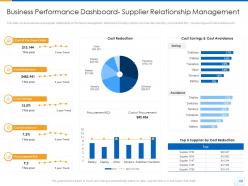
Slide 44: This slide covers business and supplier relationship performance management dashboard including metrics such as cist reduction, cost savings and cost avoidance etc.
Slide 45: This is the icons slide for the project.
Slide 46: This slide displays the title for additional slides.
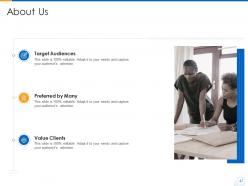
Slide 47: This slide presents about the company, target audience and its client's values.
Slide 48: This slide displays the 30-60-90 days plan for your project.
Slide 49: This slide explains the ideas generated for your company.
Slide 50: This slide presents the comparison of your products based on selects.
Slide 51: This slide displays the location of the company across the globe.
Slide 52: This slide exhibits the venn diagram for your company targets.
Slide 53: This slide showcases the posts related to past experiences of clients.
Slide 54: This slide explains the puzzle for your company.
Slide 55: This is the thank you slide and displays the contact details of the company i.e. office address, contact number, etc.
Supplier strategy powerpoint presentation slides with all 55 slides:
Use our Supplier Strategy Powerpoint Presentation Slides to effectively help you save your valuable time. They are readymade to fit into any presentation structure.










FAQs for Supplier strategy
Honestly, start by figuring out which suppliers actually matter to your business versus the ones you just buy paper clips from. COVID was a brutal wake-up call about how fragile supply chains really are. Once you've mapped that out, focus your energy on building solid relationships with the strategic ones. Set up clear metrics for delivery times, quality, cost - the usual stuff. Regular check-ins help catch problems early. Oh, and don't forget risk assessment because surprises suck. The four main pillars are basically segmentation, relationship management, risk planning, and keeping track of performance. But seriously, nail down your supplier priorities first.
Financial statements are your best friend here - cash flow, debt ratios, profit margins from the last few years. D&B credit reports are solid but honestly pretty expensive if you're vetting a bunch of suppliers. I always check their payment history with other vendors and dig around for any legal drama or liens. Quick Google searches work surprisingly well too - you'd be amazed what random news articles reveal about layoffs or sketchy stuff that won't show up in official reports. Oh, and set up quarterly check-ins for your critical suppliers so you don't get caught off guard.
So basically tech handles all the boring grunt work and shows you what's actually happening with your suppliers. Real-time tracking is a game changer - you'll know instantly who's crushing it and who's dropping the ball. Automated workflows save you tons of time, plus the predictive stuff can warn you about problems before they blow up. Digital communication beats those nightmare email threads any day (seriously, who has time for that?). I'd start by figuring out what's driving you crazy right now, then find tools that fix those specific headaches. The data insights alone make it worth it.
Honestly, you've gotta bake the environmental stuff into your supplier process right from the start. Set hard requirements - carbon targets, waste standards, renewable energy use - and don't budge on them in your RFPs. So many companies I've worked with try adding this later and it's a nightmare. Build partnerships with suppliers who actually care about this stuff, not just whoever's cheapest. Regular audits keep everyone honest. Oh, and start small - maybe your top 10 suppliers first? Way easier to manage that way and you'll learn what works.
Track these four things monthly: quality stuff like defect rates, delivery performance (are they actually on time?), cost competitiveness, and how fast they respond when things go sideways. Financial health matters too if they're critical suppliers - you don't want them folding halfway through a project. Create scorecards comparing suppliers side-by-side. Set clear benchmarks so they know what success looks like. Honestly, start small with 3-4 metrics that actually impact your business. You can always add more later once you've got the rhythm down.
Yeah global sourcing is a pain - you're dealing with crazy long lead times, quality issues, and currency swaps that'll mess with your budget. Communication gets weird with time zones too. Honestly, the regulatory stuff is the worst part though. Best move is spreading suppliers across different regions instead of relying on just one. Don't chase the cheapest option either - stick with reliable partners you can actually trust. Regular audits help catch problems early. Oh, and definitely keep backup inventory for anything critical. You'll thank yourself later when something inevitably goes wrong.
Look, when you actually collaborate with suppliers instead of just placing orders, everything changes. They become invested in your success - you'll get their best innovations first, not after your competitors. Share your forecasts with them. Bring them into product development meetings. Honestly, the difference is night and day compared to just negotiating contracts all the time. You get early access to new tech, cost-saving ideas, actual solutions designed for your specific problems. Pick maybe 2-3 of your key suppliers and start having regular strategy sessions with them. Trust me, it's way better than the transactional approach most companies stick with.
Do your research first - check what they usually charge, scope out competitors, see what's normal in the market. You don't want to go in blind, obviously. Push for deals that work for both of you instead of trying to milk every dollar (seriously, that always comes back to bite you). Price isn't everything though. Payment schedules, when they deliver, quality guarantees - that stuff matters too. Set up some checkpoints so you can tweak things if needed. Never take their opening offer, and honestly? Try negotiating a few contracts at once. Gives you way more room to maneuver.
Look, having multiple suppliers is like having backup plans when stuff inevitably breaks. One supplier goes down from a factory issue or shipping mess? You're screwed if that's your only option. Spread things across different vendors in various regions instead. Yeah, managing multiple relationships is more of a headache - I won't lie about that - but it beats sitting there with zero inventory for weeks. Honestly, your boss will thank you later. Focus on your most critical parts first and find at least two solid suppliers for each one.
Honestly, your supplier choices should match what you're actually trying to do as a business. Innovation-focused? Go with suppliers who do R&D and can build stuff with you. Trying to be the cheapest option? Find the most efficient, low-cost providers. Quality is everything? Partner with suppliers who have solid certifications and quality processes. Don't just pick based on price - I mean, we all do it sometimes, but it's usually a mistake. Map out what you need from suppliers based on your real priorities. I'd start by looking at your current suppliers honestly. See where they don't align with your goals and fix those gaps.
Dude, politics can totally mess up your supplier game. I'd look at how stable their government is and what trade policies might change - saw a buddy's company get screwed when tensions flared up with their main vendor. Spread your suppliers across different regions so you're not stuck if one area goes sideways. Build some wiggle room into contracts too. You'll want backup options in stable countries even if they cost a bit more upfront. Oh, and actually follow the news in those regions - sounds obvious but most people don't until it's too late.
Honestly, data analytics is a game-changer for this stuff. Pull all your procurement data together first - that's where the magic happens. Look for the biggest cost outliers and weird patterns that your regular reports miss. Track delivery times, quality scores, pricing trends, all that good stuff. You'll quickly see which suppliers are actually worth it versus the ones that are just bleeding you dry. Set up some basic dashboards that ping you when performance drops or when market prices shift (so you know if you're getting ripped off). I've seen companies slash costs just from analyzing their spend patterns. Start with the biggest problems first though - don't get lost in the weeds.
Look, you want suppliers who actually give a damn about your success, not just people filling orders. Regular communication is huge here - share your goals, what's keeping you up at night, where you're headed. They'll start bringing you solutions instead of just invoices. Here's the thing though: your competitors are probably talking to these same suppliers too. Strong relationships give you the inside track. Schedule check-ins that aren't about contracts or procurement stuff. Make them feel invested in your wins. Trust me, it's worth the extra effort when they start thinking like partners instead of vendors.
Look, you've gotta spread the risk around - don't rely on just one supplier for anything critical. Set up contracts with wiggle room, maybe shorter terms or flexible volumes. Communication is huge too; stay in touch so you can shift gears fast when needed. Honestly, I've watched so many companies crash and burn because they got lazy with this stuff. Keep your ear to the ground for market changes - pricing, capacity issues, political drama, whatever. Oh and map out your key suppliers first, figure out where you're dangerously dependent on single sources. That's your starting point.
Antitrust stuff is your biggest risk - any price fixing or monopoly moves will get you sued fast. Contract details matter too, especially liability and IP clauses. Your suppliers need to hit compliance marks for labor, environmental, whatever your industry requires. If you're sharing customer data, privacy laws get tricky. The legal landscape shifts constantly which is honestly exhausting to track. Due diligence on suppliers' legal status is crucial. Oh, and loop in your lawyers early - they'll catch things you miss.
-
Out of the box and creative design.
-
Editable templates with innovative design and color combination.
-
Really like the color and design of the presentation.
-
Helpful product design for delivering presentation.
-
Great product with effective design. Helped a lot in our corporate presentations. Easy to edit and stunning visuals.