

Pricing Strategy Powerpoint Presentation Slides





Try Before you Buy Download Free Sample Product
 Impress Your
 Audience
 100%
100% Editable
 Save Hours
 of Time


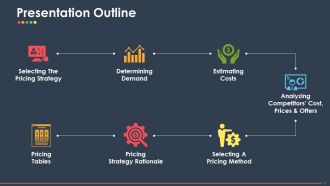
If you need to create a professional PowerPoint presentation to showcase your business pricing strategies when selling a product or service, then download our content ready pricing strategy PowerPoint presentation slides. Research specialists have researched the content of this presentation whereas the graphics designers at SlideTeam have converted it into a stunning presentation. Using this presentation PPT, you can explain how one can identify and create the best strategies for its business. This pricing planning PPT presentation consists of 33 slides that will help you to explain the idea of the marketing mix, product marketing, pricing management, brand marketing, cost management, price discrimination, yield management strategies, and many more. This readymade pricing planning PowerPoint presentation covers a slide on selecting the pricing strategies, determining demand, estimating costs, analysing, competitors cost, prices, and offers, selecting a pricing method, pricing strategy rationale, and pricing tables. Keeping the client’s requirement in mind, our presentation designers have provided additional slides to make their presentation work easy. Rapidly download these pricing strategy presentation slides. Except you intend to make a presentation to aliens you need to add emotions to it. Why not make use of professionally designed Pricing Strategy Powerpoint Presentation Slides that have the necessary ingredients for a successful presentation.
People who downloaded this PowerPoint presentation also viewed the following :
Content of this Powerpoint Presentation
Price, one of the crucial components in the 4Ps of marketing, is an underrated tool in terms of profitability. Companies that invest in price competencies tend to position their products strategically to keep a price that not only influences customers but also gives them a competitive advantage.
So, if you are a business owner looking to generate revenue by beating a rival firm, it is high time you consider a pricing strategy for increasing your market power. Clearly, price will portray the value of the product, and considering consumer perception can help you impress them. Therefore, you need to calculate your price so that it not only draws people's attention but also helps you make your profit smartly.
Deciding upon the pricing can be a complex process, and we know that. You need to come to a midpoint where your and your customers’ needs are taken into account to boost sales eventually. You can check out our IT Pricing Proposal Powerpoint Presentation Slides to frame your pricing in the best possible manner.
While you are busy making smart pricing decisions, we are highly obliged to take the responsibility of delivering stunning presentations to you. This Pricing strategy PowerPoint deck is just an example of how we are best at developing content-ready PPTs for your business. With the inclusion of 33 slides, we have come up with a solution to make your pricing planning smoother. It has included all the essential ingredients to make your presentation a hit in front of stakeholders.
So why wait? Let me take you through a brief list of presentation slides included in this product one by one!
Template 1: Pricing Strategies
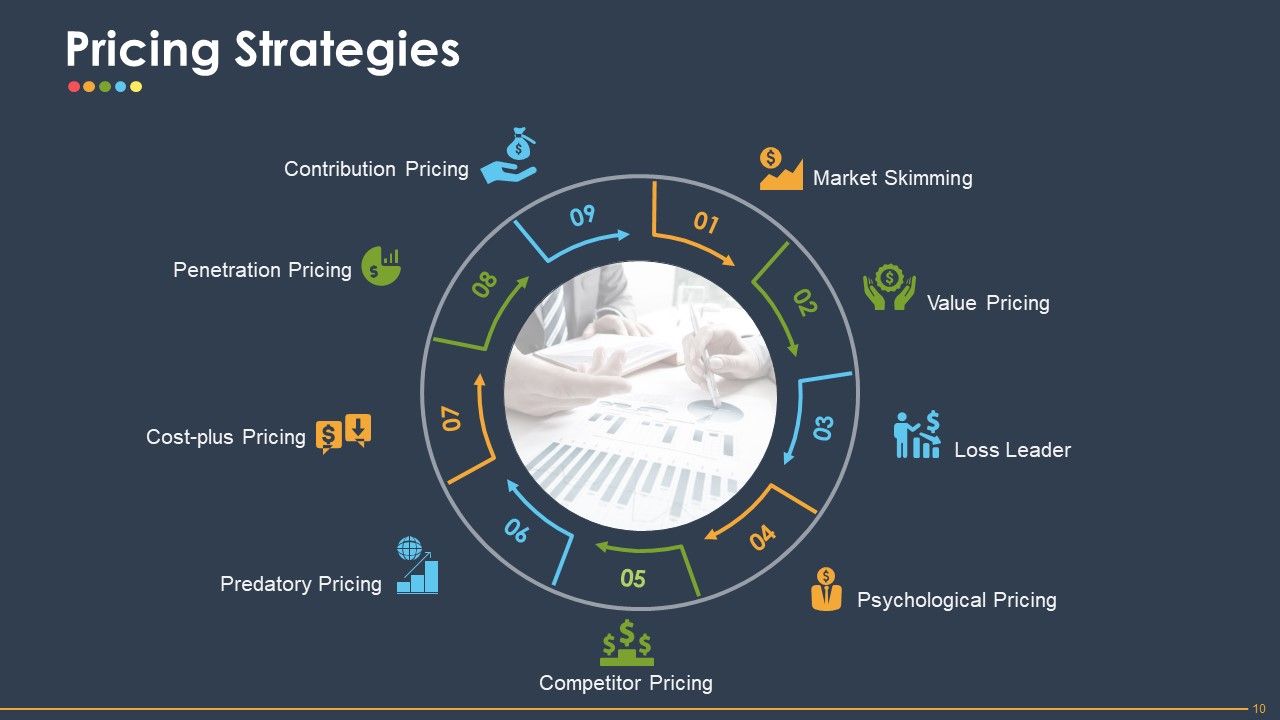
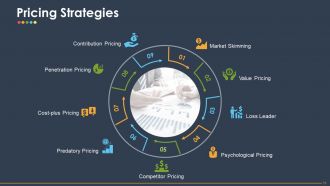
This PPT Slide will showcase your different pricing strategies in a circular graph to get the audience informed at a glance. There are always pros and cons of each strategy. So, you can explain them one by one to the audience with this PPT Design. Using this presentation slide, you can make your scenario planning better as you can assess the potential impact of every strategy and anticipate market reactions and changes with the pricing approaches being considered.
Template 2: Pricing Strategy Rationale
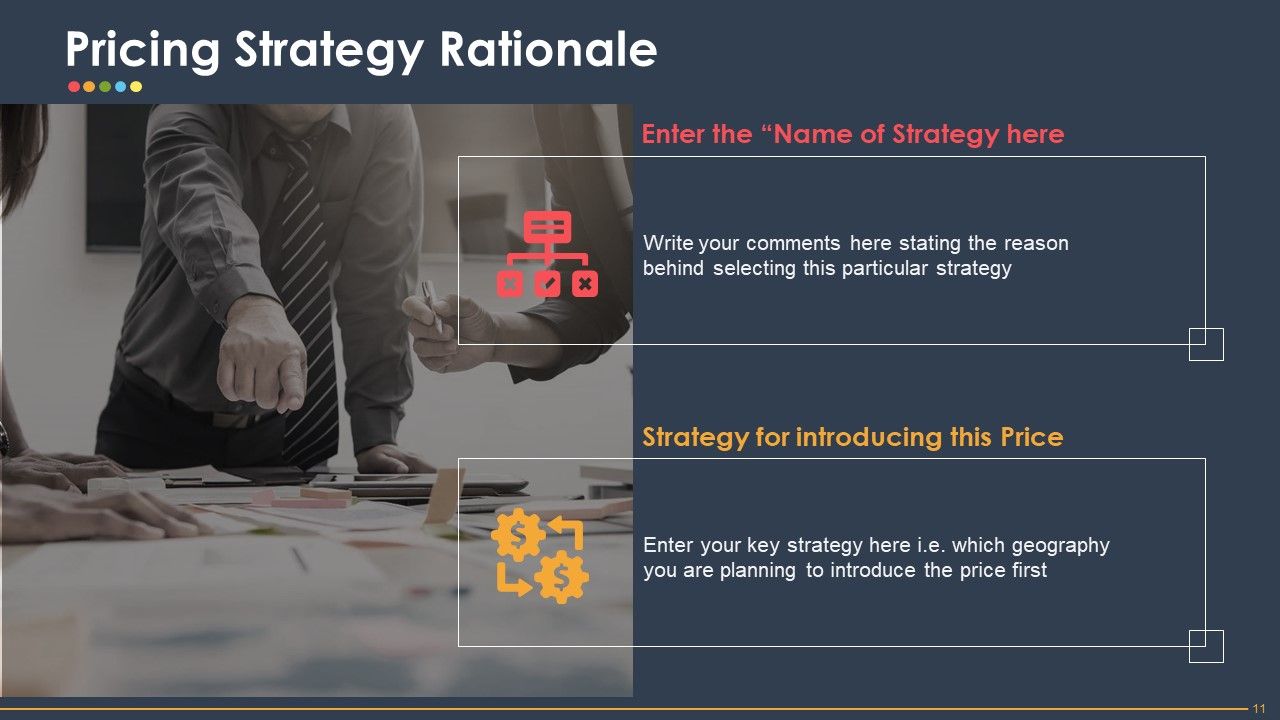
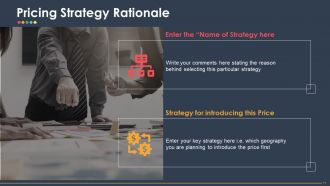
With this PPT Layout, you will introduce your selected pricing approach with a plan. Now that you have done thorough research and analysis of the target market, you have a strategy for coming up with a price that certainly delivers value to your product. Using this presentation layout, this process will become easy. You can explain your intended pricing strategy and how you are going to integrate it in your marketing areas.
Template 3: Pricing Table
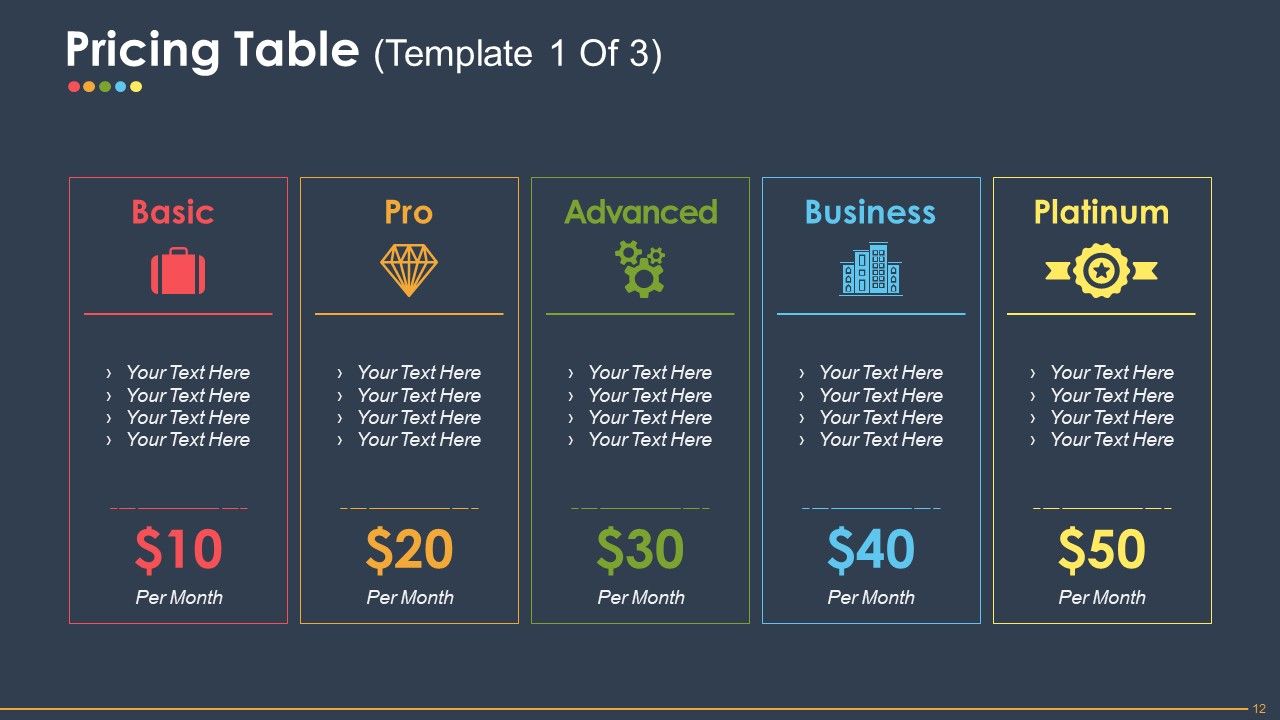
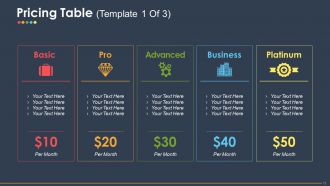
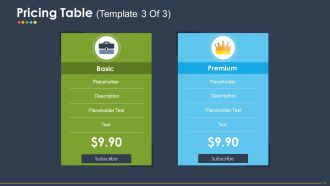
Every business owner plans their pricing strategically to influence users and seamlessly enter the competitive market. For that, you will use this PPT Design to categorize your pricing plans into basic, pro, advanced, business, and platinum. This shows that you have purchase plans that suit different users. Likewise, you will be penetrating different user segments that compel the user’s decision to buy.
Template 4: Pricing Table (2/3)

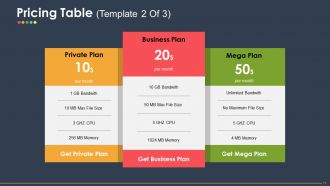
This is another presentation template for describing your pricing plan into different categories so that users have a choice of payment. With this pricing guide, customers get to choose the service according to their budget and requirements as buying the whole product can be costly for them. Hence, this PPT Layout is a powerful way to communicate your plan through categorization.
Template 5: Clustered Bar
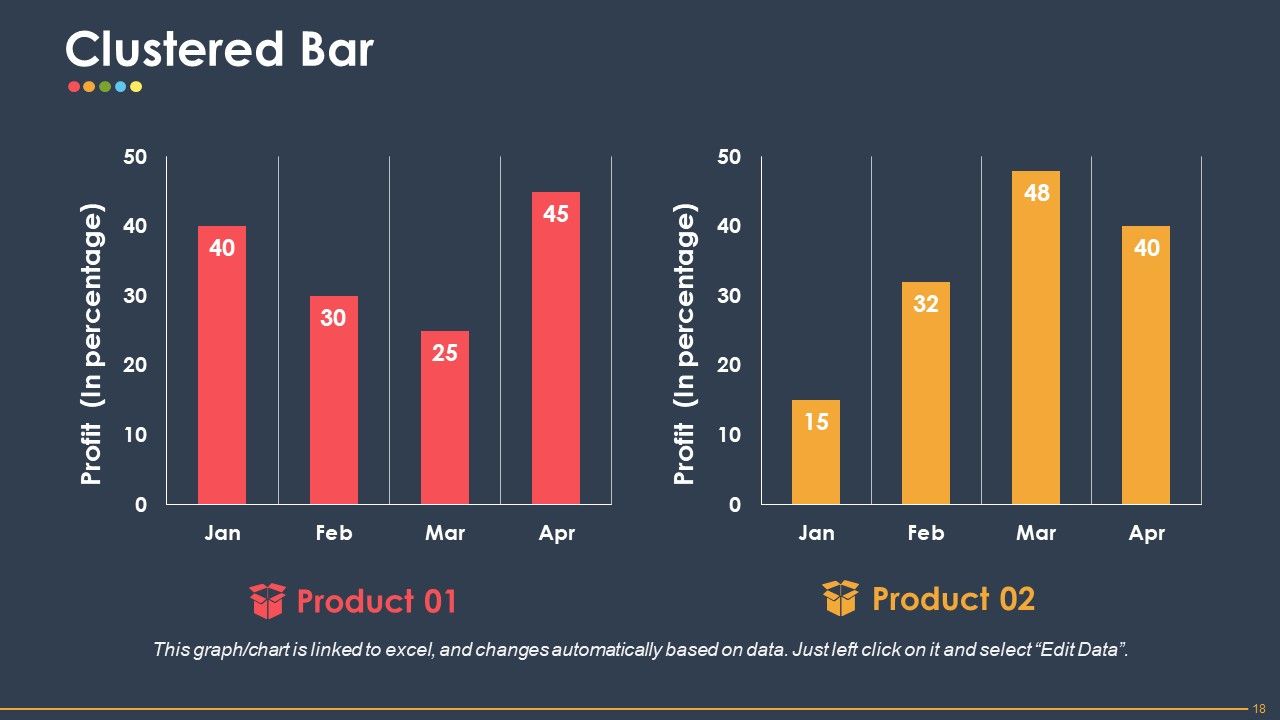
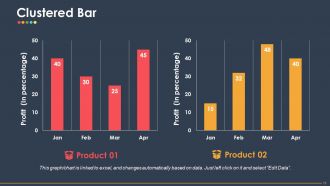
While incorporating pricing strategy, owners have to determine profit trends in order to decide a price that will generate revenue. In this case, this PPT Slide will help you compare the profitability trends of 2 products in a graphical form. You can adjust the data as per your business requirements, and you are ready for a diligent decision that will lead to success.
Template 6: Stacked Line with Marker
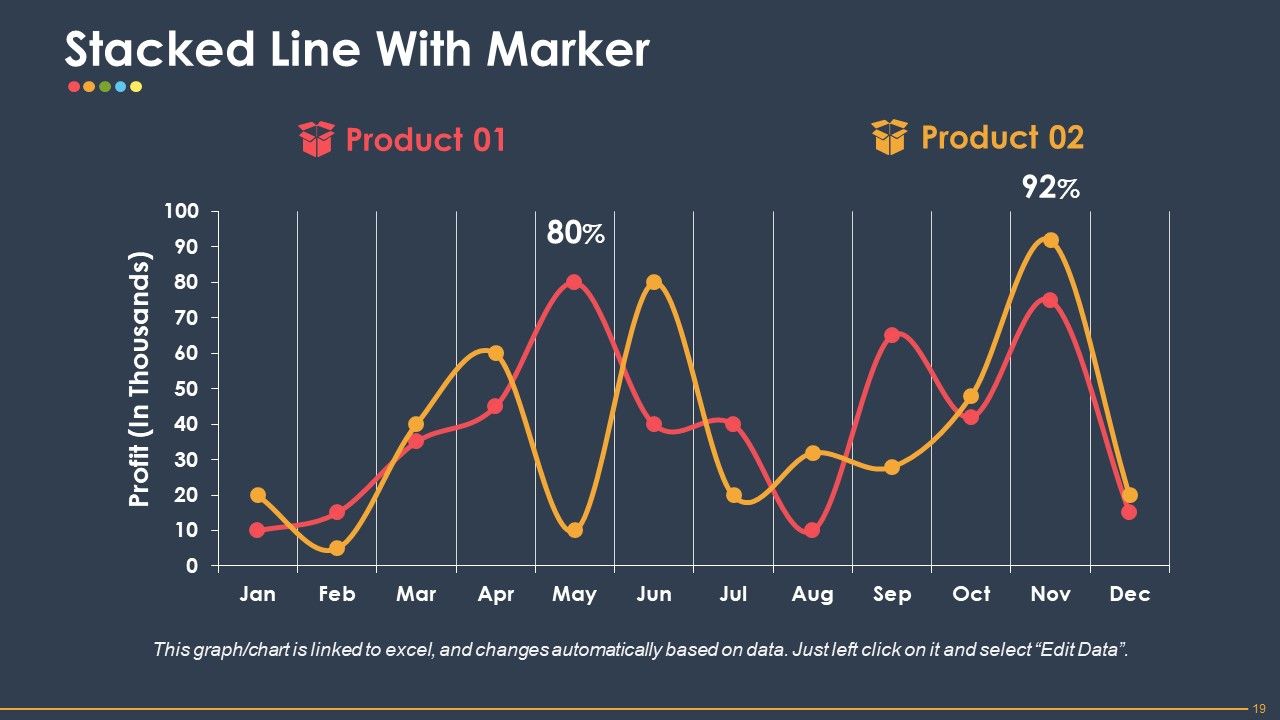
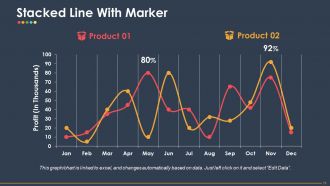
When it comes to visualizing data and presenting it to stakeholders, stacked line graphs are apt. While you are making a pricing decision, tracking profitability will give you insights to make your decision excessively strategic. Use this lucrative PowerPoint Layout to identify data patterns across categories. With markers, you can highlight your key points or milestones, making your users focus on the relevant information.
Template 7: Bubble Chart
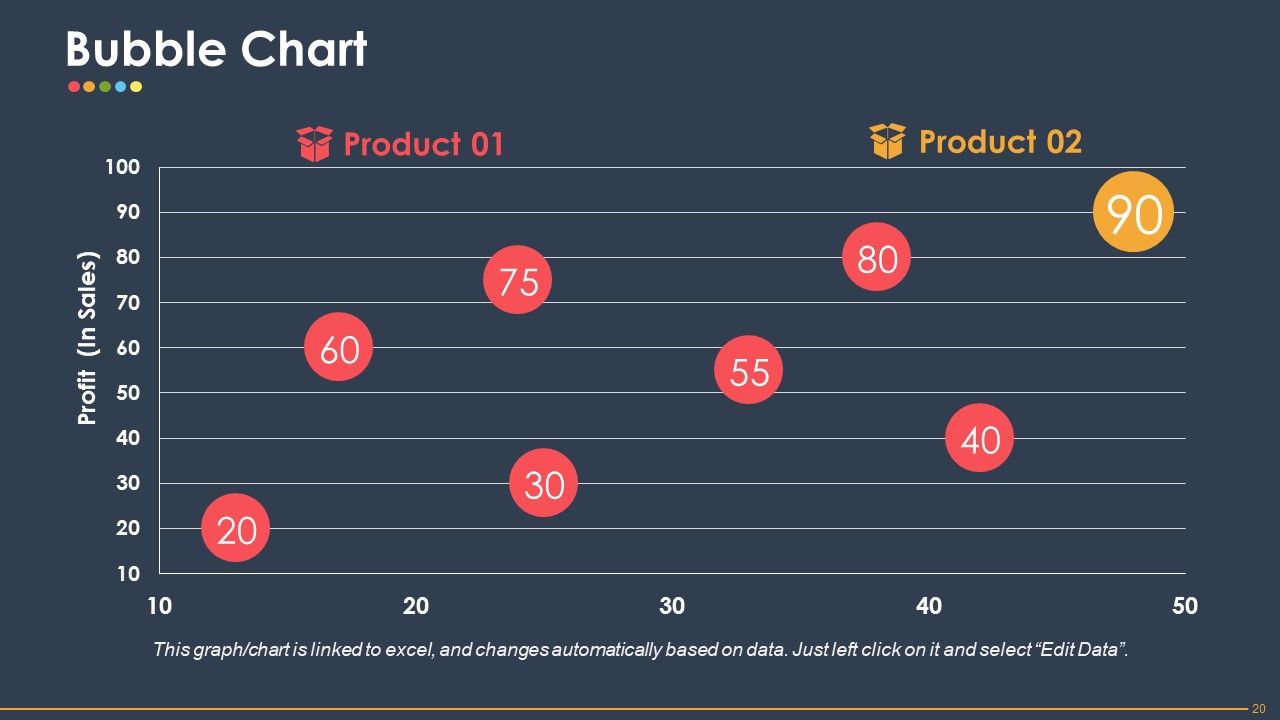
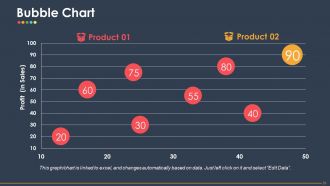
This is yet another visual representation that you need to determine the profitability of two people over time. This PPT Template will help you visualize information through bubble charts in various contexts. You can investigate your decision by determining the relationship between two variants and undertaking a cross-category comparison, i.e., for two products. You can adjust your price, being the flexible element, as per the data you have identified.
Template 8: Selecting the Pricing Objective
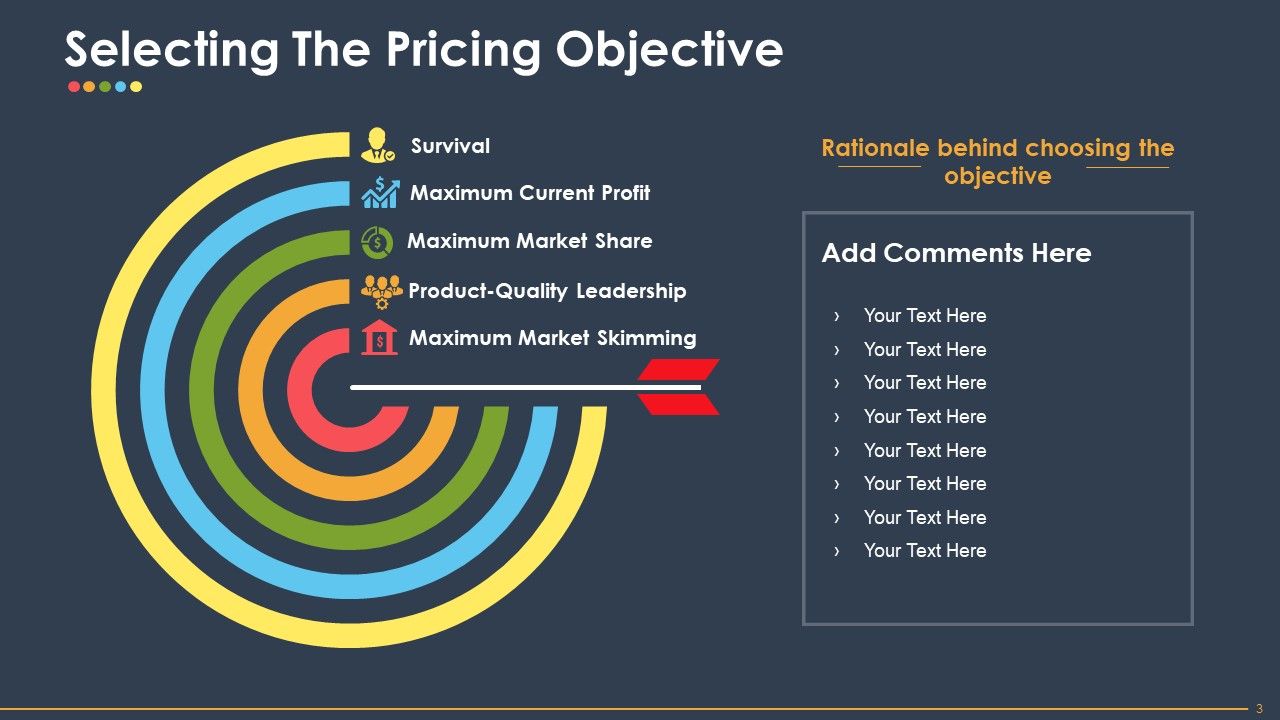
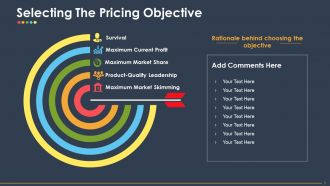
Selecting a particular pricing policy depends upon several factors, such as survival, maximum current profit, maximum market share, product-quality leadership, and maximum market skimming. With this PPT Design, you can mention the rationale or goals behind your pricing strategy to make everyone clear how important this strategy is for the organization. This is crucial for your agency to grow when you have made a thorough pricing analysis.
Template 9: Price Experiments
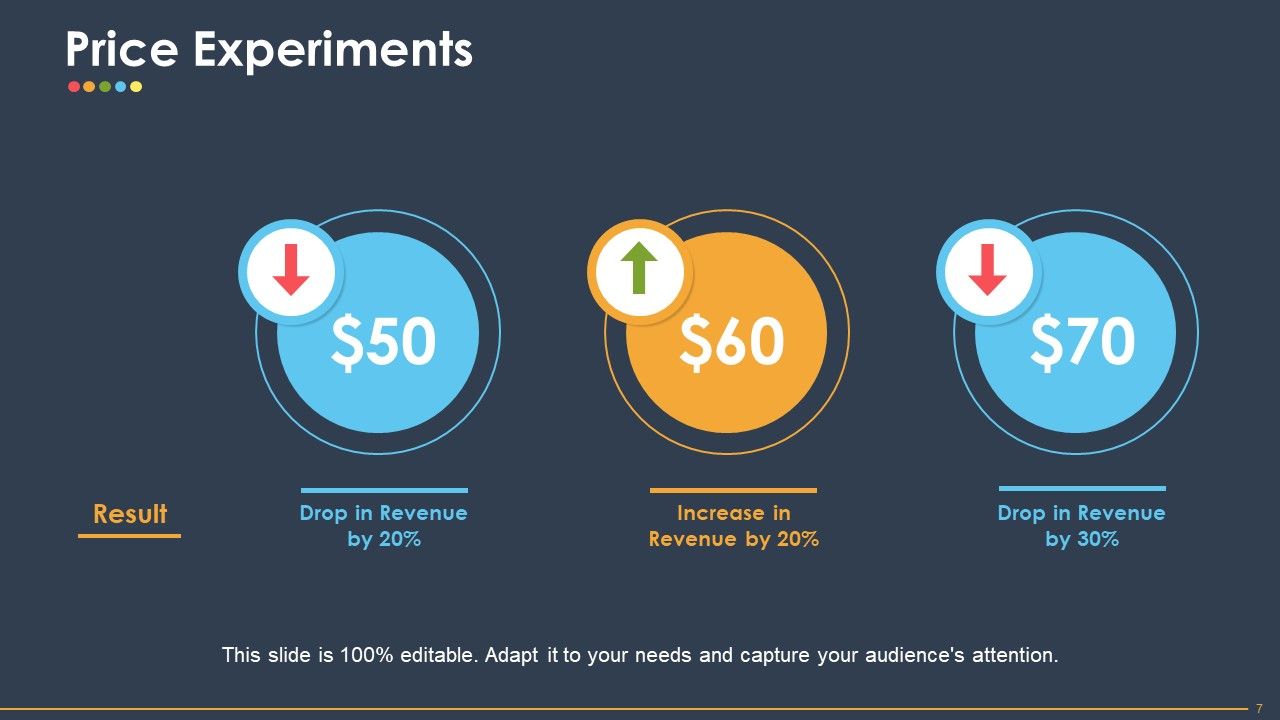
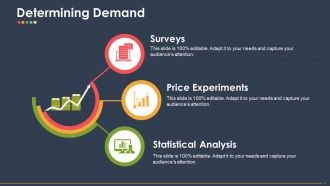
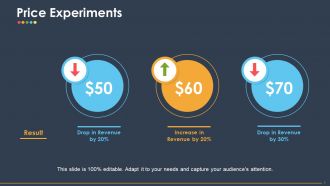
Experimenting with your pricing strategies is necessary to determine how the target audience responds to your newly available prices. With this editable presentation template, you can demonstrate the results of your price experiments, which can be used as empirical data for informed decisions. You have real-world evidence of your approach, which can later help you optimize the pricing plan to capture the maximum value of your product.
Precise Price Yields Peak Performance
Deciding upon the correct price of the product requires diligence from several angles and our presentation designs will help you achieve this. Each PPT Slide is customizable and gives you complete freedom to measure the impact of pricing through experimentation. You have a great chance of building a fabulous agency if you analyze user persona and come up with pricing packages that add to the value of the product. Using the ready-made PPT Templates shown here will make you confidently and impactfully address your audience.
Pricing Strategy Powerpoint Presentation Slides with all 33 slides:
Acquire an effective counter with our Pricing Strategy Powerpoint Presentation Slides. They are good for convincing critics.




FAQs for Pricing Strategy
First thing - check out what your competitors are charging and who they're targeting. That's your starting point. Look at Creative Market or Envato to see what similar stuff goes for. The template market is honestly pretty crowded these days, so you need something that stands out. Think about how complex your designs are and what time they'll save people. Are you doing fancy animations or super niche industry stuff? Also decide if you're doing one-time purchases or subscriptions - that changes everything. Don't forget your production costs and what profit margin you actually want. Then position yourself as premium, middle-ground, or budget option based on what you're offering.
Oh man, psychological pricing is such a weird mind hack but it actually works! Your brain sees $9.99 and thinks "nine something" instead of ten bucks - I know it sounds dumb but the data backs it up. Try showing your expensive plan first so the regular one looks reasonable by comparison. Bundles are perfect for apps since you're not shipping anything physical anyway. Honestly, just A/B test your current price against something ending in .99 and see what happens. The conversion rate differences might surprise you. Start simple and tweak from there!
Dude, you've gotta do market research before setting those template prices. Survey your actual customers about what they'll pay and what features they care about. I made this mistake early on - priced way too low because I was just guessing! Check competitor pricing too, but honestly don't just copy them. What works is A/B testing different price points or running focus groups to see real reactions. The whole thing comes down to using actual data about what people value, not whatever feels "right" in your head. Trust me on this one.
Yeah, definitely check what other template creators are charging - gives you a good baseline to work with. But don't get too hung up on matching their exact prices (I made that mistake when I started, wasted so much time!). If your stuff has better design or unique features, price higher. New to the scene? Maybe go slightly under to get some momentum. Just don't lowball yourself because you're nervous - I see people do this all the time and it's painful to watch. Market research is smart, but your pricing should reflect your actual value, not just what everyone else is doing.
Honestly, go with tiered pricing for templates. You can bundle different value levels - basic ones vs the fancy animated stuff with custom fonts. Skip freemium though, it'll just hurt your sales. People know if they need templates or not, so giving away free versions is kinda pointless. I'd do 2-3 tiers: basic around $15-25, premium $35-50, maybe throw in an "everything bundle" for like $75-100. Fixed pricing could work if your stuff's consistently good, but tiers let you catch different types of customers. Oh and definitely test with small batches first - you don't want to price yourself out of the market right away.
Honestly, free samples work great for boosting sales. People need to see your quality before they'll pay - it's just human nature. Think about it like Costco's sample stations (works every time, right?). Once customers see how polished your templates are, they'll trust the paid versions are worth buying. The trick is being smart about what you give away. Don't hand over everything, but make sure it's your best stuff. Maybe 2-3 slides from a 20-slide deck? That builds confidence without killing future sales. Trust me, samples create demand way more than they hurt it.
Dude, subscription models are a game changer for template businesses. You'll see retention jump to like 70-80% compared to maybe 30% with one-time sales. Makes sense though - people are getting new templates every month plus updates, so why would they leave? Once they're paying $10-15 monthly, it's way easier than dropping $50+ each time they need something new. But here's the thing - you actually have to deliver fresh stuff regularly. Can't just collect payments and ghost them. I'd honestly build up your content pipeline first before making the switch. Otherwise you'll just piss people off.
Dude, pricing across different countries is way trickier than most people realize. You've got to think about what locals can actually afford first. Then there's weird cultural stuff - like in China, prices ending in 8 are considered lucky, but Western shoppers respond better to 9s. Some places expect you to haggle, others find it offensive. Religious holidays can either boost your sales or tank them depending on your timing. Oh, and don't even get me started on how different cultures view "premium" pricing. Test small in each region before you commit to anything big. Trust me, what works in one market can completely flop in another.
Honestly, just hammer home how much time you're saving people. Nobody wants to mess around with slide layouts for hours when they could be doing literally anything else. Target specific groups like consulting firms or tech startups - they actually care about looking professional and will pay for it. The key is showing off all the design work that went into it, plus bundle in some extras like icons or fonts to make it feel worth the price. And definitely use customer testimonials that mention ROI or time savings. Those work way better than just saying your templates look pretty.
Bundling totally works because people see way more value in 10 templates for $49 vs $8 each individually. It feels like this amazing deal they can't pass up. Most folks love having options too – even if they only end up using like 3 of them, they still feel smart about the purchase. Kind of like those cereal variety packs, you know? Show your individual prices first, then hit them with the bundle discount. Oh, and themed bundles work great too – "startup pitch pack" or whatever fits your audience. Makes the value super obvious. Trust me, it's psychology gold.
Honestly, the biggest thing is just don't be a jerk about pricing. I've seen people charge like $50 for a basic worksheet template which is insane. You wanna make money but not screw over broke college kids, you know? Maybe do student discounts or have some free versions alongside your paid stuff. Tiered pricing works well too - something for everyone's budget. Ask your followers what they think is fair pricing, they'll tell you straight up. You put in work so you deserve to get paid, but education shouldn't be crazy expensive either.
Check your conversion rates and what people are actually saying in feedback - that's where the goldmine is. Cart abandonment at checkout usually screams "too expensive." Customers will straight up tell you "I'd buy this at $15 instead of $25" which honestly makes your job easier. Notice any patterns? Like if your fancy templates sit there while basic ones sell out. Keep an eye on what competitors are doing too, especially when they drop prices. Just don't go crazy with huge changes - test small bumps up or down first. Those big swings can totally mess with your momentum.
Honestly, seasonal promotions are a double-edged sword. Customers get hooked on waiting for your sales instead of paying full price - which totally makes sense from their perspective, right? Before you know it, they see your discounted price as the "real" one. Your margins take a hit year-round because everyone expects those deals. Competitors will probably copy your seasonal cuts too, and then you're all stuck in this annoying price war. My advice? Be picky about what you actually put on sale. Keep your main products at steady prices and set boundaries early. That way promotions boost sales without eating into your regular income.
Don't underprice those templates! You'll barely break even and customers will expect dirt-cheap prices forever. Low prices scream "low quality" to most people anyway. Your competitors might think you're desperate and start slashing their prices too - honestly, that whole race to the bottom thing never ends well. Sure, you might get some sales upfront, but those bargain hunters will ditch you the second someone goes cheaper. Do some research on what decent templates actually cost. Then price yours confidently based on what they're worth.
Honestly, most people selling templates think way too small about what they're worth. Instead of just matching competitor prices, figure out what results your stuff actually delivers. Like if your pitch deck template helps someone close a million-dollar deal, why charge $50? Ask for $200. Survey your customers - are they saving 20 hours of design work? Landing bigger clients? That's the real value right there. I know it sounds obvious but you'd be surprised how many sellers miss this completely. Once you know the impact, build your pricing around that and make sure your marketing actually explains why it's worth more than the generic stuff out there.
-
Excellent design and quick turnaround.
-
Editable templates with innovative design and color combination.