


Partner relationship management roadmap partner relationship management




Try Before you Buy Download Free Sample Product
 Impress Your
 Audience
 100%
100% Editable
 Save Hours
 of Time


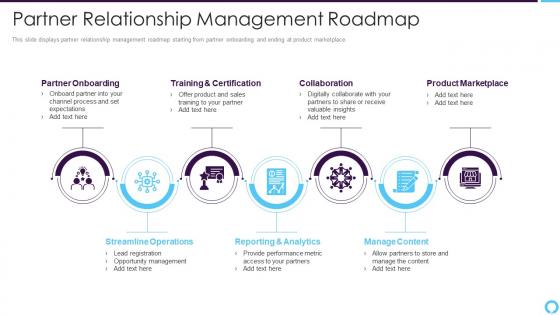
This slide displays partner relationship management roadmap starting from partner onboarding and ending at product marketplace.
People who downloaded this PowerPoint presentation also viewed the following :
Partner relationship management roadmap partner relationship management with all 6 slides:
Use our Partner Relationship Management Roadmap Partner Relationship Management to effectively help you save your valuable time. They are readymade to fit into any presentation structure.





FAQs for Partner relationship management roadmap
Honestly, start with mapping your current partner touchpoints - that's where you'll find the biggest communication gaps to fix first. Set up clear check-ins and make sure everyone knows what's expected from day one. Training is massive because nobody can sell stuff they don't get, obviously. You need shared goals, some kind of incentive structure that actually works, and co-marketing support. Joint business planning helps too. Oh and definitely have a conflict resolution process ready because trust me, things will get weird at some point. Regular performance tracking keeps everyone honest. Communication channels might sound boring but they're literally the foundation of everything else.
Track portal adoption and training completion, but honestly? Revenue metrics are what actually matter. Partner-sourced revenue growth, deal closing times, satisfaction scores - that's the real stuff. I've watched so many teams obsess over login counts while their partner revenue stays flat. Kind of misses the point, right? Deal registration volume is solid to track too, plus onboarding speed for new opportunities. Stick to maybe 3-5 metrics max that connect to your actual program goals. Monthly reviews work well - you'll catch trends before they become problems.
Partner management software is honestly a lifesaver - it puts everything in one dashboard so you're not juggling spreadsheets anymore. Your CRM connects with it to show the whole customer picture when partners are involved. The automated stuff handles boring tasks like onboarding and commissions (thank god). Partners get their own portal too for training materials and resources. My advice? Don't overthink it at first. Figure out what's driving you crazy right now - maybe it's tracking deals or calculating payouts - then find something that fixes that specific problem. You can always add more features later once you get the hang of it.
First thing - figure out what you actually need help with and where partners could fill those gaps. Don't go after competitors, find companies that serve your customers but with different stuff. Your existing network is gold, honestly - way easier than cold outreach. When you're evaluating people, reputation matters but so does whether you can actually work together. I've seen so many partnerships fail because teams just didn't click. Oh and their tech needs to actually work with yours obviously. Start with small tests before you sign anything big. Way less risky.
Honestly, most partnerships crash because people treat them like transactions instead of actual relationships. Poor communication kills everything - you can't just ghost your partners and expect things to work. I've seen so many deals fall apart over misaligned expectations too. Regular check-ins are huge, and you've got to be real about what you can actually deliver. Don't over-promise timelines just to close the deal. The lazy approach never works here. You need those consistent touchpoints and follow-through, otherwise you're basically setting money on fire. Understanding their business matters as much as pushing your own agenda.
Set shared goals upfront and actually write them down - seriously, don't just assume you're aligned. Monthly check-ins are non-negotiable, even when you're swamped. I always push for quarterly reviews where we look at real progress, not just feel-good metrics. Make sure the KPIs work for both companies, not just yours. Joint account planning helps too. Oh, and tie compensation to mutual wins if you can swing it. Honestly, most partnerships die because people think they're on the same page but never actually verify it. Don't be those people.
Start with a welcome sequence that walks new partners through everything step by step. Give them role-based access - honestly, showing someone irrelevant stuff right away is the fastest way to confuse them. Set up automated emails for milestones, but don't info-dump on day one! Get their profile done first, then slowly roll out training materials. Oh, and assign someone as their main contact for the first month - makes a huge difference. Track completion rates for each step so you can spot where people usually bail out and smooth those rough spots.
Dude, you can't just call partners when stuff breaks - that's how relationships die. Set up monthly check-ins and quarterly reviews now, before you need them. Share the good stuff too, not just problems. Yeah, Slack works for quick things, but honestly? Sometimes you gotta actually call people like it's 2005 or whatever. Most partnerships crash because everyone's reactive instead of getting ahead of issues. Oh, and make sure you're swapping market insights both ways - it's not just about what they can do for you. Schedule something this week, seriously.
Focus on revenue first - partner-generated sales, deal registrations converting, how long sales cycles take. Training completion and cert levels tell you if relationships are healthy. Lead pass-through rates matter for marketing stuff. Honestly? Most dashboards become a hot mess when you track everything. Pick maybe 3-5 things that actually move the needle for your business. Monthly check-ins with key partners work best. Oh, and support ticket times - forgot that one but it's pretty telling about partner satisfaction.
So CRM is for your actual customers - tracking leads, support stuff, what they're buying. PRM is totally different though, it's for managing your business partners like resellers or distributors. You're doing things like onboarding new partners, avoiding channel conflicts (which honestly can get messy), helping them sell your products better. Quick way to remember it: CRM = selling TO customers, PRM = selling THROUGH partners. Most companies end up needing both systems anyway since they work together pretty well. Just depends on your business model really.
Honestly, most companies are terrible at this - they'll send out surveys and then never do anything with the results. Start simple: pick one spot in your partner journey and add a quick feedback form there. Maybe during onboarding when things are fresh in their minds? Survey your partners regularly too, but here's the thing - you actually have to respond to what they're telling you. Build it into those quarterly reviews you're probably already doing. Create some kind of ongoing communication channel so feedback doesn't just happen once a year. The whole point is making it systematic, not random.
Honestly, start with a basic dashboard - even something simple will show you stuff you're missing. Track deal conversion rates, how long deals take to close, customer satisfaction scores. The numbers don't lie about who's actually performing vs just coasting. I'd also look at engagement patterns since they'll tell you which partners might bail or need extra help. Revenue per partner is obvious but super telling. Oh, and time-to-close data can reveal whether some partnerships just create unnecessary friction. Once you've got this running, you'll spot the real performers pretty quickly.
Dude, this is huge - training literally makes or breaks partnerships. Your partners can't sell what they don't understand, right? Start with solid onboarding that covers the basics. Then keep teaching them through ongoing sessions about your product, sales tactics, whatever they need. Oh, and make sure they can actually reach someone when they're confused (which happens more than you'd think). Track how partners perform before and after training sessions. Some programs look great on paper but don't move the needle. Without proper training, you'll just have a bunch of partners sitting there wondering what they're supposed to be doing.
Honestly, most companies suck at this - they just push their own stuff instead of actually caring about their partners. You've gotta make it worth their while beyond just transactions. Set up quarterly check-ins to talk about THEIR goals, not yours. Give them real value like training or co-marketing ops. A decent partner portal helps too so they're not constantly bugging you for basic stuff. Oh, and exclusive resources make them feel special. Treat them like actual business partners instead of just another way to make sales. Focus on their success metrics and they'll stick around way longer.
Honestly, the AI matching stuff is pretty wild - it'll automatically figure out which partners work best for what deals based on their track record. Real-time collab tools finally don't suck anymore, which is nice. There's predictive analytics now that catches partnerships going downhill before they totally implode. Oh, and co-selling platforms got way better at letting your teams actually work together on deals without wanting to murder each other. You should probably peek at what your PRM vendor's been up to lately - most of them snuck in some decent AI features you might've missed.
-
Visually stunning presentation, love the content.
-
Excellent template with unique design.