

Vendor relationship management strategies powerpoint presentation slides




Try Before you Buy Download Free Sample Product
 Impress Your
 Audience
 100%
100% Editable
 Save Hours
 of Time


Vendor relationship management strategies provide a systematic approach to evaluating vendors that supply an organizations goods and services. Here is an efficiently designed Vendor Relationship Management Strategies template covering techniques to improve supplier performance. SRM is a part of vendor management, and, with the help of this PPT, organizations can segment their suppliers and determine important vendor categories to devise efficiently. The main objective of this presentation is to ensure that all contracts with vendors support the needs of the business. This PowerPoint presentation covers three critical steps. vendors segmentation, vendors strategy development, and vendors execution. Vendors segmentation includes a comparison of suppliers to identify opportunities and risks. Further, vendors strategy development consists of an optimal way to interact with suppliers based on business needs. Next, it covers vendors strategies to Execute the designed strategy effectively to obtain desired results. Book a free demo with our research team and customize this 100 percent editable template now.
People who downloaded this PowerPoint presentation also viewed the following :
Content of this Powerpoint Presentation
Slide 1: This slide introduces Vendor Relationship Management Strategies. State Your Company Name and begin.
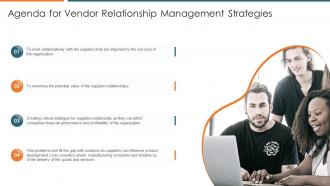
Slide 2: This slide shows Agenda for Vendor Relationship Management Strategies.
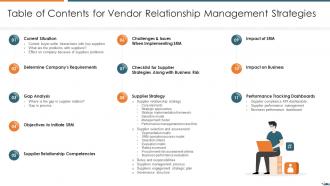
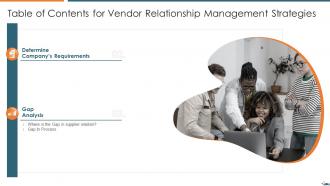
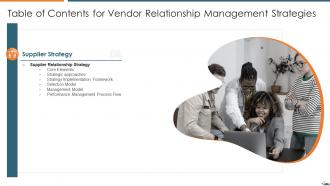
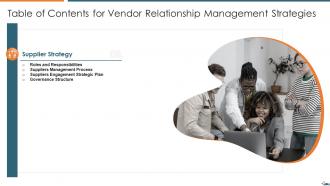
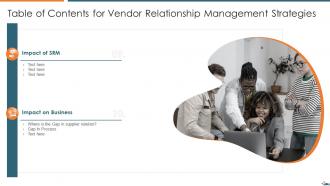
Slide 3: This slide presents Table of Contents for Vendor Relationship Management Strategies.
Slide 4: This slide shows title for topics that are to be covered next in the template.
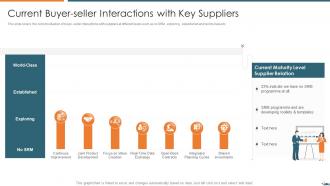
Slide 5: This slide covers the current situation of buyer- seller interactions with suppliers at different levels.
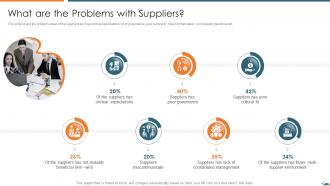
Slide 6: This slide displays problem areas of the suppliers such as unclear expectations, poor governance, etc.
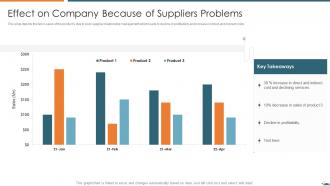
Slide 7: This slide represents Effect on Company Because of Suppliers Problems.
Slide 8: This slide shows title for topics that are to be covered next in the template.
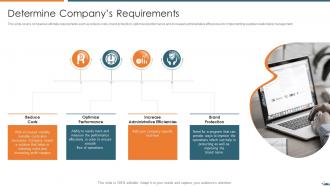
Slide 9: This slide presents companies ultimate requirements such as reduce costs, brand protection, etc.
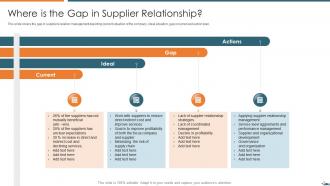
Slide 10: This slide displays the gap in suppliers relation management depicting current situation of the company.
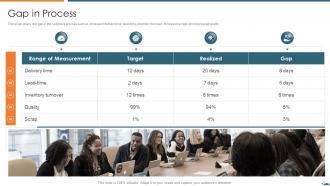
Slide 11: This slide represents the gap in the suppliers process such as, increased delivery time, lead-time, inventory, etc.
Slide 12: This slide shows title for topics that are to be covered next in the template.
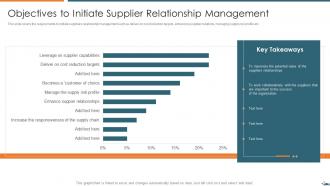
Slide 13: This slide presents Objectives to Initiate Supplier Relationship Management.
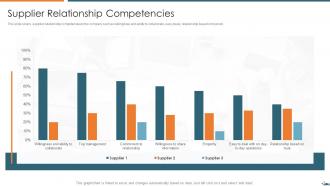
Slide 14: This slide displays supplier relationship competencies to the company.
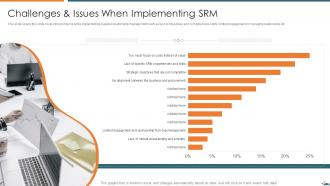
Slide 15: This slide represents Challenges & Issues When Implementing SRM.
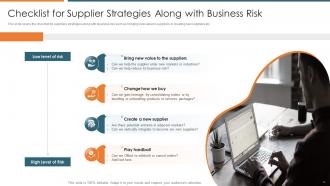
Slide 16: This slide showcases checklist for suppliers strategies along with business risk.
Slide 17: This slide shows title for topics that are to be covered next in the template.
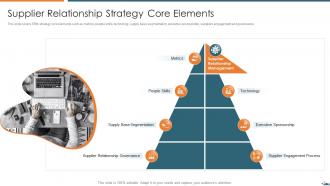
Slide 18: This slide presents SRM strategy core elements such as metrics, people skills, technology, etc.
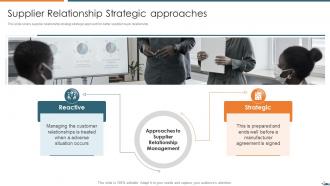
Slide 19: This slide displays supplier relationship strategy strategic approach for better supplier buyer relationship.
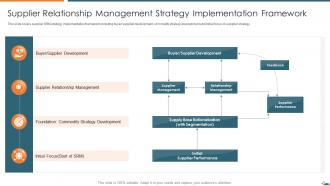
Slide 20: This slide represents Supplier Relationship Management Strategy Implementation Framework.
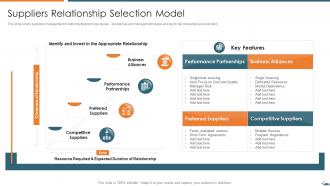
Slide 21: This slide showcases suppliers management model including top to top review , operational and management review.
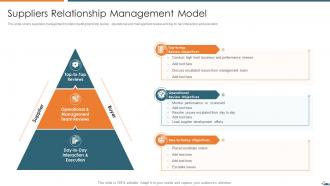
Slide 22: This slide shows Suppliers Relationship Management Model.
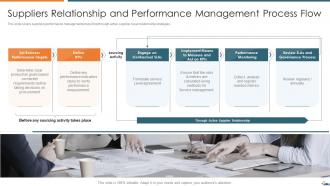
Slide 23: This slide presents Suppliers Relationship and Performance Management Process Flow.
Slide 24: This slide shows title for topics that are to be covered next in the template.
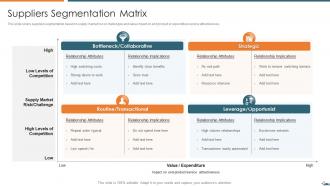
Slide 25: This slide presents suppliers segmentation based on supply market risk or challenges and value impact.
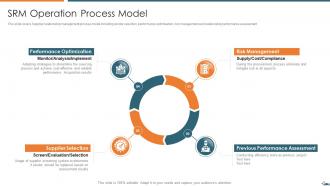
Slide 26: This slide displays Supplier relationship management process model including vendor selection, performance optimization, etc.
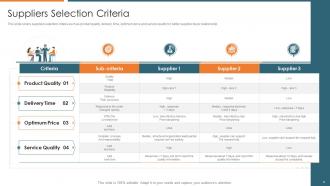
Slide 27: This slide represents suppliers selection criteria such as product quality, delivery time, optimum price, etc.
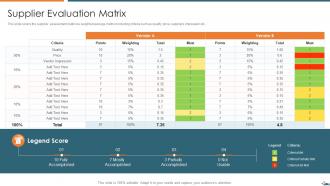
Slide 28: This slide covers the supplier assessment matrix via weighted average method including criteria.
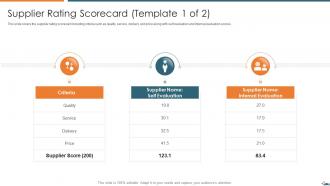
Slide 29: This slide represents supplier rating scorecard including criteria such as quality, service, delivery, etc.
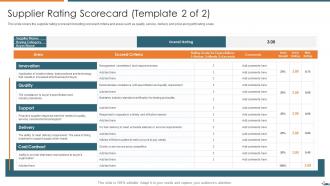
Slide 30: This slide showcases supplier rating scorecard including scorecard criteria and areas.
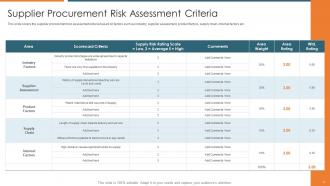
Slide 31: This slide covers the supplier procurement risk assessment criteria.
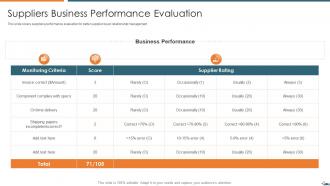
Slide 32: This slide presents suppliers performance evaluation for better supplier buyer relationship management.
Slide 33: This slide shows title for topics that are to be covered next in the template.
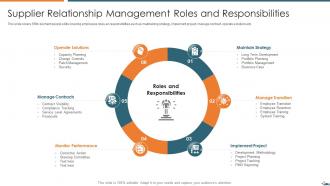
Slide 34: This slide presents Supplier Relationship Management Roles and Responsibilities.
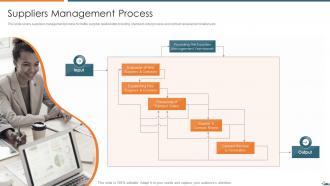
Slide 35: This slide displays suppliers management process for better supplier relationship.
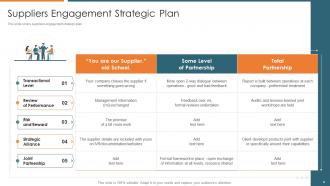
Slide 36: This slide covers suppliers engagement strategic plan.
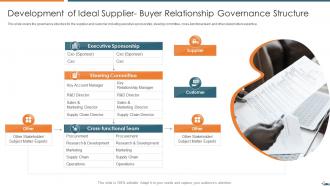
Slide 37: This slide represents Development of Ideal Supplier- Buyer Relationship Governance Structure.
Slide 38: This slide shows title for topics that are to be covered next in the template.
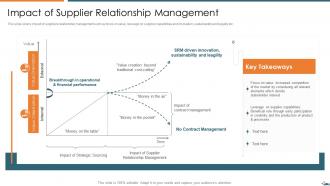
Slide 39: This slide presents impact of suppliers relationship management.
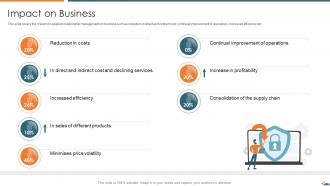
Slide 40: This slide displays impact of suppliers relationship management on business.
Slide 41: This slide shows title for topics that are to be covered next in the template.
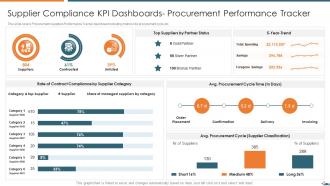
Slide 42: This slide presents Supplier Compliance KPI Dashboards- Procurement Performance Tracker.
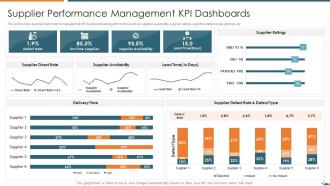
Slide 43: This slide displays supplier performance management KPI dashboards along with metrics.
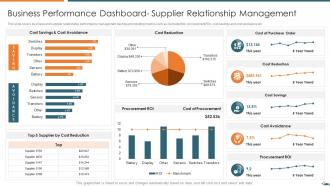
Slide 44: This slide represents business and supplier relationship performance management dashboard.
Slide 45: This slide showcases Icons for Vendor Relationship Management Strategies.
Slide 46: This slide is titled as Additional Slides for moving forward.
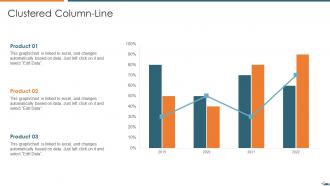
Slide 47: This slide provides Clustered Column chart with two products comparison.
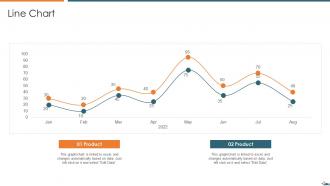
Slide 48: This slide describes Line chart with two products comparison.
Slide 49: This is Our Mission slide with related imagery and text.
Slide 50: This slide shows Post It Notes. Post your important notes here.
Slide 51: This slide presents Roadmap with additional textboxes.
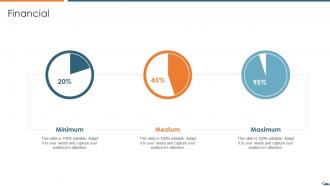
Slide 52: This is a Financial slide. Show your finance related stuff here.
Slide 53: This is a Timeline slide. Show data related to time intervals here.
Slide 54: This slide provides 30 60 90 Days Plan with text boxes.
Slide 55: This slide showcases Magnifying Glass to highlight information, specifications etc
Slide 56: This is a Thank You slide with address, contact numbers and email address.
Vendor relationship management strategies powerpoint presentation slides with all 61 slides:
Use our Vendor Relationship Management Strategies Powerpoint Presentation Slides to effectively help you save your valuable time. They are readymade to fit into any presentation structure.







FAQs for Vendor relationship management strategies
Honestly, it's all about treating vendors like actual partners instead of just people you throw money at. Clear communication is huge - set up regular check-ins and performance reviews so nobody's guessing what's expected. SLAs need to be realistic and something both sides can live with, not just wishful thinking on paper. Contract terms can't be totally one-sided either or you'll burn bridges fast. The relationship stuff gets ignored way too much though, which is dumb because that's what saves you when things go sideways. Oh and definitely have backup plans for critical vendors - learned that one the hard way. Start by figuring out where your current communication is falling apart.
Honestly, get a good vendor management platform and it'll save you so much headache. Everything lives in one spot instead of scattered across a million emails. Set up automated alerts for contract renewals and SLA breaches - trust me, you don't want to miss those deadlines. The AI stuff is pretty cool too, spots problems before they become disasters. Invoice approvals and compliance checks just happen automatically. I'd start by listing out what's driving you crazy right now with your current setup, then find tech that fixes those specific issues first.
Track the obvious stuff first - delivery times, quality scores, staying on budget. Response time when you need help is huge too. But honestly? The relationship metrics matter way more than most people realize. How well do they communicate, how fast do they fix problems, are they actually trying to make things better together? If you're in a regulated field, compliance tracking is non-negotiable. Also watch for any cool innovations they bring to the table. Start with maybe 4 key metrics that actually matter to your business. You can always add more once you've got the hang of it.
Honestly, cultural stuff can make or break vendor relationships. What seems direct to you might feel super rude to them. Some cultures want tons of relationship-building before any real business happens - which I've learned the hard way. Time zones are already a pain without worrying about formality levels and hierarchy expectations too. Research their norms beforehand if you can. Getting local team members involved helps a ton since they actually understand the subtle things. Trust me, one miscommunication can tank a partnership and cost you big time.
Oh man, communication is everything with vendors - seriously. Regular check-ins are huge, plus you gotta set clear expectations from day one. When stuff goes wrong (and it will), give them honest feedback right away. I've watched so many partnerships totally implode because people just... didn't talk when problems started. Don't be reactive - schedule those quarterly reviews, update them when your needs change. Oh, and definitely don't save all the performance talks for contract time. Set up multiple ways to reach each other too. Trust me, it's way better to overcommunicate than leave people guessing.
Start with your top 3-5 vendors this quarter and just ask them stuff. Set up quarterly check-ins or quick surveys about your processes, payment timing, communication - whatever. They see your operation from the outside so they'll catch things you're blind to internally. Honestly, the best part? They work with your competitors too, so you get that bonus intel. Ask specific questions about pain points and what sucks. Then - and this is key - actually do something with what they tell you. Circle back and show them how their feedback led to real changes. It's basically free consulting from people who know your space.
Do your homework first - check what their competitors charge and figure out what you're actually worth as a customer. When you sit down with them, bring up your buying volume and payment history as negotiating tools. Honestly, half the time just asking "can you do better on price?" actually works. Don't get tunnel vision on price alone though - maybe push for better payment terms or service instead. Oh, and always be ready to walk away if it's not working. Write down whatever you agree on, and don't feel weird about renegotiating next year.
Honestly, you've got to build risk assessment into your whole vendor process from day one. Categorize them by how much they could screw you over - like your payment processor versus whoever delivers your pens, you know? Set up regular check-ins to monitor their financial health, security stuff, and how they're actually performing. For your riskiest vendors, have backup plans ready because scrambling last-minute sucks. The trick is making these risk conversations part of your normal meetings, not some yearly thing you dread doing.
Honestly, sticking with the same vendors long-term is a game changer. You'll get way better pricing once they see your volume, and when stuff breaks at 2am, guess who gets priority support? The best part though - they actually learn your business. Mine caught a compatibility issue before our last upgrade that would've been a nightmare. No more wasting weeks on RFPs either (ugh). Plus you get early access to their new features and roadmap stuff. I'd pick your top 3-5 most critical vendors and really invest in those relationships instead of constantly vendor hopping.
Honestly, you've gotta build compliance stuff right into how you pick and manage vendors from day one. Do your homework first - check their certifications, run background checks, audit their practices before you sign anything. Set up regular reviews after that and make them report issues immediately. I know it's tedious paperwork nobody wants to deal with, but I've watched companies get absolutely destroyed by skipping this step. Your contracts need clear ethical standards with real consequences. Oh, and definitely set up some kind of anonymous reporting system so problems don't stay buried until they blow up in your face.
So for VRM tools, the big players like SAP Ariba and Coupa are solid if you want everything in one spot - onboarding, tracking, the works. Oracle's got a decent option too. Smaller operations might do better with something like Vendorful, or Gatekeeper if contracts are your main headache. Honestly though? I've seen teams crush it with basic CRMs or even spreadsheets when their vendor list isn't crazy long. The trick is actually using whatever you pick consistently. Map out how you currently handle vendors first, then find software that matches that flow. Don't torture yourself adapting to some overly complex system.
Set up a scoring system that weighs cost against quality - don't just pick whoever's cheapest because that'll come back to haunt you. Score them on stuff like past work, technical skills, and references, not just price. I usually do 60-70% quality factors and 30-40% cost, but honestly it depends how much risk you can handle. Oh, and think total cost, not just what they charge upfront. Figure out your minimum quality bar first, then compare prices among the vendors who actually meet it. Trust me on this one.
Honestly, diverse vendors are a game changer for your bottom line. You'll get better pricing since you're not locked into the same suppliers forever. Fresh perspectives mean more innovative solutions too. These smaller vendors are usually scrappier and work harder to impress you - which I've seen firsthand at my company. Risk-wise, it's smart to spread things around so one supplier going under doesn't wreck your operations. Your brand looks better for it, and you tap into new customer networks. Oh, and the market insights are way better when you work with people who actually understand different communities. Set some diversity goals for new contracts and see what happens.
Honestly, jump on vendor disputes fast before they blow up. Call them directly first - hear their side, then lay out what's bugging you. Write everything down (seriously, future you will be grateful if this goes sideways). Try to brainstorm fixes that don't screw either of you over instead of just playing blame games. Direct conversation not working? Time for a mediator or loop in the big bosses from both companies. Stay friendly but don't budge on your standards or what's in the contract. The relationship matters for down the road too.
So everyone's obsessed with AI analytics now for tracking vendor performance - honestly it's pretty game-changing. Supply chain resilience became huge after all those recent disasters (we all learned the hard way). Sustainability and ESG stuff is everywhere too. Digital onboarding platforms are finally making things less painful - the old paperwork process was absolutely terrible. Oh, and there's way more focus on diversity in vendor selection now. But here's what I'd actually do: look at which vendors could become real strategic partners instead of just basic suppliers. Those collaborative relationships are where you'll see actual value, not just transactions.
-
Awesome use of colors and designs in product templates.
-
I discovered this website through a google search, the services matched my needs perfectly and the pricing was very reasonable. I was thrilled with the product and the customer service. I will definitely use their slides again for my presentations and recommend them to other colleagues.