


Suppliers relationship management model key strategies to build an effective supplier relationship




Try Before you Buy Download Free Sample Product
 Impress Your
 Audience
 100%
100% Editable
 Save Hours
 of Time


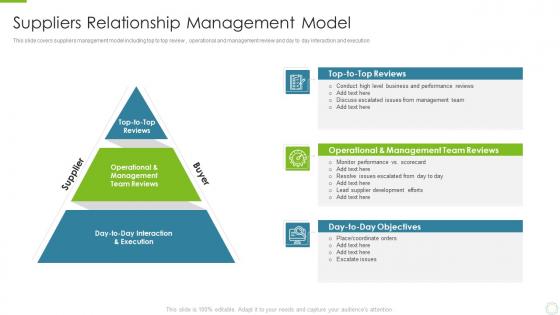
This slide covers suppliers management model including top to top review , operational and management review and day to day interaction and execution.
People who downloaded this PowerPoint presentation also viewed the following :
Suppliers relationship management model key strategies to build an effective supplier relationship with all 6 slides:
Use our Suppliers Relationship Management Model Key Strategies To Build An Effective Supplier Relationship to effectively help you save your valuable time. They are readymade to fit into any presentation structure.





FAQs for Suppliers relationship management model key strategies to build an
Effective SRM enhances supply chain performance by improving collaboration, reducing costs, ensuring quality consistency, and minimizing supply disruptions through strategic partnerships. Through better communication and integrated planning, organizations streamline procurement processes, accelerate delivery times, and enhance product quality, with many manufacturers finding that strong supplier relationships ultimately deliver competitive advantages and operational resilience.
Key metrics to evaluate SRM program success include supplier performance scores, cost savings achieved, delivery reliability rates, quality compliance percentages, and contract adherence metrics. These measurements enable organizations to streamline procurement processes, enhance vendor partnerships, and minimize supply chain risks, with many enterprises finding that strategic supplier evaluation ultimately delivers improved operational efficiency and competitive advantage.
Organizations foster better supplier collaboration through SRM practices by establishing clear communication channels, implementing joint planning processes, sharing performance metrics transparently, and creating mutual development programs. These collaborative approaches enable suppliers and buyers to align goals, streamline operations, and innovate together, with many manufacturing and retail companies finding that strategic partnerships deliver reduced costs, faster time-to-market, and enhanced competitive advantage.
Technology enhances Supplier Relationship Management through automated procurement processes, real-time performance tracking, digital contract management, predictive analytics, and integrated communication platforms. These systems streamline vendor interactions by improving transparency, reducing manual errors, and enabling data-driven decisions, with many organizations finding that digital SRM tools ultimately deliver cost savings and stronger supplier partnerships.
Businesses can measure supplier performance through key performance indicators including delivery timeliness, quality metrics, cost competitiveness, compliance rates, and responsiveness to issues. Through standardized scorecards and regular audits, organizations in manufacturing, healthcare, and retail track these metrics consistently, enabling data-driven decisions that enhance supply chain reliability and ultimately deliver competitive advantage.
Common SRM challenges include poor communication, lack of transparency, inadequate performance monitoring, contract disputes, and limited strategic alignment between partners. These obstacles can be overcome by implementing digital collaboration platforms, establishing clear KPIs and regular reviews, creating structured communication protocols, and developing strategic partnerships rather than transactional relationships, ultimately delivering enhanced supply chain resilience and competitive advantage.
SRM contributes to risk mitigation by establishing comprehensive vendor assessments, diversifying supplier bases, implementing continuous monitoring systems, and creating contingency protocols for supply disruptions. Through strategic supplier partnerships and real-time performance tracking, organizations enhance supply chain resilience, reduce dependency on single sources, and maintain operational continuity, ultimately delivering greater stability and competitive advantage in increasingly volatile markets.
Effective strategies include establishing clear communication channels, implementing collaborative planning processes, creating mutual performance metrics, offering long-term contracts with volume commitments, and investing in joint technology platforms. These approaches enable shared risk management, innovation collaboration, and supply chain transparency, with many manufacturing and retail organizations finding that strategic supplier partnerships ultimately deliver cost reductions, improved quality, and enhanced competitive positioning.
Organizations can balance cost management with supplier relationship development by implementing strategic sourcing, collaborative cost reduction initiatives, performance-based contracts, and long-term partnership agreements that align mutual interests. This approach enables suppliers and buyers to identify efficiency opportunities together, streamline processes, and share innovation benefits, ultimately delivering sustainable cost savings while strengthening relationships that drive competitive advantage in an increasingly complex supply chain environment.
Best practices for supplier contract negotiation in SRM include establishing clear performance metrics, implementing risk-sharing mechanisms, creating flexible pricing structures, defining quality standards, and building long-term partnership clauses. These approaches enhance supplier relationships by fostering transparency, ensuring mutual accountability, and enabling scalability, with many organizations finding that strategic contract frameworks ultimately deliver cost optimization and operational efficiency.
Effective communication strengthens supplier partnerships by establishing clear expectations, enabling proactive issue resolution, and fostering mutual transparency throughout the relationship lifecycle. Through regular performance reviews, collaborative planning sessions, and open feedback channels, organizations build trust, reduce operational disruptions, and enhance supplier innovation, ultimately delivering improved service quality and competitive advantage.
Cultural differences significantly impact global Supplier Relationship Management through varying communication styles, negotiation approaches, business etiquette expectations, contract interpretations, and relationship-building practices. While these differences present coordination challenges, they also create opportunities for enhanced innovation and market insights, with many multinational organizations finding that culturally-adaptive SRM strategies ultimately deliver stronger partnerships and competitive advantages.
Sustainability integration into Supplier Relationship Management involves establishing environmental criteria in vendor selection, conducting regular sustainability audits, implementing green procurement policies, setting carbon footprint reduction targets, and requiring compliance certifications. Through these practices, organizations streamline supply chain transparency, minimize environmental risks, and enhance brand reputation, with many manufacturing and retail companies finding that sustainable supplier partnerships ultimately deliver cost savings and competitive advantage.
Effective supplier conflict resolution techniques include direct communication, collaborative problem-solving, escalation protocols, performance reviews, and mediation services. These approaches streamline disputes by addressing root causes, establishing clear expectations, and maintaining transparency, with many organizations finding that proactive relationship management and structured negotiation frameworks ultimately deliver stronger partnerships and reduced operational disruptions.
Supplier feedback is crucial for SRM continuous improvement, enabling organizations to identify process inefficiencies, strengthen collaboration, enhance service delivery, and reduce operational costs. Through regular feedback mechanisms, companies in manufacturing, retail, and healthcare streamline procurement cycles, improve supplier performance metrics, and foster strategic partnerships, ultimately delivering enhanced supply chain resilience and competitive advantage in increasingly complex markets.
-
Top Quality presentations that are easily editable.
-
Out of the box and creative design.