


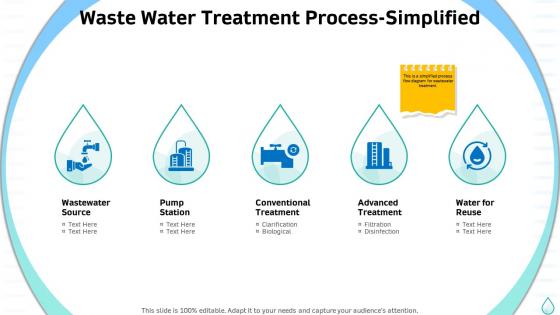
Sustainable water management waste water treatment process simplified




Try Before you Buy Download Free Sample Product
 Impress Your
 Audience
 100%
100% Editable
 Save Hours
 of Time


Our Sustainable Water Management Waste Water Treatment Process Simplified are topically designed to provide an attractive backdrop to any subject. Use them to look like a presentation pro.
People who downloaded this PowerPoint presentation also viewed the following :
Sustainable water management waste water treatment process simplified with all 6 slides:
Use our Sustainable Water Management Waste Water Treatment Process Simplified to effectively help you save your valuable time. They are readymade to fit into any presentation structure.





FAQs for Sustainable water management waste water
Honestly, the money you'll save is huge - we're talking 50% less energy use plus way fewer chemicals. Your system becomes more stable too, handles ups and downs better than the old setup. Compliance stuff gets so much easier when you're already beating the standards by miles. Oh, and you can actually make money back from it - biogas for power, reused water, that kind of thing. I'd start by looking at your current energy bills first. That's where you'll probably see the biggest difference right away.
So constructed wetlands are honestly pretty great if you've got the space. They're way cheaper to run since you're not powering pumps all day - nature just does its thing. Takes longer to process stuff and needs more land though. But man, they're solid at handling nutrients and weird flow changes. My cousin's town installed one and their maintenance bills dropped like crazy because there's barely any equipment to fix. Perfect for smaller communities, just don't try it with nasty industrial waste. Worth looking into if you're not in a rush.
Dude, tech is seriously what makes sustainable wastewater treatment actually work without breaking the bank. AI sensors now adjust chemical levels automatically, which is wild. Membrane bioreactors cut energy costs big time, and there's these oxidation processes that catch stuff regular methods totally miss. Smart monitoring even predicts when equipment's about to crap out - honestly saves so much headache. Plus you can pull useful stuff like nutrients and biogas from the waste now, which feels like magic sometimes. I'd say start with an energy audit of your current setup and see where you're bleeding money. That'll point you toward the best upgrades.
Honestly, there's actually a bunch of options out there. Federal EPA grants are solid, plus most states have revolving loan funds specifically for this stuff. Green bonds work too if your community can swing it. PPPs aren't bad either - companies love the environmental PR angle, so it's pretty mutual. You could look into adjusting utility rates or doing special assessments to fund it ongoing. Some places even sell carbon credits from methane capture (kinda cool actually). I'd start by calling your state environmental agency though - they've got people whose whole job is knowing what grants are available and when deadlines hit.
Honestly, the money's gonna be your biggest headache upfront. Most facilities can't swing the massive capital costs for sustainable tech, and retrofitting old systems? That gets pricey real quick. Regulatory stuff is constantly changing too - I swear they tighten environmental standards every other month. Training your team on new biogas or membrane tech takes forever. But here's what I'd do: start small with energy audits and pilot programs. Way better than trying to overhaul everything at once and going broke in the process.
Honestly, material choices are gonna make or break your plant's lifespan. Go for stainless steel or good polymers right away - yeah, it costs more upfront but you won't be replacing stuff constantly. Energy-efficient materials are clutch too. Like membranes that need less pumping pressure, or biofilm carriers that actually do their job well. I learned this the hard way on a project last year. Don't just look at sticker price though. Factor in lifecycle costs, energy use, and how much maintenance headache you're signing up for.
Yeah so wastewater treatment is actually huge for protecting rivers and stuff. Without it you'd get crazy algae blooms from all the nutrients, which basically suffocates fish by killing oxygen levels. Plus all the nasty chemicals and bacteria would just wreck aquatic life. The tricky part is that even decent systems can mess up if they dump too much nitrogen or phosphorus - honestly some facilities are better than others. I'd say push for the places that have advanced nutrient removal and actually test their water regularly. It's kinda like finding that sweet spot between what people need and keeping nature healthy.
Look, you can't just dump treated water on plants and call it good. Primary treatment removes the big stuff, then biological processes handle organics. After that, UV or chlorine kills pathogens. Testing is crucial - pathogens, heavy metals, nutrients. Don't skip this part like everyone else does. WHO has different standards depending on what you're growing. Leafy greens need cleaner water than fruit trees, obviously. Drip irrigation keeps water off leaves. Check your soil regularly too. Honestly? Start with ornamental plants first. Way less stress if something goes wrong, and you'll figure out your system's quirks.
Dude, the coolest stuff happening right now is engineered algae that literally makes electricity while cleaning dirty water. There's also these super advanced constructed wetlands - they're using layered bacterial communities to break down pharmaceuticals and even microplastics, which is honestly pretty wild. Bioaugmentation's another big one where you add specific bacteria to handle industrial nasties. The algae thing gets me excited because you get biofuels as a bonus. Oh, and if you're thinking about testing something out, I'd probably go with constructed wetlands first. They actually work and won't drive you crazy with maintenance.
So instead of just cleaning wastewater and dumping it, you're basically mining it for good stuff. Pull out phosphorus and nitrogen for fertilizer, capture biogas for energy, reuse greywater for irrigation - that kind of thing. Your treatment plant becomes more like a recovery center, which honestly makes way more sense than our old wasteful approach. Short sentences work. Look at what's actually in your wastewater first, then figure out who nearby might want those recovered materials. It's all about closing that loop instead of the linear dump-and-forget mentality we've been doing forever.
Honestly, there's like five big things to figure out first. Size matters - small towns vs growing suburbs need totally different setups. Budget's probably your biggest headache though, both the initial hit and ongoing costs. Local regs will basically dictate how fancy your treatment needs to be. Geography's weirdly important too - climate, soil, available space all affect what'll actually work. Oh and don't underestimate whether you've got people who can actually run the thing long-term. I'd start by mapping out where your community stands on each of these, then find tech that fits your reality.
Look, the biggest game-changer is when governments actually put money behind it - tax breaks and grants for green tech like constructed wetlands. Stricter discharge rules force better treatment methods too, though the paperwork is honestly brutal. Some places require water reuse quotas now, which makes sustainability non-negotiable. What works best? Finding policies in your area that don't just penalize bad performance but actually help facilities upgrade. The sweet spot is balancing environmental goals with what's economically realistic - otherwise nothing changes.
Okay so Singapore's NEWater thing is wild - they turn sewage into drinking water that's cleaner than most bottled stuff. Denmark has these treatment plants that actually make more energy than they use, which blows my mind. There's also this cool setup in Scotland called Living Machine where they use wetlands that look like parks but clean wastewater naturally. Oh and Orange County does something similar, pumping out 100 million gallons daily. Honestly the Singapore one might be your best starting point since they documented everything really well. Their tech is nuts.
Dude, climate change is completely screwing with wastewater planning. More crazy storms will flood your systems. Droughts mess up treatment processes. Sea levels are rising and threatening coastal plants - it's honestly pretty nuts how much is changing at once. That whole "design based on historical weather" thing? Totally useless now. You've gotta build in way more backup systems and flexibility. Oh, and weirdly enough, hotter temps can actually help biological treatment work better, but then you're spending more on cooling costs. Just make sure you're using climate projections when sizing your next upgrade.
Education's your best bet, but make it hit close to home. Show people how their daily stuff affects the water in their actual neighborhood - that connection is everything. Community gardens using treated wastewater are gold because they're visible and people can touch/see results. For younger folks, social media obviously. Older residents? Honestly, nothing beats just knocking on doors and having real conversations. School partnerships are clutch for long-term change. Oh, and always lead with what's in it for them, not doom and gloom. Multiple approaches working together is what actually moves the needle.
-
Great designs, really helpful.
-
Great product with effective design. Helped a lot in our corporate presentations. Easy to edit and stunning visuals.