

Swot analysis sports competition ppt powerpoint slides





Try Before you Buy Download Free Sample Product
 Impress Your
 Audience
 100%
100% Editable
 Save Hours
 of Time


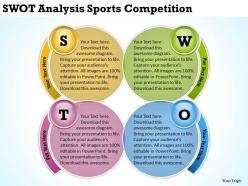
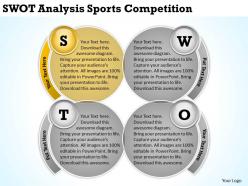
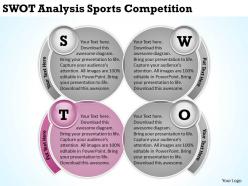
These PowerPoint slides are a unique design which can be used by professionals to represent their business management and strategies related ideas through a presentation. This PPT diagram is created with the concept of traditional SWOT analysis, which deals with internal strengths and weaknesses and external opportunities and threats of an organization. Mastering these elements will take you to a better vision and your desired objective. Different slide is used here to highlight each stage, through which gives proper emphasis on every subject. The text area shown below can easily be edited to include thoughts and ideas. The visuals of these PowerPoint slides are simple enough to be friendly with your eyes and bold enough to explain any complex business process. So now you don't need to worry about getting buy when you have such a strong companion to take you through your business management presentations. Just click on the download button and unveil the advantages this PPT slide have for you. Our SWOT Analysis Sports Competition Ppt Powerpoint Slides are really clued up. They are just the thing for your depth of knowledge.
People who downloaded this PowerPoint presentation also viewed the following :
Swot analysis sports competition ppt powerpoint slides with all 9 slides:
Our SWOT Analysis Sports Competition Ppt Powerpoint Slides have great chemistry. They make a good pair with your views.



FAQs for Swot analysis sports competition
Honestly, it usually boils down to brand recognition and how loyal your fans are. Star players and solid facilities help too. Your social media game is massive now - if you're not streaming or engaging online, you're basically letting competitors who ditched the old TV model eat your lunch. Don't put all your eggs in one basket either; teams that rely only on ticket sales or one big sponsor get screwed when things go sideways. Community ties matter way more than people think. Just figure out why fans pick you over Netflix or whatever else they could be doing instead.
Dude, bad management absolutely kills teams from the top down. When communication sucks, players get confused about what they're supposed to do. Weak leadership? Your team morale goes straight into the toilet. Plus they're probably wasting money on the wrong players instead of developing the talent they already have. I've watched teams with amazing athletes completely implode because management was a disaster. Players start doubting themselves, team chemistry dies, and suddenly you're losing games you should win easily. My advice? Figure out exactly where management is failing and fix those issues one by one. Start with how they communicate - that's usually the biggest problem.
Honestly, it's all about watching where the buzz is building. Younger crowds usually signal what's coming next - they're the ones discovering stuff on TikTok before it hits mainstream. I'd track social media chatter and streaming numbers since that's where the real action starts. Infrastructure spending is huge too. When you see new facilities or leagues forming, there's serious money behind it. Sports that mix entertainment with competition? Those blow up fast. Set up some Google alerts and follow industry reports - sounds boring but you'll catch trends way before everyone else piles in. Trust me on this one.
Yeah, sports teams get crushed during recessions. Fans stop buying tickets and jerseys first since that's non-essential spending. Corporate sponsors pull their money too, which sucks because those deals are usually the biggest revenue source. Building new stadiums becomes nearly impossible when banks aren't lending. Even TV deals can shrink if networks are hurting - though honestly, that one's less predictable. Teams that survive are the ones who saved cash during boom years and didn't put all their eggs in one basket. It's brutal but cyclical.
So brand reputation is kinda tricky - it moves around the SWOT grid depending on your situation. Strong brand? That's obviously a strength for sponsorships and fan loyalty. But reputation can tank so fast in sports, honestly it's scary. One scandal and suddenly you're dealing with a weakness that kills ticket sales. I'd also look at it as an opportunity if you're riding good momentum, or a threat when competitors have better public image than you. The real trick is being brutally honest about where your brand stands right now and watching how things shift.
Dude, fan engagement is like the golden metric for sports SWOT analysis. More engaged fans = better ticket sales, merchandise money, and those sweet sponsorship deals. Plus they create that crazy home field advantage that actually changes game outcomes. Look at your social media numbers, attendance, merch sales, fan loyalty stuff - the usual suspects. Honestly, passionate fanbases are what keep teams afloat during those brutal losing seasons (and let's be real, every team has them). The more die-hard your fans are, the more financial cushion you've got. I'd start by checking where your current engagement metrics actually stand.
Dude, tech can seriously help you spot opportunities others totally miss. Video analytics shows you opponent weaknesses, wearable sensors optimize your athletes' performance. AI even predicts game scenarios - the data insights are honestly incredible. Plus social media monitoring reveals fan sentiment and market gaps you wouldn't think of. Here's the thing though - don't go crazy trying every tool out there. Pick maybe 2-3 that actually solve your biggest problems. I'd start small, see what's working, then expand from there. Way better than overwhelming yourself with tech you'll never use properly.
Honestly, most clubs that crash and burn have the same basic problems. Money management is usually trash - they blow their budget on overpriced players who don't deliver. Leadership's another big one. Coaches get stuck in old tactics while other teams evolve past them. Youth programs get neglected too, which is so short-sighted when you think about it. Fans start feeling disconnected when clubs stop caring about the community stuff. And some places still refuse to use basic analytics in 2024, which is just stubborn at this point. If attendance or performance tanks, I'd check those areas first before looking elsewhere.
So for sponsorship opportunities in your SWOT analysis, start by figuring out which brands are already throwing money at your sport - then spot the gaps where you'd actually fit. Don't just chase the biggest checks though. Look for companies that match your vibe since those deals usually last longer and feel less forced. Equipment upgrades, better training spaces, marketing help you can't afford on your own - that stuff matters way more than people realize. Also think about sponsors who could introduce you to totally new crowds or markets. Honestly, the revenue's great but it's really about finding partners who'll actually help you grow.
Honestly, the scariest threats are scandals and performance drops. Brands will ghost you overnight if there's drama - they're terrified of bad PR. Getting injured or just aging out makes sponsors question if you're worth the money anymore. Economic stuff hits hard too, like when companies cut their whole marketing budget during recessions. Plus there's always some younger hotshot trying to take your spot. Cultural trends shift fast - what's cool today might be dead next year. Oh, and competition from newer athletes never stops. Keep backup deals brewing and negotiate clauses that protect you both when things go sideways.
Dude, sports are fighting for attention against literally everything now. Netflix drops a new season, people game for hours, everyone's doom-scrolling social media instead of watching games. It's wild how many options there are. Teams have to get creative with fan experiences and digital stuff just to compete. Sometimes they'll even drop ticket prices because - let's be real - convincing someone to leave their couch is getting harder. Like, why go to a stadium when you could binge Netflix in your pajamas? Sports organizations basically have to prove they're worth your time and money now.
Dude, community support is like having a cheat code for sports governance. You'll get way more funding - local sponsors, volunteers, political backing for new facilities. Packed stadiums make such a huge difference for attracting talent and events too. Honestly, I think the accountability aspect is underrated - communities give you real feedback that actually helps you make better decisions. You see it all the time with successful programs. They just have this momentum because everyone's invested. Map out who you're already connected with in your area, then figure out how to go deeper with those relationships. It's pretty straightforward once you start.
Honestly, the key is not putting all your eggs in one basket. Build up some emergency cash first - injuries and cancelled games happen way more than people think. Don't rely just on ticket sales or sponsorships for income. Multiple revenue streams are your friend here. Invest in injury prevention programs and developing backup talent. Most teams totally skip this boring prep work until disaster strikes. Cross-train your staff too - it's a lifesaver when someone's out. Pick your biggest 2-3 threats and make actual action plans for each one. Way better than trying to prepare for everything at once.
Look, social media is wild for sports brands. It'll boost your wins but also blast your mess-ups everywhere. Good stuff like fan connections and player personalities can blow up in the best way. Bad news though? One dumb tweet or scandal spreads faster than you can blink - Twitter's brutal like that. Plus now you're stuck needing content 24/7, which honestly sounds exhausting. I'd say check your accounts monthly to see what's working. And definitely have some kind of damage control plan ready because something will go wrong eventually.
Dude, trying new training methods is honestly what separates winners from everyone else. Your athletes get better faster when you're using VR sims, tracking their biometrics, or analyzing movement with AI tools. Meanwhile other teams are stuck doing the same old stuff. Recovery tech and personalized programs also keep your people healthy while competitors deal with injuries. Sleep optimization is huge now too - teams focusing on that are crushing it. I've seen it work firsthand. Just keep testing different approaches and actually measure what's working. You'll stay ahead of whoever you're up against.
-
Best Representation of topics, really appreciable.
-
Wonderful templates design to use in business meetings.