


System integration template process ppt infographics images





Try Before you Buy Download Free Sample Product
 Impress Your
 Audience
 100%
100% Editable
 Save Hours
 of Time


Our System Integration Template Process Ppt Infographics Images are topically designed to provide an attractive backdrop to any subject. Use them to look like a presentation pro.
People who downloaded this PowerPoint presentation also viewed the following :
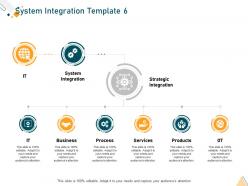
System integration template process ppt infographics images with all 2 slides:
Use our System Integration Template Process Ppt Infographics Images to effectively help you save your valuable time. They are readymade to fit into any presentation structure.

FAQs for System integration template process
Okay so you'll want five main things for system integration. Start with mapping your data flows - seriously, figure out which systems talk to each other first or you'll hate yourself later. Then build solid error handling with rollback plans because stuff always breaks at 2am. Testing frameworks are huge too - unit tests, integration tests, the whole deal. Don't forget proper API documentation and dependency lists (boring but necessary). Oh and set up monitoring so you catch problems before your users start calling. Honestly the data mapping part will save you the most pain upfront.
So the template basically forces you to connect every integration back to actual business goals and KPIs upfront. You can't skip ahead without defining how each data flow supports your bigger objectives. What's smart is the built-in checkpoints - stakeholders have to approve that tech specs still match business needs. Honestly, this stops that annoying thing where IT builds something perfect but totally useless. Oh, and use those checkpoint meetings to really push back on assumptions. Keep asking "why does the business actually need this?" Trust me on this one.
Honestly, automation is a total lifesaver for integration templates. All that boring stuff like data validation and field mapping? Gone. Your error rate drops by like 80% because everything auto-fills consistently. The workflow triggers are clutch too - hit a milestone and boom, your whole team gets notified without anyone having to babysit the process. But here's what really sold me: you can just grab proven patterns from past projects instead of rebuilding everything. Start with whatever integrations you do most often. Trust me, you'll wonder why you waited so long.
Ugh, data mapping is always a mess - nothing ever lines up the way it should. API versions will definitely bite you, especially when legacy systems are involved (they're the absolute worst). Authentication between different platforms? Total headache. Stakeholders love throwing in "quick" additions halfway through too. Testing gets crazy complicated with multiple environments that don't actually match production. Honestly? Pin down requirements super early, give yourself way more troubleshooting time than you think you need, and definitely have backup plans ready to go.
So basically, templates are just starting points - don't treat them like they're set in stone. Look at what doesn't work for your project first. Maybe the error handling is way too complicated, or the data validation is doing too much? Just tweak those parts. Honestly, I've seen people waste so much time trying to force templates to fit perfectly when they should just modify them. Update your workflows, data mapping, and API settings to match what you actually need. Oh, and definitely version control everything so your team can reuse your improvements later. The documentation should probably get updated too, but that's the boring part.
Documentation is seriously your lifeline here. Track your requirements, API specs, config changes - all of it. I can't tell you how many times I've watched integrations completely implode because someone thought they'd "remember everything later" (spoiler: they didn't). You'll need those troubleshooting guides when you're pulling your hair out at midnight trying to figure out why something broke. Plus when Sarah from your team inevitably leaves for that startup job, you won't be scrambling to recreate her entire setup from memory. Just start writing stuff down from day one, even the obvious stuff.
Get your stakeholders in early but don't drag them to every single meeting - that's how you kill productivity. Figure out who actually needs to be where and map their check-in points ahead of time. Regular touchpoints work way better than surprise "hey can you review this by tomorrow" requests. Dashboards are clutch for keeping everyone updated without constant status meetings. Here's the thing though - make sure they can actually change stuff when they give feedback, not just nod along to decisions you've already made. I'd start mapping out your core people for the first template round and get those review sessions scheduled now while you're thinking about it.
Start with unit testing each template component separately, then move to integration tests. Most people screw this up by using super basic test data - make yours match production scenarios as much as possible. Automated checks are your friend for data mapping, error handling, and rollbacks. I always throw in some manual smoke tests too because automation misses the weirdest stuff sometimes. Test both when things work and when they break. Oh, and definitely validate everything in staging first - learned that one the hard way. Your staging environment should mirror production or you're basically flying blind.
So you want your integration templates to actually improve instead of just sitting there collecting dust? Set up regular feedback sessions - like quarterly check-ins where you actually ask the teams using them what sucks. The people doing the daily grind usually know exactly what's broken or missing. Don't just wait around hoping someone will complain. Make it systematic. I've seen too many companies create these "perfect" templates that nobody can actually use in practice. Short feedback cycles mean you'll catch the real pain points and keep updating based on how teams actually work, not how you think they should work.
Postman or Insomnia are solid picks for API docs and testing. If you've got the budget, MuleSoft or Azure Logic Apps work great for bigger setups. But honestly? I've watched teams blow way too much time chasing shiny tools when a basic JSON schema would've done the job. You'll probably want something for workflow orchestration too - Apache Airflow's pretty decent, or just stick with GitHub Actions if you're keeping it simple. The real trick is using stuff your team already knows. No point grabbing the "perfect" tool if everyone's gonna struggle with it for weeks.
Track your integration times and error rates first - that's where you'll see if templates actually speed things up. Component reuse rates matter too. Business-wise, check user satisfaction and whether you're hitting deadlines better now. Honestly, the best metric I've found is how fast new people can learn your template system. That tells you everything about whether it's overcomplicated or not. Pick maybe 3-4 metrics that match whatever's been bugging you most, then add more later if needed.
So instead of building one giant integration plan upfront, Agile lets you break everything into smaller chunks. You test connections bit by bit each sprint and tweak your templates based on what actually works in practice. Game changer, honestly - you catch problems way earlier this way. Plus you're getting constant feedback from people using the system, so your templates end up matching real needs instead of just what looked good on paper. Oh, and treat your integration templates like regular backlog items that get updated each sprint. Start with your most critical system connections first, obviously.
Start with the basics - authentication, encryption, and who gets access to what. Input validation is where hackers love to slip in, so double-check everything passing between your systems. API security matters a ton too. Set up proper tokens and rate limiting. I know logging sounds super tedious, but trust me, you'll need those audit trails when things go sideways (and they will). Network segmentation helps isolate everything. Do a security check on each connection point first - way easier to catch problems early than deal with a breach later. That assessment will show you exactly where you're vulnerable.
Honestly, templates work because they force everyone to actually show up and talk. You get these built-in checkpoints where IT, ops, and business folks have to sit down together and hash out requirements. Joint testing phases, shared docs - all that stuff becomes non-negotiable. I've seen it break down silos better than most other approaches, which is saying something. Clear ownership helps too so people aren't constantly stepping on each other. My advice? Map out your key players first, then bake those collaboration moments right into your timeline from the start. Works way better than hoping people will just figure it out.
Track how often teams actually use your templates - if they're avoiding them, that's a red flag right there. Measure integration time and how much faster deployments get. Error rates matter too since good templates should cut down on mistakes. I'd also watch maintenance overhead because constantly fixing templates defeats the whole point. Set up a monthly dashboard (nothing fancy) to catch trends early. Oh, and don't forget deployment success rates from template selection to go-live. Honestly, the adoption metric tells you everything - people won't use garbage templates no matter how much you push them.
-
Unique and attractive product design.
-
Understandable and informative presentation.
-
Appreciate the research and its presentable format.
-
Out of the box and creative design.