


Talent Management And Assessment Flowchart




Try Before you Buy Download Free Sample Product
 Impress Your
 Audience
 100%
100% Editable
 Save Hours
 of Time


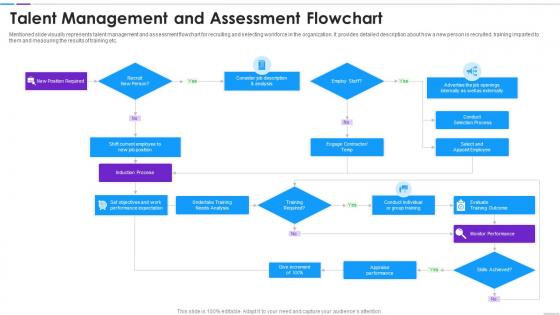
Mentioned slide visually represents talent management and assessment flowchart for recruiting and selecting workforce in the organization. It provides detailed description about how a new person is recruited, training imparted to them and measuring the results of training etc.
People who downloaded this PowerPoint presentation also viewed the following :
Talent Management And Assessment Flowchart with all 6 slides:
Use our Talent Management And Assessment Flowchart to effectively help you save your valuable time. They are readymade to fit into any presentation structure.





FAQs for Talent Management
So you'll need the basics: recruiting, employee development, performance reviews, and succession planning. Oh, and retention strategies - because people will leave anyway, but at least try to keep the good ones longer. Start with solid hiring processes to get the right people. Then focus on training programs and career paths so they don't get bored. Make your performance reviews actually matter instead of those pointless annual things everyone hates. Succession planning is huge too - figure out who can step up when your star player quits. I'd audit what you're missing first, then build from there.
Start with your solid performers who show curiosity and actually adapt when things change. Give them stretch projects - stuff outside their usual scope. Honestly, the best candidates aren't always the ones dominating every meeting. Some fly under the radar completely. Regular one-on-ones help you spot who's genuinely ambitious versus who's just coasting. Set up mentoring and get them face time with senior people. Oh, and don't skip the development plans with real milestones. Shows you're serious about their growth, not just talking about it.
Honestly, culture is everything when it comes to managing talent. If your company values don't match what employees actually experience, you're basically planting seeds in concrete. The right culture attracts better candidates from the start. New hires adapt faster when they fit the environment. Your best people will actually want to stay and grow instead of jumping ship every two years - which, let's be real, saves you tons of headaches. Look at what your workplace is really like day-to-day, not just what's written on your website.
Honestly, tech can make your whole hiring process way smoother. AI recruiting tools will screen candidates super fast, and performance platforms track how your people are growing without you having to babysit everything. There's analytics that'll predict who might quit soon - game changer for keeping good people around. Learning management systems handle training automatically too. Oh, and using Slack or Teams for feedback beats those weird once-a-year review meetings by a mile. Don't go crazy buying every tool though. Pick 2-3 things that fix your actual problems.
Track retention rates, time-to-fill, and internal promotions first - those tell you if stuff's actually working. Engagement scores are good too, though honestly they can be pretty subjective depending on who's filling them out. Don't forget succession planning coverage and training completion rates. Here's the thing though: pick maybe 3-4 metrics that match what your company actually cares about. You can't measure everything without going crazy. Set up a basic dashboard and check it quarterly. That's frequent enough to catch trends but not so often you're constantly tweaking things for no reason.
Honestly, it changes everything about how you hire and manage people. You can't just post jobs in the same places anymore - gotta expand where you're looking for talent. Job descriptions need a complete overhaul too (some of ours were borderline cringe when I really looked at them). Mix up your interview panels, ditch the cookie-cutter career paths, and actually measure if people feel included - not just headcount diversity. The tricky part? Most companies have blind spots they don't even see. Start with auditing what you're doing now. Trust me, you'll find stuff that makes you go "yikes, we really do that?"
Send them a welcome package before they even start - nobody wants to walk in completely clueless. I'd do a 30-60-90 day plan mixing training with actual work and relationship stuff. The relationship piece is honestly where most companies screw up. Give them a buddy who isn't their boss for random questions and finding the bathroom. Set up meetings with people they'll work with regularly. Check in often but don't hover - you want them confident, not stressed. Oh, and definitely do a real check-in at 30 days to catch anything you missed.
Honestly, most companies totally blow this - they treat performance reviews like some annoying HR ritual instead of actually using them for talent planning. What you want to do is focus on skills that matter for future roles, not just how someone's doing right now. Map your review questions to the leadership stuff you actually care about and career paths people want. Then use that data to spot your high-potential people and figure out where you've got skill gaps. I mean, it seems obvious but you'd be surprised how many places miss it! The whole point is turning reviews into pipeline intelligence instead of just looking backward at what already happened.
Honestly, development programs are like magic for keeping good people around. Your team will actually want to stay when they see you're investing in their future - way better than constantly hiring new folks (which gets expensive fast). I'd start by just asking what skills they want to learn. Build from there. Training and mentoring shows there's room to grow at your company. You'll spot your future leaders early too, which is pretty clutch for succession planning.
Look, spot your high-potential people early and throw them into stretch roles across different departments. Pair them with solid mentors - and honestly, don't just pick the obvious stars. Some of my best hires turned out to be the quiet ones nobody noticed at first. Regular leadership training helps too, covering both technical stuff and people skills. The trick is actually planning for this instead of scrambling when someone quits. I'd start sketching out succession plans now and check them every few months. Way better than panicking later when you're stuck.
Ugh, getting leadership on board is the worst part honestly. They'll say talent development matters but then give you zero budget to actually do anything meaningful. You're constantly putting out fires instead of focusing on the bigger picture stuff. Measuring ROI is such a pain too - like how do you even quantify someone becoming a better leader? Takes forever to see real results. Half the managers will nod along in meetings then completely ignore whatever development plans you put together. I'd say start super small with pilot programs. Get a few quick wins under your belt first, then you'll have something concrete to show when asking for more resources.
Honestly, feedback systems are total game-changers because you finally get real data instead of just winging it with promotions and performance stuff. You can spot who's crushing it early and catch problems before they blow up. 360-degree feedback is amazing when people are actually honest – though let's be real, sometimes they're not. Monthly check-ins with good questions work great, but here's the thing: your managers need to actually DO something with all that info. Otherwise you're just collecting data for no reason. It helps you build those personalized development paths people actually want too.
So regular HR is basically keeping things running - payroll, compliance, all that boring but necessary stuff. Talent management is way different though. You're actually thinking ahead, like mapping out where your best people could be in 2-3 years and building paths to get them there. It's more strategic, I guess? Instead of just reacting when someone quits, you're planning succession and spotting high-potential folks early. HR keeps the lights on. Talent management designs the whole electrical grid for what's coming next. Honestly, it's way more interesting work if you ask me.
Remote work totally changes talent management, not gonna lie. Now you can hire from anywhere instead of just your city - which is amazing for finding niche skills. Onboarding gets tricky though since people can't just learn by watching coworkers. You'll focus way more on actual results rather than hours worked. Communication tools become super important. Culture-building takes way more effort when everyone's scattered. Oh, and definitely look at your current processes - most probably don't need face-to-face interaction anyway. It's honestly liberating once you adjust.
Honestly, start with exit interviews to figure out why people are actually leaving - that's your goldmine right there. Money matters big time though. If your salary bands aren't competitive, people will bolt for 20% more somewhere else. But here's the thing - it's not just about cash. Clear career paths make a huge difference, plus investing in training shows people they have a future with you. Oh, and flexible work arrangements are basically non-negotiable now. Sometimes it's the small culture stuff that breaks the deal too. Fix those specific pain points first.
-
Informative design.
-
Innovative and creative templates with high-quality designs. Helped me with my presentation as the slides were easy to edit.