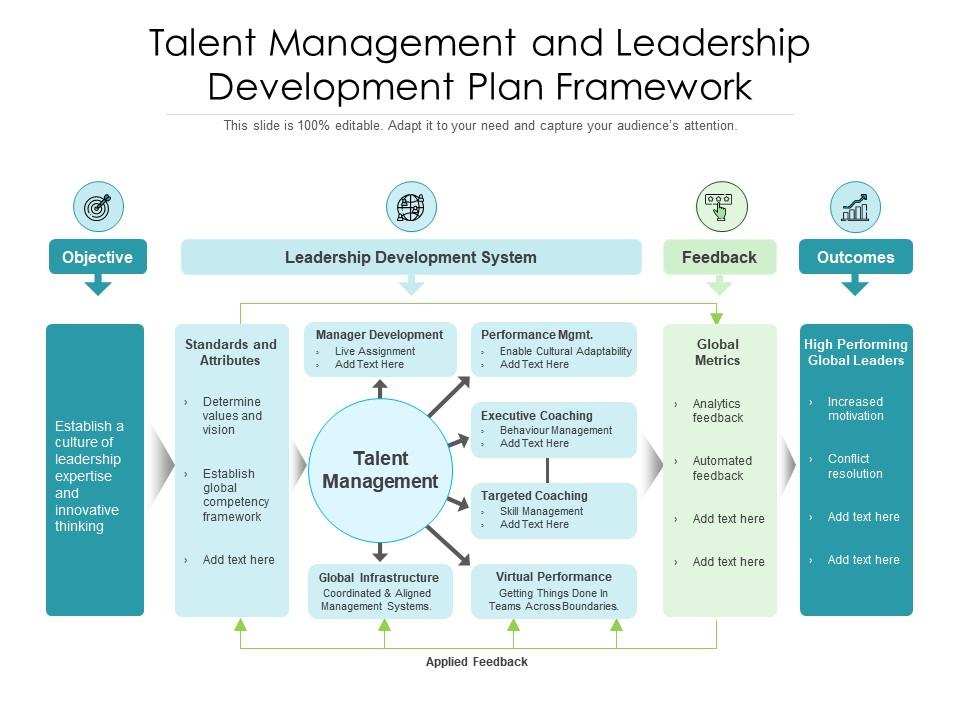
Talent management and leadership development plan framework
Try Before you Buy Download Free Sample Product
Audience
Editable
of Time
Our Talent Management And Leadership Development Plan Framework are topically designed to provide an attractive backdrop to any subject. Use them to look like a presentation pro.
People who downloaded this PowerPoint presentation also viewed the following :
Talent management and leadership development plan framework with all 2 slides:
Use our Talent Management And Leadership Development Plan Framework to effectively help you save your valuable time. They are readymade to fit into any presentation structure.
FAQs for Talent management and leadership
Okay so you need four main things: getting good people, helping them grow, keeping them around, and having backup plans for important roles. Performance management is what connects everything - feedback, goals, celebrating wins. Most places screw this up because they treat each piece separately instead of as one system. Like, your development programs should feed into succession planning, you know? Short sentences work too. Start by figuring out how these pieces actually connect at your company, then build from there.
Start with regular performance reviews and 360 feedback - that's your foundation. Skills assessments work too, but honestly? Stretch assignments tell you way more about someone's real potential. Give people challenging projects they haven't done before and watch how they handle it. I'd also pay attention during team meetings and one-on-ones since that's when people show their actual problem-solving skills. Oh, and track who adapts quickly to changes - those are usually your high-potential folks. Map out what skills you actually need first, then pick maybe 2-3 methods that won't break your budget.
Honestly, tech makes everything so much smoother. You can automate the boring recruiting stuff, track how people are doing without awkward check-ins, and AI actually tells you who's thinking about jumping ship. The data is crazy good - no more wild guessing about what your team needs. I've seen people use Workday or BambooHR to keep everything in one place instead of drowning in random spreadsheets (which, let's be real, is the worst). Just don't go overboard at first. Pick something simple like digitizing performance reviews, then build from there. Way less overwhelming that way.
Honestly, it's all about showing people you give a damn about their future. Clear development paths make a huge difference - nobody wants to feel stuck. Invest in their skills, give real feedback, not just the generic stuff. People will stick around when they see actual opportunity ahead of them. Stretch assignments work great, mentorship too. Recognition goes way further than most managers think (I've seen people quit over feeling invisible). The trick is being deliberate about it instead of just crossing your fingers. Oh, and actually talk to your team about what they want career-wise. Sounds obvious but you'd be surprised how rarely it happens.
Track your retention rates and how long it takes to fill key positions - that's where you'll see if people actually want to stay. Internal promotions are huge too. Performance scores and engagement surveys give you decent data, but honestly? Exit interviews tell you what's really going wrong. Oh, and check if you have people ready to step into critical roles when someone leaves. Learning program completion is worth watching too. Here's the thing though - don't go crazy tracking everything. Pick maybe 3-4 metrics that match your biggest headaches. Get consistent with measuring first, perfect the fancy reports later.
Honestly, D&I just makes hiring so much smarter. You're tapping into way more talent instead of the usual suspects from the same networks. Retention gets better too – people actually stick around when they don't feel like the odd one out. The performance data is solid on diverse teams, though I'm sure you've heard that already. Short sentences work. But flowing ones help break up the rhythm naturally. I'd start by looking at your job posts and interview process for bias. Those are usually the biggest culprits where good candidates slip through cracks you didn't even know existed.
Look for people who consistently perform well but also show they're growing. Initiative is huge - they volunteer for tough projects and don't wait to be asked. Quick adaptation to changes is another big one. 360-degree feedback helps a ton, plus see how they handle stretch assignments. Honestly, the best candidates usually help others succeed too, which I think says everything about their character. Track their learning agility and notice whose names keep popping up in succession planning talks. Set up regular talent reviews with your team instead of just going with gut instinct all the time.
Figure out what your company's actually trying to do first - sounds basic but you'd be shocked how many places skip this. Growing revenue? Hire for sales and customer roles. Want more innovation? Go after creative problem-solvers. Then make everything else match up - your reviews, training programs, all of it. I swear, most companies just hire randomly and hope it works out. Sit down with leadership every few months and ask if you're building the right team for where you're headed. That quarterly check-in thing has saved my butt more times than I can count.
Ditch those awful annual reviews and start doing regular check-ins instead. Weekly or bi-weekly works great. Focus on specific stuff they actually did rather than weird personality comments - like "your risk analysis in slide 3 was spot-on" instead of just "nice work." Make it go both ways too. Ask what they need from you and actually mean it. Honestly, most managers are terrible at this part. Track these conversations however you want - I use a simple doc but whatever works. The timing matters way more than people think. Give feedback right when things happen, not months later.
Start by figuring out which roles would totally screw you over if they emptied tomorrow - those are your priorities. Look 2-3 levels down from those spots and pick your high-potential people. Honestly, most companies wait way too long on this stuff. Create development plans for each candidate, then do quarterly check-ins to see how they're progressing. Get your current people involved in mentoring too. I'd map out your whole org chart first though, makes it way easier to visualize gaps. Think of it like insurance - hopefully you won't need it fast, but you'll be so glad it's there.
Honestly, most companies screw this up by doing generic skills training instead of connecting L&D directly to career paths. You need personalized development plans that actually map to roles people want - not just random workshops. I'd focus on stretch assignments and cross-functional projects since those give real experience alongside formal learning. Mentoring programs work great too. The trick is making all this development visible to leadership so they can spot rising talent. Oh, and definitely track who's actively developing themselves - those are the people you'll want to promote first.
The biggest pain points? Getting new people up to speed when they're not sitting next to anyone, plus keeping that team vibe alive. Development stuff gets weird too - like, you miss those random conversations where someone mentions they want to learn Python or whatever. Performance reviews become this whole thing since you can't just pop by someone's desk. Out of sight, out of mind is totally real with promotions. You've got to overcompensate by scheduling way more check-ins and actually writing down what people accomplish. Otherwise remote folks get screwed when it's time for raises. Structured onboarding helps too, but honestly it takes way more effort than in-person.
Honestly, start thinking about this stuff from day one - don't just hire people to fill holes. Map out how external hires actually fit into your career development framework so they're not getting screwed over compared to internal people. The onboarding piece is huge too. Connect them to mentors and real career paths, not just some generic orientation. Here's the thing though - you've gotta think bigger picture about skill mix and culture fit. I've seen too many companies just panic-hire and then wonder why retention sucks. Treat external recruiting like it's feeding your whole talent pipeline, not solving this week's crisis.
Think of employer branding as what people actually think about working at your place. When you've got a solid reputation, way more qualified people apply - we're talking up to 50% more. Plus hiring gets cheaper because candidates aren't just chasing the biggest paycheck. Look at companies like Google or Apple - half the reason everyone wants to work there is the brand itself. Without that pull, you're stuck in bidding wars over salary (which honestly gets old fast). Best move? Show off real employee stories on LinkedIn and Glassdoor instead of that corporate fluff nobody believes anyway.
Honestly, mentorship programs work because they're way more personal than regular training. Your senior people get to share what they actually know about the company while newer folks build real skills and confidence. People stick around longer when someone's genuinely invested in them - I've seen retention rates go up every time. Those regular coffee chats are where the real magic happens, you know? Problems get solved, career stuff becomes clearer. Just start simple though - match up willing senior people with eager junior ones. Give them some basic structure but don't overdo it. Let relationships happen naturally.
-
It saves your time and decrease your efforts in half.
-
Innovative and Colorful designs.
-
Visually stunning presentation, love the content.
-
Qualitative and comprehensive slides.
-
Use of icon with content is very relateable, informative and appealing.
-
Great designs, really helpful.
-
Awesome presentation, really professional and easy to edit.
-
Really like the color and design of the presentation.
-
Perfect template with attractive color combination.