


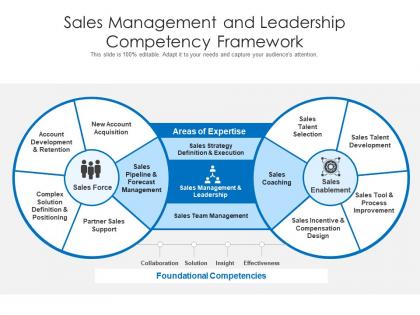
Sales management and leadership competency framework




Try Before you Buy Download Free Sample Product
 Impress Your
 Audience
 100%
100% Editable
 Save Hours
 of Time


Our Sales Management And Leadership Competency Framework are topically designed to provide an attractive backdrop to any subject. Use them to look like a presentation pro.
People who downloaded this PowerPoint presentation also viewed the following :
Sales management and leadership competency framework with all 2 slides:
Use our Sales Management And Leadership Competency Framework to effectively help you save your valuable time. They are readymade to fit into any presentation structure.
FAQs for Sales management and
Honestly, the best sales leaders I've seen do three things really well. First - they're big picture thinkers who actually coach their people instead of micromanaging. Second, they don't just talk the talk, they can still close deals themselves. But here's what kills most of them: you can be amazing with spreadsheets and forecasts, but if you can't read people or make your team feel safe to screw up and learn, you're toast. The good ones fight for their team when leadership gets stupid about resources. Oh, and they spend way more time developing people than doing the actual selling work. Are you coaching or just doing everything yourself?
Honestly, you can't just copy-paste the same framework everywhere - that's where most teams screw up. Map out how your customers actually buy first. B2B tech? You're looking at longer relationship stuff, consultative approaches. Retail's completely different - quick conversions, volume focus. The core principles stay the same though (coaching, accountability, using your data). But your tactics and KPIs need to match your industry's sales cycle. I've watched teams crash and burn trying to force square pegs into round holes. Start with your typical customer journey, then build your framework around those specific touchpoints.
Look, emotional intelligence is what makes or breaks sales leaders. Good managers just hit numbers - great ones actually get their people. You've got to read your team's moods, bounce back from rejection, and switch up how you talk to different personalities. Sales is emotional anyway (people buy with their hearts, then justify with their heads). I swear the best sales leaders have this sixth sense - they know someone's having a rough patch before anyone says a word. My advice? Actually listen when your team vents instead of jumping straight into fix-it mode. That one thing will change everything.
Honestly, just focus on what actually matters - pipeline velocity, conversion rates by stage, and how your reps are trending. Most dashboard metrics are total fluff. Activity levels and deal speed are way more useful than just looking at closed revenue after the fact. Your CRM probably has most of this data already, so start there. Then you can get fancy with call analytics later if you want. The whole point is catching problems early - like when deals are getting stuck or someone needs help. Trust me, spotting these patterns before they become disasters will save you so much headache.
Start with super clear goals for each person - none of that vague "do better" stuff. Weekly scorecards work great for keeping performance visible. One-on-ones are honestly where the magic happens, even when you're swamped (especially then). Don't just track the wins either - call out when people miss the mark and actually follow through with consequences. Oh, and this might sound obvious but own your screw-ups as the manager. People notice when you make excuses vs. taking responsibility. Recognition for good work doesn't hurt either.
Look, good communication is honestly what separates decent sales managers from great ones. Your team will perform way better when you actually listen to them and give clear direction. I've noticed the best leaders don't try to sugarcoat everything - being upfront about challenges builds way more trust than pretending everything's perfect. Each rep responds differently though, so you've got to pay attention to how they like getting feedback. Some want it straight, others need more encouragement. Start watching how your people communicate and match their style. It makes a huge difference in results.
Track quota attainment and pipeline velocity first - those don't lie. Rep ramp time is huge too since it shows if you're actually developing people. Activity stuff like calls and meetings? Yeah, monitor them but honestly they're pretty useless if your team's just checking boxes. Win rates and deal size tell you if skills are improving. Oh, and here's what I learned the hard way - pick maybe 3 KPIs tops. Any more and you'll drive yourself crazy. Review weekly so you can fix things fast instead of waiting until it's too late.
Honestly, you've gotta map out who your top performers are first and figure out what skills they're missing. Don't just do those boring performance reviews - have actual coaching conversations about growth. Cross-training is huge too, get them working different accounts so they're not stuck in one lane. Here's the thing though - most managers are too scared to give people stretch assignments before they feel "ready." That's actually backwards because that's where the real learning happens. Oh, and be consistent with the time investment. I know it sounds obvious but so many people skip this when things get hectic.
Dude, honestly? Just be real with your team about what's happening. Don't disappear when things get messy - that's when people freak out the most. Have those weekly check-ins where you're like "yeah, this sucks BUT here's what we're doing about it." Keep doing your one-on-ones too, people need to vent. Celebrate the small stuff since big wins might not happen right now. Show them you're handling the stress well - they'll mirror your energy. Oh and listen, actually listen when they tell you what's bugging them. Action plans help way more than just complaining about problems.
Start with your hiring - build diverse recruitment pipelines and track representation like any other metric. Create mentorship programs that actually matter. The key thing? Don't let it feel like corporate box-checking because your team will see right through that. I'd focus on psychological safety first - make sure everyone speaks up during pipeline reviews. Set clear expectations about inclusive language and how people collaborate. Honestly, the best approach is weaving D&I into your regular coaching conversations and performance reviews. That way it becomes natural leadership, not something awkward you tack on later.
Honestly? Skip most of the classroom training - it's pretty useless. What actually works is throwing your best people into real situations. Rotate them through different territories, let them manage big accounts or mentor newbies. Pair them with solid leaders they can shadow and learn from. Give them projects that'll make them sweat a little (in a good way). Monthly check-ins help too, but focus on leadership growth, not just their numbers. Oh, and start this whole process way before you're scrambling to fill positions. You'll thank yourself later.
Here's what's worked for me - make mentorship part of your actual leadership pipeline, not some side thing. Take your best reps and pair them with people moving up. Honestly, the formal structure is what makes it stick. Set real goals around conversion rates or whatever you're trying to improve. Check-ins need to happen regularly or it falls apart. Your top performers actually love this stuff because it keeps them engaged while you're building future leaders. I'd start with maybe 2-3 pairs first. Don't go crazy right away.
Honestly? Start with a solid CRM like Salesforce or HubSpot - you need that pipeline visibility first. Then check out Gong or Chorus for call recording and coaching insights. The AI stuff they do is pretty wild actually. Basic tools matter too though - we use Slack constantly for quick team check-ins, and something like Monday.com helps track bigger projects. I'd probably avoid going crazy with too many tools at once. Build your CRM foundation, then add coaching tools where your team's struggling most. Oh, and the conversation analysis features will save you hours of listening to calls manually.
Think of quarterly targets as stepping stones, not isolated fights. Monthly check-ins are your friend - track pipeline health while making sure your team's building skills for next year. Focus on deals that create strategic accounts instead of grabbing whatever revenue you can find. Honestly, this approach saves you so much headache later. I screwed this up once and hit Q3 numbers but completely burned out my top performers. Set up comp plans so hitting this quarter actually feeds into long-term growth. Short-term wins should build toward something bigger, not work against it.
Don't micromanage - coach instead. Also stop obsessing over numbers without figuring out WHY someone's struggling. Oh, and here's a big one: just because someone crushes their quota doesn't mean they'll be a good manager. I've seen that backfire so many times. You need to actually train them on leadership stuff first. Inconsistent coaching kills motivation too. Set clear expectations from day one and stick to regular one-on-ones where you're genuinely listening. Celebrate the wins! People forget that part. Having solid processes helps, but honestly the listening thing is huge.
-
Top Quality presentations that are easily editable.
-
Excellent work done on template design and graphics.
-
Enough space for editing and adding your own content.
-
Enough space for editing and adding your own content.