


Leadership competencies framework





Try Before you Buy Download Free Sample Product
 Impress Your
 Audience
 100%
100% Editable
 Save Hours
 of Time


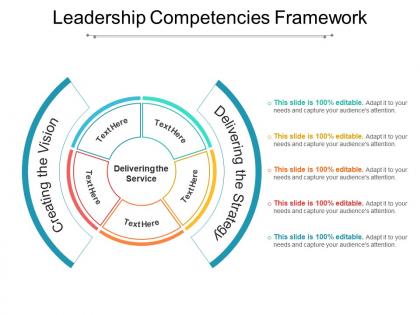
Drive new leadership competencies and meet the future business trends with the aid of the Leadership Competencies Framework presentation slide. You can explain how to create a good team using skills management PPT slideshow. With the help of a leadership development PowerPoint graphic, you can motivate your staff members on their performance and work with them collaboratively. Take the help of the competency architecture presentation template to build new strategies or plans that increase the revenue of your business. Employ the leadership behavior PowerPoint layout to gather efficient knowledge that helps you to run the organization more smoothly. You can be a good leader and derive new ways to solve the problems with the help of the leadership competencies PPT visual. Included here are various high-grade icons with which you can make your presentation reliable and engaging. You can outline the numerous duties of a leader and meet the business goals by downloading our ready-to-use leadership skills PPT theme.
People who downloaded this PowerPoint presentation also viewed the following :
Leadership competencies framework with all 5 slides:
Be competitive with our Leadership Competencies Framework. They facilitate an aggressive campaign.


FAQs for
Honestly? The best leaders I've seen are just really good at reading people and rolling with changes. Emotional intelligence is huge - like actually listening before jumping in with solutions. They focus on growing their team instead of just checking boxes, which seems obvious but so many managers miss this. Communication matters obviously, but it's more about being clear and purposeful when you do speak. Oh, and they can make hard calls without overthinking everything to death. I'd say watch how you handle stress and whether you're actually helping your people get better at their jobs.
Honestly, emotional intelligence is a game changer for leadership. You start picking up on when Sarah needs a pep talk versus when she just wants to work through stuff alone - makes such a difference. Managing your own emotions better means you're not dumping your stress on everyone else too. I've watched leaders completely flip their team's energy just by tuning into people more. The trick is actually listening and asking how folks are doing beyond just work stuff. Also helps that you won't react as much when things get chaotic.
Look, communication is basically the skill that unlocks everything else in leadership. You can't influence people or resolve conflicts if you can't get your point across, right? Plus even if you're super smart technically, it doesn't matter if you can't explain stuff to your team or help them make decisions with it. Good communication helps you motivate people and build trust way faster. Oh and it's huge for getting everyone aligned on goals - which honestly is half the battle most days. Start by listening more than talking (harder than it sounds) and practice breaking down complex ideas into simple terms.
Oh totally, culture changes everything about leading global teams. I bombed so hard early on trying to be super direct with my Japanese colleagues - yikes. Germans want you straight to the point, but in high-context cultures you've got to build relationships first and be way more subtle. Your feedback style needs to shift too depending on who you're talking to. Some people want that blunt honesty, others need it wrapped in like three layers of politeness. Honestly just ask your team members what works for them - saves so much awkwardness later.
Honestly, 360-degree feedback is probably your strongest move here. Gets input from bosses, peers, and their direct reports - way more complete picture. You could also try personality tests like DISC or Myers-Briggs, though some people get weirdly obsessed with those labels afterwards lol. Behavioral interviews work well too. Oh, and simulation exercises are cool because you actually watch them lead in real time instead of just talking about it. Start with the 360 feedback though - it's thorough and feels fair to everyone involved.
Honestly, you gotta practice under fake pressure first - like those simulation things where it feels real but isn't. Build yourself a quick mental checklist: grab whatever info you can, spot 2-3 decent options, then go with whichever one won't totally screw you over. Try timing yourself on small stuff - 5 minutes max. Sounds dumb but most people freeze because they've literally never practiced deciding fast. Here's the thing though - a pretty good decision right now almost always beats waiting around for the perfect one. That's just how leadership works, you know?
Honestly, adaptability is what separates good leaders from the ones who get steamrolled by change. Your team needs to see you can roll with new tech and shift strategies when things get weird (and let's be real, things always get weird). People won't follow someone stuck in the past - like, imagine still managing like it's 2019? Yikes. The best leaders I know actually get excited about change instead of fighting it. Start practicing with small pivots now. It's like going to the gym but for your flexibility as a leader. When the big stuff hits, you'll be ready.
Honestly, a good mentor is like having cheat codes for leadership. They'll call out your blind spots and give you real feedback when you mess up. I learned more from my mentor's war stories than any leadership book - hearing how they handled similar situations was gold. The tricky part? Don't just find someone who'll pat you on the back. You want someone who demonstrates skills you actually want to develop. Come with specific scenarios to talk through, maybe practice those awkward conversations you're dreading. They'll also push you toward stretch assignments that build real confidence.
Honestly? Communication is everything - you've gotta overcommunicate rather than leave people guessing. Can't just pop by someone's desk anymore, so those regular one-on-ones become your lifeline. Trust me, it's weird at first. Digital body language matters way more than you'd think when you can't physically read the room. Focus on actual results instead of micromanaging hours (nobody wants that). You'll need serious empathy too since everyone's dealing with different home chaos. Oh, and stick to those check-ins you schedule - that's where real connections happen, not in random Slack messages.
Start with your biggest pain points - where are leaders actually struggling? Survey your teams about what they need from their managers, then match that against your company goals. Honestly, skip the generic "communication skills" training everyone does. Get specific. Going through a merger? Focus on change management. Expanding markets? Strategic thinking becomes critical. I'd tackle maybe 2-3 competencies max at once - trying to fix everything just spreads you too thin and nothing really sticks. What's your biggest leadership headache right now?
Strategic thinking is what separates real leaders from people who just manage tasks. You've gotta see the big picture and connect dots that others miss. I mean, I've watched so many brilliant people get stuck because they never lift their head up from the daily grind. Look for opportunities before they become obvious to everyone else. Make decisions that set your team up for long-term wins, not just quick fixes. Here's what helped me: regularly step back and ask "where are we actually heading and why?" That one shift in perspective? It changes how you approach everything.
Honestly, being an ethical leader today means you've gotta develop way better self-awareness than leaders used to need. You can't just chase results anymore - now you need skills in managing different stakeholders, communicating transparently, and actually caring about people (not just pretending to). That whole "move fast and break things" approach? Pretty much toxic now. Modern leaders have to juggle complex moral decisions while still hitting their numbers. My advice? Actively ask people about your blind spots - like, really listen. And practice explaining your choices through an ethics filter, not just "here's how we make money."
Honestly, the best stuff happens when people learn by doing with good feedback. Pair your promising folks with solid mentors who'll push them into stretch assignments. Those 360 reviews are gold too - people need to hear how they actually come across. Cross-functional rotations help tons because you get the bigger picture. Oh, and action learning projects where teams solve real business problems? Chef's kiss. Way better than just sitting in training rooms all day. The trick is keeping it going instead of those random one-time workshops that everyone forgets about immediately.
Honestly, they'll copy what you do way more than listen to speeches about growth. Budget for actual training and conferences - show it matters. Make it safe for people to say "I don't know this yet" without feeling stupid (because let's be real, we're all figuring stuff out). I'd start by just asking each person what they want to tackle next quarter. Throw around cool articles you find. When someone picks up a new skill, make noise about it! Work learning goals into their reviews too. The trick is framing it as investing in where they're headed, not piling on more work. What's your team most curious about right now?
Ugh, bad leadership is like a disease that spreads everywhere. You'll notice people checking out mentally, turnover going crazy, and teams just wandering around with no real direction. Trust completely evaporates. Your top performers? They start updating their LinkedIn profiles real quick. Communication turns into a mess, conflicts never get sorted out properly, and honestly the whole thing becomes this slow-motion train wreck. The numbers don't lie either - companies with weak leaders see performance drop 20-30%. I've seen it happen and it's brutal. If you're spotting these warning signs, fix the leadership problem ASAP.
-
The Designed Graphic are very professional and classic.
-
Visually stunning presentation, love the content.